The Apple Watch Series 10 and the Apple Watch SE 3 share the same S10 chip and the same watchOS foundation, yet they diverge sharply on display size and health sensor depth. The Series 10 carries a wide-angle OLED panel and a full advanced sensor array, while the SE 3 trims back to the essentials that cover most daily tracking needs. This guide is built as a practical buying reference for anyone weighing the two models, and it is worth bookmarking before a purchase decision.
| Feature & Selling Point |
Apple Watch Series 10 |
Apple Watch SE 3 |
| Processor |
S10 chip, 64-bit dual-core, 4-core Neural Engine |
S10 chip, 64-bit dual-core, 4-core Neural Engine |
| Display Size |
42mm and 46mm options |
40mm and 44mm options |
| Display Type |
Wide-angle OLED, Always-On |
Retina LTPO OLED, Always-On |
| Case Thickness |
9.7mm |
Thicker than Series 10 |
| Weight (Aluminum) |
36.4 grams (46mm GPS) |
Lighter due to smaller case |
| Battery Life |
18 hours all-day use |
18 hours all-day use |
| Storage Capacity |
64GB |
64GB |
| ECG Sensor |
Yes |
No |
| Blood Oxygen Monitoring |
Yes |
No |
| Temperature Sensing |
Yes |
No |
| Water Resistance |
50m swimproof |
50m swimproof |
| Apple Intelligence and Siri AI |
Yes |
Yes |
| Case Material Options |
Aluminum and titanium |
Aluminum only |
| Positioning |
Premium features, larger display |
Essential features, better value |
The table shows that the two models share far more than they separate. The biggest functional divergence is the sensor array: the Series 10 adds ECG, blood oxygen, and temperature sensing on top of the common heart rate and sleep tracking found on both watches. The other notable split is screen real estate, with the Series 10 offering a physically larger case and a wide-angle OLED panel that reads more clearly at an angle.
Shared Silicon: The S10 Chip Across Both Models
Apple's decision to power the SE 3 with the same S10 chip used in the Series 10 is the single most consequential detail of this comparison. According to Apple's published specifications, the S10 chip uses a 64-bit dual-core processor and a 4-core Neural Engine, and it enables on-device Apple Intelligence and Siri AI features. That means the everyday responsiveness, app launch speed, and voice assistant experience are near-identical between the two watches.
Where buyers often assume a gap, there is none: both watches carry 64GB of internal storage, both run the same watchOS build, and both support the same third-party app catalog. The performance ceiling of the SE 3 is effectively the performance ceiling of the Series 10, which makes the price difference harder to justify on processor grounds alone.
One concrete way to see the parity in practice is to run a mapping or workout app on an Apple Watch SE 3 [GPS 40mm] Midnight Aluminum 40mm S/M GPS to a Series 10. Loading times, touch response, and dictation accuracy are visually indistinguishable in normal use.
Display, Case, and On-Wrist Feel
Apple's official specs list the Series 10 46mm at 46mm tall, 39mm wide, and 9.7mm thin, with a 416 by 496 pixel resolution and a 1220 sq mm display area. The 42mm version scales down proportionally. Combined with a metal back and a wide-angle OLED panel, the Series 10 achieves a flatter, more low-profile look, and the display remains legible when viewed from an off-axis angle, such as during a run or while driving.
The SE 3 uses a Retina LTPO OLED panel that supports an Always-On display but omits the wide-angle viewing layer and the larger max case size of the Series 10. On the wrist, the SE 3 feels slightly taller on the case profile and reads as visually smaller. Neither watch is fragile: both share 50m water resistance, which Apple rates for swimming and showering.
Case options also diverge. The Series 10 ships in aluminum and titanium, while the SE 3 is limited to aluminum. Anyone who wants a lighter or more scratch-resistant metal finish will need to step up to the Series 10, or look to Apple's separately positioned Ultra line.
Health Sensors: What the SE 3 Leaves Out
The sensor gap is the clearest technical boundary between the two models. The Series 10 includes an electrical heart sensor that enables ECG readings, a blood oxygen sensor, and a temperature sensor used for cycle tracking and overnight vitals. The SE 3 does not include any of these three. It retains the optical heart rate sensor, sleep staging, high and low heart rate notifications, and fall and crash detection, which remain the features most users interact with daily.
For someone whose goal is step counting, workout rings, sleep scores, and receiving notifications, the extra sensors on the Series 10 rarely change daily behavior. For someone managing a known cardiac concern or wanting cycle tracking based on temperature shifts, the ECG and temperature sensors are the deciding factor, and the SE 3 simply cannot substitute.
Battery, Charging, and All-Day Practicality
Apple states that the SE 3 delivers all-day, 18-hour battery life from the power-efficient S10 chip. The Series 10 is also rated at 18 hours for normal use. That means battery endurance is a wash between the two, and neither offers multi-day life without a charge. Both use the same magnetic charging puck, and both support fast charging on the Series 10 side, with the SE 3 accepting a slightly slower top-up.
In real terms, the difference buyers notice is more about the charging routine than about the quoted number. A consistent overnight charge keeps either watch running without a midday top-up, and a 20 to 30 minute partial charge covers most evening workouts. If battery endurance is the single most important criterion, neither of these two models is the answer; that use case points toward Apple's larger specialized wearables.
- Series 10: 18-hour rated battery, wide-angle OLED display, ECG, blood oxygen, and temperature sensors, titanium option
- SE 3: 18-hour rated battery, LTPO OLED Always-On display, S10 chip, aluminum only, no ECG or blood oxygen sensor
- Both: 50m water resistance, 64GB storage, Apple Intelligence and Siri AI, fall and crash detection
Price Positioning and Ecosystem Value
The SE 3 is priced as Apple's entry-level smartwatch, and that position is what defines its role in the lineup. The Series 10 sits one tier above, and the premium covers the sensor package, the wider case options, and the titanium alternative. Buyers who already own an iPhone get the same level of integration from both: handoff, Apple Pay, Find My, and the full watchOS app library work identically.
Resale and longevity are worth considering as well. Because the SE 3 carries the same S10 chip as the Series 10, it should receive watchOS updates for a similarly long window. That makes the SE 3 an unusually strong long-term value for budget-conscious buyers who do not need the extra sensors, and positions the Series 10 as the better choice for anyone who wants the fullest current health tracking Apple offers at this tier.
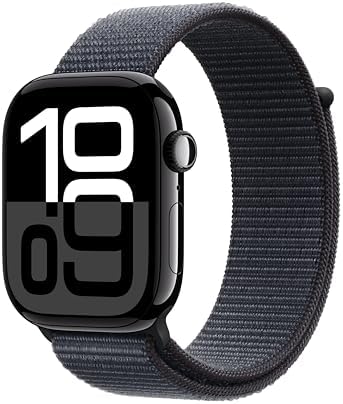
For shoppers comparing the two side by side, the Apple Watch Series 10 [GPS + Cellular, 42mm] - Jet Black Aluminum Case with Black Sport Band, S/M (Renewed) feels smaller on a narrower wrist while still offering the full sensor set. On the other side, the SE 3 holds its own as a daily driver, and its Always-On display keeps the experience feeling modern rather than stripped down.
Which Apple Watch Fits Your Wrist and Routine
The Series 10 is the more capable watch. The SE 3 is the smarter buy for most people. That summary holds up under specification-level scrutiny: identical chip, identical storage, identical battery rating, and identical water resistance, separated by sensors and screen size. Shoppers who care about ECG readings, blood oxygen tracking, temperature-based cycle tracking, or titanium finishes should choose the Series 10. Everyone else gets the same core smartwatch experience from the SE 3 for meaningfully less money.
Both models sit within a broader Apple smartwatch family that spans several generations and price tiers. The Series 10 generation shows how far the flagship tier has moved, and the Series SE lineage illustrates how much of that flagship experience has since reached the entry tier. Either way you lean, the gap between these two watches is narrower than the price tag suggests, and that is good news for buyers on a budget.
 Just Pick Your Favorite Stylish Watch online














Item Reviews