Two titanium smartwatches sit at the top of the Apple wearable range , yet they answer different questions. The Series 10 targets everyday wear with a slim profile and broad case-size choice, while the Ultra 2 is built around endurance, brightness, and dive-grade water resistance. For anyone deciding between them, the real question is not which is newer, but which set of trade-offs fits daily life. This comparison examines both models across the specifications that shape real purchasing decisions, from case construction to battery endurance, so the choice rests on evidence rather than marketing claims.
| Feature & Selling Point |
Apple Watch Series 10 |
Apple Watch Ultra 2 |
| Case Sizes |
42mm and 46mm |
49mm only |
| Case Materials |
Aluminum, Titanium |
Titanium |
| Display Type |
Wide-angle OLED, up to 2000 nits |
Always-on Retina, up to 3000 nits |
| Display Glass |
Ion-X or Sapphire |
Sapphire crystal |
| Battery Life (Normal Use) |
Up to 18 hours |
Up to 36 hours |
| Low Power Mode |
Up to 36 hours |
Up to 72 hours |
| Water Resistance |
50 metres (5 ATM), WR50 |
100 metres (10 ATM), EN13319 |
| Dust Resistance |
IP6X |
IP6X |
| Operating Temperature |
Standard range |
Extended range, for high altitude and cold |
| Navigation Features |
GPS, compass, basic waypoints |
Precision dual-frequency GPS, depth gauge, siren |
| Action Button |
No |
Yes, customisable |
| Speaker & Media |
Speaker and microphone |
Dual speakers, 40\% louder |
| Cellular Options |
GPS and GPS + Cellular |
GPS + Cellular standard |
| Weight Range |
Lighter, from about 30g |
Heavier, from about 61g |
| Target User |
Everyday wear, sleep and health tracking |
Athletes, divers, hikers, multi-day explorers |
The table shows where the two models diverge most sharply. The Series 10 keeps a wider choice of case sizes and a lighter build, while the Ultra 2 doubles the water resistance rating, extends battery life, and adds dedicated navigation hardware such as dual-frequency GPS and a depth gauge. The Series 10 fits a broader range of wrists and daily routines; the Ultra 2 is engineered around a narrower but more demanding set of outdoor activities.
The Series 10 was designed as a refinement of Apple's mainstream wearable line, and Apple positions it as the everyday model in the current lineup. The 42mm and 46mm aluminium options create a low-profile silhouette that slides under a cuff, while the titanium variants add a more premium finish without changing the overall proportions. Apple states that the Series 10 requires an iPhone Xs or later running iOS 18 or later, a software baseline shared with the Ultra 2, which means neither model is a purchase to make in isolation from the phone already in use.
For readers weighing the smaller model first, the Apple Watch Series 10 Jet Black Aluminum 42mm GPS Cellular pairs a compact case with a dark aluminium finish, and the configuration illustrates why this generation is often chosen for daily wear. The 42mm body keeps components proportional on narrower wrists, and the aluminium case holds the weight down, which matters for anyone who intends to wear the watch overnight for sleep tracking. Its wide-angle OLED panel reaches up to 2000 nits, remaining legible in direct sunlight while displaying more text at a glance thanks to the larger effective screen area on current-generation models.
Design Language and Case Construction
Case material has a direct impact on weight, scratch resistance, and the overall feel of a watch on the wrist, which is why it sits near the top of the decision list for either model. The Series 10 aluminium chassis is the lightest configuration available, and its Ion-X glass offers a level of shatter resistance that suits accidental knocks. Moving to a titanium Series 10 brings a sapphire crystal front, which Apple describes as offering up to two times more scratch resistance than Ion-X glass across comparable product lines, a meaningful difference for users who tend to graze doorways and desk edges.
The Ultra 2 takes a different approach: the 49mm titanium case is larger and taller, and the raised bezel that surrounds the sapphire crystal protects the display edge from frontal impacts. That geometry is not decorative. It reflects a construction philosophy built around surviving contact with rock, salt water, and abrasive surfaces rather than disappearing under a shirt sleeve. Compared with the more jewellery-facing aluminium and titanium finishes on the Series 10, the Ultra 2 reads as a purpose-built instrument, and its larger footprint makes that positioning immediately visible on the wrist.
Display, Brightness, and Legibility
Brightness stops being a specification sheet footnote the moment the watch is used outdoors. The Series 10 panel reaches up to 2000 nits, while the Ultra 2 pushes to 3000 nits. That extra headroom is directed at conditions where the Series 10 must rely purely on contrast: direct overhead sun on a reflective alpine slope, or glare off open water. It is a measurable difference in screen performance, not a stylistic preference, and it appears in bright environments where readability decides whether a glance at a split time or a map bearing is useful at all.
The full specifications published by Apple list both models as supporting an always-on display with an extended wide viewing angle, though the Ultra 2's superior peak brightness is the more consequential figure for active outdoor use. In dim light and indoor settings, the two panels behave nearly identically, so the brightness advantage matters only for the environments the extra nits were built for.
Battery Endurance and Charging Behaviour
Battery life is where the comparison becomes unambiguous. Apple rates the Series 10 at up to 18 hours in normal use and up to 36 hours with Low Power Mode enabled. The Ultra 2 is rated at up to 36 hours normally and up to 72 hours in Low Power Mode, effectively doubling endurance at both tiers. For a nightly-charging routine, 18 hours is workable; for a multi-day trek, a single overnight charge is no longer workable once GPS recording and heart-rate tracking are layered together.
That endurance gap speaks to the underlying architecture. The Ultra 2 carries a physically larger battery, which is one reason its case is deeper and the watch weighs roughly twice as much as the lightest Series 10. The trade-off follows physics rather than tuning: long tracking sessions and overnight wear impose a real power cost, and the Ultra 2 is sized to absorb it without charging breaks. That capability comes from structural capacity, not a software override that artificially boosts the battery readout.
Outdoor Capability and Navigation Hardware
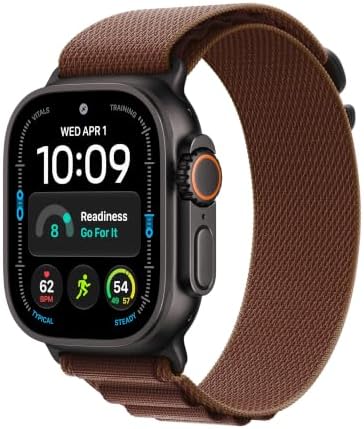
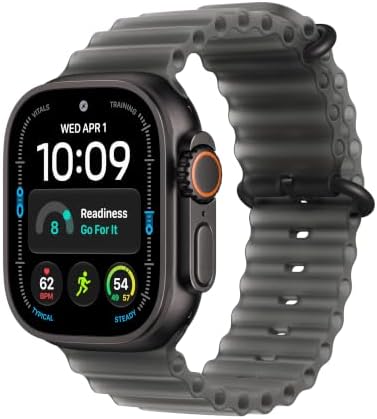
For divers and hikers who need a titanium build with a rubberised strap, the Apple Watch Ultra 2 Titanium Blue Ocean 49mm GPS Cellular combines an ultralight case with a band designed for water exposure. The Ultra 2's EN13319 certification supports recreational diving workloads where a 5 ATM watch cannot operate, and Apple includes features such as a depth gauge and a water-temperature sensor aimed at those activities.
Beyond water resistance, the Ultra 2 adds a customisable Action Button on the crown side that can be assigned to stopwatch control, workout switching, siren activation, and waypoint marking. Its dual-frequency GPS (L1 and L5) classification allows position fixes that resist the signal reflections common in canyons and dense city grids. The Series 10 offers solid single-band GPS navigation suitable for commuting, running, and casual hiking, but it lacks the second frequency that makes the Ultra 2's position traces more reliable in high-multipath environments.
Apple additionally documents the Ultra 2's extended operating temperature range covering high altitude and cold-weather use, which speaks to sensor and battery behaviour rather than comfort. On a multi-day, exposed route, the 49mm case and 3000-nit display handle both bright issues by widening margins: readable in glare, and still legible after hours of use drawing power while tracking. Divers and climbers are effectively buying endurance, brightness, and diver-grade water resistance as a single package, rather than accruing points on a checklist.
Choose the Right Fit
For readers who remain undecided, the decision filters down cleanly. The Series 10 lineup delivers the essentials for everyday wear: a comfortable 42mm or 46mm frame, a display that reads well under ordinary light conditions without pushing peak brightness, a sleep-tracking-friendly weight, and a charge schedule that fits a bedside routine. The Ultra 2 lands when the question shifts from daily sufficiency to multi-day endurance, and from dry sun to high-altitude exposure.
Both platforms run the same foundation, and the pairing requirement is identical, an iPhone Xs or later with iOS 18 or later, which means the operating environment will not constrain the decision. What differs is whether a larger, heavier titanium watch that tracks longer and dives deeper is the correct answer for the wrist in question. For the majority of users, the Series 10 covers the daily load; for a smaller cohort whose week includes open water, exposed summits, or multi-day routes, the additional mass buys hours of tracking time and additional situational reach that cannot be shed, only carried.
 Just Pick Your Favorite Stylish Watch online














Item Reviews