Two flagship multisport watches anchor this comparison: the Garmin brand's Fenix 8 and the Apple brand's Watch Ultra 3. One is engineered around extended battery life, solar charging, and on-device topographic mapping; the other centers on cellular independence, satellite messaging, and the broadest health sensor suite Apple has shipped. This guide is a reference resource for athletes, adventurers, and everyday users weighing these models, so save and share it when making a purchase decision.
| Feature & Selling Point |
Garmin Fenix 8 (47mm) |
Apple Watch Ultra 3 (49mm) |
| Case Dimensions |
47mm diameter |
49mm x 44mm x 12mm |
| Weight |
Approximately 80g (titanium) |
61.6g (natural titanium) |
| Display Type |
AMOLED (also available in solar MIP) |
LTPO3 OLED, always-on Retina |
| Display Resolution |
454 x 454 pixels |
422 x 514 pixels (1245 sq mm) |
| Battery Life (Smartwatch Mode) |
Up to 16 days (AMOLED); up to 29 days (solar) |
Up to 42 hours (normal); up to 72 hours (Low Power Mode) |
| Battery Life (GPS Mode) |
Up to 47 hours (AMOLED); up to 92 hours (solar) |
Up to 12 hours (GPS); up to 42 hours (Low Power) |
| Solar Charging |
Yes (Solar editions) |
No |
| Satellite Communication |
Yes (inReach via subscription) |
Yes (Emergency SOS, Messages via satellite) |
| Cellular Connectivity |
No |
Yes (LTE/5G cellular) |
| Water Resistance / Dive Rating |
10 ATM, dive-rated to 40m |
100m water resistance, EN13319 dive-rated |
| Built-in Flashlight |
Yes (LED flashlight) |
No |
| Advanced Health Sensors |
Heart rate, SpO2, HRV, Body Battery |
ECG, temperature sensing, sleep apnea detection |
| Training Features |
Multi-band GNSS, TopoActive maps, dive modes |
Precision dual-frequency GPS, custom workouts |
| Key Selling Point |
Extended battery + solar + flashlight |
iPhone integration + satellite SOS |
| Best Use Case |
Multi-day treks, ultra-running, diving |
Daily training, urban fitness, iPhone-centric users |
The most consequential difference in this table is battery longevity. The Fenix 8 lasts up to 16 days in smartwatch mode and up to 92 hours with GPS when equipped with solar charging, while the Apple Watch Ultra 3 offers up to 42 hours normally and 12 hours in GPS mode. For athletes logging consecutive 10-hour training days or backpackers on week-long trips, that gap determines whether the device becomes a daily burden or a reliable tool.
Design and Case Construction
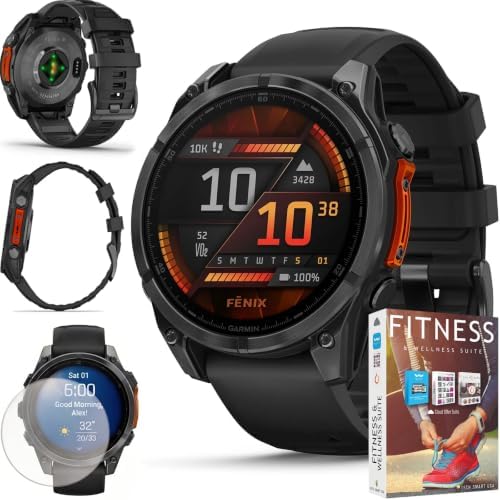
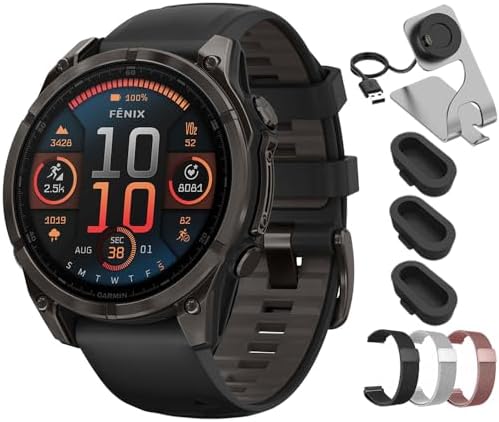
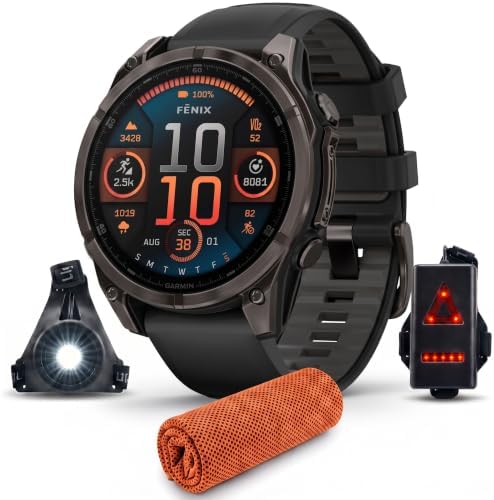
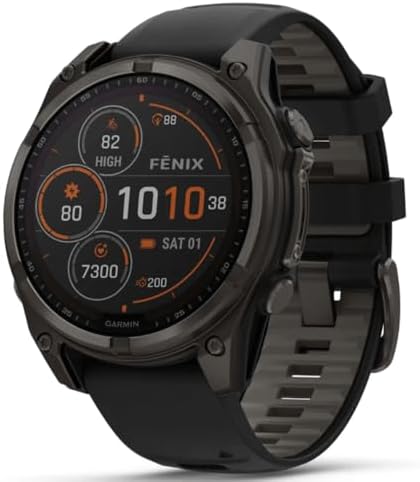
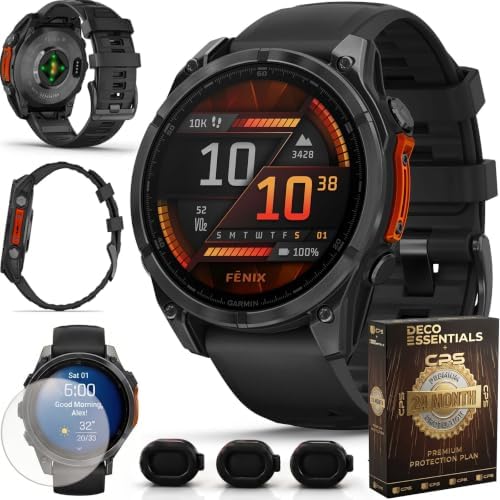
The structural philosophy of each watch reveals its intended environment. The Garmin fēnix 8 Slate Black 47mm GPS uses a fiber-reinforced polymer case with a metal rear cover and a titanium bezel on premium editions. Its 47mm diameter and approximately 80g weight give it a substantial wrist presence, but the rear cover design distributes the mass evenly. The five-button layout includes a dedicated flashlight button on the left side, a hardware feature that Apple has not replicated.
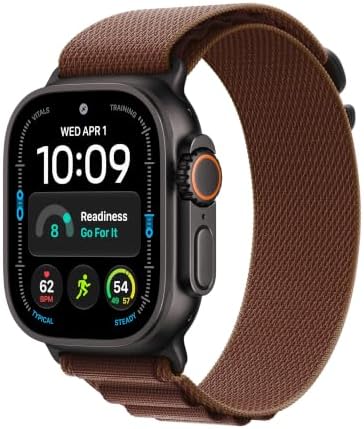
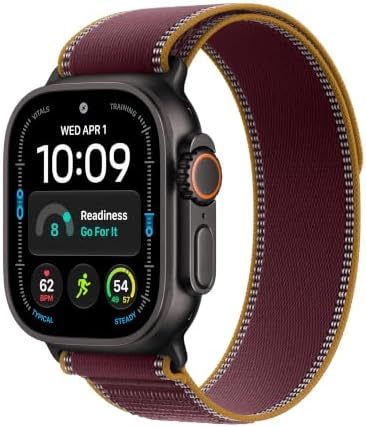
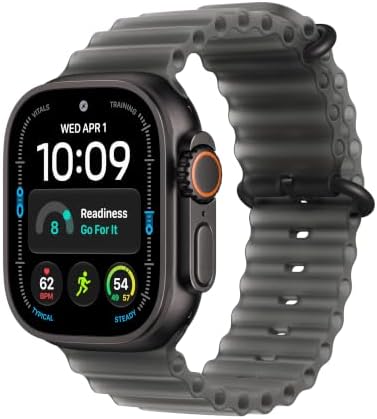
The Apple Watch Ultra 3 [GPS + Titanium Black Ocean 49mm GPS Cellular] weighs 61.6g in its natural titanium finish and measures 49mm across, 44mm tall, and 12mm thick. Apple states that the case is milled from aerospace-grade titanium and tested to MIL-STD-810H standards. The 49mm size sounds large on paper, but the flat sapphire crystal and 12mm depth make it sit lower on the wrist than the Fenix 8.
Display Technology and Readability
Both watches have moved to OLED-based panels, but the implementation differs. The Fenix 8 AMOLED edition delivers a 454 x 454 pixel resolution with vivid color and always-on capability. Garmin also offers the Fenix 8 in a solar MIP variant with a memory-in-pixel display that relies on ambient light for readability and extends battery life to 29 days in smartwatch mode. That choice matters for users who prioritize visibility in bright sunlight over deep blacks.
The Apple Watch Ultra 3 uses a LTPO3 OLED panel covering 1245 square millimeters with a 422 x 514 resolution. Apple claims a peak brightness of 3000 nits, the highest on any Apple Watch, which makes it readable in direct desert or alpine sun. The wider aspect ratio of the Ultra 3 also gives complications and maps more horizontal space compared to the squarish Fenix display.
Battery Life and Charging
Battery life is the Fenix 8's strongest argument. According to Garmin, the 47mm AMOLED model runs up to 16 days in smartwatch mode, up to 47 hours in GPS mode, and up to 92 hours with solar charging in GPS mode. The solar editions add a Power Glass lens that converts light into usable energy, a feature that can extend expedition use under favorable conditions. There is no Apple Watch that offers solar charging.
Apple states that the Apple Watch Ultra 3 delivers up to 42 hours of normal use and up to 72 hours in Low Power Mode. GPS battery life is rated at 12 hours under normal conditions and up to 42 hours in Low Power Mode. These figures support a single long training session or a weekend trip, but not a multi-day unsupported trek without a charger. Cellular and satellite features also draw additional power, reducing real-world endurance below the quoted maximum.
Training, Navigation, and Outdoor Features
The Fenix 8 includes multi-band GNSS with SatIQ technology, which automatically selects the optimal satellite system to balance accuracy and battery drain. Preloaded TopoActive maps with ski maps, golf courses, and around-the-world coverage support turn-by-turn navigation without a phone. The watch also includes dive modes rated to 40 meters, a built-in LED flashlight, and sport profiles for everything from trail running to whitewater paddling.
As specified by Apple, the Ultra 3 ships with precision dual-frequency GPS, a 100-meter water resistance rating, and EN13319 dive certification. It includes depth and water temperature sensors for recreational diving to 40 meters. The difference is that Apple's navigation relies heavily on the companion iPhone or cellular connection for route planning, whereas the Fenix 8 collection on-device map system allows standalone route creation and following.
Health Sensors and Ecosystem Integration
The Apple Watch Ultra 3 offers the most comprehensive health sensor array of any Apple wearable. It includes an electrical heart sensor for ECG readings, temperature sensing for cycle tracking and sleep insights, and sleep apnea detection cleared by regulators. The device pairs with an iPhone to deliver notifications, wrist-based messaging, and emergency SOS via satellite when off-grid, a capability that requires no separate hardware or subscription.
Garmin's Fenix 8 counters with its own sensor suite: wrist-based heart rate, pulse ox, HRV status, Body Battery energy monitoring, and advanced sleep scoring. Garmin's health metrics are presented through the Garmin Connect app, which offers deeper longitudinal data than Apple's Health app for athletes tracking training load, recovery time, and VO2 max trends. The Apple ecosystem wins on daily convenience and app availability, while Garmin's platform wins on athletic data depth and battery-friendly implementation.
Which Watch Fits Which User
Choosing between these two models comes down to use case, not absolute quality. The Garmin Fenix 8 is the better match for anyone who spends multiple days away from power outlets, needs on-device topographic maps, relies on a built-in flashlight, or wants solar charging as a safety net. Its training metrics and multi-band GNSS performance make it a dependable tool for ultra-runners, mountaineers, and divers who track underwater time.
The Apple Watch Ultra 3 is the stronger choice for iPhone users who want a rugged daily driver with cellular independence, satellite messaging for emergencies, and advanced health monitoring including ECG and sleep apnea detection. Its lighter weight and lower profile make it more comfortable for all-day wear, and the 3000-nit display is an asset for anyone training in bright environments.
A Decision Rooted in Environment, Not Specs Alone
Both watches represent the current ceiling of multisport engineering, but they answer different questions. Garmin asks how long a watch can operate without a charger; Apple asks how much health and connectivity data can fit into a wearable that still feels like a daily accessory. The answers will point different athletes in different directions, and that is the point.
 Just Pick Your Favorite Stylish Watch online














Item Reviews