The Venu 3 and Venu 3S share the same software platform, sensor suite, and AMOLED display technology, yet they diverge on one decisive specification: case diameter. The Venu 3 measures 45mm across, while the Venu 3S comes in at 41mm. That 4mm difference cascades into battery capacity, wrist presence, and strap compatibility, making the choice between them more consequential than a simple size preference. This comparison is built as a decision reference for buyers weighing the two models, and it is worth bookmarking for anyone comparing specifications side by side before committing to a purchase.
| Feature & Selling Point |
Garmin Venu 3 |
Garmin Venu 3S |
| Case Diameter |
45mm |
41mm |
| Display Size |
1.4-inch AMOLED |
1.2-inch AMOLED |
| Weight Range |
Approx. 47g (stainless steel) |
Approx. 40g (stainless steel) |
| Smartwatch Battery |
Up to 14 days |
Up to 10 days |
| Battery Saver Mode |
Up to 26 days |
Up to 20 days |
| GPS-Only GNSS |
Up to 26 hours |
Up to 21 hours |
| All-Systems GNSS |
Up to 20 hours |
Not differentiated in official comparison |
| Display Always-On |
Supported (reduces battery to approx. 6 days) |
Supported (reduces battery to 5 days) |
| Health Sensors |
Wrist-based heart rate, Body Battery, HRV status, stress tracking, sleep coach |
Wrist-based heart rate, Body Battery, HRV status, stress tracking, sleep coach |
| Sleep Monitoring |
Garmin Sleep Coach with sleep score |
Garmin Sleep Coach with sleep score |
| Smart Features |
Texting, calls from wrist, Garmin Pay |
Texting, calls from wrist, Garmin Pay |
| Case Material Options |
Stainless steel bezel, fiber-reinforced polymer case |
Stainless steel bezel or soft gold bezel, fiber-reinforced polymer case |
| Strap Width |
22mm QuickFit |
18mm QuickFit |
| Best Suited For |
Users with larger wrists or those prioritizing maximum battery life |
Users with slimmer wrists or those seeking a lighter daily wear option |
| Water Resistance |
5 ATM |
5 ATM |
| Positioning |
Standard-size flagship Venu |
Compact alternative with the same sensor array |
The table makes one thing clear: the Venu 3 and Venu 3S are functionally identical twins separated only by physical dimensions. Both run the same Garmin operating system, both carry the same Elevate heart rate sensor, and both support the same Body Battery and sleep coach features. The decision therefore hinges on wrist size, battery expectations, and how much screen real estate a buyer needs for glanceable information during workouts or daily wear. The Venu 3 doubles the battery advantage in smartwatch mode, while the Venu 3S trims weight and bulk without sacrificing any sensor capability.
A Shared Software Foundation Across Two Case Sizes
Garmin does not create a stripped-down version of its platform for smaller watches. The Venu 3S runs the same firmware branch as the Venu 3, which means every health metric, workout profile, and smart feature available on the larger model is also present on the smaller one. Wrist-based heart rate monitoring, heart rate variability status, stress tracking, and the Garmin Sleep Coach all operate identically because the optical sensor module and accelerometer are the same across both models. The only hardware distinction that surfaces in daily use is the display diagonal: 1.4 inches versus 1.2 inches, which affects how much data appears on a single screen without scrolling.
This parity matters for buyers who might assume the 3S is an entry-level derivative. It is not. The Venu 3S is a full-featured smartwatch that happens to be housed in a 41mm case. Anyone exploring the Garmin brand's broader smartwatch catalog will find that the two models share the same processor, the same connectivity suite (Bluetooth, ANT+, Wi-Fi), and the same Garmin Pay contactless payment support. The software experience does not degrade with the smaller case.
Feature equivalence extends to workout modes as well. Both watches support more than 30 built-in sport profiles, including running, cycling, swimming, strength training, and yoga. Both provide animated on-screen workouts, recovery time suggestions, and VO2 max estimates. Neither model offers multisport handoff or advanced training metrics like Training Readiness or Acute Load, which are reserved for the Forerunner and Fenix lines, but for general fitness tracking the Venu pair delivers identical value.
Battery Life: The Most Tangible Difference
Battery capacity is the one specification where the Venu 3 clearly pulls ahead. Garmin rates the 45mm model for up to 14 days in smartwatch mode, while the 41mm Venu 3S reaches up to 10 days. That four-day gap widens in GPS mode: 26 hours versus 21 hours for GPS-only tracking. For runners who log multi-hour sessions or hikers who spend full days on trails, the Venu 3 provides a buffer that the 3S cannot match. However, the 3S still delivers enough endurance for most training weeks, and its smaller battery is offset by the watch's lighter weight, which some users prefer for sleep tracking and all-day wear.
It is worth noting that battery saver mode extends both watches considerably. The Venu 3 reaches up to 26 days in saver mode, and the Venu 3S reaches up to 20 days. These figures are achievable by disabling the always-on display and reducing screen brightness. When the always-on display is active, battery life drops to roughly 6 days on the Venu 3 and 5 days on the Venu 3S, which reflects the continuous power draw of the AMOLED panel. Buyers who rely on always-on functionality should factor that reduction into their expectations.
Charging is another area where the two models align. Both use Garmin's proprietary charging cable and reach a full charge in approximately one hour. The Venu 3's larger battery takes marginally longer to top off, but the difference is negligible in practice. Neither model supports wireless charging, which is a consideration for users accustomed to charging pads. The charging cable is compact and travel-friendly, but it is one more accessory to pack.
Who Should Choose the Garmin Venu 3S
The Venu 3S is designed for wrists that measure roughly 130mm to 180mm in circumference. On a smaller wrist, the 45mm Venu 3 can overhang the edges of the wrist bone, which compromises both comfort and heart rate accuracy. The 41mm case of the 3S sits flush on narrower wrists, allowing the optical sensor to maintain consistent skin contact. Garmin positions the 3S as a companion for users who want the full Venu feature set in a form factor that does not dominate the wrist.
Beyond wrist fit, the 3S appeals to users who prioritize a lighter device. The stainless steel version weighs approximately 40 grams, compared to roughly 47 grams for the standard Venu 3. That weight difference is noticeable during sleep and long runs, where every gram matters. The 18mm QuickFit strap system also opens up a wider selection of aftermarket bands designed for smaller watches, including the Venu 3S collection in materials ranging from silicone to woven nylon. The 3S competes directly with other compact smartwatches in the fitness segment, and its feature parity with the larger Venu 3 makes it a legitimate flagship rather than a compromise.
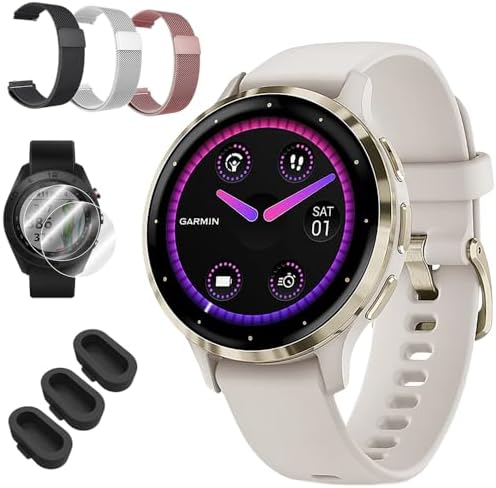
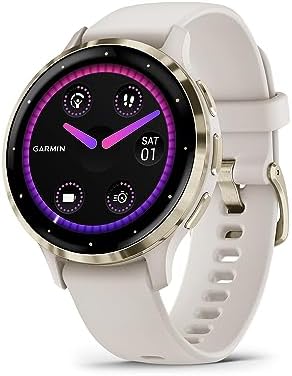
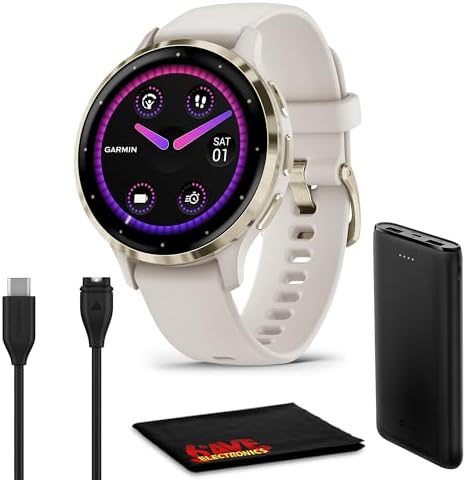
One point of differentiation is color and finish availability. Garmin offers the Venu 3S with a soft gold bezel option that the standard Venu 3 does not receive in all markets. This gold variant, paired with a French Gray case, shifts the 3S toward a more fashion-forward aesthetic. Buyers who want a fitness watch that doubles as a dress accessory will find the Garmin Venu 3S Soft Gold Stainless 41mm to be a direct answer to that requirement, since the 45mm model leans more heavily toward a sporty, utilitarian appearance.
Who Should Choose the Standard Garmin Venu 3
The 45mm Venu 3 targets wrists measuring approximately 150mm to 210mm. On these wrists, the larger display becomes an asset rather than a liability. The 1.4-inch AMOLED screen provides enough space to display six data fields during a run without requiring the user to swipe between screens. For cyclists who mount the watch on handlebars or for users who rely on map navigation during hikes, the extra screen real estate improves usability. The Venu 3 delivers the same health insights as the 3S, but it presents them on a canvas that requires less squinting.
The battery advantage of the Venu 3 is real, but it is most meaningful for users who travel frequently or forget to charge. Garmin rates the 45mm model for up to 14 days, which means a user can leave the charger at home for a two-week trip without anxiety. The 3S at 10 days is still respectable, but it requires more disciplined charging habits. For anyone who has ever been caught with a dead smartwatch before a morning run, the Venu 3's extra four days represent a practical safety margin.
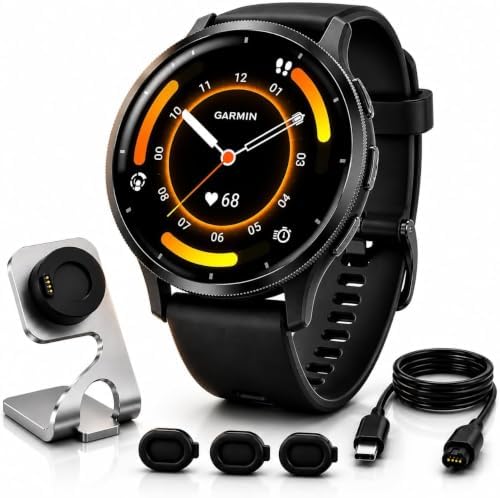
Strap compatibility is another consideration. The Venu 3 uses a 22mm QuickFit system, the industry-standard width for men's watches. Aftermarket strap options at 22mm are abundant and inexpensive, covering leather, stainless steel, nylon, and silicone. The 3S's 18mm lug width is less common, though still supported by Garmin and third-party manufacturers. A buyer who intends to customize the watch with a metal bracelet or a premium leather band will find more choice at 22mm. For those who plan to use the supplied silicone band, the strap difference is moot. The primary Venu 3 model is available in a configuration that includes a Slate stainless bezel and a 45mm black case, and the Garmin Venu 3 (Refurbished) Slate Stainless Black 45mm presents a way to step into the larger model at a lower entry point, which may appeal to buyers who are uncertain about committing to the full retail price.
Design, Materials, and Display Quality
Both the Venu 3 and Venu 3S use a fiber-reinforced polymer case with a stainless steel bezel. This construction keeps weight down while providing a durable exterior that resists scratches better than plastic alone. The AMOLED displays on both models offer the same pixel density and contrast ratio, which means text and graphics appear equally crisp on the 1.4-inch and 1.2-inch screens. The difference is purely one of scale: a larger canvas shows more at once, while a smaller canvas feels denser and more compact.
The water resistance rating is identical at 5 ATM, which means both watches survive swimming, showering, and shallow water activities. They are not intended for scuba diving or high-impact water sports, but for lap swimming and recreational snorkeling they perform adequately. The touchscreen works with wet fingers, and the physical buttons provide alternative navigation when the screen is submerged. Garmin's interface is designed so that users can operate the watch entirely through buttons if preferred, which is helpful during activities where touch input is unreliable.
One subtle design distinction is the bezel finish. The Venu 3 is most commonly available with a slate or silver stainless bezel, which gives it a technical, sports-watch appearance. The Venu 3S offers the same finishes plus the soft gold option mentioned earlier, which broadens its appeal as a crossover piece. Neither watch looks out of place in a business casual setting, but the 3S in soft gold leans more toward jewelry than instrument. This aesthetic flexibility may matter to buyers who want one watch to serve multiple roles.
Making the Decision: Size, Battery, or Both
The choice between the Venu 3 and Venu 3S ultimately reduces to a single question: which specification matters more, wrist fit or battery endurance? For users with wrists under 170mm, the 3S will feel more balanced and will likely provide more accurate heart rate readings because the sensor sits closer to the skin. For users with wrists over 170mm, the 45mm Venu 3 will sit correctly without overhanging, and the extra battery life becomes a bonus rather than the primary reason to choose it.
It is possible to appreciate both models for different reasons. The Venu 3S proves that a smaller watch does not need to sacrifice features, which is a meaningful statement in a market where compact models are often stripped of sensors or software capabilities. The Venu 3 demonstrates that a larger case can still be comfortable and relatively lightweight when the materials are chosen carefully. Garmin has effectively created two watches that serve different wrists without creating a hierarchy of capability.
For the buyer who remains uncertain, the safest approach is to measure wrist circumference before ordering. A flexible tape measure wrapped snugly around the wrist bone provides the most accurate reading. If the measurement falls between 150mm and 170mm, either model will work, and the decision comes down to personal preference for screen size or battery life. If the measurement is below 150mm, the 3S is the appropriate choice. If it exceeds 180mm, the standard Venu 3 will look and feel more proportional. That single measurement resolves the decision more effectively than any specification table.
What Garmin has achieved with the Venu 3 series is a rare thing in consumer electronics: a product line where the smaller variant is not a downgrade. The Venu 3S carries the same health sensors, the same smart features, and the same software update path as its larger sibling. The reduced battery life is a direct consequence of physics, not feature segmentation. Buyers who choose the 3S are not settling; they are selecting the case size that matches their body. And buyers who choose the Venu 3 are not sacrificing comfort for battery life; they are choosing a watch that can go two weeks between charges while still tracking every metric that matters. The best fitness wearable is the one that stays on the wrist, and Garmin has made it possible to pick the size that makes that happen.
 Just Pick Your Favorite Stylish Watch online












Item Reviews