The Samsung Galaxy Watch9 and the Google Pixel Watch 5 represent two distinct answers to the same question: how much smartwatch should a Wear OS device actually be? Samsung builds its case around a rounded rectangle with a physical rotating bezel, while Google leans into a domed circular display with a cleaner, jewellery-like silhouette. Both run the same underlying operating system, yet the hardware choices, battery priorities, and health platforms pull them in noticeably different directions.
This comparison is written as a practical buying reference for anyone deciding between the two, and it is worth saving for later. The Samsung Galaxy Watch9 carries forward the lineup's focus on sensors and sleep analytics, while the Pixel Watch 5 prioritises tighter Fitbit integration and Google's on-wrist AI features. The table below sets out the core specifications and selling points side by side.
| Feature and Selling Point |
Samsung Galaxy Watch9 |
Google Pixel Watch 5 |
| Display Type |
Super AMOLED, 40mm and 44mm |
Actua domed display, 41mm and 45mm |
| Case Material |
Aluminium with stainless steel options |
Recycled aluminium |
| Processor |
Exynos W-series |
Qualcomm Snapdragon W5 series |
| Operating System |
Wear OS with One UI Watch |
Wear OS, near-stock Pixel build |
| Battery Life (Typical) |
Up to 40 hours, always-on reduced |
Up to 36 hours, always-on reduced |
| Charging |
Magnetic wireless puck |
Magnetic pin dock, four-pin contact |
| Health Platform |
Samsung Health with BioActive sensor |
Fitbit platform with Google AI insights |
| Sleep Tracking |
Sleep score, snore detection, Apnea risk |
Sleep score and algorithm-based daytime readiness |
| ECG and Heart Alerts |
Available via Samsung Health Monitor |
Available through Fitbit ECG app |
| Durability Rating |
5 ATM plus IP68 and MIL-STD-810 |
5 ATM, IP68 water resistance |
| Navigation Controls |
Touchscreen plus rotating bezel |
Touchscreen plus haptic crown |
| Phone Compatibility |
Android focus, iOS limited |
Android 9 and later, no iOS |
| Best For |
Deep health metrics and lasting battery |
Google ecosystem and Fitbit loyalists |
| Signature Strength |
Sensor breadth and rugged certification |
Polished design and AI-first software |
The clearest split in the table sits between sensor depth and software polish. Samsung packs more health channels into the Galaxy Watch9, including a BioActive sensor array and MIL-STD-810 durability, while Google answers with a cleaner Fitbit-driven experience and a domed display that reads more like traditional jewellery. The battery and connectivity columns, however, are close enough that most buyers will decide on ecosystem rather than specification.
How the Two Design Philosophies Diverge
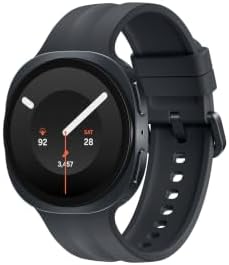
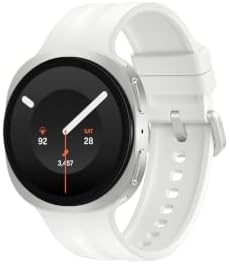
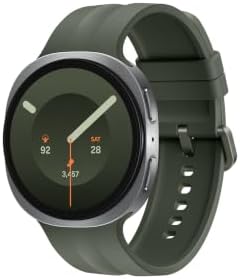
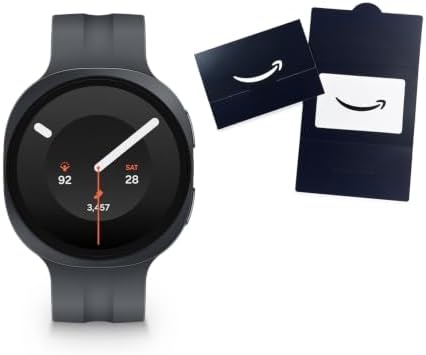
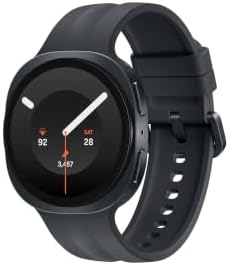
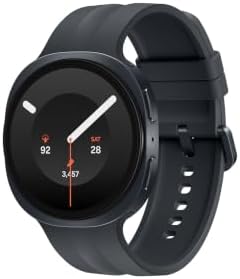
Samsung has spent several generations refining a case that positions function ahead of fashion. The Galaxy Watch9 ships in 40mm and 44mm aluminium bodies, with the 40mm Bluetooth variant arriving in a matte graphite finish that pairs easily with both workout gear and office attire. The rotating bezel remains the defining interaction method: it clicks through menus, adjusts alarms, and controls media without leaving fingerprints on the display. That mechanical feedback is the single most tactile difference between this watch and any competing Wear OS device.
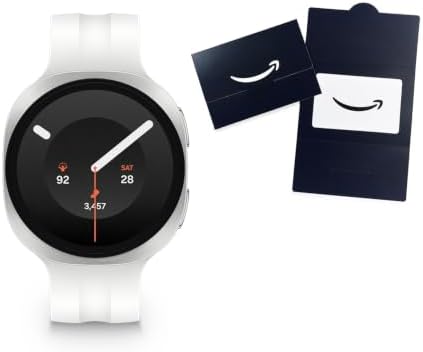
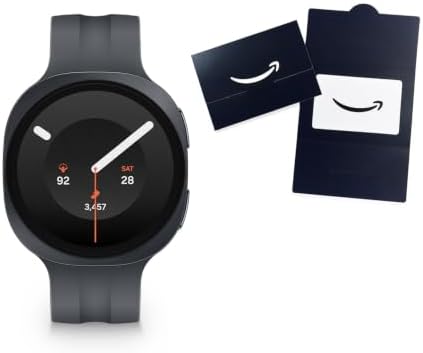
Google takes the opposite route. The Pixel Watch 5 uses a domed Actua display that curves into a thin recycled aluminium frame, and the 45mm LTE Obsidian version reads almost as a smooth pebble on the wrist. Instead of a rotating bezel, navigation relies on the haptic crown, which gives gentle vibrations as it scrolls. The design hides its sensors more effectively, producing a slimmer profile where Samsung's case is visibly engineered for hardware.
Neither approach is objectively superior. Shoppers who prefer a tactile, tool-like feel often gravitate toward the Galaxy Watch9, while the Pixel Watch line targets buyers who prefer a design that disappears into daily life.
Display, Durability, and Daily Wear
Both devices use AMOLED-style panels with always-on modes and high brightness, so outdoor legibility is rarely the deciding factor. The difference lies in geometry. Samsung's conventional flat glass sits flush with the bezel, reducing glare near the edges. Google's domed profile wraps light differently, offering the visual appeal of a traditional watch crystal but with slightly more edge distortion when viewed from very shallow angles.
Durability tilts toward Samsung. The Galaxy Watch9 is certified to 5 ATM, IP68, and MIL-STD-810 for shock, temperature, and altitude resistance, which appeals to hikers and gym-goers. The price is partly justified by this ruggedness. The Pixel Watch 5 meets 5 ATM and IP68, which covers swimming and everyday exposure but stops short of the military-grade envelope.
Weight is the trade-off. Samsung's protective build is slightly heavier on the wrist, while Google's thinner frame makes the 41mm version feel almost weightless during sleep. Anyone tracking sleep stages overnight may find the Pixel Watch 5 less obtrusive, whereas Samsung counters with more detailed snore and breathing analysis to make its heft worth carrying.
Battery Life and Charging Realities
Samsung quotes up to 40 hours of typical use on the Galaxy Watch9, and independently verified estimates of real-world figures generally land in the same region as official claims. That covers a comfortable two nights and a full day before needing a charge, and it assumes always-on display is disabled. Turning always-on mode on typically cuts the listed figure roughly in half, which is consistent with the wider category.
The Pixel Watch 5 lists up to 36 hours of typical use, which is close enough that the gap rarely changes a purchase decision. What differs is charging speed and method. Samsung's magnetic wireless puck is forgiving of accidental misalignment. Google's four-pin magnetic dock snaps onto the back with a satisfying certainty but requires the specific contacts to line up, so a generic Qi pad will not revive either watch.
- Samsung Galaxy Watch9: around 40 hours typical, topped up nightly by choice rather than necessity
- Google Pixel Watch 5: around 36 hours typical, thick enough for an overnight-then-next-day cycle
Neither device is designed for multi-day expeditions without a charger. Buyers who have twice experienced battery anxiety on a traditional Wear OS watch will find both of these latest-generation models a clear improvement over older models.
Health Tracking and Sensor Accuracy
Samsung's BioActive sensor bundle measures heart rate, blood oxygen, and body composition via electrical impedance, letting users track skeletal muscle mass and body fat percentage from the wrist. Samsung markets this as one of the most comprehensive sensor arrangements on a consumer smartwatch, and the claim is supported by the number of concurrent metrics the watch can log. For fitness users who fine-tune a training plan, the body composition trend line can be as useful as weight alone.
Google answers through Fitbit, a platform with years of algorithmic tuning. The Pixel Watch 5 tracks heart rate with continuously recorded beat-to-beat data and leverages Google AI to surface long-term trends. Fitbit ECG and irregular rhythm notifications are available in supported markets, and the sleep score has an established following. Body composition readings are not part of the Pixel Watch 5's sensor package.
Users migrating which ecosystem they already trust should follow the app they plan to live in daily, since the underlying accuracy gap between these two sensors is smaller than the onboarding cost of switching health platforms. A key selling point for Pixel buyers remains the inclusion of two years of data with the subscription rather than a hardware feature.
Anyone who prefers the compact Samsung form factor can look at the Samsung Galaxy Watch9 Graphite 40mm Bluetooth as the everyday all-rounder, while buyers who prioritise Google software should weigh it against other models in the Google range before committing.
Software, Ecosystem, and AI Features
Because both devices run Wear OS, the app catalogue is essentially identical. The differences live in the overlays. Samsung's One UI Watch adds its own widgets, Bixby voice interaction, and tight coupling with Galaxy phones for call handoff and camera control. Google's build offers a cleaner surface, deeper Gemini Intelligence integration, and consistent update cadence that Pixel owners have come to expect.
Gemini Intelligence allows the Pixel Watch 5 to handle on-device assistant requests that feel native to Google's AI stack, and the smooth responsiveness is a tangible daily experience. Samsung counters with SmartThings connectivity and a wider spread of partnerships across fitness and productivity apps.
Phone pairing matters here. Google recommends Android 9 and later for the Pixel Watch 5, and there is no iOS path. Samsung supports iPhone pairing on the Galaxy Watch9 but with reduced messaging and call features. The honest summary is that an Android phone offers the most seamless experience for both, and the software debate effectively becomes one between Bixby and Gemini.
Which Watch Fits Which User
The decision sits inside purchasing behaviour rather than specifications. Choose the Google Pixel Watch 5 (45mm) LTE if the priority is a domed design, Fitbit's mature algorithmic suite, subscription-free data access, and deep Gemini assistance. Choose the Samsung brand's Galaxy Watch9 if priority is sensor breadth, military-grade durability, and a tactile rotating bezel. Neither choice is a compromise; the correct one is the one that matches the platform you already open every morning.
Buyers on the fence can walk a middle path by starting with the platform they use most for health data and expansion to a second device only once they are certain a hardware upgrade is the bottleneck. For the majority of Android users, that exploration starts with the watch that already speaks the language of their phone.
 Just Pick Your Favorite Stylish Watch online




















Item Reviews