The Fitbit Charge 5 and the Fitbit Inspire 3 represent two different answers to the same question: how much tracker does a person actually need? The Charge 5 arrived as a feature-dense health companion with a colour AMOLED panel, built-in GPS, and an electrodermal activity sensor, while the Inspire 3 took the opposite path, stripping the formula back to the essentials and letting a lower price point do the talking. This comparison is written as a reference for anyone weighing the two before buying, so it is worth bookmarking and sharing with a friend who is stuck on the same decision.
| Feature & Selling Point |
Fitbit Charge 5 |
Fitbit Inspire 3 |
| Display Type |
Colour AMOLED, always-on option |
Colour AMOLED, touchscreen |
| Built-in GPS |
Yes, onboard GPS |
Connected GPS only |
| EDA Stress Sensor |
Yes |
Not included |
| ECG App |
Yes, where available |
Not included |
| Optical Heart Rate |
24/7 continuous |
24/7 continuous |
| Battery Life |
Up to 7 days |
Up to 10 days |
| Water Resistance |
50 m swim-proof |
50 m swim-proof |
| Case Profile |
Slim, domed glass front |
Very thin, lightweight polymer |
| Strap System |
Quick-release bands |
Quick-release bands |
| Sleep Tracking |
Sleep stages and Sleep Score |
Sleep stages and Sleep Score |
| Daily Readiness Score |
Yes, with Premium |
Basic readiness indicators |
| Premium Membership Trial |
Included at launch |
Included, three-month access |
| Charging Method |
Magnetic charging cable |
Magnetic charging cable |
| Best Suited To |
Health-focused users and runners |
Light activity and step tracking |
| Form Factor |
Tracker with metal accent options |
Minimalist plastic-and-glass body |
Scanning the table, two differences decide most purchases: the EDA stress sensor and the onboard GPS on the Charge 5 that the Inspire 3 does not carry, against the longer battery rating the Inspire 3 holds. Everything else, from sleep staging to 50-metre water resistance, sits on common ground.
What Separates These Two Fitness Trackers
Both devices live in the same Fitbit family, yet they were drawn for different owners. The Fitbit brand's ecosystem links them through one app, one account, and one set of health metrics, but the hardware inside each case tips the experience in a distinct direction. Anyone who has browsed the broader Fitbit range will recognise the split immediately: one is built to measure more, the other is built to disappear on the wrist.
Size, Weight, and Everyday Wearability
Wearability favours the Inspire 3. Its body is slim and light enough to be forgotten during sleep, which matters because both trackers are designed to be worn overnight for sleep stages and resting heart rate. The Charge 5 counters with a taller case and domed glass that reads more like a screen-first device. Neither is heavy, but the Inspire 3 sits flatter under a cuff.
What Each Screen Actually Does
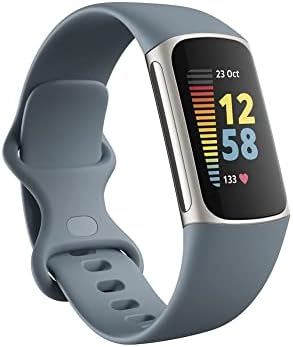
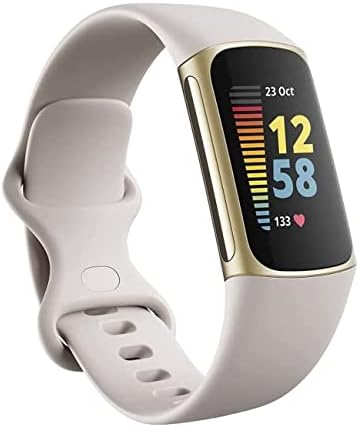
Both use colour AMOLED panels, so the difference is not image quality but purpose. The Charge 5 display carries an always-on mode and shows richer data fields mid-run, including pace pulled from its own GPS. The Inspire 3 screen is simpler, tuned for glancing at steps, heart rate zones, and timers rather than reading full workout splits.
Sensors and Health Metrics Compared
The sensor loadout is where the price gap earns its keep. Fitbit positions the Charge 5 as an advanced health tracker, and the hardware list supports that framing. Alongside the standard optical heart rate array, it adds an electrodermal activity sensor for spotting stress responses and an ECG app that can record heart rhythm readings in supported regions. The Inspire 3 sticks to continuous heart rate, SpO2 trends, and skin temperature variation, which still covers the bulk of everyday wellness tracking.
- Charge 5 additions: EDA stress sensor, ECG app, onboard GPS, always-on display
- Inspire 3 strengths: longer rated battery life, lighter build, lower entry point
- Shared basics: 24/7 heart rate, sleep stages, Sleep Score, SpO2 trends, menstrual health logging
Both devices also lean on software for context. Daily Readiness Score, which interprets sleep, activity, and heart rate variability into a training suggestion, is unlocked through a Premium subscription on both models, though the Charge 5 launches with a longer trial period.
Battery Life and Charging Realities
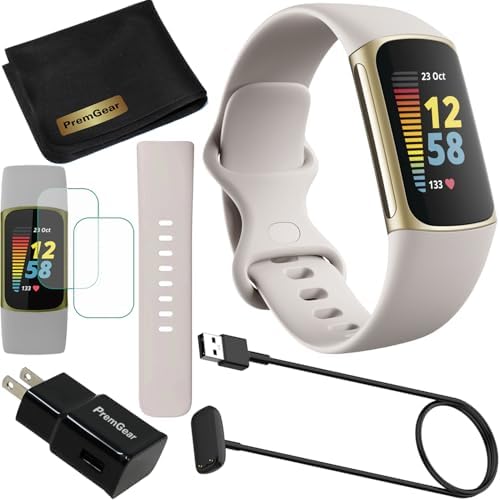
Fitbit publishes up to seven days of battery life for a fully charged Charge 5, a figure that shrinks noticeably when GPS sessions or the always-on display are used heavily. The Inspire 3 is rated higher, at up to ten days, and the gap widens further in practice because it has no onboard GPS to drain. For anyone charging on a nightstand once a week, both are manageable; for anyone who forgets, the Fitbit Charge 5 Advanced Fitness with Graphite GPS with a power bundle adapter that keeps the cable question settled.
The Inspire 3 suits the opposite buyer: someone who wants stress management prompts, sleep insights, and a three-month health membership without paying for sensors they will not use. It is a straightforward value argument against the more capable Charge 5. For a closer look at the Inspire 3 models, the full range covers several band and colour options, and the Fitbit Inspire 3 Health & Fitness Midnight Black remains the most versatile configuration for daily wear.
Who Should Choose Which
Runners and cyclists get the clearest answer. Onboard GPS means the Charge 5 can log a route without a phone in the pocket, and the EDA sensor adds a recovery layer that pairs well with hard training blocks. The Inspire 3 relies on connected GPS, so a phone has to come along, which rules it out for phone-free outdoor sessions but suits gym work, walking, and swimming without issue.
Style-conscious buyers should try both on if possible. The Charge 5 accepts a wider spread of band options and metal-accent accessories, giving it more range across office and casual settings. The Inspire 3 is deliberately unobtrusive, a tracker for people who dislike the look of a screen on their wrist and would rather forget the device is there.
The deciding factor falls back to sensors and budget. Paying more for the Charge 5 buys ECG, EDA, and standalone GPS; staying with the Inspire 3 buys simplicity and a battery that stretches further between charges. Neither is the wrong tracker, but they are not interchangeable, and matching the device to actual habits prevents paying for features that never get used.
 Just Pick Your Favorite Stylish Watch online













Item Reviews