Two wearables arrive from companies with fundamentally different ideas about what a smartwatch should prioritize. The Samsung brand's Galaxy Watch7 extends the phone experience onto the wrist, while The Garmin brand's Vivoactive 6 functions as a training instrument that happens to tell time. Anyone choosing between them is really choosing between two philosophies, so this comparison focuses on the specifications and daily realities that matter most for a purchase decision. This guide serves as a professional reference for that decision, and it is worth bookmarking for later review.
| Feature & Selling Point |
Samsung Galaxy Watch7 |
Garmin Vivoactive 6 |
| Display Type |
Super AMOLED, 40mm or 44mm |
AMOLED, 390 x 390, 42mm |
| Case Sizes |
40mm and 44mm |
42mm (single size) |
| Battery Life (Smartwatch Mode) |
Up to 40 hours (always-on off) |
Up to 11 days |
| Operating System |
Wear OS 5 with One UI Watch |
Garmin proprietary OS |
| Processor |
Exynos W1000 (5nm, 3nm-class) |
Not publicly detailed by Garmin |
| Preloaded Sports Apps |
90+ workout modes |
80+ preloaded sports apps |
| Health Sensors |
BioActive sensor (heart rate, ECG, BIA), temperature |
Elevate heart rate, SpO2, HRV, sleep |
| GPS |
Dual-frequency GPS (L1 + L5) |
Built-in GPS with multi-band support |
| Water Resistance |
5 ATM + IP68 |
5 ATM |
| Sleep Tracking |
Advanced with sleep apnea detection |
Sleep score, stages, nap detection |
| Contactless Payments |
Samsung Wallet / Google Wallet |
Garmin Pay (limited banks) |
| Third-Party App Ecosystem |
Google Play Store (extensive) |
Connect IQ Store (curated) |
| Phone Compatibility |
Android only (full features) |
Android and iOS |
| Best Suited For |
Android users wanting a connected lifestyle |
Multi-day athletes and outdoor users |
| Key Selling Point |
Deep Galaxy ecosystem integration |
11-day battery with training focus |
| Band System |
Quick-release proprietary |
Quick Release (standard 20mm) |
The single most decisive difference in this table is battery life. Garmin rates the Vivoactive 6 at up to 11 days in smartwatch mode, according to Garmin's official product specifications, while the Galaxy Watch7 runs roughly a day and a half between charges. That gap shapes everything else: charging habits, sleep tracking reliability, and how the watch fits into a training week.
Battery Life and Charging Routines
The Galaxy Watch7 uses a 300mAh cell in the 40mm model and a larger 425mAh cell in the 44mm variant, with Samsung quoting up to 40 hours of typical use. In practice, enabling the always-on display or running continuous GPS brings that figure closer to a single day for many users, which makes a nightly charging ritual almost unavoidable. A comparison with the Galaxy Watch7 series shows incremental gains rather than a step change, so the charging picture is broadly familiar to anyone who has worn a recent Galaxy Watch.
The Garmin brand's counterpart takes the opposite approach. Garmin specifies up to 11 days in smartwatch mode for the Vivoactive 6 series, and several days of that figure survive even when GPS activities are logged regularly. The practical consequence is that the watch can be worn overnight for sleep and recovery data without careful battery planning, a detail that matters for weekly training loads. Neither device uses solar charging, so the trade-off is straightforward: more screen time and connected features on one side, far more endurance on the other.
Display, Design, and Build Quality
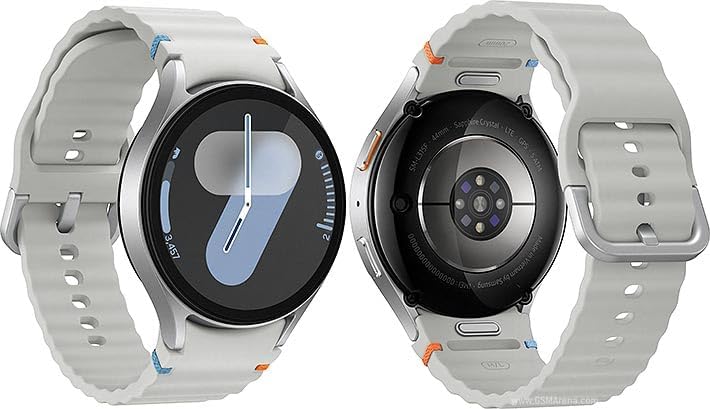
Samsung equips the Galaxy Watch7 with a Super AMOLED panel in 40mm and 44mm case sizes, wrapped in an aluminum frame with a sapphire crystal cover. The circular bezel and rotating digital ring give it a jewelry-like presence that suits office settings, evening events, and everything between. The strap uses Samsung's quick-release system, which makes swapping between a sport band and a leather option a thirty-second job.
Garmin's device settles on a single 42mm case with a 390 x 390 AMOLED display. The fiber-reinforced polymer case keeps the weight down, and the standard 20mm Quick Release band system means any off-the-shelf strap will fit. The design language is clean and unobtrusive rather than luxurious, which fits a product made to be worn during runs, swims, and hikes without attracting attention in a meeting room. Buyers who prioritize tactile quality and screen brightness will favor the Samsung panel; buyers who want a lightweight, forget-it's-there fit will prefer the Garmin's construction.
Health Monitoring and Sensor Suite
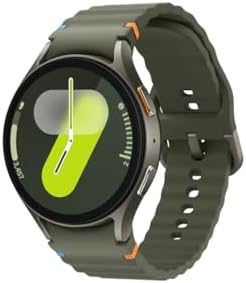
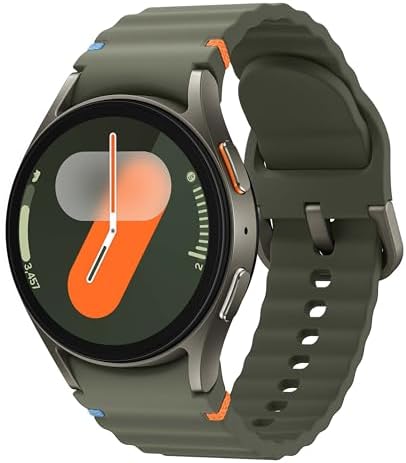
The Galaxy Watch7 carries Samsung's BioActive sensor, which combines optical heart rate, electrical ECG, and bioelectrical impedance analysis for body composition readings. It adds an infrared temperature sensor and supports sleep apnea detection in compatible regions, giving the watch a clinical-adjacent feature set that goes beyond step counting. For people interested in a broader health snapshot rather than pure athletic output, the Samsung Galaxy Watch7 40mm L300N GPS Green offers this full sensor array in the more compact case size.
Garmin's sensor package on the Vivoactive 6 centers on the Elevate heart rate monitor, pulse oximetry, heart rate variability, and detailed sleep scoring. Garmin has built its reputation on refining these core metrics over many product generations, and the Connect app turns the raw numbers into training readiness, body battery, and stress scores. The difference in philosophy is clear: Samsung measures more parameters, while Garmin interprets fewer parameters more deeply. Neither approach is objectively superior, but they appeal to different users.
Training Features and Sports Tracking
Garmin ships the Vivoactive 6 with more than 80 preloaded sports apps, per Garmin's own documentation. That includes running, cycling, swimming, golf, yoga, and dozens of niche disciplines, each with its own metrics screen and data fields. The watch also supports structured workouts, training plans, and recovery guidance, features that reflect Garmin's roots in endurance sport. Runners who care about pace targets, cadence, and interval structuring will find this a familiar environment.
Samsung counters with over 90 workout modes on the Galaxy Watch7, and the Wear OS platform gives access to third-party training apps through the Play Store. The dual-frequency GPS is a genuine improvement for urban runners, as it reduces the position drift that older single-band watches suffered in built-up areas. Where the Galaxy Watch7 lags is in post-activity analysis; Samsung Health presents the data clearly, but the depth of interpretation available in Garmin Connect remains a benchmark the industry measures itself against.
Smart Features, Connectivity, and Ecosystem
Wear OS 5 with One UI Watch gives the Galaxy Watch7 a genuine smartwatch experience. Google Wallet and Samsung Wallet support tap-to-pay almost anywhere, notifications are rich and actionable, and the watch can run standalone apps for music, messaging, and maps. For Android phone owners, the integration is frictionless, with features like camera control and Find My Phone working without extra setup. iPhone owners, however, are largely excluded from the full experience.
The Vivoactive 6 runs Garmin's proprietary operating system, which prioritizes stability and battery efficiency over app breadth. Notifications arrive reliably, music controls work, and Garmin Pay handles contactless payments where the user's bank is supported. The Connect IQ store offers watch faces, data fields, and small utilities, but it is not comparable in scope to Google's app library. Garmin's advantage is cross-platform freedom: the watch pairs with both Android and iOS phones, so switching phones does not force a watch upgrade.
Pricing Positioning and Long-Term Value
Both watches occupy the upper mid-range segment of the market. The Galaxy Watch7 competes on feature density per dollar, bundling advanced sensors, a premium display, and open app access into a single package. The Vivoactive 6 competes on longevity and focus, delivering fewer smart features but dramatically better endurance and a mature training platform. Renewed or open-box units of either model can shift the value calculation considerably, and buyers comfortable with that route often find the Garmin device at a lower effective cost over a multi-year ownership period because of its battery design and durable case materials.
A Final Take on Choosing Between Them
The choice comes down to the wearer's daily reality. Someone who checks messages on the wrist, uses tap-to-pay, and wants the most capable sensor array available in a smartwatch should look at the Galaxy Watch7. Someone who runs, cycles, or hikes several times a week and refuses to think about charging cables should look at Garmin vívoactive 6 Health and Fitness Gold GPS, which trades app quantity for endurance and analytical depth. Both watches succeed at what they set out to do, and both deserve serious consideration from anyone buying a wearable this year.
 Just Pick Your Favorite Stylish Watch online




















Item Reviews