Apple's annual wearable refresh raises a familiar question for anyone holding an older model: does the newest generation justify the upgrade, or does the outgoing model remain the smarter purchase? The Apple Watch Series 12 GPS + 46mm Cellular arrives with a redesigned Health Sensing System and the S11 chip, while Series 11 collection continues to deliver the core experience that made it a mainstream favorite. This comparison sets the two generations side by side as a reference for purchase decisions, covering the technical specifications and selling points that matter most to buyers.
| Feature & Selling Point |
Apple Watch Series 12 |
Apple Watch Series 11 |
| Processor |
S11 chip |
Prior-generation chip |
| Health Sensing |
All-new Health Sensing System |
Standard heart rate and HRV tracking |
| Heart Rate Monitoring |
Higher-frequency heart rate and HRV readings |
Standard-frequency readings |
| Case Sizes (Aluminum / Titanium) |
42mm |
42mm and 46mm |
| Case Sizes (Ceramic) |
43mm |
Not applicable |
| Case Depth |
9.7mm |
9.7mm |
| 46mm Display Resolution |
416 by 496 pixels |
416 by 496 pixels |
| Display Area (46mm) |
1220 sq mm |
1220 sq mm |
| Weight (Aluminum, GPS, 46mm) |
37.8 grams |
37.8 grams |
| Connectivity |
GPS and GPS + Cellular |
GPS and GPS + Cellular |
| iPhone Requirement |
iPhone 11 or later with iOS 27 or later |
Older iOS compatibility |
| Materials |
Aluminum, titanium, and ceramic case options |
Aluminum and titanium case options |
| Environmental Standard |
Mercury-, BFR-, and PVC-free |
Mercury-, BFR-, and PVC-free |
| Best Suited For |
Buyers wanting the latest sensor accuracy |
Everyday fitness and health tracking on a budget |
| Key Selling Point |
All-new Health Sensing System with S11 chip |
Proven health features at reduced cost |
The table reveals that the most consequential differences sit in sensing and silicon rather than in dimensions. Physical dimensions, display resolution, weight, and water-related construction remain effectively unchanged between the two generations, which means buyers choosing on fit and feel alone will find little to separate them. The Health Sensing System and the S11 chip are where Series 12 makes its case.
What the S11 Chip Changes in Daily Use
Apple introduced the S11 chip as the computational backbone of the Series 12 collection, and the practical effect is a higher ceiling for on-device processing. Wearable silicon rarely produces dramatic visual changes, but it governs how quickly sensor data is sampled, filtered, and translated into readings. A newer chip generally allows more frequent sampling without draining the battery at the same rate, which is precisely the constraint that limits how often a wrist-worn optical sensor can fire.
For Series 11 owners, the chip story is less about deficiency and more about positioning. The Series 11 hardware was designed around the sensor suite of its generation, and it handles notifications, workout tracking, contactless payments, and always-on display duty without complaint. A buyer who does not scrutinize heart rate granularity will not feel the processor gap in ordinary use. The gap becomes visible primarily in the quality and frequency of the biometric data the device records.
Health Sensing System: The Generational Divide
Apple's own newsroom announcement states that the Health Sensing System in Series 12 delivers higher-frequency heart rate and heart rate variability readings. That phrasing matters because HRV is a sensitive metric. It reflects beat-to-beat variation in the interval between heartbeats, and it is used as an indirect signal of recovery and autonomic nervous system activity. Measuring it well requires capturing many more data points than measuring a simple average heart rate.
Higher-frequency sampling therefore serves two purposes: it improves the fidelity of the HRV estimate itself, and it allows the watch to detect short-lived events that a slower sampling interval would miss entirely. An enhanced sensor stack does not change what a user does with the watch, but it changes how much confidence can be placed in the trends the watch reports.
Why Sampling Frequency Is Not Just a Spec Sheet Number
Optical heart rate sensors work by illuminating skin with green LEDs and measuring how much light is absorbed by pulsing blood. Motion, skin tone, wrist fit, and ambient light all introduce noise into that signal. Increasing the sampling rate gives the processing pipeline more raw material to filter against, which is why sensor upgrades and chip upgrades tend to arrive together rather than in isolation.
The Series 11 relies on the previous generation's sensor arrangement. Apple has not published frequency figures for either model in the material available, so the honest framing is directional: the newer system samples more often, and the older system does not. Buyers who track HRV trends seriously, or who train in conditions where heart rate lags, have a concrete reason to prefer the newer hardware.
Practical Implications for Fitness and Recovery Tracking
For a runner, cyclist, or swimmer, the value of better HRV sampling shows up in recovery guidance rather than in the workout itself. Heart rate during exercise is a comparatively easy measurement, because the signal is strong and the range is wide. Heart rate variability during rest or sleep is a far more delicate measurement, and it is the one the newer sensing system is designed to improve.
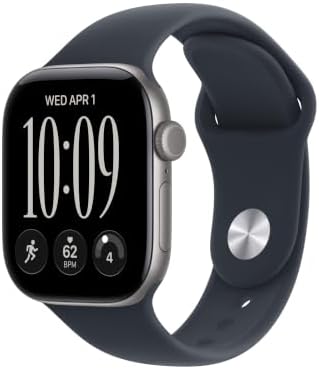
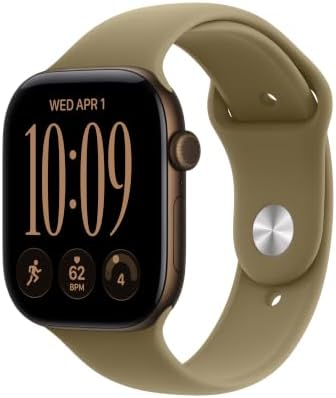
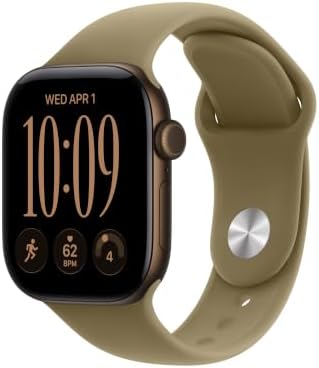
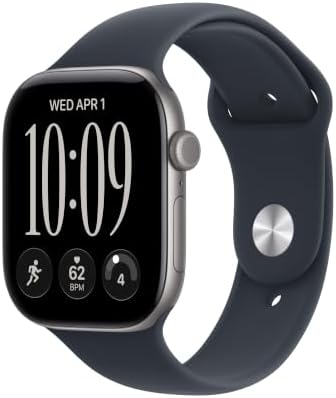
Anyone who uses a watch mainly for step counts, notification triage, and occasional workouts will find the Series 11 sensor package entirely sufficient. A configuration such as the Apple Watch Series 11 [GPS 46mm] remains a complete fitness tracker with sleep score, health monitoring, an always-on display, and water resistance, and those functions do not degrade simply because a newer model exists.
Case Sizes, Materials, and Fit
According to Apple's technical specifications, the Series 12 is offered in a 42mm aluminum and titanium size and a 43mm ceramic size, with a width of 37mm and a depth of 9.7mm for the aluminum and titanium variants. The Series 11 technical specifications list a 46mm case measuring 39mm wide and 9.7mm deep, with a 416 by 496 pixel display and a 1220 square millimeter display area.
The overlapping dimensions are the headline here. Weight, depth, and pixel density carry over, so a buyer upgrading from Series 11 to Series 12 will not experience a dramatically different object on the wrist. What changes is the range of finishes. The introduction of a ceramic case option on Series 12 widens the material palette beyond aluminum and titanium.
Ceramic as a New Material Direction
Ceramic occupies an interesting position in watchmaking. It resists scratching far better than aluminum, holds color without anodizing or coating, and feels denser and cooler against the skin than metal. It is also heavier and more brittle under sharp impact. Apple's decision to introduce a ceramic variant in the Series 12 lineup, at a 43mm size that does not correspond exactly to the metal sizes, suggests a deliberate differentiation rather than a simple size addition.
For buyers who value surface durability and a finish that does not show hairline scuffs, ceramic is the more compelling argument for the newer generation than any dimension change. The Series 11 offers jet black aluminum among its configurations, which addresses the same cosmetic concern through a different route.
Software Requirements and Ecosystem Longevity
Apple specifies that the Series 12 requires an iPhone 11 or later running iOS 27 or later. That requirement is worth checking before purchase, because it determines whether an existing phone can pair with the newer watch at all. Older iPhone models that remain functional with previous watch generations may not meet the Series 12 threshold.
This is where the Apple brand's ecosystem calculus becomes relevant. The Series 11 supports older iOS versions, which makes it the practical choice for anyone running an aging iPhone who still wants a current-generation wearable. Compatibility, not capability, can be the deciding factor.
Longevity also runs in the other direction. A newer watch will continue to receive watchOS updates for longer, so the Series 12 has a longer useful service life ahead of it if the paired iPhone is also current. Buyers planning to upgrade their phone within a year or two should weigh that forward compatibility heavily.
On the environmental side, both generations share the same responsible material standard, with Apple listing mercury-, BFR-, and PVC-free construction across the Series 12 and Series 11 comparison. There is no differentiation to be found there.
The choice between these two generations ultimately comes down to what a buyer intends to measure. Series 12 exists to capture biometric data more often and more precisely, and its ceramic option and newer chip support that mission. Series 11 remains a fully capable health and fitness companion whose sensor suite still covers everyday tracking, sleep scoring, and workout logging, and it pairs with a wider range of iPhones. For a buyer whose priority is the sharpest available heart rate and HRV data, the newer generation is the only one that delivers it. For everyone else, the previous generation continues to earn its place on the wrist.
 Just Pick Your Favorite Stylish Watch online












Item Reviews