The Google Pixel Watch 4 and the Samsung Galaxy Watch8 represent two distinct answers to the same question: how should a modern smartwatch integrate with the phone in your pocket? Both arrived in 2025 with updated silicon, refined health sensors, and deeper AI integration, yet they pull in different directions. The Pixel Watch 4 leans on Google's Gemini assistant and Fitbit's health platform, while the Galaxy Watch8 pushes Samsung's Cushion design language and a broader Galaxy ecosystem. This guide is built as a practical, decision-ready reference for anyone weighing these two models, so it is worth bookmarking and sharing before making a purchase.
| Feature and Selling Point |
Google Pixel Watch 4 |
Samsung Galaxy Watch8 |
| Case Sizes Available |
41mm and 45mm |
40mm and 44mm |
| Display Type |
Actua 3.0 AMOLED, 3000 nits peak |
Super AMOLED, 3000 nits peak |
| Processor |
Qualcomm Snapdragon W5 Gen 2 |
Exynos W1000 (3nm) |
| Operating System |
Wear OS 6 with Gemini built in |
Wear OS 6 with One UI 8 Watch |
| Battery Capacity |
~30 hours typical use (45mm) |
Up to 40 hours with power saving |
| Charging Speed |
Fast charging, ~50\% in 30 min curved charger |
Fast wireless charging |
| Display Protection |
Corning Gorilla Glass 5 |
Sapphire crystal |
| Water Resistance |
5 ATM / IP68 |
5 ATM / IP68 |
| Health Sensors |
Heart rate, SpO2, skin temperature, ECG |
Heart rate, SpO2, skin temperature, ECG, BioActive sensor |
| Key Selling Point |
Gemini AI plus Fitbit integration |
Cushion design plus Energy Score |
| Sleep Tracking |
Fitbit sleep stages, Sleep Score |
Sleep Coaching with AI insights |
| Navigation |
GPS, GLONASS, Galileo, BeiDou |
GPS, GLONASS, Galileo, BeiDou |
| Connectivity |
Wi-Fi, Bluetooth 5.3, NFC, LTE optional |
Wi-Fi, Bluetooth 5.3, NFC, LTE optional |
| Ecosystem Lock-In |
Requires Android 10 or later |
Galaxy phone for full features |
| Best Use Case |
Fitbit users, Gemini-centric workflows |
Galaxy ecosystem, wellness coaching |
The most consequential differences sit in three places: the processor architecture, the display protection, and the ecosystem gravity. The Galaxy Watch8 runs on Samsung's 3nm Exynos W1000 and carries a sapphire crystal face, both of which favor long-term durability and snappy performance. The Pixel Watch 4 counters with Qualcomm's Snapdragon W5 Gen 2 and a curved charger that improves contact during charging. The table above should serve as a quick-reference map, but the sections below unpack what those specifications actually mean during daily use.
Design Philosophy and Build Materials
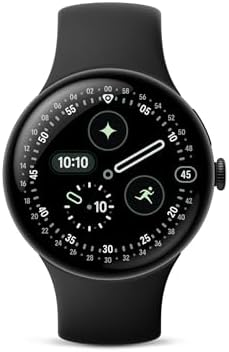
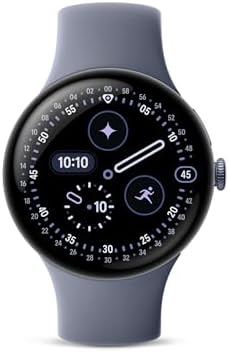
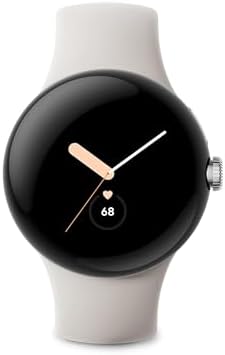
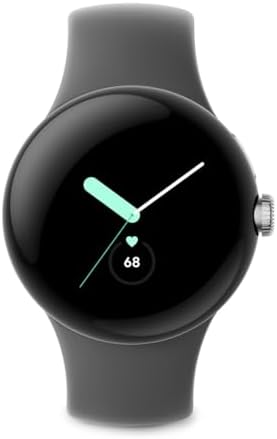
The Google Pixel Watch 4 retains the domed, pebble-like silhouette that has defined the Pixel Watch line since its first generation. That curvature is not decorative; it allows the Actua 3.0 display to wrap slightly toward the wrist, which improves readability during running or cycling. The 45mm variant in Moonstone with an Active Band, for example, pairs a matte aluminum case with a soft-touch fluoroelastomer strap, delivering a weight that stays unobtrusive during sleep tracking.
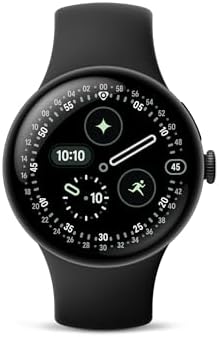
Meanwhile, the Samsung Galaxy Watch8 introduces what Samsung calls its Cushion design, a profile that smooths the transition between case and bezel. On the 40mm Bluetooth model in Graphite, this translates to a watch that sits flatter against the wrist than some earlier Galaxy Watch generations. The sapphire crystal covering the Super AMOLED panel is a notable material upgrade, offering scratch resistance that Gorilla Glass 5 on the Pixel Watch 4 cannot fully match. For anyone who regularly brushes their wrist against door frames or gym equipment, that distinction matters over a multi-year ownership period.
On the software side, both watches run Wear OS 6, but each brand layers its own interface on top. The Google brand's approach prioritizes a clean, tile-based layout that surfaces Gemini suggestions without burying them under menus. Samsung, by contrast, uses One UI 8 Watch, which reorganizes tiles around its health platform.
Performance and Battery Endurance
Raw performance on the Galaxy Watch8 benefits from the 3nm Exynos W1000, which handles app switching and on-device AI tasks without visible lag. The Pixel Watch 4's Snapdragon W5 Gen 2 is no slouch, but it relies on a 4nm process, so sustained heavy use, such as turn-by-turn navigation with the screen always on, can draw more power.
Battery Life in Real Scenarios
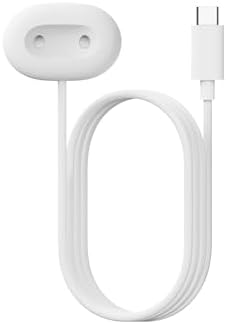
Google states that the Pixel Watch 4 delivers roughly 30 hours of typical use, and that figure drops to around 15 hours with the always-on display enabled and GPS active. Samsung markets the Galaxy Watch8 at up to 40 hours in power-saving mode, with normal use closer to 30 hours. The practical takeaway is that neither device escapes the nightly charging ritual if you use sleep tracking. A 30-minute charge gets the Pixel Watch 4 to roughly half capacity thanks to its curved charger, which maintains better contact than flat charging pucks.
Processor Demands and AI Features
Gemini built into the Pixel Watch 4 handles voice queries, message drafting, and context-aware suggestions directly on the wrist. Samsung's Galaxy AI on the Watch8 focuses more on health synthesis, generating an Energy Score from sleep, activity, and heart rate variability data. These are fundamentally different AI philosophies: Google wants to be your assistant, Samsung wants to be your coach.
Health and Fitness Tracking Capabilities
Health tracking is where the two watches diverge most in user experience, even though the underlying sensor arrays are similar. Both support ECG, SpO2, skin temperature, and continuous heart rate monitoring. The difference lies in the software interpretation.
- Fitbit integration on Pixel Watch 4: Sleep stages, Daily Readiness Score, Active Zone Minutes, and a library of guided workouts.
- Samsung Health on Galaxy Watch8: Sleep Coaching, Running Coach, Energy Score, and Body Composition analysis via BioActive sensor.
- Third-party app support: Both watches access the Google Play store, but Fitbit Premium unlocks deeper analytics on the Pixel side.
For runners, the Samsung Running Coach provides real-time form feedback during workouts, a feature that has matured over several Galaxy Watch generations. Fitbit's equivalent on the Pixel Watch 4 emphasizes recovery metrics instead. Choosing between them depends on whether you want in-the-moment coaching or post-session readiness guidance.
Ecosystem Integration and Software Support
The Samsung brand's ecosystem rewards users who carry a Galaxy phone. Features like Camera Controller, Find My Phone, and seamless Galaxy Buds switching work best, or in some cases only work, when paired with a Samsung handset. The Galaxy Watch8 lineup reaches its full potential within this closed loop, and Samsung's official compatibility documentation confirms that full feature access requires a Galaxy device running a recent version of One UI.
Google's positioning is more platform-agnostic. The Pixel Watch 4 works with any Android phone running Android 10 or later, and Gemini features function across brands. That openness is a genuine advantage for users who switch phones or prefer a non-Samsung Android device. However, some Fitbit features require a Fitbit account, and the best health insights sit behind the Fitbit Premium subscription.
In terms of the broader Pixel Watch line, Google has committed to a multi-year update policy, and Wear OS 6 brings improvements to battery management and app responsiveness. The Google Pixel Watch 4 (45mm) is the current sweet spot for screen size and battery balance in that lineup, while the smaller 41mm version suits narrower wrists.
Which Smartwatch Fits Your Wrist and Workflow
The decision ultimately comes down to the phone in your pocket and the data you care about. If you carry a Galaxy handset, the Samsung Galaxy Watch 8 (2025) 40mm offers synergy that is hard to ignore: camera control, Buds switching, and Samsung Health's Energy Score all operate without friction. The sapphire crystal and 3nm chip also give it a durability and performance edge for heavy users.
If you use a non-Samsung Android phone or already rely on Fitbit for sleep and recovery data, the Pixel Watch 4 is the more natural fit. Its Gemini integration and Fitbit ecosystem make it a stronger standalone device rather than a companion to one specific phone brand. Neither watch is objectively superior across every category; each optimizes for a different user profile.
 Just Pick Your Favorite Stylish Watch online












Item Reviews