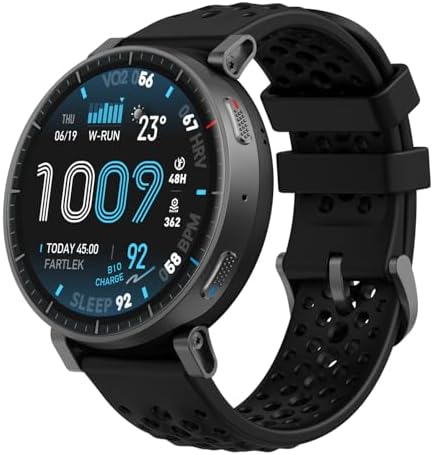
The Amazfit Active Max pairs a 1.5-inch AMOLED display with a 48mm case and a stated 25-day battery rating, positioning it as an endurance-focused everyday smartwatch. The Amazfit Balance 2 takes a different route, combining a 47mm case, sapphire glass, dual band GPS, and a 21-day battery rating aimed at professionals who train seriously and want durability baked into the materials.
Both models come from the same brand, share the same 1.5-inch AMOLED display size, and run the same 170+ sport mode library, but they diverge sharply once you look at case dimensions, glass type, GPS architecture, and what kind of athlete or commuter each one is built for. This comparison is designed as a practical buying reference for anyone deciding between the two, and it is worth bookmarking before you commit to either model.
| Decision Factor |
Amazfit Active Max |
Amazfit Balance 2 |
| Battery Life (Rated) |
Up to 25 days |
Up to 21 days |
| GPS Architecture |
Standard single band GPS |
Dual band GPS |
| Glass Type |
Standard tempered glass |
Sapphire glass |
| Case Size |
48mm |
47mm |
| Display |
1.5" AMOLED |
1.5" AMOLED |
| Special Training Modes |
Standard fitness tracking |
Hyrox and Golf modes |
| Onboard Storage |
4GB |
Standard onboard storage |
| Offline Maps |
Yes |
Yes |
| Sport Modes |
170+ |
170+ |
| Health Tracking |
Heart rate and sleep tracker |
Heart rate and sleep tracker |
| Water Resistance |
Water-resistant |
Water-resistant |
| Compatibility |
iOS and Android |
iOS and Android |
| Charging |
Magnetic charging base |
Magnetic charging base |
| Target User |
Everyday users wanting maximum battery |
Professionals and serious athletes |
| Key Selling Point |
25-day battery and 4GB storage |
Sapphire glass and dual band GPS |
The table makes the split clear: the Active Max leans on battery endurance and onboard storage, while the Balance 2 leans on tougher glass and dual band GPS. Those four differences, namely battery, glass, GPS tier, and specialized training modes, are the ones that should drive your decision rather than the identical screen size or sport mode count.
Battery Endurance and Everyday Wearability
The most noticeable spec difference between the two watches is the rated battery figure. The Amazfit brand's Active Max carries a 25-day rating, while the Balance 2 is rated at 21 days. In practice, that gap matters most for people who travel frequently, work long shifts, or simply dislike placing a watch on a charger every week.
Case sizing also affects comfort over long wearing periods. The Active Max uses a 48mm case, which is slightly larger than the Balance 2's 47mm footprint. On larger wrists, the difference is minor, but on medium or smaller wrists the 47mm Balance 2 tends to sit more flush against the arm. Both use a 1.5-inch AMOLED panel, so screen real estate and text legibility are effectively the same across the two, and neither sacrifices display brightness to achieve its battery rating.
Part of why the Active Max can stretch to 25 days is that it does not carry the sustained battery drain of dual band GPS polling. Single band GPS consumes less power per tracking hour, which is a trade-off worth understanding before choosing between the two, since the same hardware choice that saves battery also determines how accurate your route trace will be in difficult terrain.
GPS Accuracy and Offline Navigation
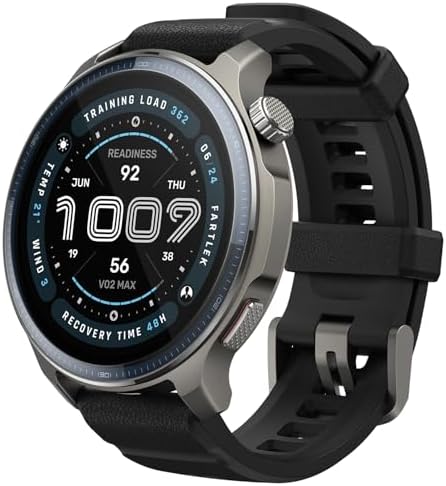
Route tracking is where the two watches separate most clearly for runners, hikers, and cyclists. The Amazfit Balance 2 Smart Watch 47mm GPS can lock onto multiple satellite frequency bands simultaneously rather than relying on a single band. Dual band positioning is generally more resistant to signal reflection and drift in dense urban areas, forest canopies, and steep valleys, where single band receivers often produce jagged or shortened distance readings.
The Amazfit Active Max Smart Watch 1.5" 48mm GPS remains perfectly adequate for city running, park walks, and road cycling where the sky view is largely unobstructed. Both watches support offline maps, so downloaded route tiles remain available without a phone connection. That shared feature is more important than it first appears, because it means neither watch forces you to carry a handset simply to find your way back on an unfamiliar trail.
The practical takeaway is straightforward. If your training happens mostly in open environments and you value the longer battery window, the Active Max GPS implementation covers the job. If your routes regularly pass through tall buildings, tree cover, or canyon terrain, dual band tracking on the Balance 2 is the more dependable tool.
Materials, Glass, and Long-Term Durability
Durability is the second major dividing line. The Balance 2 is fitted with sapphire glass, a material that ranks near the top of commonly used watch coverings for scratch resistance. Sapphire is harder than tempered glass, so it resists the everyday abrasions that come from brushing against door frames, gym equipment, car doors, and rock surfaces. For anyone who wears a watch during manual work or outdoor climbing, that single material choice can extend the usable life of the device considerably.
The Active Max uses standard tempered glass, which is still tough enough for ordinary daily wear and handles knocks without issue, but it will show fine surface scratches sooner under the same conditions. Neither watch is described as a dedicated diving instrument, and both are marketed with water resistance rather than professional dive certification, so swimming and showering are within scope while deep water activity is not.
Amazfit's broader design language across the Active and Balance lines treats the wrist as both a training tool and a style object. The Balance 2's sapphire front panel reflects that positioning, giving the watch a clearer, harder surface that holds its appearance over years of use. The Active Max instead prioritizes a lighter build and a lower maintenance threshold, which suits wearers who replace devices more frequently and prefer not to worry about protecting the crystal.
Training Features and Specialized Sport Modes
Both watches list 170+ sport modes, covering the usual range from running, cycling, and swimming through to strength training, yoga, and team sports. On paper, the mode library is identical, so the difference lies in the specialty modes layered on top.
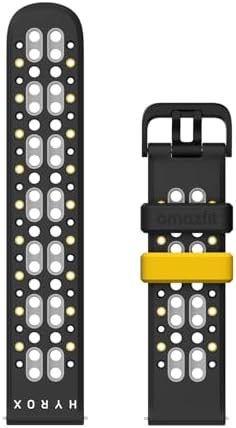
The Balance 2 adds Hyrox and Golf modes. Hyrox is a structured race format combining running with functional workout stations, and having a dedicated mode means the watch can segment those intervals rather than forcing athletes to log them as generic strength and run sessions. Golf mode is aimed at players who want distance-to-green information and round tracking on the wrist instead of reaching for a separate device or phone app. Neither mode appears on the Active Max, which keeps a more general fitness-focused profile.
Both watches cover the core health metrics that most buyers now expect: continuous heart rate monitoring and sleep tracking. The Active Max also offers 4GB of onboard storage, which allows music or audio content to be carried locally so a phone can stay at home during a run. Taken together, the Active Max leans toward lifestyle convenience and entertainment storage, while the Balance 2 leans toward structured, performance-oriented training data.
Software, Compatibility, and Charging
Both models work with iOS and Android handsets, which removes the platform lock-in problem that some smartwatches still carry. If you switch between an iPhone and an Android device, either watch will continue to pair and sync without forcing you into a different ecosystem.
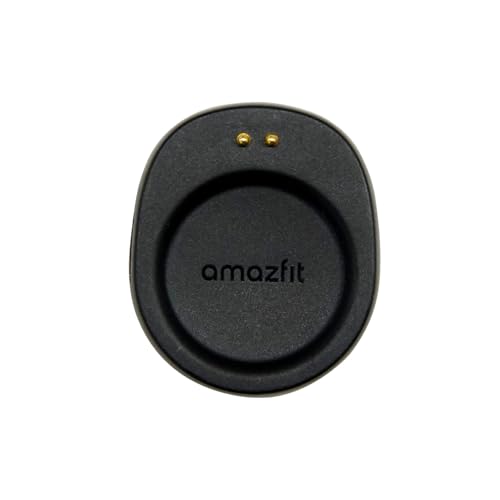
Charging is handled through a magnetic charging base on both watches. Because the two devices use compatible charging hardware, it is possible to consolidate accessories, including the Amazfit Charging Base for Various Models, rather than purchasing a separate dock for each. For households with more than one Amazfit device, that cross-compatibility reduces cable clutter on a desk or bedside table.
Offline maps deserve a further note in this section because they depend on software rather than hardware. Both watches let you download route data in advance, then navigate without a live connection. For trail runners and hikers, this is the feature that converts a general-purpose smartwatch into something you can trust in areas without reliable cellular coverage, and it is one of the few capabilities where the two models are genuinely equal.
Which Amazfit Model Fits Your Routine
The choice comes down to what you value more: the longest possible time between charges, or the most reliable tracking and toughest glass. The Amazfit Active Max is the better fit for commuters, casual runners, and anyone who wants a large AMOLED screen, music storage, and a battery that can stretch to 25 days. The Balance 2 is the better fit for structured athletes, Hyrox competitors, golfers, and people who train in challenging environments where dual band GPS and sapphire glass earn their keep.
Neither watch is a compromise pick. They are built on the same display foundation and the same sport mode library, but each one optimizes a different part of the experience. Battery endurance and storage define the Active Max, while positioning accuracy and material resilience define the Balance 2. Matching that optimization to how you actually wear a watch is the surest way to end up satisfied rather than simply spec-sheet impressed.
 Just Pick Your Favorite Stylish Watch online












Item Reviews