The Fitbit Charge 6 weighs roughly 22 grams and runs for several days per charge, while the Apple Watch Series 11 pairs a 46mm always-on Retina display with an approximately 24-hour battery. Those two numbers frame the entire decision between a dedicated fitness band and a full smartwatch, and they shape how each device fits into daily life from the moment it goes on the wrist.
This guide compares the Google Fitbit Charge 6 and the Apple Watch Series 11 across the dimensions that matter most to buyers: display, battery, sensors, health features, smart capability, materials, and price positioning. The table below condenses those decision points into a single reference worth keeping for anyone weighing a tracker against a smartwatch.
| Feature & Selling Point |
Fitbit Charge 6 |
Apple Watch Series 11 |
| Form Factor |
Slim tracker band, 1.04-inch screen |
Rectangular smartwatch case, 42mm / 46mm |
| Display |
AMOLED touchscreen, always-on option |
Always-On Retina, edge-to-edge |
| Battery Life |
Several days per charge |
Approximately 24 hours |
| Charging Time |
Fast charge, full in about 2 hours |
Fast charge, quick top-ups supported |
| Water Resistance |
5 ATM, swimproof |
50 metres, swimproof |
| Heart Rate Sensor |
Multi-path optical heart rate, continuous tracking |
Optical heart rate, high/low alerts, background readings |
| ECG / EKG |
Yes, compatible with the ECG app in supported regions |
Yes, ECG app in supported regions |
| Blood Oxygen Monitoring |
SpO2 tracking during sleep |
Blood Oxygen app in supported regions, overnight readings |
| Sleep Tracking |
Sleep stages, sleep score, 30-day sleep profile |
Sleep stages, sleep score, overnight vitals |
| GPS |
Built-in GPS |
Built-in GPS, GLONASS |
| Post-Workout Insights |
Active Zone Minutes, Cardio Load, Daily Readiness Score |
Training Load, Vitals app, Workout Buddy |
| Smart Features |
Notifications, Google Wallet, Google Maps, YouTube Music controls |
Full watchOS app store, calls, messages, wallets, on-wrist apps |
| Subscription |
Premium tier for advanced insights; 3-month Google Health Premium often included |
No mandatory subscription for core features |
| Case Materials |
Aluminum, glass front |
Aluminum or titanium, Ion-X or sapphire glass |
| Size / Weight |
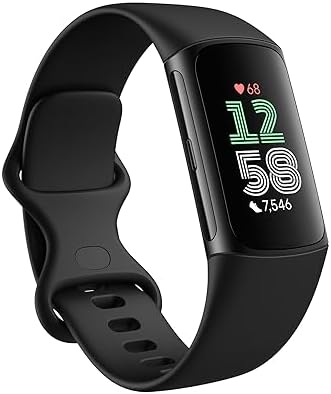
Approximately 22 g, 37 x 23 mm case |
42mm and 46mm cases, approximately 30 to 50 g depending on case |
| Typical Price Band |
Mid-range tracker pricing |
Premium smartwatch pricing |
| Best Fit |
Users who prioritise multi-day battery, slim fit, and focused workout metrics |
Users who want a full smartwatch experience with broad health, safety, and app features |
The most consequential differences come down to battery life and breadth of capability. The Charge 6 keeps going for multiple days between charges, while the Apple Watch Series 11 runs for about a day. In exchange for that runtime, the Series 11 brings a larger display, on-wrist apps, and a wider feature set that reaches well beyond fitness tracking.
For most buyers, the right choice depends on which of these two trade-offs feels more important in daily use. The sections below unpack each dimension in detail so the decision rests on real criteria rather than marketing claims.
Form and Wearing Experience
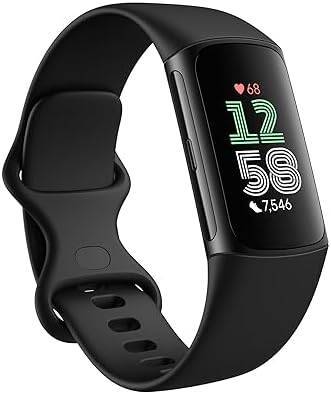
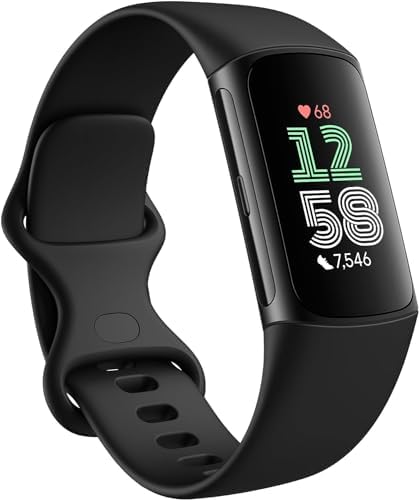
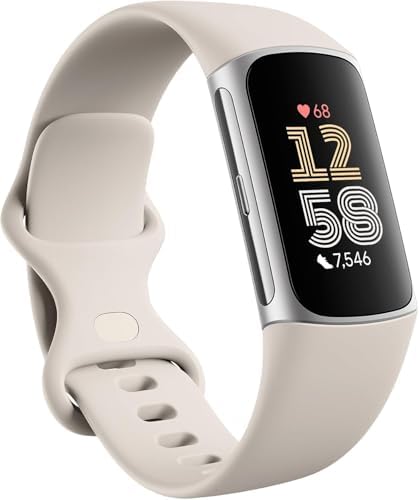
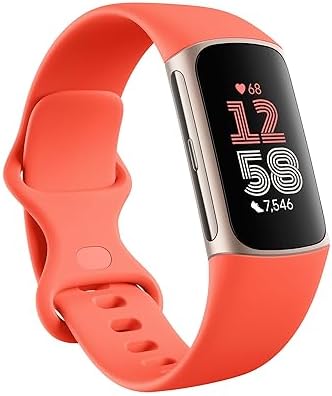
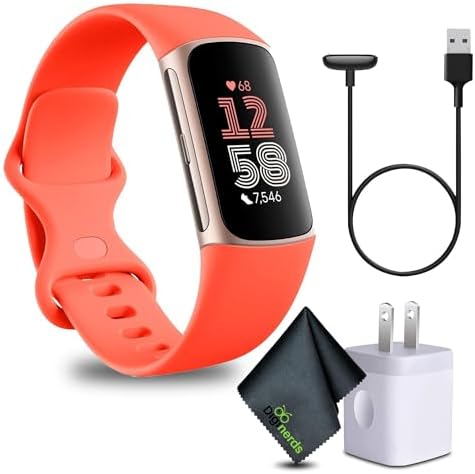
The Google Fitbit Charge 6 is designed to disappear on the wrist. At roughly 22 grams, it feels closer to a slim bracelet than a watch, which matters for people who wear a traditional timepiece on the other arm or who dislike bulk during sleep. The band sits close to the skin, and the narrow AMOLED screen is large enough for step counts, heart rate, and workout prompts without inviting distraction.
The Apple Watch Series 11 takes the opposite stance. Its 42mm and 46mm aluminum or titanium cases give Apple enough surface area for complications, app icons, and full-color workout summaries. The always-on Retina display is brighter and more readable in direct sun, and the digital crown plus side button provide tactile control that a touch-only band cannot match.
That physical difference shapes the ownership experience. A band that disappears is easy to wear around the clock for sleep tracking and continuous heart-rate data. A watch that is visible and interactive invites the wearer to check messages, quick-start a workout, or glance at a weather complication. Neither approach is wrong, but they suit different habits and different wrists.
Tracking Accuracy and Sensor Array
Both devices share a core sensor suite. Each offers continuous optical heart-rate monitoring, blood oxygen tracking, ECG capability in supported regions, sleep-stage analysis, and built-in GPS. That overlap makes the comparison less about what data each device can collect and more about how the data is packaged, scored, and presented to the wearer.
Heart Rate and Workout Detection
Google positions the Fitbit Charge 6 as a health and fitness tracker first. Its multi-path optical heart rate sensor is designed to maintain a steady reading during vigorous movement, and automatic exercise recognition starts logging compatible workouts without any manual input. That suits people who run, cycle, or swim and want a clean record without pausing to adjust settings mid-session.
The Apple Watch Series 11 uses its optical heart sensor in combination with the wider watchOS ecosystem. A workout can be started from the Workout app or by asking Siri, and the watch will record splits, heart-rate zones, and recovery metrics. Apple's background heart-rate measurements and high/low heart-rate alerts provide ongoing context outside formal exercise sessions.
Recovery and Readiness
Fitbit's Daily Readiness Score combines recent activity, sleep quality, and heart-rate variability into a single recommendation to push harder or take it easy. The Charge 6 benefits from this framework, giving structure to training decisions without requiring the wearer to interpret raw numbers.
Apple's approach is more open-ended. The Series 11 surfaces training load, overnight vitals, and a sleep score, but it expects the wearer to draw connections between them. People who enjoy analysing their own trends will appreciate the depth; people who want a clear rest-today or go-today signal may find Fitbit's scoring more direct.
Battery, Charging, and Daily Practicality
Battery life is the single most tangible divider. The Fitbit Charge 6 typically lasts several days, which means sleep can be tracked every night and the band charged during a short break. The Apple Watch Series 11 offers approximately 24 hours on a typical charge, a figure that requires a daily charging routine for most users. Sleep tracking is still possible by charging during a morning or evening window, but the rhythm is more demanding.
For people who travel frequently, work long shifts, or simply dislike managing another rechargeable device, the Charge 6's longer runtime is a real advantage. For people who dock their watch on a nightstand every night anyway, the gap matters less.
Charging speed is competitive on both devices, with quick top-ups supported. The difference is not how fast they refill but how often they need to be refilled.
Features Beyond Fitness
The Apple Watch Series 11 is a general-purpose wrist computer that also happens to track fitness. It handles phone-free calls, messages, music, contactless payments, and a massive app store. Safety features like fall detection and emergency calling add value well beyond exercise, and the always-on display makes everyday tasks genuinely convenient.
The Fitbit Charge 6 includes useful connected features such as notifications, Google Wallet for payments, Google Maps directions, and YouTube Music controls. It is more capable than the trackers that came before it, but its core purpose remains health and activity tracking rather than ecosystem-level app access.
For anyone mapping out the full landscape of each ecosystem, Fitbit's health-first philosophy carries into every model it makes, while Apple's connected-wristwatch approach extends far beyond fitness into lifestyle territory. Buyers leaning toward the tracker side can browse Charge 6 models, and those drawn to the smartwatch route can compare Series 11 sizes and finishes.
Design Quality, Materials, and Durability
The Charge 6 uses an aluminum case with a reinforced glass front and a band that swaps easily without tools. It is designed to be practical rather than precious, and its 5 ATM water rating covers swimming and showering.
The Apple Watch Series 11 offers more finish options. Aluminum models balance weight and cost, while titanium versions deliver a more premium feel with sapphire glass for extra scratch resistance. Its 50-metre water resistance and IP6X dust resistance apply across the line, so buyers can choose a model that matches their environment without sacrificing core durability.
Which Should You Buy
The case for the Fitbit Charge 6 is straightforward: several days of battery, a slim form factor that works day and night, a full sensor suite, and a lower price. It is the better choice for someone who wants accurate fitness and sleep tracking without needing a full smartwatch.
The case for the Apple Watch Series 11 is breadth: a larger display, a wide app ecosystem, stronger safety features, broader health monitoring beyond baseline fitness, and more sophisticated post-workout metrics such as Training Load. It is the better choice for someone who wants one device to cover workouts, communication, and everyday connected tasks.
There is no single winner. The deciding criteria are battery, form factor, and how much functionality you want on your wrist. The Google Fitbit Charge 6 takes a focused approach, while the Apple Watch Series 11 [GPS 46mm] serves a broader daily role. Choosing between them is really choosing between two philosophies of what a wrist companion should be.
 Just Pick Your Favorite Stylish Watch online












Item Reviews