The Google Pixel Watch 4 and the Samsung Galaxy Watch8 answer the same question in two very different ways: what should a modern smartwatch feel like on the wrist? Google's fourth-generation flagship keeps the domed, pebble-like silhouette introduced in 2022 and now ships with user-replaceable screens and batteries, while Samsung moves to a squarer cushion case with sapphire crystal and MIL-STD-810H testing. The table below distills the specifications that actually change a purchase decision.
| Decision Factor |
Google Pixel Watch 4 |
Samsung Galaxy Watch8 |
| Case Sizes |
41mm and 45mm |
40mm and 44mm |
| Display Type |
Actua 360 dome, up to 3,000 nits |
Super AMOLED, up to 3,000 nits |
| Glass Protection |
Custom 3D Corning Gorilla Glass |
Sapphire crystal |
| Processor |
Qualcomm Snapdragon W5 Gen 2 |
Exynos W1000 (5-core, 3nm) |
| Operating System |
Wear OS 6 with Gemini built in |
One UI 8 Watch with Galaxy AI |
| Battery Life |
Up to 30 hours (Always-On on) |
Up to 30 hours (Always-On off) |
| Charging Speed |
25\% faster than Pixel Watch 3 |
Standard wireless charging |
| Health Sensors |
Heart rate, SpO2, skin temperature, cEDA |
BioActive 3-in-1, ECG, skin temperature |
| Sleep Features |
Sleep Score, apnea detection |
Sleep Coaching, Energy Score, apnea detection |
| Durability Rating |
5 ATM + IP68 |
5 ATM + IP68 + MIL-STD-810H |
| Repairability |
User-replaceable screen and battery |
Service center only |
| Connectivity |
Wi-Fi, Bluetooth, LTE, dual-band GPS |
Wi-Fi, Bluetooth, LTE, dual-band GPS |
| Phone Requirement |
Android 10 or later |
Android 12 or later, 1.5GB RAM minimum |
| Band System |
Proprietary slim attachment |
One-click quick-release |
| On-Wrist Assistant |
Gemini built in |
Gemini and Bixby |
| Best For |
Long-term owners who value repairability |
Galaxy phone users who want maximum durability |
Three rows drive the final decision for most buyers. The Pixel Watch 4 offers user-replaceable screens and batteries, a policy that lowers long-term ownership cost. The Galaxy Watch8 counters with sapphire crystal and MIL-STD-810H shock and temperature testing, meaning Samsung expects the watch to survive drops and temperature swings that the Pixel is not rated for. Meanwhile, both watches claim up to 30 hours of battery, but Google measures that figure with the Always-On display active while Samsung measures it with Always-On disabled, so real-world runtime depends heavily on settings.
The Pixel Watch 4 Experience: Wear OS and Physical Repair
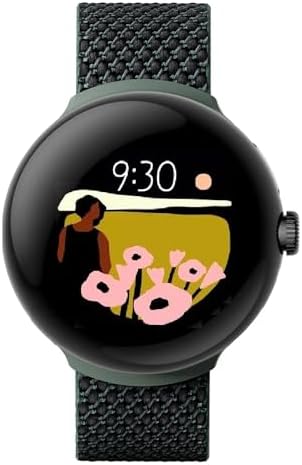
Google's fourth-generation flagship refines the rounded body introduced in 2022 rather than reinventing it. Sizing splits into 41mm and 45mm variants, and the larger option suits most adult wrists without dominating the forearm. The domed glass rises above the bezel, a deliberate choice that improves swipe gestures from the screen edge but also increases the chance of contact with door frames and gym equipment.
Under that glass sits the Actua 360 panel, a display architecture that extends the visible area closer to the case edge than a flat panel would allow. Google rates peak brightness at up to 3,000 nits, a figure that matters most on bright cycling routes rather than indoors. Wear OS 6 runs the interface, and Gemini is available as an on-wrist assistant rather than a voice command that simply opens a phone app. The Snapdragon W5 Gen 2 platform pairs with a co-processor that handles ambient tasks, which is one reason Google quotes up to 30 hours of use with the Always-On display active.
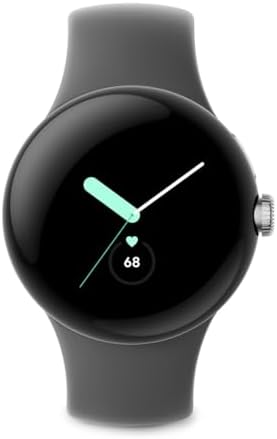
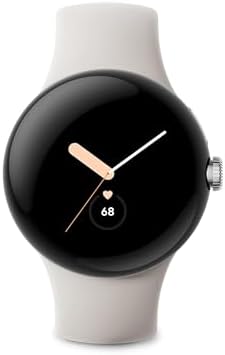
The most unusual selling point has nothing to do with sensors. Google designed the Pixel Watch 4 so that the screen and battery can be replaced with tools and parts available to ordinary owners, an approach that extends the working life of the watch and contrasts with the sealed construction common in this category. For buyers who keep a device for four or five years rather than two, that policy is a genuine tiebreaker. Shoppers weighing the two designs can look at the Google Pixel Watch 4 45mm Wi-Fi as a direct comparison point against the Samsung alternative.
Fitness tracking follows the cEDA-based stress monitoring first introduced on the Pixel Watch 3, combined with continuous heart rate, blood oxygen, and skin temperature readings. Google's health data flows into the Fitbit app ecosystem, which remains one of the more polished dashboards for sleep and readiness metrics. Running metrics are accurate enough for casual training but do not reach the depth of a dedicated multisport watch, so athletes with structured triathlon plans should look elsewhere.
Galaxy Watch8: Military Durability and Galaxy AI
Samsung redesigned the case shape for this generation, replacing the rounded profile of the Watch6 and Watch7 with a squarer cushion form. The 40mm and 44mm sizes are each slightly thinner than their predecessors, and the front of the watch is now protected by sapphire crystal rather than the previous glass specification. That single change matters for anyone who has scratched a smartwatch screen on a rock, a wall, or a door handle.
The frame carries MIL-STD-810H certification, which covers a defined set of shock, vibration, and temperature tests. Samsung pairs that rating with 5 ATM water resistance and an IP68 dust rating, so the Galaxy Watch8 is comfortable in a pool, a shower, and a muddy trail. Charging reverts to a standard wireless puck, and the case works with many Qi-compatible pads, which reduces travel clutter for owners who already carry a phone charger.
On the software side, One UI 8 Watch layers Galaxy AI features on top of the core Wear OS foundation. Energy Score summarizes sleep, activity, and heart rate variability into a single daily number, while Sleep Coaching turns nighttime data into suggestions the following morning. The running coach adds structured interval sessions and real-time pace guidance, a feature aimed at people training for a first 10K or half marathon rather than dedicated athletes.
Compatibility should be checked before buying. Samsung lists Android 12.0 or higher with at least 1.5GB of RAM as the minimum requirement for the Watch8 series, and tablets are not supported as companion devices, a restriction sometimes overlooked during purchase. Most modern Android phones meet the operating system threshold, but users on older mid-range hardware should confirm their device before committing.
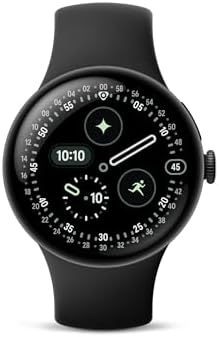
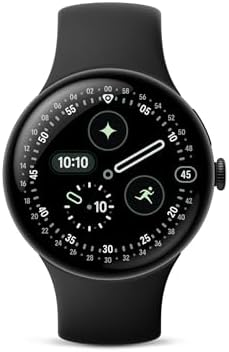
Wearers who prefer a smaller case can start with the Samsung Galaxy Watch 8 (2025) 40mm Graphite Bluetooth, which suits wrists under 16 centimeters. Buyers who prefer the squared-off look but plan to wear the watch overnight should note the cushion case sits flatter than Samsung's earlier rounded designs, which some users find more comfortable against a pillow.
Which Buyer Should Choose Which Watch
The decision usually hinges on a single dependency: the phone in a pocket. Samsung's watch ecosystem integrates most tightly with Galaxy phones, and features such as camera control, quick sharing, and certain health algorithms perform best when paired with a Samsung device. Users on a Pixel phone will find Google's watch communicates more cleanly with the assistant, the camera app, and the broader Android feature set that Google controls directly.
Repairability should carry real weight. Google's decision to make the screen and battery replaceable changes the long-term ownership cost of the Pixel Watch 4, particularly for buyers who tend to keep devices past their warranty period. Samsung counters with the stronger physical durability rating and sapphire crystal, a package that resists damage in the first place rather than making repair easy after the fact. Neither approach is objectively better, but they suit different risk profiles.
Battery expectations should be set realistically. Both watches claim up to 30 hours, yet that number assumes specific settings that rarely match real use. Turning off the Always-On display typically pushes runtime past a full day and a half, and enabling it pulls the figure down. Heavy GPS use, LTE calls, and continuous heart rate tracking during long workouts will cut significantly into either total.
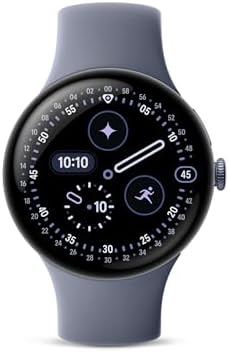
Fitness-focused buyers who care about running dynamics, recovery metrics, and sleep coaching will find more depth in Samsung's Health app, while people who value a single-screen assistant and a jewelry-style case will favor Google's interpretation of the category. Buyers who want to survey the full lineup before choosing a colorway can browse the Galaxy Watch8 series, which now spans several sizes and finishes since launch.
Display, Sensors, and the Small Details
Screen brightness matters in direct sunlight, and both watches advertise a peak of roughly 3,000 nits. Samsung's Super AMOLED panel uses a flatter profile, which reduces glare slightly, while Google's dome magnifies reflections at certain angles but improves touch response at the edge. The Pixel brightens its display in a smooth, gradual curve; the Galaxy defaults more aggressively, so caution is needed in dark rooms.
- Heart rate accuracy: Both watches use multi-LED photoplethysmography and perform well during steady-state cardio
- SpO2 monitoring: Offered by both, most useful during sleep for detecting overnight drops
- ECG: Available on the Galaxy Watch8 through Samsung's Health Monitor app, region-dependent
- Skin temperature: Present on both models, used mainly for cycle tracking and overnight trends
- Stress tracking: Google uses cEDA-based continuous readings from the sensor array, Samsung uses an on-demand approach
Band systems diverge in a way that matters for anyone who swaps straps often. Google uses a slim proprietary attachment that keeps the profile elegant but limits third-party options. Samsung's one-click quick-release system is more accommodating and has a deeper aftermarket. For users who change straps with outfits, credit goes to Samsung here.
Ecosystem Lock-In and Software Updates
Both brands have committed to multi-year update schedules, and both have proven reasonably reliable at delivering them. Google's track record on Pixel hardware includes feature drops that arrive independently of the annual Wear OS release, and the Wear OS 6 rollout brings the most recent interface revision. Samsung's One UI 8 Watch ships on top of the same underlying platform but adds a distinct layer of customization around tiles, watch faces, and connected Galaxy features.
The choice narrows with long-term ownership. Google's repairability policy gives the Pixel Watch 4 a defensible path to a five-year lifespan for careful owners. Samsung's sapphire front and MIL-STD-810H rating give the Galaxy Watch8 an advantage against accidental damage in the first place. Neither company has published full parts pricing across regions, so owners considering repair should verify parts availability in their local market.
The platform question carries more weight than any single specification. Ecosystem habits, running apps, and the phone brand already in hand are the factors that will decide daily satisfaction long after the novelty of a new screen has faded. Buyers should start there, then filter the two watches through durability, battery, and repair expectations.
Before committing, it helps to review Samsung smartwatches for context on how the Watch8 fits the lineup, and to compare Google wearables for the Pixel side. Checking official product pages before purchase also helps confirm carrier compatibility and third-party app availability for each platform.
The final consideration is time. A smartwatch purchase in late 2025 sits at a comfortable distance from the next major hardware revision, and both the Pixel Watch 4 and the Galaxy Watch8 refresh their respective lineups without introducing radically new sensor technology. Owners who need a reliable tracker now will not be caught out, while those who prefer to wait a generation can watch how Gemini and Galaxy AI evolve on the wrist over the coming months.
 Just Pick Your Favorite Stylish Watch online












Item Reviews