The Google Pixel Watch 4 arrives with Wear OS 6 and Gemini built in, while the Apple brand answers with watchOS 26, a 46mm case option, and Apple's deepest health stack yet. Anyone weighing the Google hardware against Apple's lineup needs a clear, side-by-side read on the specs that actually change daily use: screen size, battery claims, sensor coverage, charging speed, and how each watch talks to the phone in your pocket. This guide exists for that decision alone.
| Feature and Selling Point |
Google Pixel Watch 4 |
Apple Watch Series 11 |
| Case Sizes |
41mm and 45mm domed Actua 360 display |
42mm and 46mm with wide-angle OLED |
| Display Brightness |
Up to 3,000 nits peak |
Up to 2,000 nits peak |
| Processor |
Qualcomm Snapdragon W5 Gen 2 |
Apple S10 chip with 4-core Neural Engine |
| Battery Claim (Always-On) |
Up to 40 hours |
Up to 38 hours in Low Power Mode |
| Charging Speed |
Roughly 15 minutes for 50 percent |
Roughly 30 minutes for 50 percent |
| Water Resistance |
5 ATM plus IP68 dust rating |
50m to ISO 22810 and IP6X |
| Satellite Positioning |
GPS, GLONASS, Galileo, Beidou |
GPS, GLONASS, Galileo, QZSS |
| Cellular Variant |
LTE and Wi-Fi models |
GPS and GPS + Cellular models |
| Emergency Satellite |
Not offered |
Satellite SOS and messages on cellular models |
| ECG and AFib History |
ECG plus irregular rhythm notifications |
ECG, AFib History, and hypertension notifications |
| Skin Temperature Sensor |
Overnight temperature tracking |
Wrist temperature with cycle and sleep context |
| Sleep Apnea Detection |
Breathing disturbance alerts |
Sleep apnea notifications and Sleep Score |
| Voice Assistant |
Gemini built in |
Siri with on-device processing |
| Repairability |
Four screw-based repairable components |
Screen and battery serviced by Apple |
| Phone Compatibility |
Android 11 or later |
iPhone 11 or later |
| Best Use Case |
Fast-charging Android all-rounder with Gemini |
Deep health tracking and satellite safety on iPhone |
The table above frames the central tension between these two wearables. Google's contender leans on a brighter display, a notably faster 50-percent top-up, and a longer stated always-on runtime, while Apple's entrant answers with satellite connectivity, a broader set of cardiac alerts, and tighter integration for anyone already inside the iPhone ecosystem. Neither spec list is decorative, because each row points directly at the way a buyer will use the watch every single day.
Battery Life and Charging: The Daily Ritual Divides Them
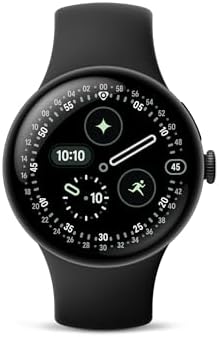
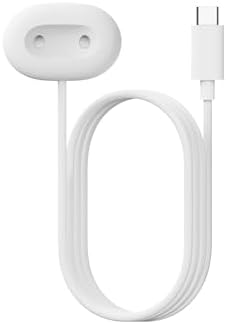
Battery claims decide whether a smartwatch is a tool or a chore. Google states that the Google Pixel Watch 4 (45mm) - 45mm Wi-Fi is rated at up to 40 hours with the always-on display enabled, and that a 15-minute charge returns roughly half the capacity when using the supplied charger. That combination changes behavior: a shower-length top-up in the morning can carry the watch through a full day of notifications, workouts, and sleep tracking without a dedicated overnight charging slot.
Apple takes a different route. The Series 11 is rated at up to 38 hours in Low Power Mode, and Apple's own guidance suggests roughly 30 minutes to reach 50 percent. In practice this means the Apple Watch still leans toward a nightly charging habit for most owners, though Low Power Mode widens the margin for a missed session. The trade-off is simple to state: if you hate charging rituals, the Pixel Watch 4 has the edge; if you already charge an iPhone and AirPods every night, matching the watch into the same routine costs nothing.
Who Feels the Difference Most
Long-shift workers, nurses, and frequent flyers tend to notice charging friction faster than anyone else, because irregular schedules break nightly routines. Sleep-trackers also notice it, since the sensor data that matters most is captured while the watch is worn, not while it sits on a puck. Conversely, professional services based on Android and Wear OS have expanded notably, offering specialist field, inspection, and workflow apps on Google's ecosystem that a smartwatch can now extend beyond the phone. A watch that lasts several days without stress benefits exactly these data-heavy schedules.
It is worth separating marketing numbers from real-world behavior in this section. Google's 40-hour figure assumes the always-on display stays active, which is the heaviest of the two configurations typically benchmarked. Apple's 38-hour figure is achieved specifically in Low Power Mode, which trims some background functions to preserve runtime. Neither number is dishonest; they simply describe opposite ends of each manufacturer's own testing envelope. The fair conclusion is that both watches will comfortably handle a full waking day and a night of tracking, and that only the fast-charge figure produces a truly noticeable difference in weekly use.
Health Sensing and Safety Features
Sensors sit at the center of smartwatch value because they provide a reason to keep the device on the wrist. Both watches measure heart rate, blood oxygen, skin temperature, and sleep stages, but the depth of clinical framing differs. The Apple Watch Series 11 [GPS 46mm] Jet Black Aluminum Black 46mm M/L GPS offers ECG, AFib History, and sleep apnea features, a combination Apple has now positioned as a full cardiac picture for everyday users.
- Cardiac monitoring: ECG on both, with Apple offering additional hypertension notifications.
- Sleep apnea: Notifications on both, plus Apple's Sleep Score system.
- Temperature: Overnight tracking on both, feeding cycle and recovery estimates.
- Emergency: Apple adds Satellite SOS and messages on cellular models.
- Coach: Both now include expanded, AI-assisted activity guidance.
The strongest argument for Apple here is not the length of its feature list but the framing of the alerts. Heart, blood pressure, and sleep apnea notifications are validated through large trials that Apple publishes data on, which lends them weight for anyone who wants the watch to be a genuine health instrument rather than a passive tracker. Google's corresponding features are credible but rely more heavily on a combined app view inside Fitbit, and require an awareness of when readings are intended for wellness versus diagnostics.
Durability and Repairability
Water and dust management are consistent between the two: the Pixel Watch 4 carries 5 ATM water resistance and an IP68 dust rating, and the Series 11 meets the 50-meter ISO standard with IP6X protection. This matters for swimmers, runners in wet weather, and anyone who regularly cleans a device under a tap. Both are rated for shallow-water exercise, but neither is intended for high-velocity or deep diving.
Repair arcs diverge more sharply. Google has designed the Pixel Watch 4 so that four internal components can be replaced using standard screws, which reduces long-term servicing friction and improves the odds that a watch survives a cracked screen or weakened battery. Apple's repair path continues to run through its own service network, which is effective but places a premium on scheduling and cost. Apple's design priority is clear: a tightly sealed, water-resistant body traded against fewer user-serviceable parts.
Ecosystem Fit and Software Experience
Ecosystem is the deciding row for many buyers and the one that cannot be objectively won on spec sheets. The Series 11 is designed around an iPhone 11 or later, and features such as satellite messaging, Handoff, Unlock with Apple Watch, and Health app integration only operate at full depth inside Apple's own hardware and account structures. For an iPhone owner who carries an iPad and uses iCloud, the watch's value escalates sharply with every Apple device nearby.
The Pixel Watch 4 is the reverse case: it requires Android 11 or later and unlocks its best features through Gmail, Google Maps, Google Wallet, and Gemini integration on a Pixel phone. Android users who already live inside Google's account, calendar, and assistant stack will find the mapping, commute, and voice experiences more natural here than they would on Apple's platform, since the watch is built to extend Gemini rather than imitate it. For those who want to explore the broader Android wearable landscape, the Google brand page outlines the wider hardware family this watch belongs to.
Displays and Everyday Handling
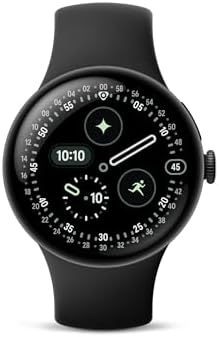
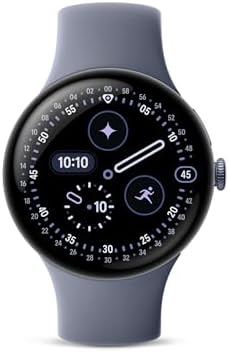
The display gap is more meaningful than the raw numbers suggest. Google's 3,000-nit peak is higher than Apple's 2,000 nit peak, and the domed Actua 360 glass changes how light moves across the surface. In direct sun, that difference translates to reading a message at midday without angling the wrist, and the squarer 41mm and 45mm options give Google a slightly different proportion to the wrist than Apple's 42mm and 46mm cases. None of this is lifestyle copy; display size influences strap choice, band comfort, and how much of a notification is visible at a glance.
For buyers who settle on Apple's hardware, the 46mm GPS configuration is the most balanced entry in the line. The 46mm case brings the larger display, Jet Black aluminum keeps the weight down relative to steel options, and the GPS variant covers run mapping and commuting use without the cellular premium. For anyone comparing the middle of the range rather than top-end cellular models, that combination is the sensible reference point.
Which Watch Fits Your Wrist and Your Routine
The decision criteria here are less about benchmarks and more about behavior. Android users who want faster charging, a brighter panel in sunlight, visibly repairable construction, and Gemini available from the wrist have a compelling case for the Pixel Watch 4. iPhone users with cardiovascular or sleep concerns, frequent hikers who value satellite-based emergency contact, and households already using Apple's health stack should treat the Series 11 as the more functional device rather than simply the more popular one.
There is also a quieter consideration: the Pixel Watch 4's lead in charging speed and always-on runtime benefits anyone whose day runs long and unpredictable, while Apple's satellite safety net and deeper clinical disclosure benefits anyone whose trips leave the cellular grid behind. Bringing up the one-year comparison first is useful, since a first purchase is clearly different to a repeat buyer. That question sits at the level of which habit each brand assumes you have: charging nightly, or charging opportunistically.
On form and daily handling, the wearable that stays on the wrist longer delivers more value regardless of its spec sheet. The Pixel Watch 4 makes that argument through stamina and speed, the Apple Watch Series 11 makes it through a safety feature set and health pipeline that no third party currently replicates with satellite contact. Buyers will not be poorly served by either model in 2025, but aligning the purchase to the phone in the pocket and the routine already in place produces a far more satisfying result than any single row of specifications can tell on its own.
 Just Pick Your Favorite Stylish Watch online












Item Reviews