The Amazfit Bip Max pairs a 2.07-inch AMOLED panel with a stated 20-day battery rating, while the Amazfit Active 2 Smart Watch 1.32" 44mm GPS packs a 1.32-inch AMOLED screen into a 44mm case with a claimed 10-day runtime. Those two numbers frame the entire decision: one watch asks you to wear a larger device and forget the charger, the other asks you to charge more often in exchange for a smaller, dressier profile.
This guide is built for buyers weighing those trade-offs at the point of sale, so it is worth saving before you commit. It separates verified specifications from marketing language, maps each model to the people it actually suits, and flags where the spec sheets stop short of telling the full story.
| Feature and Selling Point |
Amazfit Bip Max |
Amazfit Active 2 Premium |
| Display size and type |
2.07-inch AMOLED |
1.32-inch AMOLED |
| Glass protection |
Tempered glass cover |
Sapphire crystal |
| Stated battery life |
Up to 20 days |
Up to 10 days |
| Case size |
50mm |
44mm |
| Onboard storage |
4GB |
Not specified by brand |
| Offline maps |
Supported |
Not listed in official specs |
| Strap material |
Sport-oriented strap |
Leather plus sport strap |
| Water resistance |
Water-resistant |
Water-resistant |
| Positioning |
GPS guidance |
GPS |
| Subscription fees |
None |
None |
| Health monitoring |
Fitness and hybrid training set |
Heart rate plus sleep monitoring |
| Sport and workout coverage |
150+ sports |
160+ workout modes |
| Best use case |
Multi-day trips and training blocks |
Office wear plus evening workouts |
| Standout selling point |
Big screen with 20-day battery |
Sapphire glass in a 44mm case |
Read the table by use case rather than by numbers. The Bip Max wins on screen real estate, storage, offline navigation and stamina, while the Active 2 Premium answers with sapphire protection, a smaller 44mm footprint, a dual-strap package, and a richer sleep and heart-rate feature list. Battery life and case size move in opposite directions here, and that single tension decides most purchases.
Design Priorities: Two Different Wrists, Two Different Briefs
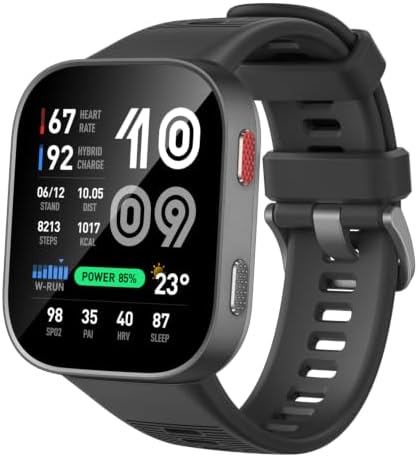
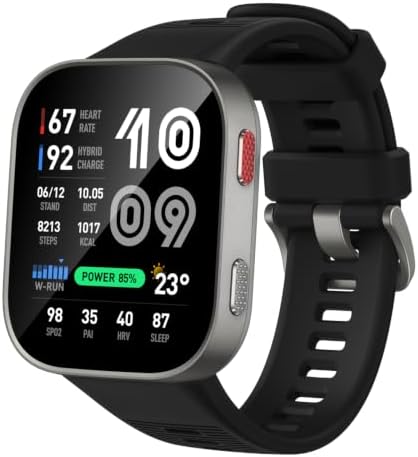
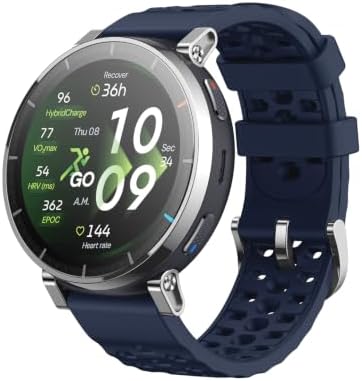
Amazfit split its lineup along a clear line with these two releases. The Bip Max follows the Bip family's original logic: put function first, keep the panel large, and treat the watch as a training instrument rather than jewellery. Its 2.07-inch AMOLED display is bright enough to read in direct sun on a run, and the 50mm case gives fingerprint-prone touch controls more room to register accurately when hands are wet or moving.
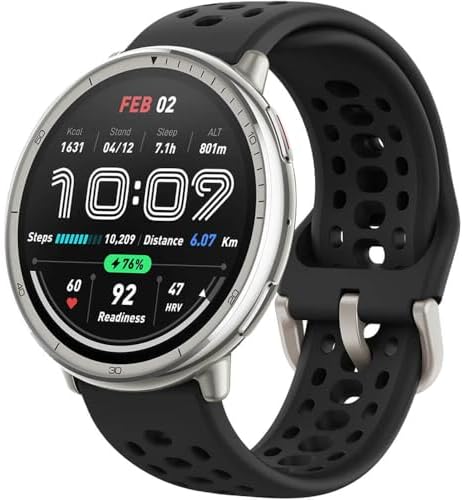
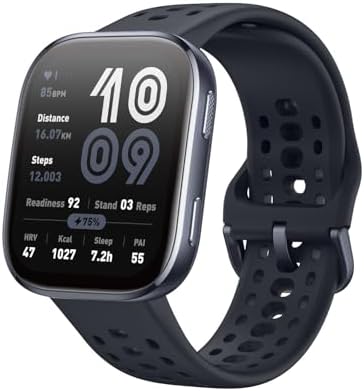
The Active 2 Premium takes the other path. A 44mm case sits closer to conventional dress-watch proportions, sapphire crystal guards the glass against desk contact and doorframes, and the box includes a leather strap alongside a sport strap. Swapping between them turns one watch into two: quiet enough for a meeting, durable enough for an interval session.
Neither design is better in absolute terms. A 50mm watch with a 2.07-inch screen will crowd shirt cuffs and can look oversized on narrower wrists. A 1.32-inch display shows fewer data fields per glance, which matters during structured workouts where you want pace, heart rate zone, and elapsed time visible simultaneously.
Battery Life and Charging Habits
The Bip Max carries a stated rating of up to 20 days, and the Active 2 Premium is rated at up to 10 days, according to Amazfit's own specifications. That gap changes daily behaviour rather than just the charging schedule. Twenty days means a fortnight-long trip, a backpacking weekend, or a heavy training block can pass without a cable. Ten days covers a normal working week plus a weekend with room to spare, but it will not survive an extended separation from a power source.
Both figures assume typical use. Always-on display modes, frequent GPS sessions, and continuous heart-rate tracking all shorten real-world runtime well below the rated ceiling, which is a normal characteristic of AMOLED smartwatch platforms rather than a flaw specific to either model. Buyers who run GPS for an hour a day should expect noticeably shorter intervals between charges on both watches.
Navigation, Storage, and Offline Utility
The Amazfit Bip Max Smart Watch 2.07" 50mm GPS has 4GB of on-device storage and supports offline maps, a combination that matters most when phone signal disappears. Loading a route before a hike or a long run lets the watch guide you without tethering to a handset, and the spare storage accommodates music or additional map regions. For city runners who always carry a phone, this advantage rarely shows up; for trail users and travellers, it is the strongest technical argument in the comparison.
The Active 2 Premium includes GPS tracking but its official specification material does not list offline maps, so route guidance without a paired phone is less certain. Buyers who treat navigation as a core requirement should verify current firmware features at purchase, since capabilities in this category can be added or refined through software updates after launch.
Health Tracking and Training Features
Both watches operate without a subscription fee, which distinguishes the Amazfit approach from several competitors that gate deeper analytics behind monthly plans. The Amazfit Active 2 Smart Watch 1.32" 44mm GPS includes heart rate and sleep monitoring, with 400 face styles and 160+ workout modes for people who want granular recovery data. Sleep staging, resting heart rate trends, and stress indicators are the features most buyers check daily.
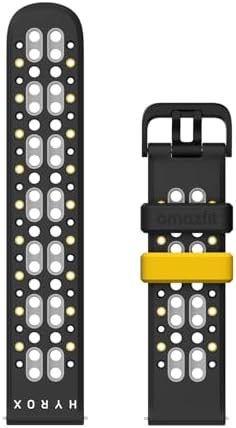
The Bip Max lists 150+ sports alongside hybrid training and a HYROX mode, aimed at users mixing strength work with cardio. Hybrid athletes get structured guidance for combined sessions rather than single-discipline tracking. Both watches cover the essentials - heart rate, workout logging, smartphone notifications - so the practical difference lies in the depth of sleep and recovery insights versus the breadth of multi-sport programming.
Durability, Materials, and Daily Wear
Sapphire crystal is the Active 2 Premium's clearest hardware advantage. It resists scratches far better than the tempered glass used on most mid-range smartwatches, which keeps the display legible years into ownership and protects resale value. The Bip Max counters with overall robustness tied to its larger, sport-focused build, where the tempered cover is more easily replaced as part of a lower-cost platform.
Both watches carry water resistance ratings that cover sweat, rain, and hand washing, making them suitable for everyday wear around a gym or office. Strap choice shapes long-term comfort more than any other accessory decision: the Active 2 Premium's leather plus sport strap pairing suits users who want a formal option out of the box, while the Bip Max suits buyers happy to fit an aftermarket band.
- Bip Max: 2.07-inch AMOLED, 4GB storage, offline maps, 150+ sports, HYROX mode, 50mm case, up to 20 days battery
- Active 2 Premium: 1.32-inch sapphire AMOLED, heart rate and sleep monitoring, 160+ workout modes, 44mm case, leather plus sport strap, up to 10 days battery
- Shared: no subscription fees, GPS tracking, iOS and Android compatibility
Which Amazfit Watch Should You Buy
The decision reduces to three questions. Do you value screen size and battery life above all else? Choose the Bip Max, particularly if you hike, travel, or train outdoors where offline maps and multi-day stamina carry real weight. Do you value a compact, scratch-resistant watch that moves between the office and the gym? Choose the Active 2 Premium, especially if sapphire glass and a smaller 44mm case matter more than the longest possible runtime. Do you need the broadest workout library and the deepest sleep analytics? The Active 2 Premium's 160+ modes and recovery monitoring give it a narrow edge for data-driven training.
Budget-conscious buyers should also weigh the Amazfit brand's frequent refreshes across both the Bip and Active families, since new models arrive regularly and can shift the value equation. Checking current firmware support and strap compatibility before purchase avoids surprises, particularly where offline functionality is concerned.
Ultimately, these two watches represent different answers to the same question about what a smartwatch should demand from its owner. The Bip Max asks for wrist space and returns freedom from charging, while the Active 2 Premium asks for more frequent charging and returns a watch that looks at home in almost any setting. Matching that trade-off to your actual week - not the spec sheet's most impressive number - is what makes either purchase feel correct a year later.
 Just Pick Your Favorite Stylish Watch online












Item Reviews