Choosing between the Garmin Instinct 3 and the Fenix 7 means weighing two rugged GPS smartwatches that share a brand lineage yet target very different owners. The Instinct 3 leans on a polymer, shock-resistant chassis and an optional AMOLED screen, while the Fenix 7 counters with a stainless-steel or titanium build and full-color topographic mapping. This guide breaks down the specifications that actually change a purchase decision, from display technology and battery endurance to navigation depth and repairability, and it is built to be saved as a permanent reference for anyone shopping the rugged GPS category.
Both watches sit inside the Garmin brand's outdoor family, yet each answers a distinct question: does a buyer want maximum rugged simplicity, or maximum field capability?
| Decision Criterion |
Garmin Instinct 3 |
Garmin Fenix 7 |
| Display technology |
AMOLED or monochrome solar (model-dependent) |
Transflective MIP touchscreen with solar option |
| Case material |
Reinforced polymer with metal bezel options |
Stainless steel or titanium |
| Case sizes offered |
45mm and 50mm |
42mm, 47mm, and 51mm (7S, 7, 7X) |
| Topographic maps |
Breadcrumb navigation and course following |
Preloaded TopoActive maps with routable guidance |
| Solar charging |
Available on select solar variants |
Available on Solar and Sapphire Solar editions |
| Integrated flashlight |
Yes |
Yes (Fenix 7X models) |
| Water rating |
10 ATM |
10 ATM |
| Touchscreen input |
On AMOLED models |
Yes, plus button control |
| Training metrics depth |
Core health and activity tracking |
Advanced training load, stamina, and hill score |
| Golf and ski features |
Limited |
Full course maps and ski run data |
| Multi-band GNSS |
Supported on select models |
Supported on Sapphire editions |
| Music storage |
Not available |
Onboard storage on most variants |
| Weight |
Lighter polymer build |
Heavier due to metal construction |
| Price positioning |
Lower entry cost |
Premium tier |
| Best for |
Value-focused hikers, trail runners, casual outdoor users |
Multi-day trekkers, skiers, golfers, data-driven athletes |
The single biggest differentiator sits in navigation. The Fenix 7 ships with routable maps that let owners follow trails turn-by-turn on a watch screen, while the Instinct 3 relies on breadcrumb-style course guidance. Buyers who rarely wander far from marked trails will not notice, but anyone venturing off-grid should weigh this carefully before choosing.
Display Technology and Everyday Readability
The Instinct 3 family splits into a solar monochrome line and an AMOLED line. The solar variant trades vivid color for indefinite standby life, while the AMOLED version delivers deep blacks and vibrant color that rival premium fitness watches. Garmin's own product listings describe the 45mm AMOLED model as a rugged GPS smartwatch with smart notifications alongside health and wellness features, and the flashlight is integrated directly into the case.
The Fenix 7 sticks with a transflective memory-in-pixel display. It is not as flashy in indoor lighting, but its always-on legibility in bright sunlight remains a hallmark of the line. Touch control was added on this generation, yet the physical buttons are retained for gloved use, an important point for winter sports and cold-weather hiking.
Picking the Right Display for Real Conditions
An AMOLED screen can look more contemporary for wrist-worn messaging reminders and night viewing. A memory-in-pixel screen, by contrast, draws less ongoing power and is readable when light is harsh and reflective, which is often the case at altitude.
Build, Weight, and Wearability
The Instinct 3 in 50mm trim measures roughly 51 x 51 x 14.9mm according to Garmin's comparison tool, matching a broad aesthetic that anchors it firmly to the tactical, functional school of design. Its polymer body resists knocks and keeps weight down, making it comfortable during sleep tracking and long runs. Watches in the Instinct 3 series favour endurance over jewellery-grade finishing, whereas the Fenix 7 positions itself as a more premium instrument.
The Fenix 7's steel or titanium build is noticeably denser but conveys a more substantial presence on the wrist. Buyers coming from analogue tool watches often prefer the tactility of metal, and the sapphire crystal on higher-end models resists scratching during rock scrapes and rope work.
Battery Life and Solar Charge Differences
Solar editions of both watches extend battery life when outdoor light is present. A direct comparison of the solar variants is discussed by owners in Fenix 7 solar discussions, where buyers weigh the same price point for hiking, swimming, running, and cycling features. The general consensus: Fenix 7 solar gives longer runtime in smartwatch mode with intermittent sun exposure, while the Instinct 3 solar offers respectable multi-week ranges that align with its pitch as a low-maintenance field watch.
For expeditions lasting longer than a week without wall charging, solar input becomes a real tiebreaker rather than a marketing bullet. Only one model in each line supports this on specific variants, so buyers searching for such features should confirm the exact SKU before purchasing.
GPS, Mapping, and Off-Grid Confidence
The Fenix 7 offers routable topo maps, course navigation, and multi-band GNSS on Sapphire editions. Multi-band is a meaningful upgrade for canyon hikers, dense forest traversal, and steep terrain where satellite reflections confound single-band receivers. The Instinct 3 supports multi-band GNSS as well on selected configurations, giving it a competitive edge that reaches beyond its entry price tag.
Where the two part ways is visual. Following a breadcrumb trail on the Instinct 3 means reading a line on a small screen. Following a route on the Fenix 7 means reading a map that looks like a map. That distinction becomes more valuable the further someone strays from a maintained trail.
Training, Sports, and Outdoor Toolkits
Both watches can track trail running, hiking, swimming, cycling, and skiing. The Fenix 7 goes further in analytic depth, with training load, hill score, endurance score, and race predictions that connect directly to Garmin's broader performance ecosystem. Golfers get full course maps and shot tracking on the Fenix; on the Instinct 3, the golf feature set is more limited.
For most casual outdoor users, the Instinct 3's metrics are more than sufficient. Heart rate, pulse ox, stress tracking, sleep scoring, and body battery data are all included. The differences appear when structured training plans and cross-discipline analytics enter the picture.
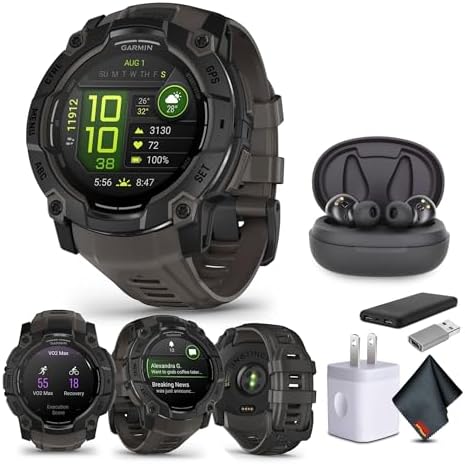
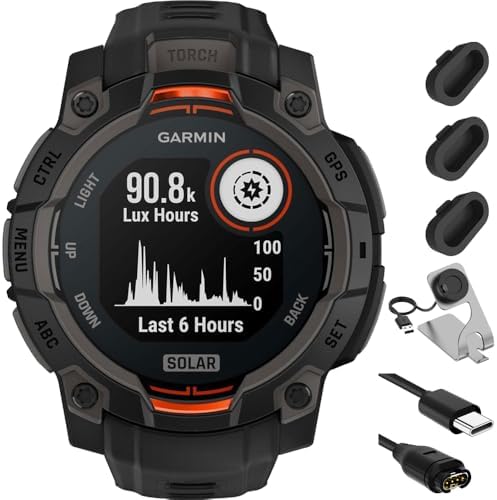
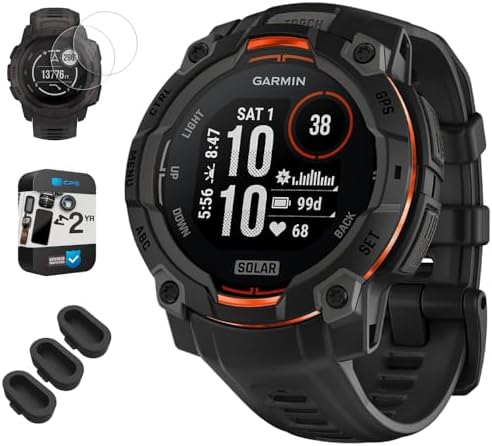
Buyers searching for a lightweight daily driver that can also handle weekend hikes may prefer the Garmin Instinct 3 Tactical Edition AMOLED 50mm, whose wider display and integrated flashlight make it a sensible go-anywhere device without steel or sapphire premiums.
Who Should Buy Which Watch
The Instinct 3 answers a clear question: what is the toughest GPS smartwatch that still leaves budget for other gear? Its polymer case, elevated bezel, and optional AMOLED screen give it broad appeal for hikers, daily wearers, and anyone moving up from a basic fitness band. The trade-offs are limited mapping and no on-watch music storage.
The Fenix 7 suits a different owner. Someone who reads topographic lines before a trip, wants a steel or titanium finish, integrates with smart trainers, and dislikes charging often. Its price sits higher, its case is heavier, and its feature density pushes toward genuine specialist territory. Buyers who fall into that category often end up choosing the Garmin fenix 7 adventure silver graphite (Renewed) for its steel body and routable maps.
Repairability, Long-Term Value, and Final Trade-Offs
The Instinct line has historically been kind to owners over time. The polymer chassis absorbs bumps, and replacement straps are widely available. Its battery chemistry and firmware support reflect Garmin's general approach of keeping outdoor watches functional for years.
The Fenix 7 shares that durability carefully tuned for premium finishing, though scratches on a metal bezel are more noticeable than on a textured polymer frame. Buyers who enjoy the patina of outdoor equipment may prefer metal; those who want a watch that looks new after a season of abuse may prefer polymer.
The decision reduces to a question of priorities. Anyone whose adventures stay within mapped boundaries and who prefers lighter gear can put an Instinct 3 on the wrist and use the savings on equipment. Anyone whose plans involve remote terrain, multi-day navigation, or tracked training goals will find the extra depth of the Fenix 7 aligns with the way they actually move through the outdoors. Neither is universally better; each answers the outdoor pursuit it was designed for.
 Just Pick Your Favorite Stylish Watch online
















Item Reviews