The Garmin Instinct 3 and the Garmin Forerunner 165 sit at two different points on the same training map, and the choice between them comes down to how you plan to use a watch rather than which one is newer. One is built around a rugged, solar-assisted outdoor chassis, the other around a lightweight running-first platform with an AMOLED display. This guide compares them dimension by dimension so you can decide which one earns a permanent place on your wrist.
| Feature & Selling Point |
Garmin Instinct 3 |
Garmin Forerunner 165 |
| Display Type |
AMOLED or MIP variant, monochrome-capable |
Colorful AMOLED |
| Case Construction |
Reinforced polymer, MIL-STD-810 rated |
Fiber-reinforced polymer |
| Smartwatch Battery Life |
Up to 11 days (20 days with battery saver) |
Up to 11 days |
| GPS-Only Battery |
Up to 19 hours |
Up to 19 hours |
| All-Systems GNSS Battery |
Up to 17 hours |
Up to 17 hours |
| Solar Charging Option |
Yes, Solar variant extends runtime |
Not available |
| Water Rating |
10 ATM |
5 ATM |
| Built-In Sports Apps |
Running, hiking, tactical, outdoor profiles |
Running-focused profiles plus strength and cardio |
| Training Metrics |
Basic activity and recovery tracking |
Training metrics and recovery insights |
| Smart Notifications |
Yes, iPhone and Android compatible |
Yes, iPhone and Android compatible |
| Sleep Monitoring |
Advanced sleep scoring |
Advanced sleep scoring with recovery feedback |
| Ruggedness Focus |
Shock, thermal, and water resistance testing |
Everyday durability, lighter build |
| Ideal User |
Hikers, tactical users, multi-day adventurers |
Runners, gym-goers, daily commuters |
The table above makes one thing clear: these two watches overlap heavily on core battery and GPS figures, but diverge on two dimensions that will decide the purchase for most buyers. The Instinct 3 offers a solar charging option and 10 ATM water resistance, while the Forerunner 165 concentrates on richer on-wrist training feedback and a brighter AMOLED running display. Pick the column that matches how you actually spend your weekends and training hours.
Battery and Charging: Solar Versus Pure Efficiency
Garmin lists the Instinct 3 at up to 11 days in smartwatch mode, expandable to roughly 20 days with battery saver engaged. GPS-only GNSS mode runs up to 19 hours, and all-systems GNSS mode drops that to about 17 hours. Those figures sit remarkably close to what the Garmin Forerunner 165 Running Colorful AMOLED Black delivers across the same modes, so raw runtime is not what separates them.
The difference lies in how each watch recovers that energy. The Instinct 3 is offered in a Solar configuration that tops up the battery from ambient light during outdoor exposure, which matters on multi-day hikes where wall outlets are scarce. The Forerunner 165 relies entirely on a charging cable, but its lower overall power draw under AMOLED brightness means fewer top-ups during a normal training week. For an ultrarunner logging early-morning miles before sunrise, cable charging is rarely a problem. For a backpacker three days from the trailhead, solar top-up is a meaningful safety margin.
Display and Readability in Real Conditions
Both watches use a color display, and Garmin's running comparison pages confirm color screens and smart notifications are part of the shared foundation across this segment. Where the Instinct 3 differs is in its option set: buyers can select an AMOLED variant for vivid color or a monochrome memory-in-pixel panel for maximum contrast and minimum power draw. The Forerunner 165 leans entirely into a bright AMOLED panel, which looks more modern indoors and in gym lighting.
In direct sunlight, a transflective MIP display on the Instinct 3 stays legible without backlight help, an advantage for desert hikers and sailors. The Forerunner 165's AMOLED is readable in sunlight via auto-brightness, but it consumes more power to do so. Neither screen is objectively better; the right answer depends on whether you value punchy color in a spin class or guaranteed legibility on a glacier with gloves on.
Touchscreen and Button Behavior
The Instinct line has traditionally favored physical buttons, which stay operable with wet or gloved fingers. That matters at altitude or in cold rain. The Forerunner 165 adds touch-based interaction on top of its buttons, making menu navigation faster for users used to smartphones. If you glance at notifications during meetings, touch is convenient. If you change data fields mid-descent on a mountain, buttons are unbeatable.
Watch Face and Body Fit
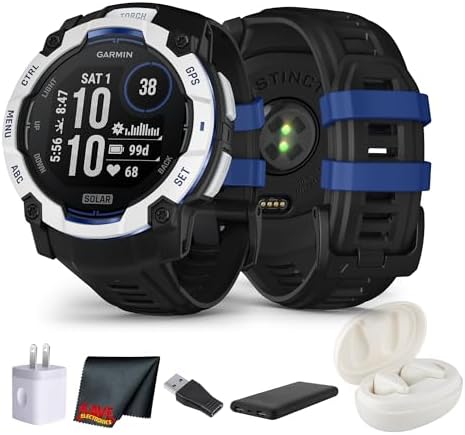
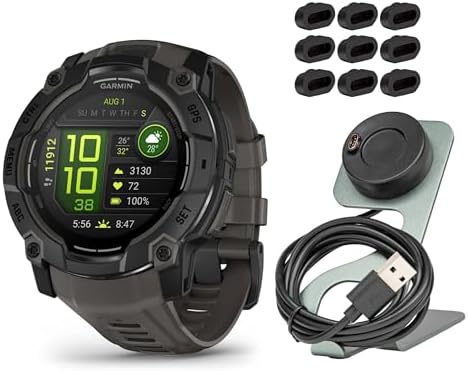
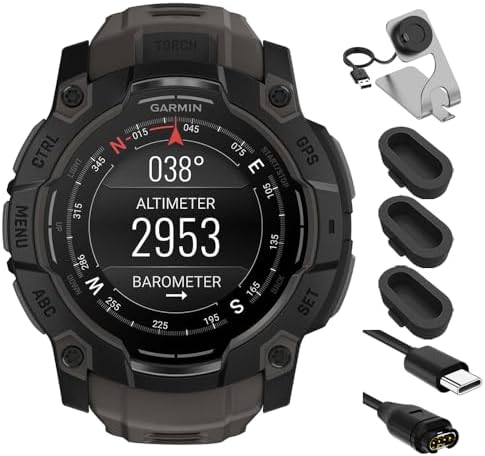
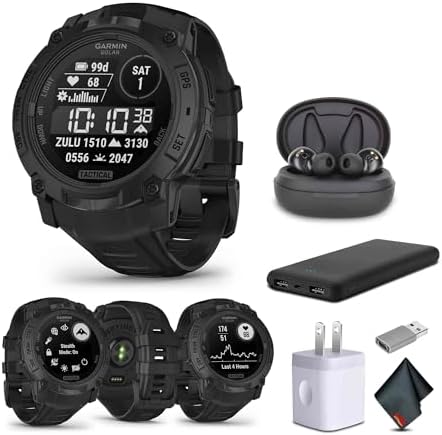
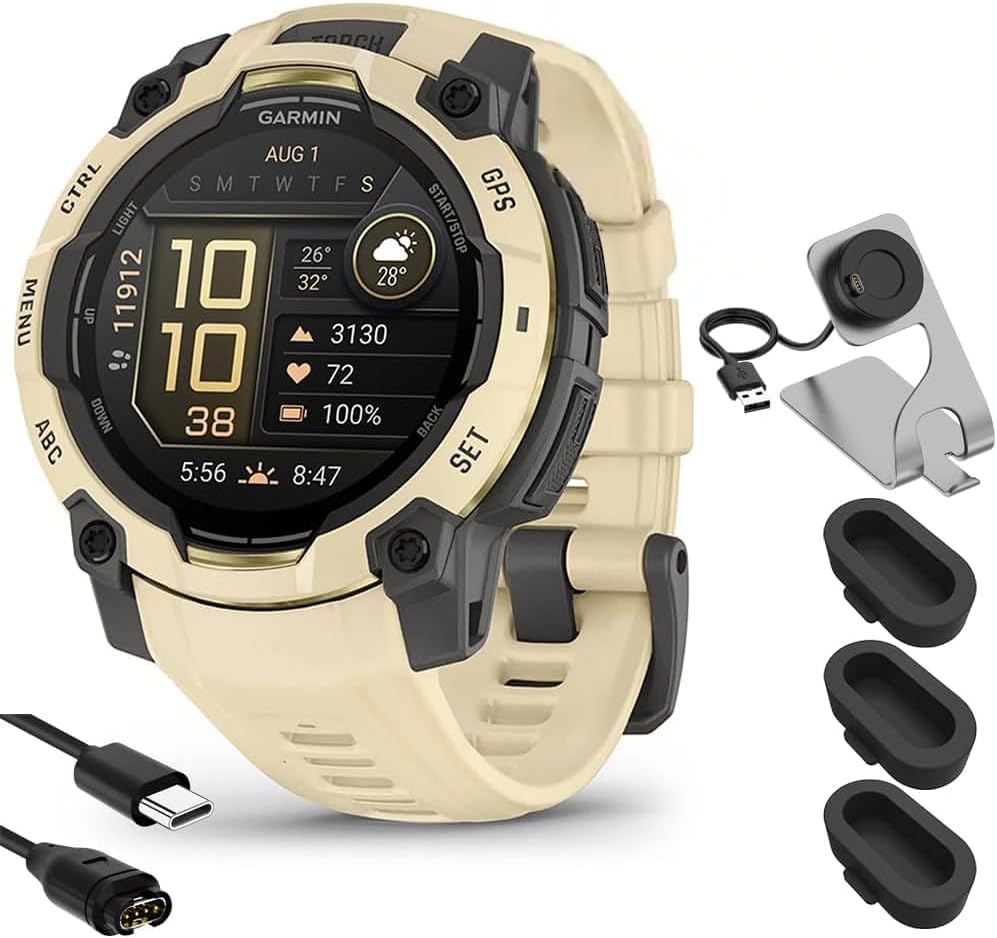
The Instinct 3 carries a chunky, angular profile intended to broadcast durability. The Instinct 3 range also includes a Tactical Edition with an AMOLED 50mm display, matching the sort of buyer who wants a rugged outdoor GPS smartwatch with a large, easy-read dial. The Forerunner 165 sits lighter on the wrist, which long-distance runners tend to prefer because it reduces swing weight and chafing on marathon-distance efforts.
Durability and Water Resistance You Can Rely On
Garmin positions the Instinct series around environmental toughness, and the 10 ATM rating on the Instinct 3 covers swimming, snorkeling, and rain without concern. The Forerunner 165 carries a 5 ATM rating, which handles pool swimming and showering but is not intended for high-impact water sports or extended immersion at depth. If your training includes open-water swims, whitewater paddling, or offshore fishing, that single grading difference is decisive.
Beyond water, the Instinct 3's reinforced polymer case and button layout are designed to survive drops onto rock and prolonged exposure to temperature swings, categories where the Forerunner 165's lighter housing is built for everyday risk rather than expedition abuse. A trail runner clipping a branch at speed will appreciate the extra protection. A road runner training on asphalt simply does not need it.
Training Metrics, Recovery, and Daily Coaching
Here the Forerunner 165 tilts the argument back in its favor. It ships with training metrics and recovery insights oriented toward runners: guidance on workout intensity, post-session recovery windows, and feedback designed to help structure a week of training. For a runner who wants the watch to nudge them toward smarter interval pacing rather than just record it, that layer of interpretation is the reason to choose this model over a ruggedized alternative.
The Instinct 3 still tracks the essentials. Heart rate monitoring, smart notifications, built-in sports apps, and sleep scoring are shared across both watches, as evidenced by the common feature baseline across the Garmin brand's running comparison literature. What the Instinct 3 lacks is the runner-specific coaching architecture. It records your effort accurately; it simply does less interpretation of that data for race-day preparation.
Practical takeaway: if you follow a structured 5K, 10K, or half-marathon plan and adjust weekly based on recovery scores, the Forerunner 165 is the more natural companion. If you track effort broadly and mostly care about heart rate, pace, and distance during mixed outdoor activities, the Instinct 3 tells you everything you need.
Smartwatch Features and Everyday Wearability
Both watches pair with iPhone and Android devices, deliver smart notifications, and support contactless payment setups in supported regions. That means the choice is not about connectivity, it is about intent. The Instinct 3 is designed to be worn continuously in harsh conditions, so you leave it on through showers, climbs, and weather. The Forerunner 165 is engineered to disappear during daily life and training, which is a benefit for users who dislike a heavy watch catching on shirt cuffs.
Style also plays a role in how often the watch actually gets worn. The Forerunner 165's AMOLED display and lighter silhouette read as a modern fitness device, appropriate in office settings and casual wear without much thought. The Instinct 3's tactical aesthetic is a deliberate statement; it complements outdoor gear and utility clothing but draws more attention in formal settings. Buyers who rotate watches between office and trail often find the Forerunner 165 more flexible, while Instinct 3 fans typically treat it as a dedicated outdoor tool.
Which Garmin Fits Your Priorities?
The Instinct 3 is the answer for hikers, tactical users, and anyone who treats a GPS watch as a survival instrument. Solar charging, 10 ATM water resistance, shock-tested construction, and a MIP display option combine for maximum resilience. A comparison point worth noting is the Garmin Instinct 3 Tactical Edition AMOLED 50mm GPS, which layers a large AMOLED screen onto that same rugged body for users who want both durability and color visibility. For more context on how this model sits within the wider outdoor line, the Forerunner 165 category page shows the contrasting philosophy: a lighter running-first design.
The Forerunner 165 is the better purchase for runners and gym-based athletes who value training feedback and recovery guidance over maximum environmental resistance. Its lighter case causes less wrist fatigue over long distances, and its running metrics give structure to a training week in a way the Instinct line does not attempt.
Real trade-offs to weigh before deciding:
- Water: 10 ATM versus 5 ATM decides open-water swimming and diving suitability
- Power: Solar top-up versus cable-only charging decides multi-day off-grid viability
- Coaching: Recovery insights and running metrics versus accurate, unadorned activity tracking
- Build: Heavy-duty shock resistance versus lightweight daily comfort
- Screen: MIP legibility in glaring sun versus AMOLED color richness indoors
Neither watch needs to win outright. The Instinct 3 represents Garmin's insistence that a GPS watch should survive whatever the terrain throws at it, while the Forerunner 165 shows the brand channeling the same sensor platform into a focused running companion. Matching the right philosophy to the demands you actually place on your wrist is the only criteria that matters, and the watch that fits that description will feel correct on day one and every day after.
 Just Pick Your Favorite Stylish Watch online























Item Reviews