The Apple Watch Series 12 and the Apple Watch Series 11 are separated by a single generation, yet the gap between them sits in places that matter at the end of a long day rather than on a specification sheet. Both arrive in the same 46mm aluminium footprint, both run the same watchOS generation, and both promise all-day battery life. The meaningful differences surface in satellite connectivity, low-power endurance, charging behaviour, and how each model holds its value once the next refresh arrives.
| Purchase-Decision Dimension |
Apple Watch Series 12 |
Apple Watch Series 11 |
| Case sizes offered |
42mm and 46mm |
42mm and 46mm |
| Normal-use battery rating |
Up to 24 hours |
Up to 24 hours |
| Low Power Mode runtime |
Up to 38 hours |
Up to 38 hours |
| Workout battery window |
Up to 10 hours |
Up to 10 hours |
| Satellite connectivity |
Included |
Not offered |
| Display technology |
Always-On Retina |
Always-On Retina |
| Display resolution (46mm) |
416 by 496 pixels |
416 by 496 pixels |
| Case depth (46mm) |
Approx. 9.7mm |
Approx. 9.7mm |
| Health sensor suite |
Heart rate, ECG, blood oxygen, sleep score |
Heart rate, ECG, blood oxygen, sleep score |
| Water resistance |
50 metres, swimproof |
50 metres, swimproof |
| Connectivity options |
GPS and GPS + Cellular |
GPS and GPS + Cellular |
| Required iPhone |
iPhone 11 or later, iOS 27 or later |
iPhone 11 or later, iOS 27 or later |
| Charging behaviour |
Fast-charge capable |
Fast-charge capable |
| Best suited to |
Off-grid runners, remote hikers, buyers keeping the watch four years or more |
City users, gym-goers, buyers who want the proven generation at a lower entry point |
| Resale and price trajectory |
Holds value longer, higher launch price |
Discounted sooner, better immediate value |
The table makes one thing clear: the hardware baseline is nearly identical, and the deciding factor is satellite connectivity plus the price you are willing to pay for it. If emergency messaging away from cellular coverage is a genuine possibility in your routine, the newer model earns its premium. If your training and commuting happen inside city limits, the older generation delivers the same daily experience for less.
What Actually Changed Between the Two Generations
Apple has kept the physical platform stable across this generation change. The 46mm case measures roughly 46mm tall, 39mm wide and 9.7mm deep, with a 416 by 496 pixel Always-On Retina panel covering about 1196 square millimetres of display area. Because the chassis, resolution and weight class carry over, a buyer upgrading from the previous generation will not notice a different feel on the wrist. The changes are functional rather than structural, which is precisely why the buying decision should be made on features instead of appearance.
The headline addition is satellite connectivity on the newer model. Apple's own comparison pages list it as a differentiator, and it changes the risk calculation for anyone who runs trails, hikes above the tree line, or sails beyond coastal coverage. Satellite messaging does not replace a personal locator beacon, but it does provide a fallback channel when a cellular tower is nowhere in range. For buyers whose outdoor activity stays within a city park, this feature will likely never be used, and paying for it becomes a matter of insurance rather than utility.
Battery Life: The Numbers Are Closer Than the Marketing Suggests
Both watches are rated at up to 24 hours of normal use, up to 38 hours in Low Power Mode, and up to 10 hours of continuous workout tracking. Those figures come directly from Apple's technical specifications for the current generation and match the published ratings for the previous one. In practice, this means a full day of notifications, a 45-minute GPS run and overnight sleep tracking will leave both models in a similar state by morning.
The practical difference emerges over years, not days. Battery cells degrade with charge cycles, and a watch purchased a generation earlier has already absorbed part of that wear. A buyer choosing between a new Series 11 and a new Series 12 starts from the same health baseline, but a used or discounted Series 11 may already be one or two years into its cycle. That is a genuine trade-off worth pricing into the decision, because a battery service costs money and time regardless of which generation you own.
Health Sensors and the Daily Tracking Experience
The sensor array is effectively shared. Heart rate monitoring, ECG readings, blood oxygen measurement and sleep score tracking are present on both generations, and both feed the same Health app on a paired iPhone. For a buyer whose primary motivation is closing rings, monitoring resting heart rate trends, or reviewing sleep quality, the two watches are functionally interchangeable. The newer generation does not introduce a sensor that the older one lacks, which removes one of the usual reasons to pay more for the latest model.
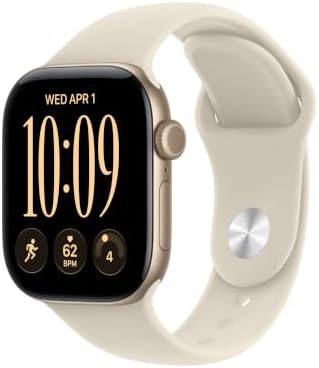
Water resistance is identical at 50 metres, so pool swimming and showering carry the same risk profile on either watch. Connectivity options also mirror each other, with GPS-only and GPS + Cellular variants available on both. If you want to leave your phone at home and still take calls, either generation supports that workflow through a cellular plan. The Apple Watch Series 12 GPS + 46mm Cellular is the configuration that pairs the newest satellite feature with an always-connected setup, which is the combination most relevant to buyers who train far from home.
Compatibility, Software and Longevity
Both models require an iPhone 11 or later running iOS 27 or later. That requirement is identical, so there is no scenario where the older watch extends the life of an older phone or vice versa. Software support is the more important variable over a four-year horizon: Apple has historically delivered watchOS updates to several generations of hardware simultaneously, which means the Series 11 will continue receiving feature updates alongside the Series 12 for a meaningful period.
The realistic planning assumption is that both watches will remain fully supported for years, and the newer model will receive the final update one cycle later. For a buyer who replaces a watch every two years, that difference is irrelevant. For a buyer who keeps a watch for five years, the extra cycle of support on the newer generation has real value and should be weighed against the price gap.
Who Should Buy the Series 12
The newer generation is the right choice for three specific buyer profiles. The first is the outdoor athlete who runs, hikes or rides in areas without reliable cellular coverage, where satellite messaging provides a safety layer that the older model cannot match. The second is the long-term owner who intends to keep the watch for four years or more and wants the maximum remaining software support window. The third is the buyer who simply wants the current generation and is not price sensitive.
For that last group, the Series 12 range covers both case sizes and both connectivity tiers, so the choice between aluminium and cellular configurations stays open. Buyers who want the satellite feature specifically should confirm they are selecting the newer generation, because the feature is the single clearest dividing line between the two product lines.
Who Should Buy the Series 11
The previous generation remains an excellent purchase for anyone whose activity stays within cellular range. Gym training, commuting, swimming, sleep tracking and notification management are handled identically. Because the model has been on the market longer, it is frequently discounted, which shifts the value calculation firmly in its favour for budget-conscious buyers.
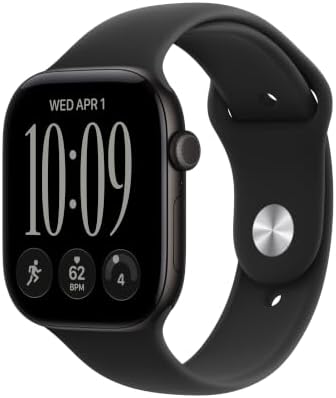
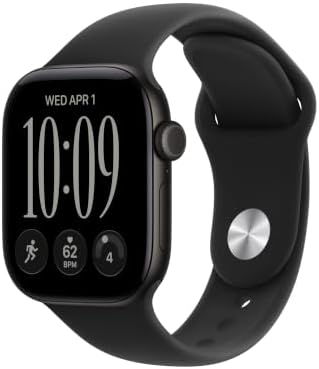
A concrete configuration that illustrates the value case is the Apple Watch Series 11 [GPS 46mm] Jet Black Aluminum Black 46mm M/L GPS, which pairs the larger case with the standard GPS tier. Buyers who do not need standalone cellular can put the savings toward a band collection or an extended warranty instead.
How to Decide in Under Five Minutes
Answer three questions in order. First, do you regularly travel, train or work in places without cellular signal? If yes, choose the Series 12 for satellite connectivity. Second, do you plan to keep the watch for more than three years? If yes, the newer generation buys you an extra software support cycle. Third, is the price difference more than you are comfortable paying for features you may not use? If yes, the Series 11 delivers the same daily experience and leaves money for accessories.
Buyers who answer no to the first two questions and yes to the third should treat the older generation as the rational purchase rather than a compromise. The sensor suite, display, water resistance and battery ratings are shared, so the daily experience does not degrade simply because a newer model exists. The full Series 11 line remains a current, fully supported product family rather than a discontinued one.
The Broader Apple Watch Lineup and Where These Two Fit
Apple now sells three distinct tiers: the standard Series line, the Ultra line for extreme use, and the SE line for first-time buyers. The Series 12 and Series 11 sit in the middle tier, which is the volume segment and the one most buyers should default to. The Apple watch range as a whole shares the same Health app ecosystem, the same band attachment system and the same iPhone pairing requirements, so switching between tiers later is straightforward.
That shared ecosystem is worth remembering when weighing the two generations against each other. Because bands, chargers and software carry across, the cost of choosing one generation over the other is limited to the watch itself. There is no lock-in penalty either way, which makes the decision purely about satellite connectivity, support horizon and price.
For most buyers, the honest recommendation is straightforward: pay for the newer generation only if you have a specific use for satellite messaging or you intend to keep the watch long enough to benefit from the extra support cycle. Everyone else can buy the previous generation with confidence, spend the difference on a better band or a cellular plan, and get the same experience on the wrist every single day.
 Just Pick Your Favorite Stylish Watch online




















Item Reviews