The choice between a general-purpose smartwatch and a dedicated running tool has never been more nuanced. The Apple Watch SE 3 [GPS 40mm] Midnight Aluminum 40mm S/M GPS and the Garmin Forerunner 165 Running Colorful AMOLED Black both answer the same question: what should a fitness watch actually do? This guide is designed to be your definitive, bookmark-worthy resource. It breaks down the specifications that actually matter so you can determine which device aligns with your daily routine.
| Feature & Selling Point |
Apple Watch SE 3 |
Garmin Forerunner 165 |
| Display Technology |
Always-On Retina LTPO OLED |
AMOLED |
| Battery Life (Smartwatch Mode) |
Up to 18 hours |
Up to 11 days |
| Battery Life (GPS Mode) |
Up to 18 hours |
Up to 19 hours |
| Case Material |
Aluminum |
Fiber-reinforced Polymer |
| Water Resistance |
50 meters (WR50) |
50 meters (5 ATM) |
| Satellite Positioning |
GPS, GLONASS, Galileo, QZSS |
GPS, GLONASS, Galileo |
| Processor |
Apple S9 SiP |
Garmin Proprietary |
| Onboard Music Storage |
Yes (32GB) |
Yes (approx. 3.5GB) |
| Contactless Payment |
Apple Pay |
Garmin Pay |
| Advanced Running Metrics |
Basic via third-party apps |
Native (VO2 Max, Training Effect) |
| Recovery Insights |
Sleep Tracking, HRV |
Training Readiness, HRV Status |
| Safety Features |
Fall Detection, Crash Detection |
Incident Detection, LiveTrack |
| Smart Home Control |
Yes |
Limited (via Garmin Connect IQ) |
| Third-Party App Ecosystem |
Extensive (App Store) |
Curated (Connect IQ Store) |
| Voice Assistant |
Siri (On-device) |
No |
| Best Suited To |
Everyday connected lifestyles, iPhone users who want apps, safety features, and an always-on display |
Dedicated runners and athletes who prioritize multi-day battery life, native training analytics, and recovery insights |
The table above highlights the critical divergence between these two devices. The Apple Watch SE 3 is engineered for all-day interaction, offering a rich app ecosystem, on-device Siri, and comprehensive safety features. The Garmin Forerunner 165 counters with an exceptional multi-day battery life and a suite of native training tools designed specifically for runners who demand performance analytics without daily charging. The real decision hinges on whether you prioritize a connected lifestyle or specialized athletic tracking.
Design, Build, and Daily Wearability
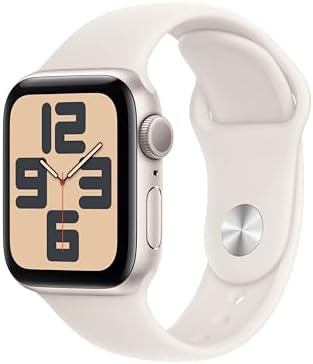
The physical design of each watch reflects its primary purpose. The Apple Watch SE 3 utilizes a 40mm aluminum case with rounded corners and a smooth, glass-like finish. It is designed to be unobtrusive during sleep and elegant enough for a business meeting. The Midnight Aluminum finish is a deep, neutral color that pairs well with the matching Sport Band.
In contrast, the Garmin Forerunner 165 features a fiber-reinforced polymer case. This material choice is deliberate, keeping the watch lightweight for runners who are conscious of every gram. The Forerunner 165's aesthetic is sportier and more utilitarian, with a slightly thicker profile to accommodate the larger battery. While the Apple Watch leans towards a jewelry-like appearance, the Garmin brand is unapologetically a tool for athletes.
Display and Interaction
The Apple Watch SE 3 is equipped with an Always-On Retina display. This is a significant advantage for users who value glanceable information; you do not need to raise your wrist to see the time or notifications. The LTPO OLED technology also enables an always-on dimmed state that preserves battery life, although the SE 3 still requires daily charging.
The Garmin Forerunner 165 features a bright AMOLED display, which is a notable upgrade from the MIP displays found on older entry-level models. It offers vibrant colors and excellent contrast, which makes maps and training charts easier to read. However, the Forerunner 165 does not have an always-on display mode. To check the time, you must perform a wrist gesture or tap the screen, a deliberate trade-off to maintain the device's multi-day battery life.
Battery Life and Charging: A Study in Compromise
This is perhaps the most significant differentiator. The Apple Watch SE 3 offers up to 18 hours of battery life in smartwatch mode. In practice, this means a daily charging routine is necessary. For users who are already accustomed to charging their smartphone every night, the Apple ecosystem makes this seamless, as the watch charges quickly via a magnetic puck.
The Garmin Forerunner 165 disrupts this pattern entirely. In smartwatch mode, it can last up to 11 days. Even in GPS-only mode, it lasts up to 19 hours. This means a user can log a daily 5K run, wear the watch 24/7 for sleep tracking, and still only need to charge it once a week. For frequent travelers, ultra-marathon runners, or simply anyone tired of the charge-your-watch-daily ritual, the Forerunner 165's battery architecture is a persuasive argument.
Training and Performance Metrics
The Apple Watch SE 3 provides a comprehensive set of fitness features, including heart rate monitoring, sleep tracking, and high/low heart rate notifications. It uses the Apple S9 SiP to power workout algorithms that are accurate for general fitness. However, for detailed performance analysis, Apple relies heavily on third-party applications. This means advanced metrics like ground contact time, vertical oscillation, and lactate threshold are accessible, but often behind a subscription or separate app download.
Native Training Tools on the Forerunner 165
The Garmin Forerunner 165 is built from the ground up for runners. It offers native metrics that require no additional setup. These include VO2 Max estimation, Training Effect, and Training Readiness. This is not just a feature list; it is a training system. Training Readiness, for example, combines sleep data, heart rate variability (HRV), and recent activity to tell you whether you should push hard or focus on recovery. For a runner seeking structured improvement without a coach, this built-in analytics suite is the primary allure of the Forerunner 165 series.
The Forerunner 165 also supports training plans and offers daily suggested workouts. This creates a guided experience, pushing you to perform specific intervals or recovery runs based on your current fitness level. The Apple Watch SE 3, while capable, does not align your daily schedule with your performance data in the same automated, prescriptive way.
Smart Features and Ecosystem Connectivity
If the intent is to stay connected without a phone, the Apple Watch SE 3 shines. With a cellular option, users can make calls, send texts, and stream music directly from the wrist. The App Store offers thousands of titles, from meditation apps to advanced golf GPS. Features like Fall Detection and Crash Detection add a safety layer that is reassuring for daily life and outdoor activities. The Always-On display also means you can glance at a notification mid-conversation without appearing to ignore the person in front of you.
The Garmin Forerunner 165 takes a more focused approach. It provides smart notifications, contactless payment via Garmin Pay, and music storage for offline listening. It also features safety tools like Incident Detection and LiveTrack, allowing friends and family to follow your run in real-time. However, the app ecosystem is curated and not as expansive as Apple's. You cannot answer a phone call on the Forerunner 165, nor can you respond to texts with a voice-to-text function. The philosophy here is to minimize distractions during a workout, keeping the focus on the activity rather than the wrist-mounted screen.
Deciding between the Apple Watch SE 3 and the Garmin Forerunner 165 is a matter of identifying your primary use case. The Apple Watch SE 3 is the correct choice for someone who is active but prioritizes a connected lifestyle. It is for the user who wants to leave their phone behind, control their smart home, and have a safety net in case of a fall. The Garmin Forerunner 165 is the definitive choice for the runner who values data, battery longevity, and recovery insights above all else. It is a specialized instrument for athletes who demand that their watch keeps up with their training schedule, not the other way around. The trade-off between a rich, power-hungry smartwatch and a focused, durable training partner has never been clearer.
 Just Pick Your Favorite Stylish Watch online













Item Reviews