The Apple Watch Series 11 arrives with a 9.7mm thin case profile, a detail that keeps the aluminum model at roughly 30.3 grams in the 42mm GPS configuration. That combination of slim dimensions and light weight matters more than any single spec sheet headline, because it determines whether the watch disappears on the wrist during a full day of wear or becomes a constant reminder of its own presence.
Design Evolution And Physical Dimensions
Two case sizes anchor the lineup. The smaller version measures 42mm in height and 36mm in width, with a 374 by 446 pixel resolution spread across a 989 square millimeter display area. The larger version steps up to 46mm in height, 39mm in width, 416 by 496 pixels, and a 1196 square millimeter display area that accommodates wrists measuring between 140mm and 245mm. That wrist range is broad enough to cover a significant portion of adult wearers without forcing a compromise on either case size.
Apple has continued to make the case thinner relative to its footprint rather than simply enlarging the watch, so the increased screen real estate does not come with proportional bulk. For anyone upgrading from an older model, the difference is most obvious when scrolling through notifications or reading a workout summary on the wrist rather than reaching for a phone.
Display And Materials
The always-on display remains a defining characteristic of the series, and the expanded display area on the 46mm version makes complications easier to read at a glance. Aluminum remains the mainstream case material, while the front crystal and rear sensor array are engineered to work together for both visibility and accurate biometric readings.
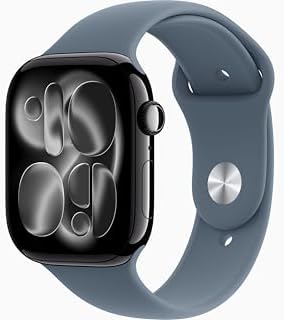
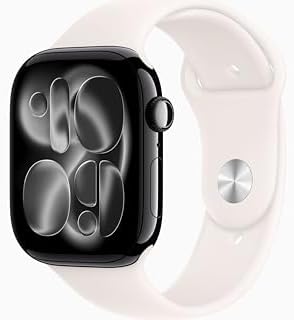
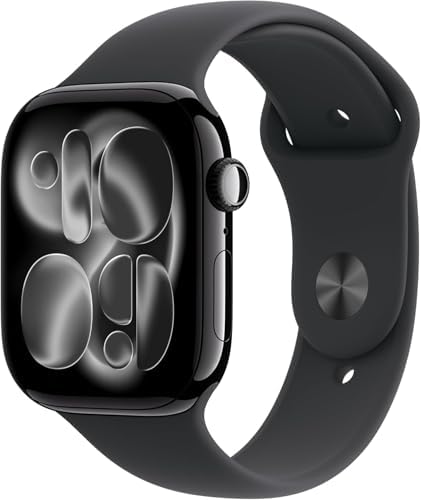
Case color options include finishes such as Jet Black, which pairs with a range of band materials. A configuration such as the Apple Watch Series 11 Jet Black Aluminum 46mm GPS pairs the hardware and strap for a cohesive look out of the box.
Chip, Performance And Connectivity
Processing power comes from the S-series chip architecture that Apple has refined across successive generations, with a 64-bit dual-core processor and a multi-core Neural Engine handling on-device machine learning tasks. This matters for features that need to respond instantly rather than round-trip to a server, including audio intelligence functions, sound recognition, and health algorithms that process sensor data locally.
Storage capacity sits at 64GB, which is enough for offline music, podcast downloads, and a meaningful library of third-party applications without constant housekeeping. Connectivity follows the familiar split between GPS-only and GPS plus Cellular variants, and cellular models maintain a connection to the paired iPhone over Bluetooth for a substantial portion of the day in addition to handling calls and messages independently when the phone is left behind.
Charging And Daily Runtime
Battery behavior is one of the practical differentiators in this generation. Apple rates the watch to reach up to 80 percent charge in about 30 minutes, a figure that makes a short top-up before heading out genuinely useful rather than symbolic. Charging speed in this range shifts the usage pattern: instead of a rigid overnight routine, the watch can be topped up during a shower or while sitting at a desk.
Runtime targets full-day use, which covers sleep tracking at night and active use during the day when charging is scheduled around those two blocks. This dual-purpose role is why battery capacity alone rarely tells the whole story; the charging curve and the ability to recover meaningful charge quickly often matter more in practice.
Health And Fitness Capabilities
Health monitoring remains the central reason many buyers choose an Apple Watch over a conventional timepiece. The sensor array supports continuous heart rate measurement, blood oxygen tracking where available, sleep staging, and workout metrics across a wide catalog of activity types. Sleep Score distills overnight data into a single interpretable number, while the fitness tracking layer records calories, distance, pace, and heart rate zones during exercise sessions.
Water resistance allows the watch to be worn during swimming and showering, and the workout app includes pool and open water profiles. For runners and cyclists, the combination of GPS positioning and heart rate data provides the core metrics most training plans rely on, without requiring a separate chest strap for everyday sessions.
- Health monitoring: continuous heart rate, sleep staging, and blood oxygen readings where supported
- Safety features: fall detection, crash detection, and emergency calling on cellular models
- Workout profiles: running, cycling, swimming, strength training, and dozens more
- Water resistance: suitable for swimming and everyday exposure to water
Safety functions deserve separate mention because they operate passively. Fall detection and crash detection are designed to trigger without user input, which is the point: the situations that require them rarely allow someone to reach for a button. On cellular configurations, emergency calling can function even when the phone is not nearby.
Software Intelligence And Everyday Interaction
The Neural Engine enables a set of audio and voice features that go beyond basic dictation. Live Rewind, Siri Recap, Sound Recognition, and Shazam integration all lean on on-device processing, which keeps response times low and reduces dependence on a network connection. Sound Recognition, for instance, can alert a wearer to specific environmental sounds, a capability that has practical value for users with hearing considerations.
Notifications, complications, and third-party apps run on the same watchOS foundation as prior generations, so the learning curve for existing users is minimal. The larger display area on the 46mm model changes how much information fits on a single watch face, which is a quieter upgrade than a new sensor but one that affects every glance throughout the day.
Positioning Within The Apple Watch Lineup
This generation sits in the mainstream slot of the current Apple Watch range, between the more affordable SE line and the rugged Ultra models. That positioning explains its priorities: broad health coverage, a full-featured display, and cellular options rather than extreme battery endurance or specialized outdoor hardware.
Buyers comparing within the Apple brand's ecosystem generally weigh three factors: case size for wrist fit, GPS versus GPS plus Cellular for connectivity independence, and storage for offline media. The 46mm GPS plus Cellular combination with 64GB covers the widest set of use cases, from commuters who leave the phone at home to swimmers and runners who want music without carrying a device.
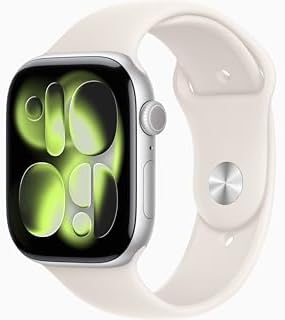
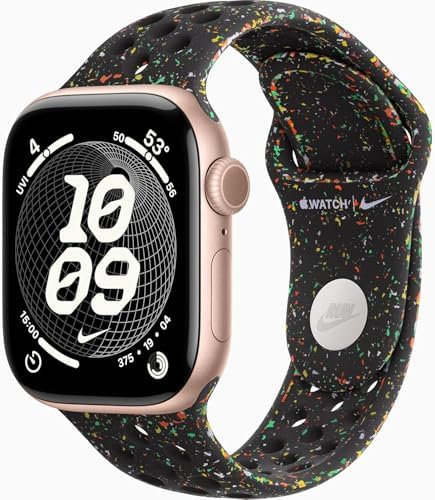
For those who want to see how the current generation fits alongside its predecessors, the Series 11 lineup offers a clear view of the size and connectivity options available across the range.
Who Should Consider The Series 11
Upgrading makes the most sense for owners of watches several generations old, where the cumulative gains in display area, charging speed, and sensor accuracy become noticeable rather than marginal. First-time buyers entering the ecosystem will find the feature set complete enough that the main decision is about size and connectivity rather than whether the watch can do a particular job.
Runners, swimmers, and gym regulars get the tracking depth they need without additional hardware. Users focused on sleep and recovery get overnight metrics paired with a charging routine that fits into a morning or evening slot. Commuters who want calls and messages without a phone nearby should look at cellular variants specifically.
The watch is less suited to multi-day backcountry expeditions where charging access is limited, a scenario where the Ultra line and its longer endurance targets are the more appropriate choice. Knowing where the Series 11 stops is as useful as knowing where it excels, because it clarifies that this generation is built around daily wear, health visibility, and the small interactions that accumulate across a full week on the wrist.
 Just Pick Your Favorite Stylish Watch online












Item Reviews