The Amazfit Active 2 series and the Amazfit Active 3 series both target the same buyer: someone who wants accurate health tracking, built-in GPS and multi-day battery life without paying a premium flagship price. According to Amazfit, the Active 2 line covers a round 44mm model starting at $129.99 and a square variant, while the newer Amazfit Active 3 Smart Watch 1.32" 45mm GPS arrives at $169.99 with sapphire glass, offline maps and a larger battery. This guide is written to be saved: it sets out the real differences between the two generations, the trade-offs that matter day to day, and the criteria that should decide which one lands on your wrist.
| Decision Factor |
Amazfit Active 2 Series |
Amazfit Active 3 Series |
| Verified starting price |
$129.99 (round), $149.99 (square) |
$169.99 (Premium) |
| Stated battery life |
Up to 10 days |
Up to 12 days |
| Display type |
1.32" AMOLED (round) / 1.75" AMOLED (square) |
1.32" AMOLED |
| Cover glass |
Standard glass (Premium adds sapphire) |
Sapphire glass (Premium) |
| Case size |
44mm round / square form |
45mm round |
| Built-in GPS |
Yes, phone-free tracking with turn-by-turn navigation |
Yes, with offline maps |
| Onboard storage |
Not specified in official material |
4GB |
| Workout modes |
160 |
170 |
| Subscription required |
No |
No (Amazfit confirmed no extra subscription for training and recovery data) |
| Health tracking core |
BioTracker heart rate and sleep monitoring |
Workout plus recovery data tracking |
| Call and text handling |
Bluetooth calls and texts supported |
Bluetooth pairing with iOS and Android |
| Water resistance |
Water-resistant |
Water-resistant |
| Strap options |
Silicone; leather plus sport strap on Premium |
Sport-oriented strap |
| Best suited to |
Budget-first buyers who still want GPS and calling |
Buyers who want durability and navigation backup |
| Generation positioning |
Previous-generation value pick |
Current-generation step-up |
| Running cost after purchase |
No subscription fee stated |
No subscription fee stated |
Read the table as a decision map rather than a scoreboard. The two rows that change most buying decisions are the cover glass and the offline maps: sapphire glass moves the Active 3 Premium into territory where scratches from keys, gym equipment or rock faces stop being a daily worry, while offline maps only matter if you routinely leave reliable phone signal behind. The price gap, roughly forty dollars between the round Active 2 and the Active 3 Premium, buys those two features plus two extra days of stated battery life. Whether that is worth it depends entirely on how you use a watch, not on which number is bigger.
What Actually Changed Between the Active 2 and the Active 3
Amazfit did not rebuild the formula. Both generations sit in the same everyday-fitness bracket, both run an AMOLED display of about 1.32 inches on the round models, and both are documented as subscription-free, which separates them from several rivals that gate training insights behind a monthly plan. The differences are concentrated in durability, storage and navigation, which is a sensible place to spend an upgrade.
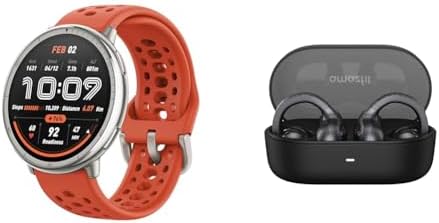
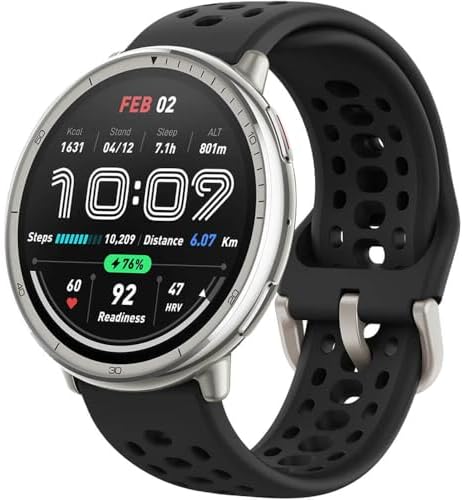
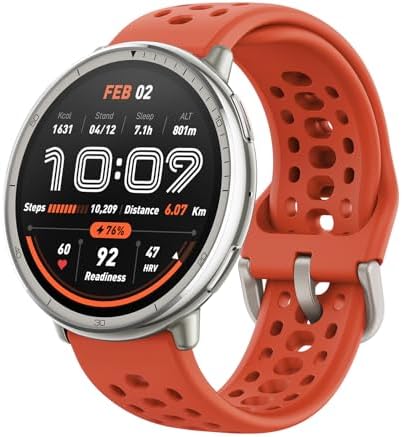
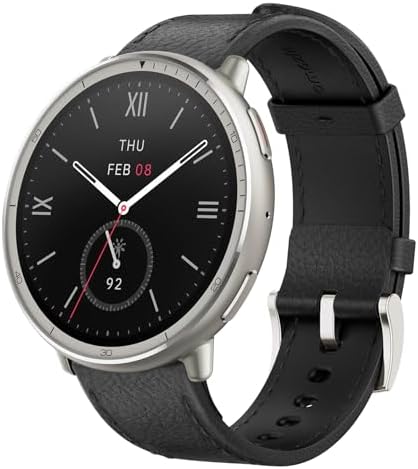
For anyone weighing the round model, the Amazfit Active 2 Smart Watch 1.32" 44mm GPS sets the established specification: a 44mm round case, up to ten days of battery, the BioTracker sensor package for heart rate and sleep, and 160 workout modes. It is a mature product with a well-documented feature set, and at $129.99 for the round model it sits in a bracket where competitors frequently omit built-in GPS or reserve it for a more expensive tier.
The Active 3 generation, by contrast, reads as a consolidation of everything Amazfit has learned about how people actually wear these watches. The shift to a 45mm case, the sapphire cover on the Premium model, the 4GB of storage and the addition of offline maps all point in one direction: a device meant to be taken further from the charger and further from the city. The jump from 160 to 170 workout modes is minor on paper but broadens the automated detection range for niche activities.
Battery Life and the Charging Habit It Breaks
Ten days versus twelve days sounds like a rounding difference. In practice it is the difference between charging on a fixed weekly rhythm and charging whenever you happen to remember. Amazfit states the Active 2 offers up to ten days and the Active 3 Premium up to twelve, and both figures assume typical use rather than continuous GPS. Heavy GPS users on either model will see substantially shorter intervals, and that is where the sapphire glass and larger capacity of the newer model start to justify themselves: the watch you can leave on for a two-day trip without a cable is the watch you actually use.
Neither model is positioned as a multi-week expedition instrument, and neither needs to be. The relevant question is whether your routine includes regular overnight travel or back-to-back days where charging is inconvenient. If it does, the additional headroom of the Active 3 is a practical gain rather than a specification to admire.
Durability: Where Sapphire Glass Earns Its Premium
The single most consequential difference between the two lines is the cover material on the Premium variants. The Amazfit Active 2 Premium Smart Watch 1.32" 44mm GPS is documented with sapphire glass, and the Active 3 Premium continues that approach. Sapphire sits high on the Mohs hardness scale, which is why it resists the sand, grit and incidental contact that gradually dull a standard glass crystal.
For a watch worn during gym sessions, trail runs and general outdoor work, this matters more than almost any other specification on the sheet. A screen that stays legible after two years of daily abuse is a better investment than a lower purchase price that leads to an early replacement. Buyers comparing the base Active 2 against the Active 3 Premium are therefore comparing two different durability classes, not simply two generations.
Navigation, Storage and the Case for Offline Maps
Built-in GPS is present across both generations, and Amazfit confirms phone-free outdoor tracking like running, walking and cycling on the Active 2, alongside turn-by-turn navigation. That already covers the vast majority of recreational use: leaving the phone at home and having the route logged accurately on return.
Offline maps change the failure mode rather than the feature list. When a route is loaded onto the watch, a wrong turn in an unfamiliar area no longer requires phone signal to correct. The 4GB of onboard storage on the Active 3 is what makes map data practical to carry in the first place, and it is the clearest functional argument for the newer line if you ride, hike or travel in areas with patchy coverage.
Health Tracking and Training Guidance Without a Subscription
Both lines track heart rate and sleep, and both are sold without a recurring training fee, which is unusual in the segment. The Active 3 shifts the emphasis slightly toward recovery data alongside workout data, reflecting a broader change in how amateur athletes train: the recognition that rest and readiness matter as much as the session itself.
Heart Rate and Sleep Monitoring
The BioTracker sensor system on the Active 2 is the foundation both generations build on, and sleep staging has become one of the more reliable features in this price bracket. Accuracy in a wrist-based optical sensor is influenced by strap fit and wrist position, so the inclusion of a leather strap and a sport strap with the Premium variant is a functional benefit, not merely a cosmetic one. A snug sport strap during exercise consistently produces better readings than a loose dress strap.
Workout Coverage and Automated Detection
The count moves from 160 modes to 170, and the practical value of that increase is modest for most users. The more relevant consideration is how well the watch recognises activity automatically, since nobody wants to scroll through a menu mid-run. Here the software maturity of the Active 2 platform works in its favour, while the Active 3 benefits from the newer firmware baseline. Buyers who follow one or two disciplines will find both sufficient; buyers who rotate between several will appreciate the broader automatic recognition.
Design, Fit and the Case Size Question
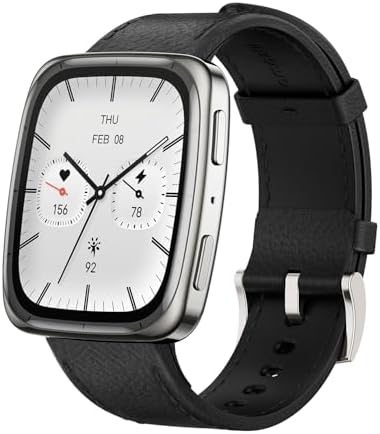
Case diameter is the specification most often ignored in online comparisons and most immediately obvious on the wrist. The Active 2 round model measures 44mm, the square variant offers a 1.75-inch display in a different form factor entirely, and the Active 3 moves to 45mm. That single millimetre is not the deciding factor on its own, but combined with case thickness and lug shape it changes how the watch sits under a shirt cuff.
Buyers with slimmer wrists often find 44mm is already at the outer edge of comfortable, which makes the square Active 2 a genuine alternative rather than a footnote in the range. Conversely, anyone who prefers a more substantial presence on the wrist will find the 45mm Active 3 aligns more closely with current sport-watch proportions.
Which Amazfit Should You Buy
The decision resolves cleanly once you identify the constraint that matters most to you. If the budget is the binding constraint and you want reliable GPS, calling and sleep tracking, the Active 2 Premium delivers sapphire glass and the full health suite at the lower price point, and the round Active 2 at $129.99 remains one of the more complete entry offerings in its class.
If durability, storage and off-grid navigation are the priorities, the extra forty dollars for the Active 3 Premium buys a materially more capable watch. Buyers who train outdoors year-round, travel to unfamiliar cities, or simply resent replacing scratched hardware will recover that difference over the life of the device.
The broader context is that the Amazfit brand's approach to the Active line has been consistent across both generations: keep the essentials, drop the subscription, and let the hardware carry the value. Whichever generation suits your routine, the result is a watch that tracks more of your day than its price suggests, and that is the criterion most worth applying when the two are lined up side by side.
 Just Pick Your Favorite Stylish Watch online













Item Reviews