The Google Pixel Watch 3 and the Samsung Galaxy Watch7 are the two most credible Wear OS flagships of their generation, and they arrive at the same question from opposite directions. Google's model leans on Fitbit's health platform and a rounded, jewelry-like case, while Samsung's leans on a brighter panel, a longer battery window, and sleep apnea detection. The criteria that actually change a buying decision deserve to sit in front of the marketing claims rather than behind them, so this guide is organized around the hardware choices a buyer will live with every day rather than the spec sheet a buyer reads once.
| Feature and Selling Point |
Google Pixel Watch 3 |
Samsung Galaxy Watch7 |
| Available case sizes |
41mm and 45mm |
40mm and 44mm |
| Display type |
Actua AMOLED, dims to 1 nit in low light |
Super AMOLED, up to 2000 nits |
| Case material |
100 percent recycled aluminum |
Aluminum frame with sapphire glass |
| Battery life claim |
24 hours with always-on display enabled |
Up to 40 hours in power-saving conditions |
| Charging method |
Pogo pin magnetic dock, no Qi pad support |
Magnetic wireless puck, USB-C |
| Chipset |
Snapdragon W5 Gen 1 platform |
Exynos W1000, five-core |
| Nighttime health tracking |
Bedtime Mode plus nightly health metrics |
Sleep apnea detection plus Energy Score |
| Blood oxygen sensor |
Included |
Included |
| ECG app |
Available in supported regions |
Available in supported regions |
| Water resistance |
5 ATM (50 metres) |
5 ATM plus IP68 rating |
| Phone compatibility |
Android 10 or higher only, no iOS support |
Android 10 or higher, some iPhone features |
| Display protection |
Corning Gorilla Glass 5 |
Sapphire crystal |
| Best suited to |
Fitness-first users wanting Fitbit depth and a softer, rounder silhouette |
Samsung phone owners wanting a longer battery window and a bigger display |
| Standout decision criterion |
Fitbit platform depth and a dual-chip architecture for always-on wear |
Sleep apnea detection and a longer battery window |
The line that matters most in that table is not the one either brand markets hardest. If the watch comes off overnight to charge, the Galaxy Watch7's extended power-saving window removes a small but daily chore, while the Pixel Watch 3 asks for a dedicated dock routine. If the day is spent outdoors, the Galaxy Watch7 pushes to 2000 nits, but the Pixel Watch 3 answers with a down-to-1-nit floor for dark rooms, a difference many people notice more often in practice than peak brightness. Read the sizing rows before the sensor rows: a watch that fits badly gets worn less, and a watch that is worn less tracks nothing.
Display Engineering: Brightness Peaks Versus Dimming Floors
Both watches rely on OLED technology, but they optimize for opposite ends of the light spectrum.
According to Samsung, the Galaxy Watch7 uses a Super AMOLED panel that peaks at 2000 nits, a figure that makes mid-day reading on a run or a bike ride essentially effortless. That headroom matters most to people who train outdoors and glance at the screen from a raised arm rather than a seated posture. The Pixel Watch 3's Actua display pushes headline brightness into the same high range, but Google's more interesting claim sits at the low end: the screen drops as low as 1 nit in Bedtime Mode, a specification aimed at people who check the time at 3 a.m. without destroying their night vision.
There is also a practical difference in physical presence. The Pixel Watch 3 comes in 41mm and 45mm, while the Galaxy Watch7 is stocked in 40mm and 44mm, so the Google model offers a genuinely larger option at the top of its range and Samsung's lineup sits slightly smaller overall. Wrist circumference, not marketing, should decide this. A 40mm watch on a broad wrist reads as undersized; a 45mm watch on a slim wrist loses its proportions.
Fitness and Sleep Data: Sensor Hardware and What It Actually Tracks
The sensor hardware across the two watches overlaps more than the marketing suggests, which makes the software layer the deciding factor.
Both devices include a blood oxygen sensor, an ECG app in supported regions, and continuous heart-rate monitoring across the day. The Galaxy Watch7 adds sleep apnea detection, a feature that flags disturbed breathing during the night and directs users toward a clinical conversation if patterns repeat. For someone with a history of snoring or a partner who has noticed pauses in breathing, that single function can outrank battery life and display brightness combined. The Pixel Watch 3 answers with Fitbit's platform depth, including nightly health metrics and a well-developed readiness framework.
Neither watch is a medical instrument, and neither substitutes for diagnosis. The sensible read is that sleeping metrics favor the Galaxy Watch7 out of the box, while Fitbit's ecosystem is deeper for users who want structured activity scoring and coaching across many sports. On accuracy, the reporting comes from each manufacturer's own measurements, and independent testing across third-party labs has been broadly consistent for both platforms in recent generations, so hardware does not separate them enough to be a sole reason to choose one over the other.
Battery and Charging Behavior in Daily Use
Here the difference is less about which watch runs longer and more about which watch fits your routine.
Samsung positions the Galaxy Watch7 at up to 40 hours in power-saving conditions. The Pixel Watch 3 targets roughly 24 hours with the always-on display enabled, which means the Pixel user needs a daily dock session and the Galaxy user gets some slack. For overnight tracking, that slack is directly useful: the Galaxy Watch7 comfortably lasts through a night of sleep tracking and still covers a full working day, while the Pixel Watch 3 requires care with the charging routine if you want to track your sleep every night.
Charging hardware adds another wrinkle. The Pixel Watch 3 charges only through its own pogo-pin magnetic dock and does not accept standard Qi wireless pads, so a travel kit means carrying the proprietary charger. The Galaxy Watch7 uses a magnetic wireless charging puck with a USB-C connection, which is easier to pair with the cables most Android owners already pack.
Processor, Wear OS, and How Long the Hardware Stays Fast
Speed in a watch is mostly visible in transitions rather than in benchmark apps, and both devices choose their silicon accordingly. The Pixel Watch 3 runs on Snapdragon's W5 Gen 1 platform, a chip designed for a dual-architecture setup where a low-power co-processor handles always-on functions while the main chip handles heavy tasks. The Galaxy Watch7 uses Samsung's five-core Exynos W1000, paired with a compact but power-efficient processor that keeps gesture and notification handling smooth.
Both watches run Wear OS 4 and receive the same Google Play Store app library, including Google Wallet for contactless payments and third-party apps for mapping, audio, and fitness. The more important question is ecosystem fit. The Pixel Watch 3 works best alongside the Google brand's wider device family, with Google Assistant baked in and deep Fitbit integration. A recent Samsung phone, tablet, or pair of earbuds adds value to the Galaxy Watch7 that no other platform can replicate with the same reliability, and the Samsung brand's ecosystem was built with that assumption baked in.
Case Materials and Long-Term Wear
Materials sit near the top of the purchase decision because watch materials age differently on a wrist.
The Pixel Watch 3 uses 100 percent recycled aluminum for its cases, a lighter and more comfortable build on the wrist, paired with Corning Gorilla Glass 5 for scratch protection. The Galaxy Watch7 fits a sapphire crystal over its display. Sapphire ranks roughly one step higher on scratch hardness, which matters in a workplace or gym environment where the watch is routinely knocked against hard surfaces. The trade-off is real: aluminum wearers feel less weight, and there is no right answer, only the answer that suits the person wearing the watch.
Water resistance is effectively equal across the two, at 5 ATM, with waterproofing down to a pressure rating suitable for shallow swims. Neither watch is built for scuba diving, and neither should be repurposed as such. For a pool session or a shower, both are fine.
Cost and Which Model to Look For
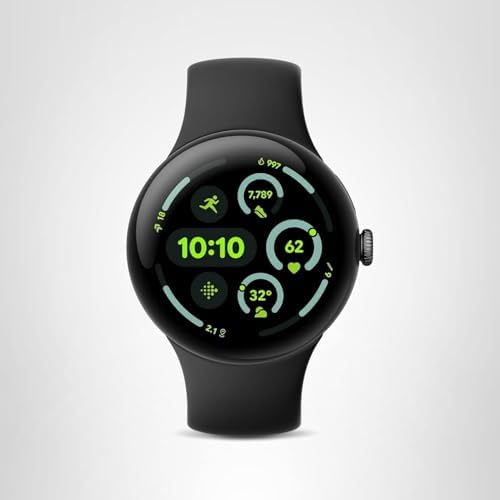
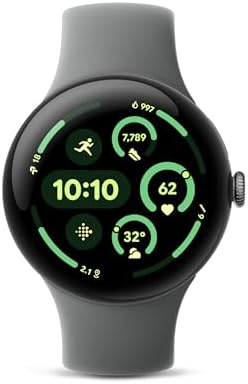
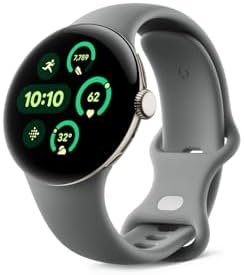
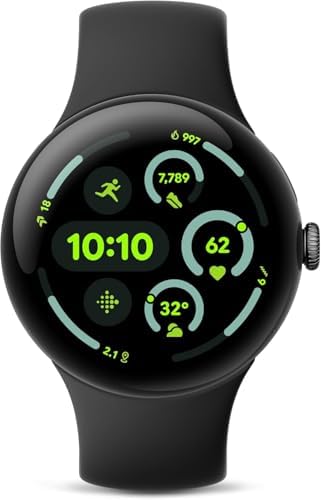
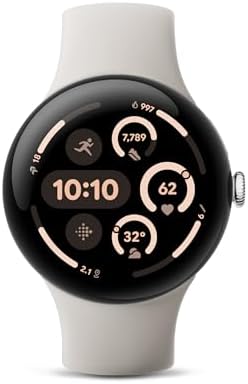
For a Pixel-first buyer, the Google Pixel Watch 3 (45mm) in its Latest Black Aluminum Wi-Fi configuration is a strong anchor point: the 45mm case gives the larger display option that Samsung's lineup cannot match at the top end, and the Wi-Fi setup appeals to people who do not want cellular service. Its battery covers a day of always-on use, and its case tracks the Pixel's soft, rounded identity.
On the other side, the Samsung Galaxy Watch7 40mm in the L300N GPS Green Renewed variant is the better fit for a smaller wrist or for a buyer who wants the Galaxy Watch7's battery allowance and sleep apnea detection at a smaller 40mm diameter. Refurbished inventory, such as this green model, makes more sense for people who care about the Wear OS hardware rather than collecting a sealed-box retail box.
Buyers who want to compare the wider field before committing should look at the full Samsung Galaxy Watch7 lineup, where case size, connectivity, and finish options sit side by side and make the sizing decision far easier to settle than any spec table can.
The Decision Framework
Buying decisions come down to roughly four circumstances. A buyer who prioritizes fitness coaching depth and Fitbit platform consistency should choose the Pixel Watch 3. A buyer who tracks sleep nightly and refuses to add a nightly charging chore should choose the Galaxy Watch7. A buyer with an Android phone from Google or with no strong brand loyalty should weigh the two on wrist feel and display habits. A buyer with a Samsung phone should start from the Galaxy Watch7 unless there is a specific reason not to, because the ecosystem that surrounds it exists in its support of the product.
For anyone undecided about case size above all else, the Pixel Watch 3 wins on offering a 45mm case option, and the Galaxy Watch7 wins on its battery allowance at smaller dimensions. For indoor readers bothered by bright watches at night, the Pixel Watch 3's 1-nit minimum outranks the Galaxy Watch7's peak brightness, and for outdoor runners the ranking is reversed. Neither watch simply beats the other on every axis, and the buyer who understands their own routine makes the better purchase almost automatically.
 Just Pick Your Favorite Stylish Watch online












Item Reviews