The Fitbit Charge 6 and the Google Pixel Watch 4 represent two different answers to the same question: how much wearable does a person actually need? One is a slim band designed to stay on the wrist for days without fuss. The other is a round smartwatch that brings a bright display, app support, and Gemini assistance to the forearm. This guide is built as a permanent reference for buyers making a single, long-term decision, so it concentrates on the criteria that shape daily life rather than marketing gloss: battery rhythm, GPS autonomy, screen experience, sleep data continuity, water resistance, and platform value. The Charge 6 series and the Pixel Watch 4 collection share a parent company and a health platform, yet they suit different wrists and different routines.
| Feature and Selling Point |
Fitbit Charge 6 |
Google Pixel Watch 4 |
| Form Factor |
Slim fitness band with narrow display |
Round smartwatch case with domed glass |
| Display |
Small AMOLED touchscreen |
Actua 360 panel, up to 3,000 nits peak |
| Case and Band Sizes |
Small and large bands, single case profile |
41mm or 45mm case options |
| GPS Autonomy |
Connected GPS through the paired phone |
Dual-frequency GPS built in |
| Battery Window |
Multi-day stretches between charges |
Roughly 30 hours per cycle |
| Smart Capabilities |
Notifications, Google apps, heart rate on gym equipment |
Gemini built in, full app environment |
| Health Tracking Suite |
Heart rate, sleep, activity, exercise modes |
Heart rate, fitness, sleep with richer visuals |
| Water Resistance |
Sweat, rain, and pool sessions |
Swimming and showers |
| Phone Compatibility |
Android-focused app integration |
Android 11.0 or newer, Pixel pairing benefits |
| Membership Bundle |
3-month Google Health Premium included |
Same platform, bundle varies by listing |
| Everyday Wearability |
Slides under a cuff, unnoticeable during rest |
Statement object that draws attention |
| Best Suited Scenario |
24/7 tracking, gym floors, outdoor runs, travel |
App-heavy users, calls, navigation, assistant tasks |
| Charging Discipline |
Forgiving, tops up while showering |
Daily or nightly top-ups become routine |
The most decision-changing rows in that table are GPS autonomy and charging discipline. The Pixel Watch 4 carries its own dual-frequency GPS hardware, so a run without a phone still records a clean route. The Charge 6 relies on connected GPS from the paired phone, a fine trade for anyone who carries a phone anyway. On the other side, the Charge 6 stretches across multiple days between charges while the Pixel Watch 4 lands at roughly a 30-hour window, and that single number reshapes how the device fits into sleep tracking and morning routines.
The Two Wearable Philosophies Behind This Choice
Fitbit built its reputation on trackers that ask nothing of the wearer except that they stay on the wrist. The approach favors narrow profiles, low visual noise, and a battery that forgets to be a problem. Charge devices have been the company's workhorse line for years, sitting between pure step trackers and larger smartwatches, and the Charge 6 continues that lineage with a deliberate reset: native Google apps, richer heart rate integration with gym equipment, and a wrist-to-machine connection that turns cardio machinery into another data source.
The Pixel Watch line borrows a different grammar entirely. It is a wrist-mounted extension of the phone, with the watch face as a display, the assistant as a co-pilot, and the case as a piece of jewelry. Google equipped the fourth-generation model with a domed Actua 360 panel rated up to 3,000 nits peak brightness and offered two case sizes, 41mm or 45mm, plus the built-in dual-frequency GPS noted in the table. Those are smartwatch-with-aspirations specs, and they set the terms of the comparison: one device is a tool you wear, the other is a computer you display.
The shared Google Health platform matters here. Both devices feed the same data environment, so dashboards, activity history, and membership benefits overlap. The decision therefore rarely comes down to software, because the software is the same. It comes down to what hardware shape survives your week.
Battery Rhythm and Real-World Charging
Wrap the Charge 6 in a paper-thin phrase: it asks you to charge it when convenient, not when necessary. That distinction is small on spec sheets and enormous in practice. The tracker records sleep through the night, collects morning heart rate data, then coasts through errands and workouts while the wearer forgets it exists. A single charging session during a shower window is usually enough to keep the current running.
The Google Pixel Watch 4 (45mm) Moonstone Wi-Fi takes the opposite stance, with approximately 30 hours per cycle, as Google specifies on its watch comparison pages. Every night becomes a scheduling question. Sleep tracking in bed, a charge window before bed, a full cycle the following day. Users can build that habit, and plenty do, but the device is honest about its priority: it trades charge duration for display capability and smart features.
The Consequence for Sleep Data
Multi-day battery changes a habit: sleep tracking stops being a nightly performance. The Charge 6 accumulates nights continuously, and the lack of a charging ritual means fewer missed samples and less guilt about removing the band. A 30-hour device demands discipline, and missed nights show up as gaps in trend lines.
What Charging Velocity Is Worth
Two things justify a shortened cycle. First, a bright display that can be tapped regularly: a panel reaching up to 3,000 nits pulls the wearer's eyes and requires more charging energy. Second, true app behavior. Smartwatch features cost battery, and the Pixel Watch 4 prices them explicitly into its runtime. Buyers should ask whether they plan to use those features daily or obsess over a step count, because the answer points to a different product.
GPS, Training Data, and Outdoor Reliability
Route recording is where the device gap widens and clears. Dual-frequency GPS enabled by Google in the Pixel Watch engineering documentation means the watch fixes position from satellite signals on two bands at once, reducing multipath error where buildings reflect signals. The result is a more dependable track along dense city streets or under tree cover. No phone pairing, no teardown, no forgotten device at home.
The Charge 6 uses connected GPS. This approach consumes satellite data from the phone through Bluetooth and mirrors the lightest of battery costs. It works reliably if the phone is within range, meaning the user should decide honestly whether every run, walk, and cycle session includes a pocket device. That scenario is common, sometimes deliberately so, but the gap in autonomy is real.
The gym story provides a good counterpoint for the tracker: the Charge 6 can pair with select cardio equipment so that heart rate lands directly on the machine's display, and the included 3-month Google Health Premium membership adds a data and insight layer familiar to Fitbit users. Buyers exploring the Charge 6 lineup should confirm which band sizes and colorways suit their wrist before committing, and Fitbit's tracker heritage offers further context on how the band family has evolved.
Screen Real Estate Versus a Quiet Wrist
The 45mm Pixel Watch case is a large object on the wrist: a bright face, a prominent curve, and a display that demands to be read at arm's length. Under a monitor light, this instrument shows a readable rendition of a workout summary and apps. The screen's maximum brightness suggests it is designed for visibility rather than flattery, and its OLED depth makes watch faces feel like small scenes.
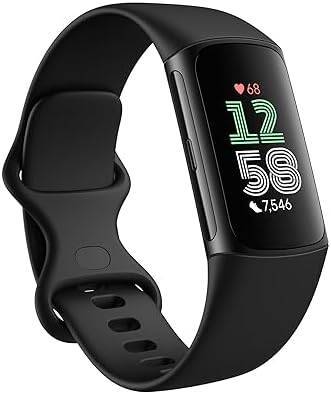
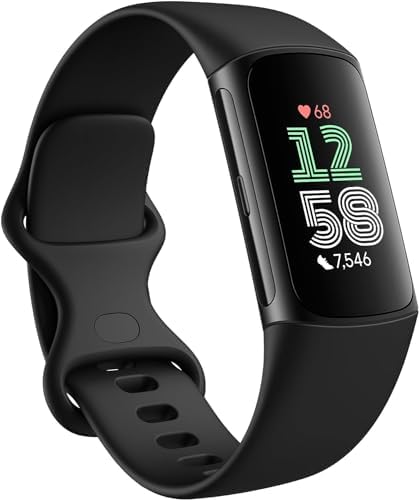
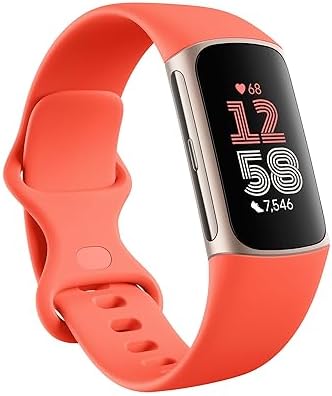
The tracker offers a different experience, one borrowed from the runner's manual: less interface, more screen. The narrow AMOLED strip displays steps, heart rate, exercise start prompts, and notification previews, but it does not pretend to be a phone. Under a jacket cuff the silhouette of the Charge 6 disappears, and during sleep its small face sits at the bottom of the wrist with minimal mass. Wearers who find a 45mm case too loud have their answer built in.
The Pixel Watch's case sizing (41mm or 45mm) at least admits that wrists vary. The smaller case reduces the silhouette while preserving the display-first character. Both devices manage water resistance suitable for swimming and showers, so the discrepancy comes down to operating system comfort versus mechanical size comfort.
Ecosystem and the Gemini Question
Gemini built into the Pixel Watch 4 marks a decisive turn beyond generic notifications. It means wrist-level help for small tasks that would otherwise pull a phone out of a pocket: prompts, quick queries, and voice commands that run under a different vocabulary. Buyers must note that such features only compete for attention on the wrist and become a steady part of their routine if they are already in the Google ecosystem.
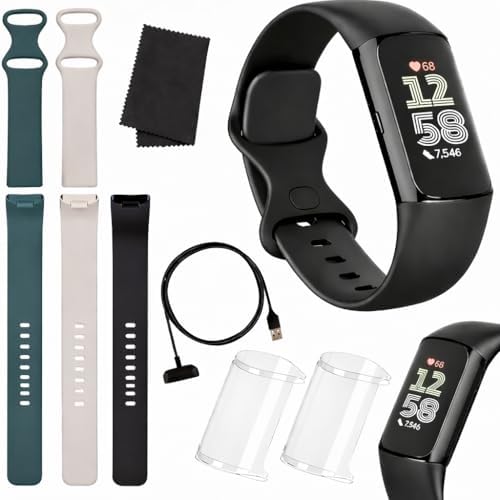
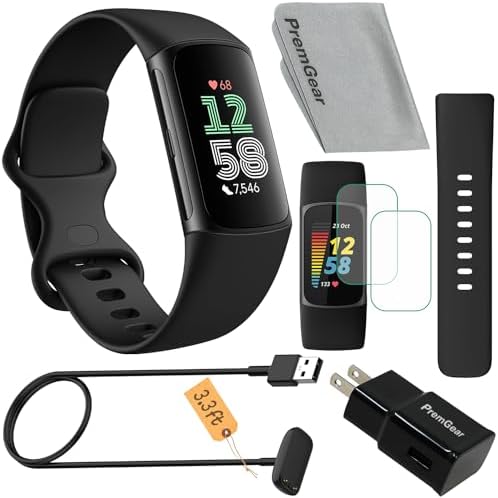
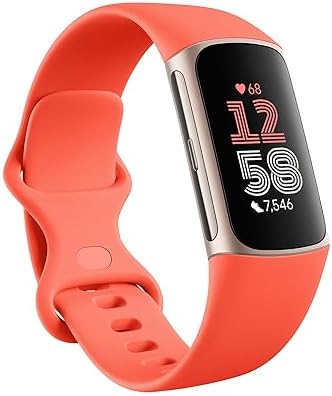
When assembling a shortlist of the Google Fitbit Charge 6 fitness tracker and similar wearables, the key is to pick features that match your life. The Charge 6 line leans toward fitness functionality: heart rate tracking, connected GPS, and a membership that makes data useful. It does not disguise itself as a phone.
The interplay between Fitbit premium services and Google's broader health platform adds a quiet edge that neither device can promise alone. For Android 11.0 or newer users, both fit comfortably, and both speak Google Health. The difference presents itself when customers consider buying into the ecosystem and opt for the device whose behavior aligns with how they move, and Google's hardware family now spans both the band and watch formats under one roof.
Establishing the Framework for Each Wrist
Users whose days mix gym training and cardio workouts, commute on foot, and track sleep continuously during a demanding week will find the Charge 6's deal easy to accept. Charging few and far between leaves the unit on the wrist longer, and connected GPS is an easy trade when a phone already goes everywhere. Multiply that weight over two years and the quietest device accumulates the most data, closing the numbers question.
The Pixel Watch 4 buyer is different: someone who wants the full visual response of working out displayed instantly, hands-on apps on the wrist, and routed runs without a phone. The case selection matters for sensitive wrists, and the daily charge moment becomes part of the routine rather than a defect. For those who use voice and reminder tasks frequently, the built-in assistant provides tangible value that a band cannot match.
Neither path belongs to a statement of status. The purchase comes down to a practical arithmetic of use: how often you reach for the interface, how much autonomy your outdoor work needs, whether your sleep tracking relies on reliable wear, and how much size a wrist tolerates. A straightforward tool and a capable computer each perform their tasks, and the lucky buyer knows which one their week demands before a product settles on the wrist.
 Just Pick Your Favorite Stylish Watch online












Item Reviews