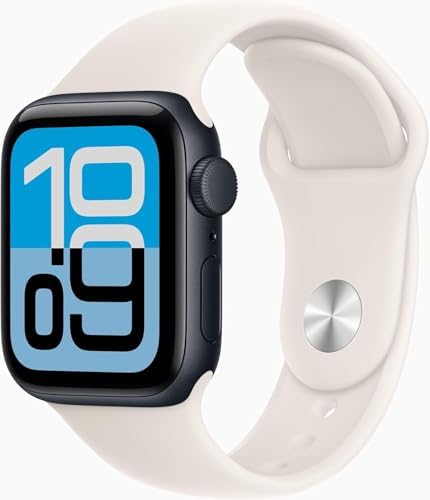
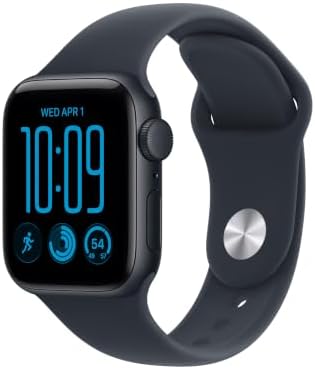
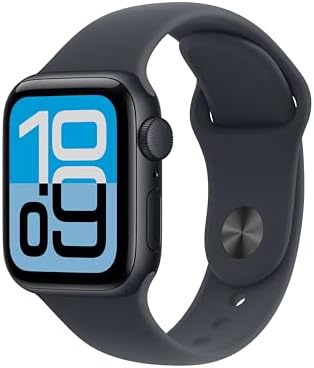
The Apple Watch SE 3 and the Garmin Forerunner 165 occupy the same accessible price bracket yet answer fundamentally different questions. One is a general-purpose smartwatch built to keep iPhone users connected through calls, payments, and safety alerts; the other is a running-focused device tuned for pace, heart rate zones, and recovery feedback. This guide is a buying reference worth keeping, because the right answer depends on how much training depth you need and how much phone-tethered convenience you are willing to trade for it.
Both watches target buyers who want serious tracking without flagship pricing, but they diverge on battery endurance, coaching intelligence, and platform loyalty. The comparison table below isolates the specs that change daily behavior, and the sections that follow explain where each device earns its place on the wrist.
| Feature & Selling Point |
Apple Watch SE 3 |
Garmin Forerunner 165 |
| Display type |
Retina OLED, always-on capable |
AMOLED color touchscreen |
| Case sizing |
Two case sizes offered |
Single 43mm case |
| Phone requirement |
iPhone only (iOS 26 or later) |
iPhone and Android |
| Typical battery use |
Up to roughly 18 hours |
Up to 11 days in smartwatch mode |
| GPS battery mode |
Hours-scale, day-charged |
Up to 19 hours in GPS mode |
| Training load metrics |
Basic activity rings and trends |
Training effect, load focus, recovery time |
| Running dynamics |
Cadence and pace from wrist |
Pace, cadence, and structured workout guidance |
| Heart rate technology |
Optical sensor, ECG not on SE line |
Elevate optical sensor with HR zones |
| Water resistance |
50 metres, swim tracking |
5 ATM, pool swim mode |
| Safety features |
Crash detection and fall detection |
Incident detection during activities |
| Contactless payments |
Apple Pay built in |
Garmin Pay on supported cards |
| Music and calls |
On-wrist calls, music streaming |
Phone notifications, music controls |
| Mapping and navigation |
Apple Maps with turn cues |
Breadcrumb courses and back-to-start |
| Best suited to |
iPhone owners mixing fitness with daily life |
Runners who train to a plan and travel light |
The pivotal rows are battery endurance, training depth, and platform loyalty. The Forerunner 165 stretches one charge across more than a week while offering structured workout guidance and recovery readouts; the SE 3 compresses that into a daily charge cycle but adds calls, payments, and iPhone-native safety tools. Readers already locked into iOS will feel the pull of the first; anyone chasing a half marathon personal best will feel the pull of the second.
The Core Trade-Off: Ecosystem Convenience vs Training Science
The Apple brand's approach treats the watch as an extension of the phone. Notifications, messages, Apple Pay, and Siri arrive without extra setup, and the SE 3 inherits that fluency. For a buyer who wants one device that handles a morning run, a workday of pings, and an evening swim, that integration is the argument. Apple notes that the SE 3 requires an iPhone 11 or later paired with iOS 26 or later, which underlines how tightly the product is bound to the phone generation in a user's pocket.
Garmin builds from the opposite premise. The Forerunner 165 assumes the buyer is training for something specific and wants the watch to coach that objective. Training load, training effect, and recovery time are not bonus cards on a general activity feed; they sit near the center of the interface. Notably, that focus extends to compatibility: Garmin devices pair with both iPhone and Android, so a runner is not penalized for carrying an Android handset. The Garmin brand's long history in GPS navigation underpins that running-first design philosophy.
Which matters more depends on a single question. If the watch is a daily accessory that also tracks workouts, the SE 3 wins on ease. If the watch is a training instrument that also happens to show notifications, the Forerunner 165 wins on depth.
Battery Life as a Lifestyle Decision
Battery figures are rarely glamorous, yet they shape behavior more than any spec sheet line. The SE 3 follows the Apple cadence of a nightly charge. That schedule suits users who already place a phone on a bedside table, but it becomes a liability for anyone sleeping away from a power outlet, camping overnight, or tracking sleep on a regular basis without a second device.
The Forerunner 165 removes that ritual. An eleven-day smartwatch claim, dropping to about nineteen hours in GPS mode, means a week of ordinary use on a single charge and enough reserve for a long weekend race without a cable. For a runner who logs daily sessions and wears the watch to bed for recovery tracking, that gap alone can decide the purchase.
Training Metrics That Actually Change Behavior
The SE 3 covers the fundamentals well: heart rate zones, calories, workout rings, and a broad catalog of workout types. The data is clear and the presentation friendly to newcomers, and Apple's activity trends do a decent job of nudging consistency over weeks. What it does not do is tell a runner whether a session was productive in the context of the training week.
The Forerunner 165 answers that question directly. Training effect scores rate the cardiovascular impact of a run, load focus compares recent hard and easy work, and recovery time advises how long to wait before the next quality session. The pace and heart rate zone alerts during a run require only a glance rather than a mental calculation. For a structured plan, those cues are more useful than a prettier interface.
Daily step counts and general activity tracking are comparable on both. The divergence starts the moment a session has a purpose beyond movement.
Runners' Experience on the Ground
Put both to work on the same route and differences appear quickly. The Garmin Forerunner 165 Running Colorful AMOLED Black shows pace, heart rate zone, and distance on a single bright screen, with haptic prompts when a lap target is missed. The AMOLED panel stays legible in low light, which helps winter evening runs and morning starts before sunrise.
The SE 3 takes a simpler route during a workout, showing the metrics most users ask for without the coaching layer. Its strength shows up after the run, when the watch becomes a general communicator again: replying to a message, taking a call through the wrist, or paying for a coffee on the way home. Neither experience is a downgrade of the other; they are built for different priorities on the same wrist.
Water resistance is a draw at 50 metres and 5 ATM respectively. Both handle pool swims, with open-water continuity dependent on the strength of GPS reception on the day.
Safety, Payments, and Everyday Utility
Apple's safety suite remains the most complete on either list. Crash detection and fall detection give the SE 3 a purpose beyond fitness, and Apple Pay is widely accepted with minimal setup. For buyers who commute by bicycle, run on busy roads, or carry an ageing phone, those features can quietly justify the price of entry.
Garmin counters with incident detection that triggers during an activity, plus Garmin Pay on supported cards. It is a narrower offering, but the feature list is honest about what the watch is designed to do. The Forerunner expects to be worn in motion, and its safety tools are scoped accordingly.
The comparison is closer on notifications: both deliver messages and call alerts, though replying from the wrist is an Apple strength. For a runner who views the phone as something to leave at home, the trade in communication features is small.
Which Buyer Should Choose Which
The SE 3 belongs on the wrist of an iPhone owner who trains several times a week across several disciplines and wants a watch that doubles as a communicator and payment device. The buyer who values familiarity, safety features, and fluid iPhone integration will notice the battery trade and accept the daily charging ritual that comes with it.
The Forerunner 165 belongs on the wrist of a runner, or an aspiring one, who wants coaching feedback, long battery life, and freedom from the wall every night. Anyone who follows a structured plan, races periodically, or tracks sleep as part of recovery will find the deeper metrics worth the narrower app and payment ecosystem. The Forerunner 165 lineup keeps the coaching tools consistent across its variants, so the entry point does not mean a stripped-down experience.
A useful framework worth keeping: choose the SE 3 if the first question is "how does this fit my day?" Choose the Forerunner 165 if the first question is "how does this improve my training?" Both answers are legitimate; only one is yours.
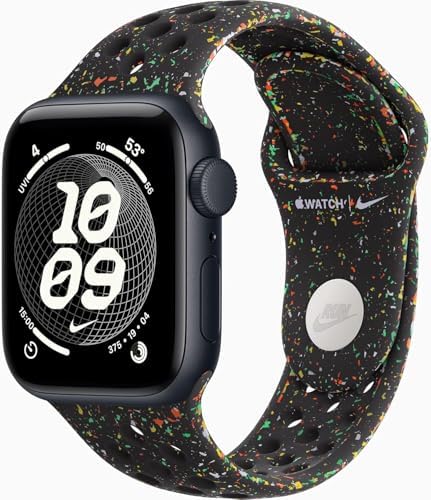
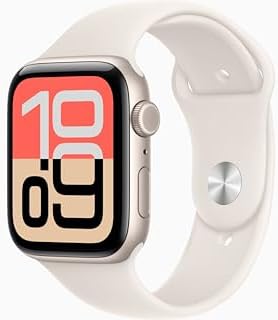
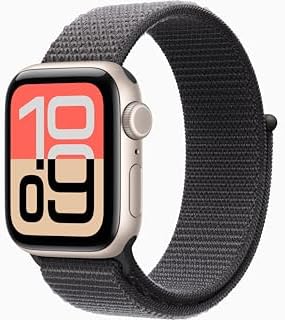
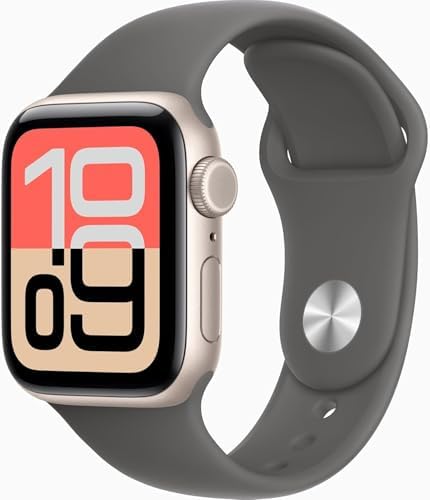
 Just Pick Your Favorite Stylish Watch online












Item Reviews