The Garmin Fenix 9 vs Forerunner 970 decision sits at the crossroads of two distinct design philosophies within the same brand: the rugged all-terrain expedition tool and the featherweight endurance racing instrument. Both lines have converged on bright AMOLED displays and advanced multi-band GNSS positioning, yet they serve very different owners. This guide treats the comparison as a buying decision rather than a spec sheet recital, because the correct choice depends far more on how and where the watch will be worn than on any single number.
The Fenix 9 series represents the multi-sport, multi-environment branch of the lineup, while the Forerunner 970 targets runners and triathletes who prioritize low weight and race-day metrics. The table below isolates the dimensions that actually change a purchase decision, from GPS endurance to case size to the depth of race analytics.
| Feature & Selling Point |
Garmin Fenix 9 |
Garmin Forerunner 970 |
| Primary Design Intent |
All-terrain multi-sport tool |
Endurance racing and triathlon |
| Available Case Sizes |
43mm, 47mm, 51mm |
Single 46mm-class case |
| Weight Range Across Sizes |
Roughly 40g to 98.5g by size and material |
Lightweight single-case build |
| Display Technology |
AMOLED, size-dependent |
Brighter AMOLED versus prior generation |
| Solar Charging Option |
Available on select variants |
Not the focus of the platform |
| Smartwatch Battery Life |
Up to 15 days / 20 days with solar |
Up to 15 days |
| GPS-Only Battery Life |
Up to 42 hours / 49 hours with solar |
Up to 26 hours |
| SatIQ Multi-Band Mode |
Up to 23 hours |
Up to 22 hours |
| Build Materials |
Titanium and stainless variants |
Carbon gray DLC titanium case |
| Built-in Flashlight |
Included on larger case sizes |
Included |
| Training Analytics Depth |
Broad multi-sport and expedition metrics |
Race-focused running and triathlon metrics |
| Maps and Navigation |
Full topographic mapping with ABC sensors |
Routing for running courses and tracks |
| Ideal Buyer Profile |
Hikers, climbers, multi-sport generalists |
Runners and triathletes chasing personal bests |
| Wrist Presence Trade-off |
Larger on wrist, heavier at 51mm |
Streamlined for continuous wear at speed |
The table exposes the central trade-off immediately: the Fenix 9 wins on GPS endurance and size flexibility, while the Forerunner 970 answers with a purpose-built running platform and a lighter single-case identity. Battery figures on the Fenix side scale with case size and solar glass, so the 15-day smartwatch number applies to the 47mm AMOLED variant, with larger solar models extending further. The Forerunner 970's 26-hour GPS-only figure sits comfortably below the Fenix 9's 42-hour baseline, yet that gap rarely matters to a marathoner whose longest training block runs four to five hours.
Battery Endurance and Real-World Charging Rhythm
Battery life is where the two lineages separate most loudly, and the difference is structural rather than incremental. Garmin states that the Fenix 9 delivers up to 15 days in smartwatch mode, 26 hours in GPS-only GNSS mode, and 23 hours under SatIQ automatic GNSS selection on the 47mm AMOLED reference configuration. Solar variants push the smartwatch figure to roughly 20 days and GPS-only use to 49 hours. Those numbers reflect a chassis engineered to host a larger cell and, on solar models, a power-collecting lens.
The Forerunner 970 occupies a different envelope. Its smartwatch mode also reaches up to 15 days, a meaningful improvement for the line, but GPS-only runtime tops out around 26 hours and SatIQ mode around 22 hours. For a runner who trains five days a week, charges on a rest day, and races a handful of times per season, that runtime is entirely sufficient. For a backpacker plotting a three-day traverse or a climber on a long approach, the Fenix 9's 42-hour GPS window and solar top-up option change the planning math considerably. The purchase criterion here is simple: if the watch will ever leave cell coverage for more than a day, the Fenix 9's endurance margin earns its place.
Weight, Fit, and the Cost of Wrist Presence
The Forerunner 970's strongest argument is the one spec tables understate: how it feels at kilometre thirty. Garmin's published figures place the Fenix 9 family across roughly 40g to 98.5g depending on case size and material, with the 51mm AMOLED Pro model at the heavy end and the 43mm variant at the light end. A runner wearing a near-100g watch notices it during high-cadence intervals and long downhill stretches, where the mass shifts against the wrist strap.
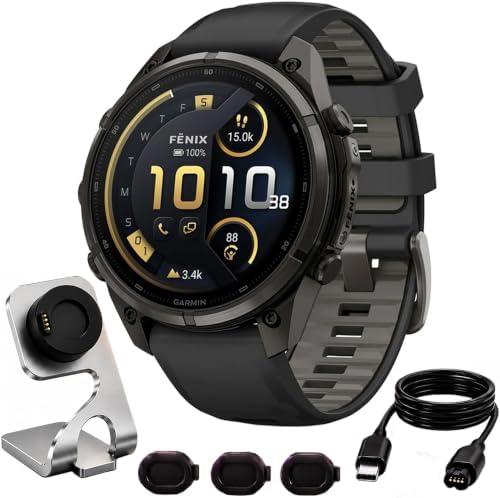
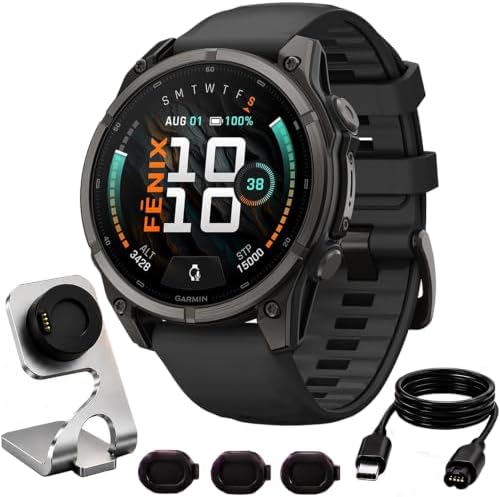
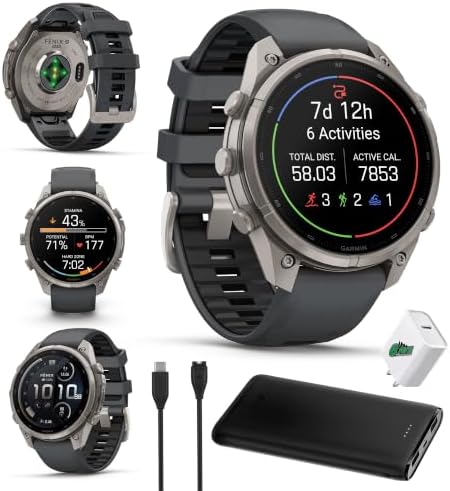
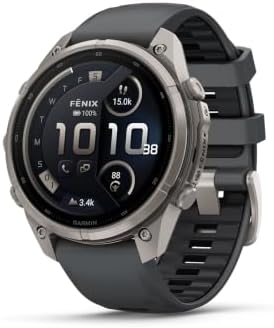
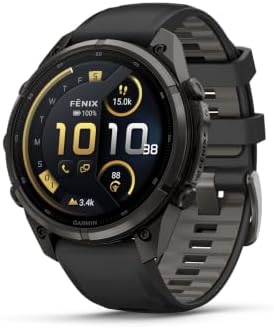
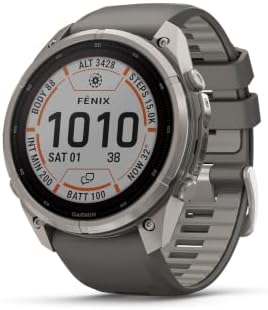
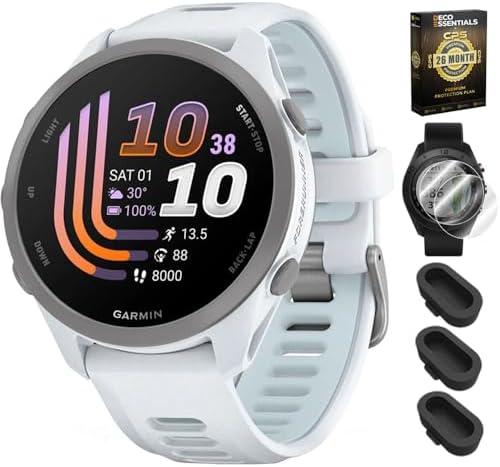
Midway through that range, the Garmin Fenix 9 47mm AMOLED GPS remains wearable for daily training, but its design brief is broader than running alone. The Forerunner 970 keeps its single-case form lean and pairs a carbon gray DLC titanium case with a translucent whitestone band, a configuration that reads as purpose-built racing equipment. Buyers who log serious mileage should weigh this dimension heavily; buyers who want one watch for trail, gym, office, and travel should accept the extra grams as the price of versatility.
Training Analytics and Race-Day Tools
Both watches ship with Garmin's full sensor suite, including wrist-based heart rate, pulse oximetry, and multi-band GNSS with SatIQ. The divergence appears in which analytics are foregrounded. Garmin states that the Forerunner 970 adds running dynamics such as ground contact time, stride length, training load focus, race predictor, and triathlon-specific transitions. Garmin positions the 970 as an upgrade over the 965 with a brighter display, premium materials, and improved battery life for demanding sessions.
The Fenix 9 answers with a broader metric library spanning hiking, climbing, golf, skiing, and dive-adjacent water sports, alongside full topographic mapping and ABC sensors for altitude, barometer, and compass. Its training tools are complete but not as tightly focused on the runner's interval-by-interval workflow. A triathlete comparing lap splits and brick workouts will find the Forerunner interface more direct; an alpinist tracking elevation profile and waypoints will find the Fenix 9 more capable. Neither wins in absolute terms, and anyone who claims otherwise is describing personal preference rather than product fact.
Build Quality, Displays, and Daily Durability
Both watches use AMOLED panels, and the Forerunner 970 steps up to a brighter display than its predecessor, improving legibility in harsh midday sun and low-light trail work. The Fenix 9 also relies on AMOLED across its AMOLED configurations, with screen size scaling across the 43mm, 47mm, and 51mm cases. In both cases, the displays are readable in direct sunlight and dim appropriately at night, a practical baseline rather than a distinguishing factor.
Durability diverges more sharply. The Fenix 9 uses titanium and stainless steel across different variants, plus sapphire crystal on premium editions, and carries reinforced bezels meant to absorb rock scrape. The Forerunner 970's carbon gray DLC titanium case is genuinely tough, but its brief assumes road and track rather than granite. The Fenix 9 also includes built-in flashlights on larger sizes, and the Forerunner 970 includes one as well, showing how features once reserved for expedition models have migrated down the pricing ladder.
Who Should Buy the Fenix 9
The Fenix 9 is the correct purchase for anyone whose activities extend beyond running. Hikers who rely on topographic maps and waypoint navigation, climbers tracking altitude gain, ski tourers monitoring barometric pressure, and travellers who want two weeks of battery between charges all land on the Fenix side of the ledger. The size range matters too: wrists under 45mm circumference often fit the 43mm case better than any single-size platform, and the solar variants add a real charging buffer for multi-day trips. Across the Fenix 9 lineup, case sizes and materials map onto very different wrists.
Who Should Buy the Forerunner 970
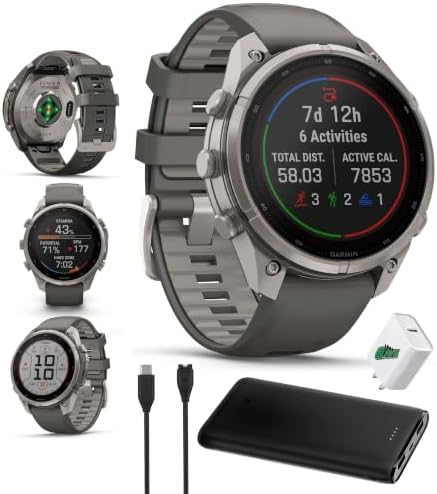
The Forerunner 970 is the sharper choice for runners, triathletes, and endurance athletes who want the lightest possible build with the deepest race analytics. Its lighter platform reduces arm fatigue during extended intervals, its running dynamics and race predictor tools streamline preparation, and its brighter AMOLED improves on-course readability. Athletes who never leave maintained trails, never need topographic routing, and rarely charge away from home will not miss the Fenix platform's extra capability. Garmin Forerunner 970 pairs that race focus with a case built for daily wear.
The Decision Criteria That Actually Matter
Three questions settle most purchase decisions. First, will the watch be worn outside cellular coverage for more than a day? A yes points to the Fenix 9's longer GPS runtime and solar option. Second, does the training log consist primarily of running and triathlon sessions with pace and interval detail? A yes points to the Forerunner 970's analytics depth and lighter weight. Third, does wrist size fall below the 45mm comfort threshold? A yes makes the 43mm Fenix 9 variant the only viable option among the two. These questions are more reliable than any marketing narrative, because they describe the buyer rather than the product.
A Closing View on Two Mature Platforms
The Garmin Fenix 9 versus Forerunner 970 comparison is less a contest than a map of intent. The Garmin brand's Fenix line was built for owners who treat the outdoors as an open-ended itinerary, and every design choice follows from that: the size range, solar option, topographic mapping, and reinforced case. The Forerunner line exists for athletes who measure their year in races and split times, and the 970's brightness, weight, and analytics serve that purpose with precision. Neither watch is the wrong answer, and the buyer who chooses based on where the next kilometre will be run, or climbed, will end up with a timepiece suited to a long partnership rather than a short-lived compromise.
 Just Pick Your Favorite Stylish Watch online




















Item Reviews