Two titanium-bodied adventure watches sit at the center of the current multisport conversation, and the choice between them rarely comes down to raw specifications alone. The Garmin Fenix 9 series continues a long-running design brief built around weeks-long battery life, hardened navigation, and map-first software, while the Apple brand's own adventure line, the Ultra 3, extends that philosophy with a larger display, satellite messaging, and a smartphone-grade ecosystem. This article is a buying guide worth keeping: it sets out who each watch suits, the real trade-offs, and the criteria that should decide the purchase.
| Feature and Decision Point |
Garmin Fenix 9 |
Apple Watch Ultra 3 |
| Display Technology |
AMOLED on the 47mm model |
Largest Apple Watch screen, 1Hz always-on |
| Battery Strategy |
Multi-day to multi-week use between charges |
Roughly daily charging, longer in low-power modes |
| Off-Grid Communication |
Satellite messaging via inReach when paired |
Built-in satellite texting and location sharing |
| Connectivity |
Bluetooth, ANT+, Wi-Fi |
5G cellular plus GPS and Wi-Fi |
| Mapping and Navigation |
On-device topo maps and multi-band GNSS |
Compass, altimeter, and route following via apps |
| Training Metrics |
Training load, recovery, VO2 max, endurance scores |
Activity rings, workout app, third-party depth |
| Health Sensors |
Optical heart rate, SpO2, sleep and HRV |
ECG, temperature sensing, sleep apnea notifications |
| Case Material |
Titanium or steel depending on variant |
Rugged titanium, 49mm |
| Water Resistance |
10 ATM plus dive-mode support |
100m plus EN13319 dive rating |
| App Ecosystem |
Garmin Connect plus Connect IQ store |
Full App Store and iPhone integration |
| Smartphone Independence |
Core functions run without a phone |
Cellular model handles calls and messages alone |
| Charging Method |
Proprietary cable, infrequent top-ups |
Magnetic fast charger, nightly routine |
| Best Suited To |
Multi-day treks and ultra events |
Connected training and everyday wear |
| Weight and Wrist Presence |
Substantial, tool-watch footprint |
Large but balanced 49mm case |
The table makes the central tension clear: one watch is engineered around going days without a charger, the other around staying connected without a phone. Battery strategy and off-grid communication are the two rows that most often settle the decision, with mapping depth and health-sensor breadth acting as tie-breakers depending on how the watch will actually be used.
Design Language and Physical Presence
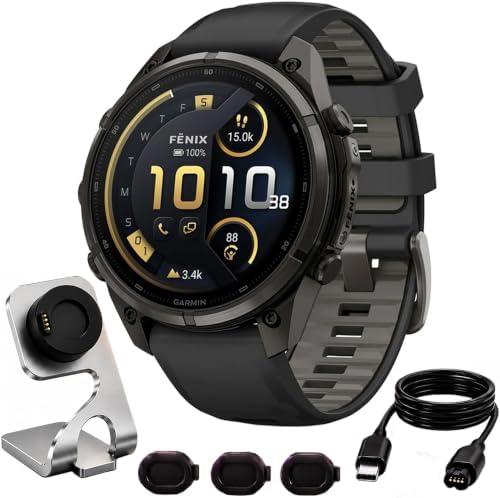
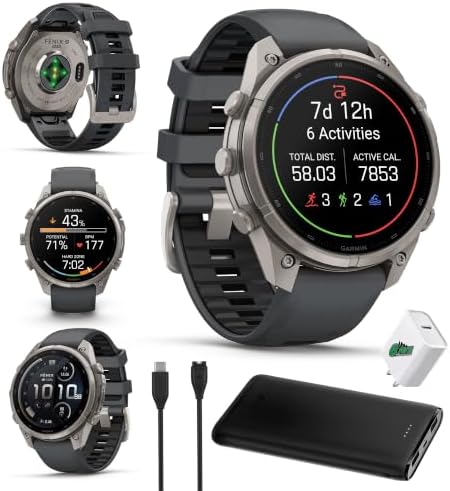
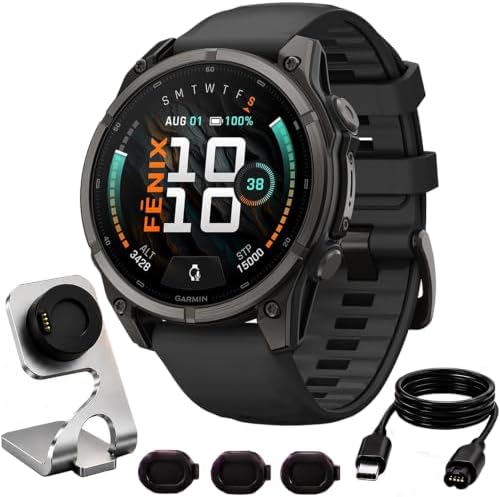
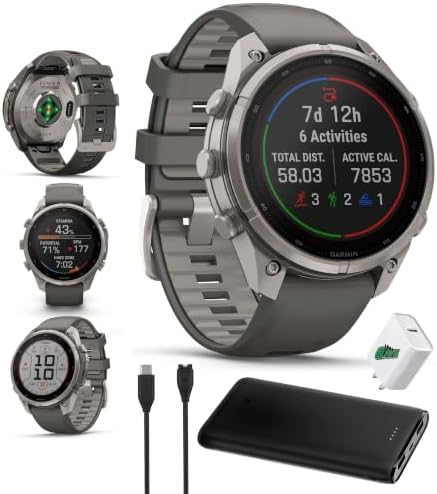
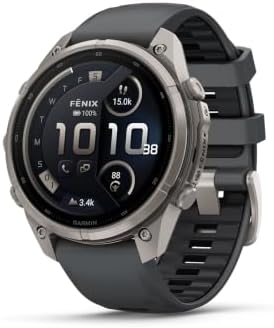
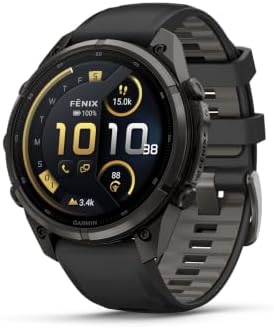
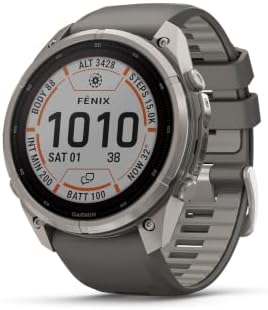
Both watches are built from titanium and both read as serious outdoor instruments, yet their design priorities diverge the moment they are strapped on. The Garmin Fenix 9 47mm AMOLED GPS keeps the familiar Fenix architecture: a raised bezel that shields the crystal, five physical buttons arranged for gloved operation, and a silhouette that prioritises durability over slimness. The 47mm case sits in the middle of the Fenix size range, offering a generous AMOLED panel while remaining a realistic daily option for most wrists.
Apple's approach leans on a single large case size, 49mm, with a rugged titanium shell, a flat sapphire front, and controls that blend a rotating crown with a configurable action button. Apple states that the Ultra 3 carries the largest display fitted to any Apple Watch, and the panel supports a 1Hz always-on refresh rate, which keeps time, complications, and workout data visible without waking the screen. The practical difference is tactile: Fenix buyers tend to want buttons that work in rain and cold, while Ultra buyers tend to value screen real estate and touch ergonomics.
Battery Life as a Lifestyle Decision
Battery endurance is not a specification footnote here, it is the variable that reshapes how the watch is used. A Fenix is designed to be charged occasionally and otherwise forgotten; the multi-day and, with solar variants, multi-week claims reflect a device that expects to accompany hikers, runners, and climbers through events measured in hours and sometimes days. Charging becomes a pre-trip ritual rather than a nightly habit.
The Ultra 3 follows the Apple Watch model, where the watch is charged alongside a phone and delivers a full desktop-class notifications experience in return. Low-power modes extend runtime for specific sessions, but the device is most comfortable in a daily charging cycle. Buyers who resent routine charging should weight this row heavily, because it drives every other ownership habit downstream.
Navigation, Mapping, and the Off-Grid Question
On-Wrist Cartography
The Fenix line has long pushed topographic maps onto the wrist itself, with routable guidance, breadcrumb trails, and multi-band GNSS for accuracy in canyon and forest environments. For alpinists, fastpackers, and anyone following a GPX file in unfamiliar terrain, the map is a primary interface rather than a companion app. Multi-day battery life also means navigation can stay live for a full expedition rather than a single outing.
Satellite Messaging and Connectivity
Apple positions satellite connectivity on supported Ultra models as a way to text emergency services, message contacts, and share location when there is no cellular coverage, a feature that has moved from novelty to genuine safety argument for remote runners and hikers. Garmin's off-grid messaging story runs through inReach pairing, which adds a subscription but brings two-way communication and SOS coverage to the Fenix platform. Neither approach is free of caveats, and the correct choice depends on whether satellite messaging is expected as a built-in feature or an add-on capability.
Training Depth Versus Ecosystem Depth
Garmin's training platform is built for structured progression. Recovery time, training load, endurance and hill scores, and detailed post-session analysis turn the watch into a coaching instrument, and the data is presented with athletes who plan seasons around it in mind. The on-device experience is deep enough that many users never open a third-party training app.
Apple's fitness story is broader but shaped differently. Activity rings and the workout app handle everyday motivation well, while third-party apps bring specialised analysis, and the ECG and temperature sensors add health context that many Garmin models do not match. Apple has also added sleep apnea notifications to recent models, extending the watch's role beyond training into general wellbeing. Where the Fenix 9 series optimises for performance analytics, the Ultra 3 optimises for breadth of everyday usefulness.
Everyday Wear, Apps, and Phone Independence
A cellular Ultra 3 can place calls, send messages, stream music, and run apps without a phone nearby, which matters for commuters, swimmers, and anyone who leaves the handset behind deliberately. The App Store gives the watch access to a mature software ecosystem, including banking, transit, and smart-home controls.
The Fenix is more self-contained in a different sense: it needs a phone rarely, but it does not attempt to replicate a smartphone. Notifications arrive, payments work in supported regions, and music can be stored locally, yet the interface is deliberately spare. Buyers who want a wrist-bound phone extension land on the Apple side; buyers who want a watch that behaves like an instrument land on the Garmin side.
Who Should Buy Which Watch
Choose the Fenix 9 if the calendar includes multi-day hikes, ultra-distance running, or long rides where a charger is not part of the plan, and if on-wrist topographic mapping and granular training metrics are the features that will actually be used. Choose the Apple Watch Ultra 3 if the watch will be worn daily, if cellular independence and the app ecosystem are valuable, and if the health sensor suite, including ECG and temperature sensing, is a priority alongside fitness tracking.
For athletes who straddle both worlds, the honest answer is that many keep a Fenix for expeditions and an Apple Watch for daily life, and the two devices cover each other's weaknesses rather than competing head-on. Apple Watch Ultra 3 GPS + Cellular 49mm is the most complete expression of Apple's adventure ambitions to date, combining a rugged titanium case with satellite communication and a display that remains legible in direct sun.
The decision ultimately comes down to what the wrist is expected to do when the signal drops and the trail stretches on. A watch that lasts the whole journey without a charger solves a different problem than a watch that keeps the outside world reachable from the middle of nowhere, and the best purchase is the one whose single greatest strength matches the single greatest demand of the adventures it will accompany.
 Just Pick Your Favorite Stylish Watch online




















Item Reviews