The Galaxy Fit 3 series and the Galaxy Watch 8 series sit at opposite ends of Samsung's wearable range, yet buyers cross-shop them constantly. One is a featherweight band built to disappear on the wrist for two weeks at a time; the other is a full smartwatch with a 3 nm processor, a bright circular display, and a deep software layer. This guide is written to be saved: it lays out the real trade-offs, identifies who each device actually suits, and gives a clear set of criteria for deciding where your money belongs.
| Feature & Selling Point |
Samsung Galaxy Fit 3 |
Samsung Galaxy Watch 8 |
| Form Factor |
Rectangular fitness band with silicone strap |
Round watch case with cushion design |
| Display |
1.6-inch AMOLED, portrait orientation |
Circular AMOLED, 40mm or 44mm sizing |
| Processor |
Low-power wearable controller |
3 nm, 5-core processor |
| Battery Life |
Up to 13 days per charge |
Multi-day, roughly 1-2 days typical use |
| Water Resistance |
IP68 rated |
5 ATM plus IP68 |
| Workout Modes |
100+ exercise modes |
Broad mode list with Running Coach |
| Sleep Tracking |
Daily sleep and activity logging |
Sleep Coaching with staged analysis |
| Recovery Insight |
Basic activity summaries |
Energy Score and readiness metrics |
| GPS |
Connected GPS via phone |
On-watch positioning support |
| Heart Rate Sensor |
Optical wrist sensor |
Optical sensor with continuous tracking |
| On-Watch Apps |
Limited; music control and basics |
Full app ecosystem via Wear OS |
| Watch Faces |
100+ downloadable faces |
Large customizable face library |
| Charging |
Magnetic pogo charger |
Magnetic wireless charging |
| Weight on Wrist |
Noticeably lighter build |
Heavier metal and glass construction |
| Best Suited To |
Step counting, sleep basics, long battery life |
Training plans, coaching, daily app use |
The table makes the central tension obvious: battery life and weight sit firmly on the Fit 3 side, while processing power, coaching depth, and software capability sit with the Watch 8. Everything else in this guide flows from that single trade-off, and the right answer depends almost entirely on whether you want a tracker that vanishes or a computer that happens to live on your wrist.
Two Different Design Philosophies on the Wrist
The Galaxy Fit3 is engineered around absence. Its aluminum body and slim silicone strap are designed so the wearer forgets the device is there, which matters more than spec sheets suggest when a tracker is meant to be worn overnight for sleep data. The rectangular 1.6-inch AMOLED panel runs vertically, matching the natural scroll of a notification list rather than the sweep of a watch hand.
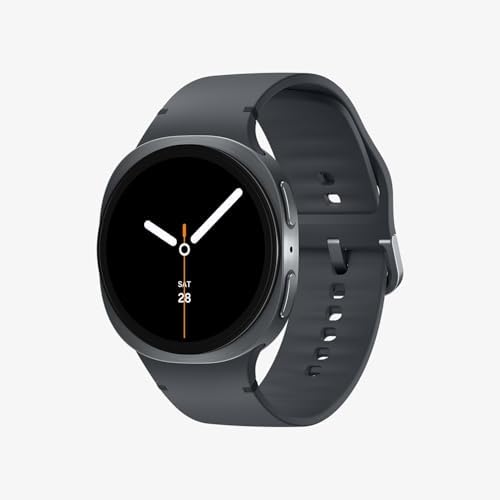
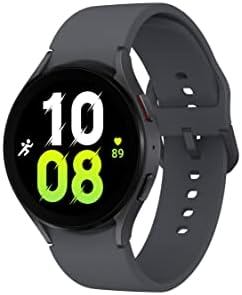
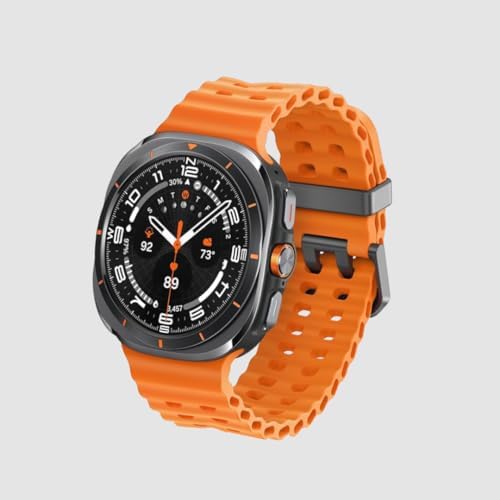
The Galaxy Watch8 takes the opposite approach, treating the wrist as a small stage. Samsung describes the Watch8 as thinner, lighter, and brighter than its predecessors, and the cushion-shaped case is offered in 40 mm and 44 mm sizes with Graphite and Gold finishes. This is a device intended to be seen, and its circular display supports analog face designs that the Fit 3 simply cannot reproduce convincingly.
Consider what each choice costs in daily life. A band-style tracker slips under a shirt cuff, survives being knocked against doorframes, and never needs to be taken off for charging during the workday. A round watch case adds visual presence but also bulk, and anyone who types for a living will notice the difference within an hour. Neither is superior as a design; they solve different problems.
Battery Life and Charging Routine
Samsung rates the Galaxy Fit 3 at up to 13 days on a single charge. Real-world figures depend on screen brightness and how many notifications are enabled, but the order of magnitude holds: this is a device charged roughly twice a month, not nightly. The magnetic pogo charger tops it up quickly, and the long interval means charging becomes an afterthought rather than part of a bedtime ritual.
The Galaxy Watch 8 operates on a very different rhythm. A 3 nm, 5-core processor, an always-on circular display, and a full app platform all draw power continuously, so typical use lands in the one-to-two-day range with charging most nights. Buyers moving from a fitness band often underestimate this shift. If you travel frequently or dislike charging routines, the Fit 3 removes an entire category of friction.
There is a second-order effect worth naming. Devices with multi-day battery life tend to be worn more consistently overnight, which improves sleep data continuity. Devices charged nightly are more likely to be left on a nightstand during the exact window when sleep tracking matters. On paper the Watch 8 has the more sophisticated sleep features; in practice, the Fit 3 may collect more complete records simply because it stays on the wrist.
Health and Fitness Tracking Depth
Both devices cover the fundamentals: continuous heart rate monitoring, step counts, sleep stages, and a broad catalogue of workout modes. Samsung lists over 100 exercise modes on the Fit 3, alongside daily activity tracking and music control. For a recreational runner, swimmer, or gym-goer who wants a clean record of effort and recovery, this covers the essentials without clutter.
The Watch 8 pulls ahead in interpretation rather than raw capture. Samsung markets features including Energy Score, Sleep Coaching, and Running Coach, all of which translate sensor data into prescription rather than description. Energy Score attempts to quantify daily readiness from sleep, activity, and heart rate variability; Sleep Coaching turns staged sleep data into behavioral suggestions; Running Coach provides structured guidance during sessions. These are software layers riding on the same underlying sensor logic, and their value depends entirely on whether you act on advice.
Water resistance differs meaningfully here. The Fit 3 carries an IP68 rating, which covers dust and immersion under defined test conditions but is not the same certification as a dive rating. The Watch 8 adds 5 ATM resistance, a standard that denotes suitability for swimming and shallow water activity. Anyone planning regular pool sessions should weigh that distinction carefully.
GPS handling also splits along predictable lines. The Fit 3 relies on connected GPS from a paired phone, which works well for runs where the phone comes along but leaves route data incomplete when it does not. The Watch 8 supports on-watch positioning, making it the more independent choice for outdoor training.
Software, Apps, and Daily Utility
This is the widest gap between the two devices, and it is architectural rather than incremental. The Galaxy Watch 8 runs a full smartwatch platform with third-party app support, contactless payment potential, and rich notification handling. Messages can be read and answered, media controlled, and additional functionality added over time. The 3 nm processor exists precisely to make that workload feel responsive.
The Fit 3 is deliberately closed. It surfaces notifications, controls music playback, offers over 100 watch faces for personalization, and does very little else. There is no app store to browse, no expanding feature set, no productivity layer. For some buyers this is a limitation; for others it is the entire point, because fewer features means fewer distractions and fewer things to troubleshoot.
The customization angle deserves a mention. Samsung provides more than 100 watch faces for the Fit 3, enough to keep the band feeling fresh across months of wear. The Watch 8 counters with a larger face library and the ability to build custom designs from photographs. Neither approach changes what the device does, but personalization drives long-term satisfaction more than most specification rows admit.
Which Buyer Belongs to Which Device
The decision framework here is unusually clean. Choose the Fit 3 if any of the following describes you: you want to forget the device is on your wrist, you refuse to charge another gadget nightly, you already carry a phone during workouts, or you are buying a first tracker for a teenager or an older relative who values simplicity over capability. The SAMSUNG Galaxy FIT 3 [2025 40MM] Black 40MM delivers that brief with the 1.6-inch AMOLED panel, IP68 protection, and roughly two-week endurance that define the line.
Choose the Watch 8 if structured training feedback matters to you, if you want a device that can handle messaging and payments without reaching for a phone, or if you simply prefer the presence of a round watch on your wrist. The Samsung Galaxy Watch 8 (2025) 40mm Graphite Bluetooth packs the 3 nm processor, cushion case design, sleep coaching, and energy scoring into the smaller of the two available sizes, which suits narrower wrists without sacrificing the feature set.
A practical middle path exists for households rather than individuals. Many buyers keep a Fit 3 for sleep and everyday wear and reserve a full smartwatch for training blocks or workdays that demand notification handling. Two devices, two charging rhythms, and no single compromise. It is not an obvious strategy, but it is a rational one for anyone who resists choosing between endurance and capability.
What ultimately separates these two products is not a specification but an intention. One is built to record a life quietly in the background; the other is built to participate in it actively. Decide which relationship you want with your wrist, and Samsung's wearable lineup resolves itself around that answer with unusual clarity.
 Just Pick Your Favorite Stylish Watch online















Item Reviews