The Seiko Presage Chronograph occupies a distinct position among Japanese mechanical watches: a chronograph conceived less as a tool than as a canvas. Its dials borrow from lacquer work, enamel firing, and textile pattern, while the movement beneath carries forward decades of in-house caliber development. For collectors who want stopwatch capability without surrendering elegance, the series makes a persuasive case.
Within the Seiko brand's wider mechanical catalog, Presage serves as the bridge between daily-wear reliability and elevated finishing. Chronograph variants extend that remit with sub-dial registers and pusher mechanisms, broadening the line's functional vocabulary while keeping its design language intact.
Design Philosophy and Dial Aesthetics
Presage dials are rarely flat surfaces. They carry texture, gradient, and finishing that reference Japanese material culture, and the chronograph versions continue this practice by treating sub-dials as compositional elements rather than afterthoughts.
Japanese Aesthetic References
The family's visual vocabulary draws on urushi lacquer, enamel, and woven textile motifs. Chronograph models frequently use recessed sub-dials that create depth shifting with the angle of light, while applied markers catch reflections that guide the eye across the face. These choices separate the series from utilitarian chronographs that prize legibility above artistry.
Balance of Sub-Dials and Main Display
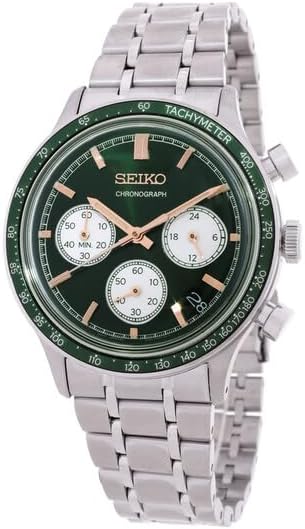
A well-resolved chronograph dial depends on proportional distribution. The Presage approach arranges registers so the hour and minute hands retain primacy, whether the layout is tri-compax or built around a central chronograph seconds hand. The intent is consistent: the watch should read as one cohesive object, not a cluster of separate instruments.
Mechanical Foundations and Chronograph Function
Presage relies on in-house automatic movements, and chronograph variants draw on Seiko's long record of developing integrated chronograph calibers. The 6R5 family, which Seiko specifies with a power reserve of roughly 72 hours, allows the watch to rest over a weekend and still run accurately on Monday. Pushers at two and four o'clock control start, stop, and reset, each operation rewarding a tactile feel for mechanical linkages.
Adding a chronograph demands more components and tighter tolerances than a time-only caliber. The engineering difficulty lies in preserving accuracy while engaging the chronograph train through a horizontal or vertical clutch system. Seiko's approach favors robust construction, which suits a line that pairs dress-watch manners with technical capability.
Case Construction and Wearing Experience
Presage cases are typically stainless steel with mixed polished and brushed surfaces. Chronograph models add pushers that protrude slightly from the case band, requiring careful integration so the profile stays elegant. Diameters tend to fall between 40mm and 42mm, a range that accommodates extra dial elements without overwhelming the wrist.
Lug-to-lug span matters here: a shorter measurement lets a larger diameter sit comfortably on smaller wrists. The line generally avoids excessive thickness, and chronograph models keep a profile that slides under a shirt cuff. Crystal options include box-shaped Hardlex, which Seiko notes is classical in form and pairs with delicately curved hands on some Cocktail Time references, reinforcing the vintage character of certain models.
Water resistance is rated for daily wear rather than diving, and the pushers are engineered to operate safely within those limits. The wearing experience emphasizes refinement over ruggedness, positioning the watch for office environments, social occasions, and travel.
Collecting the Presage Chronograph Range
The Presage family spans several sub-collections, each interpreting the core ethos differently, and chronograph models appear across them with distinct dial treatments and case finishes.
- Classic Series: Traditional layouts emphasizing applied markers and restrained palettes
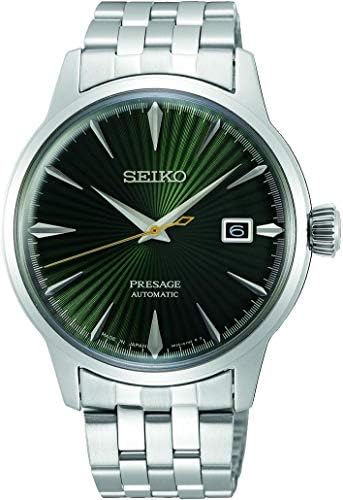
- Cocktail Time: Textured dials inspired by glass stems and ambient light
- Style60's: Vintage proportions and retro dial graphics
Color and material pairing also shape the lineup, and references such as the SEIKO Presage Green SRPE45 Brown Leather Automatic Mens Watch show that the series favors tones drawn from natural landscapes rather than conventional black or silver.
Dressier configurations with date complications appear as well, exemplified by the Seiko SRPB46 Presage Automatic, which demonstrates the family's capacity for restrained, formal layouts built on shared movement architecture and finishing standards.
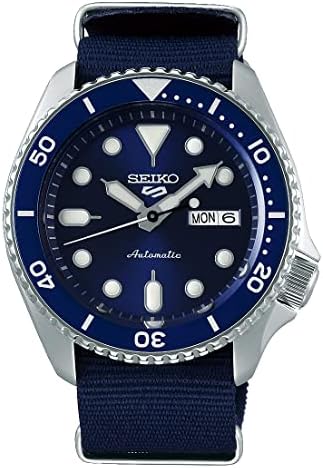
Collectors weighing the chronograph against Seiko's sportier output may find a useful counterpoint in a GMT-equipped reference such as the SEIKO SSK001 5 Sports GMT, which approaches sub-dial layouts from a different design brief entirely.
Movement Evolution and Horological Context
Seiko's chronograph heritage spans mechanical and quartz technologies, and Presage remains a showcase for the mechanical side. The 6R5 caliber family descends from earlier automatic movements and benefits from refinements in mainspring materials, escapement design, and regulation, translating into longer reserves and more consistent timekeeping.
Integrating a chronograph requires additional gear train components, a column wheel or cam system governing the start-stop-reset sequence, and precise adjustment so the chronograph seconds hand aligns with the markers. Vertical integration of movement production lets Seiko control quality at each stage, supporting the reliability expected of a Presage watch.
Against Swiss chronograph movements at similar prices, Seiko's in-house calibers argue a different value case: robust construction and practical service intervals rather than elaborate finishing visible only through a display back. Even so, many Presage chronographs include exhibition case backs revealing the chronograph bridge and balance assembly.
Dial Materials and Finishing Techniques
The character of a Presage dial depends heavily on finishing. Enamel dials, produced with Japanese craftsmen, offer a deep luster that shifts with ambient light; urushi lacquer brings a warm, organic texture; even standard metal dials receive multi-step treatment, including sunray brushing and sandblasting, to create contrast between zones of the face.
On chronograph models, sub-dials often receive contrasting finishes to separate them from the main surface. A circular grained interior surrounded by a polished or brushed ring is a common solution. These microscopic details shape the perception of quality and weigh heavily in the series' collector appeal.
Hands and markers are detailed to match. The curved hands noted in Cocktail Time references demand careful manufacturing to balance elegance and legibility, while luminous material, where present, is applied sparingly to preserve the dial's formal character, distinguishing Presage from Seiko's sports-oriented lines.
Ownership, Maintenance, and Long-Term Value
Mechanical chronographs need periodic servicing to hold accuracy and function. Most automatic watches call for service every several years depending on use, and the chronograph mechanism, with its extra moving parts, benefits from professional attention once pusher action softens or reset precision slips.
Presage models generally hold value within the accessible-luxury bracket, though limited editions and special dial variants can appreciate. Rarity of the dial treatment and completeness of the original packaging are the deciding factors. Buyers entering the series should prioritize a dial finish they genuinely enjoy and a case size that suits their wrist, since those are the practical criteria for long-term satisfaction.
Seiko's global service network supports the line, and independent watchmakers familiar with Japanese movements can also handle maintenance. Parts availability and servicing expertise both contribute to the ownership experience over time.
Positioning Within the Seiko Universe
The Presage chronograph fills a specific niche. It sits above the 5 Sports line in finishing and dial complexity, and below Grand Seiko in price and production scale, making it an entry point for collectors drawn to Japanese mechanical watchmaking without committing to the upper tiers.
Design continuity with Grand Seiko shows in the attention to dial legibility and the restrained use of color. Presage, however, permits more expressive experimentation, especially in Cocktail Time, where bold dial textures are encouraged. Chronograph models benefit from that freedom, producing watches that stand out without shouting.
For anyone building a collection around Japanese watchmaking, the Presage chronograph is a logical companion to a Prospex dive watch and a time-only Presage dress piece. Its mechanical chronograph movement and refined dial suit professional and social settings alike, carrying forward a philosophy of functional beauty that continues to define the Presage series.
 Just Pick Your Favorite Stylish Watch online























Item Reviews