The Apple Watch Series 11 arrives with a 46mm case that measures 39mm across and 9.7mm deep, and the aluminum GPS version weighs 37.8 grams on the wrist. Those numbers matter more to runners than any slogan, because a lighter case and a shallow profile reduce the bounce that turns a long tempo run into a forearm workout.
The sensor stack is the part of the Apple Watch Series 11 GPS 46mm that runners will touch every single day. Apple pairs an optical heart sensor with GPS and a 4-core Neural Engine, which is the component that handles motion interpretation and on-device processing while the watch is sampling movement data.
Why the S11 Chip Matters Mid-Run
Apple fits the S11 chip with a 64-bit dual-core processor inside the watch, alongside 64GB of storage. Storage rarely makes headlines, yet it changes how a runner uses the watch: playlists, downloaded maps and podcast libraries can all live onboard, so the wrist does not need a phone to stay useful during a session. The dual-core arrangement also lets workout tracking, audio and display rendering share headroom instead of competing for it.
The Neural Engine deserves a closer look, because machine learning on a wearable is fundamentally different from machine learning in the cloud. Sampling accelerometer and heart-rate data in real time means decisions get made on the wrist, closer to the source. Apple's implementation concentrates that work in the 4-core Neural Engine rather than pushing everything through the main processor, which is the architectural reason the watch can keep interpreting motion while the screen stays lit and audio keeps playing.
Display Brightness and Pace Reading
Apple rates the Always-On Retina panel on the Series 11 display at up to 2000 nits, and describes it as twice as bright as the previous generation. For a runner, brightness is not vanity: it is legibility at an awkward angle. A quick glance down at arm's length in direct midday sun is exactly the scenario where a dim display forces a second look, and a second look costs a stride of rhythm.
The Always-On behavior finishes the job. Flicking a wrist to wake a screen introduces a delay that feels trivial at a desk and enormous at the end of a fast interval. When the display stays readable without a wake gesture, split times and heart rate remain glanceable throughout the rep rather than just at its edges.
Health Insights That Track Beyond the Workout
Apple positions the Series 11 around hypertension notifications and a sleep score, both of which address the recovery half of a training block. Runners tend to over-invest attention in the workout and under-invest in what happens between sessions, even though adaptation occurs during recovery. A wearable that records sleep patterns and flags blood-pressure-related signals extends the watch's usefulness into the hours when training is actually absorbed.
Apple markets these features as health insights rather than diagnostic tools, so the appropriate reading is that the watch surfaces patterns worth discussing with a clinician. That framing is consistent with how the company has handled health sensing generally: detection first, escalation to professional assessment second. For a runner logging 40 or more miles each week, that combination of workout capture and recovery context is where the watch earns its place on the wrist.
Battery Life, Water Resistance and Daily Practicality
Apple quotes up to 24 hours of battery life for the Series 11. Twenty-four hours is the honest number for a device that runs GPS, an always-on display and overnight sleep tracking, and it reframes charging as a routine rather than an interruption: a short top-up during a shower or at a desk replaces the anxiety of managing a depleted battery before an evening run. Apple also states that the watch is water resistant, which covers rain, sweat and post-run rinsing without a second thought.
The practical case for the 46mm aluminum build deserves its own mention. At 37.8 grams, the watch sits comfortably on smaller wrists without the pendulum effect that heavier steel cases produce during high cadence work. Runners who prefer a more compact footprint should note that the Series 11 is also offered in a 42mm case size, so the platform is not locked to one wrist profile.
Built for Runners, Not Just for Running
Apple sells iPhone compatibility as a baseline requirement: the Series 11 needs an iPhone 11 or later running iOS 27 or later. That detail shapes who the watch actually suits. Runners already working inside Apple's ecosystem get a device that shares data across phone, watch and apps without friction; runners committed to other platforms will find that requirement a harder boundary than any specification on the sheet.
What separates a good running watch from a good everyday watch is rarely the workout menu. It is whether the same object can survive a morning interval session, a full workday of notifications and an evening without a charging cable panic. The 46mm Series 11 answers that by combining a large, bright display with a light aluminum case and a battery figure large enough to cover a normal day, so the training hardware does not demand a second device for the rest of life.
Reading the Specification Sheet as a Runner
Three numbers on the Series 11 spec sheet do most of the work for runners: 37.8 grams, 2000 nits and 24 hours. Weight decides comfort over distance, brightness decides how often a glance becomes a squint, and battery capacity decides whether the watch fits into a schedule or dictates it. Apple's S11 chip and Neural Engine sit behind those numbers, quietly handling the motion and health data that make the three headline figures meaningful.
The broader shift the Series 11 represents is the absorption of recovery into training hardware. Hypertension notifications and sleep scoring are not accessories to running; they are the other half of the adaptation cycle that runners have historically tracked separately, in apps or in guesswork. A watch that records the session and contextualizes the night after it treats training as a continuous process rather than a discrete event.
For runners building a season rather than chasing a single run, that continuity is the real purchase. The Series 11 is at its most convincing when the mile splits, the quiet evening readings and the next morning's readiness assessment all live on one wrist, and the numbers Apple publishes for weight, brightness and battery are what let that vision survive contact with an actual training plan.
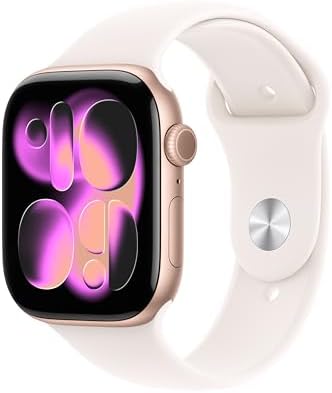
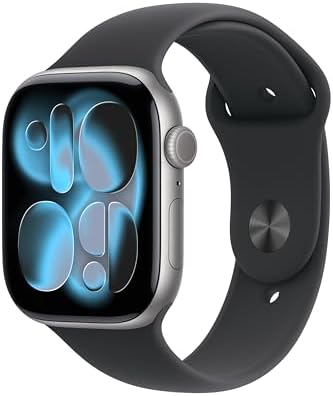
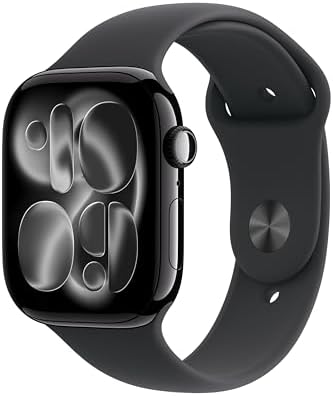
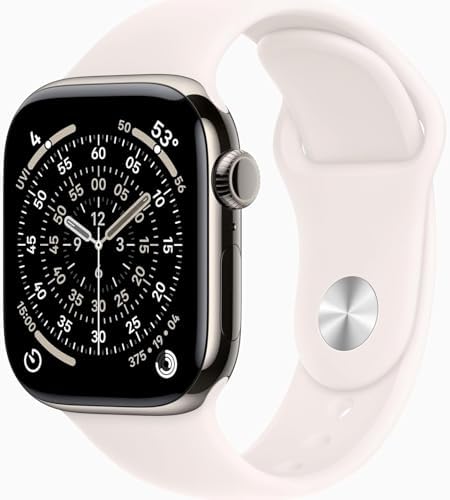
 Just Pick Your Favorite Stylish Watch online




















Item Reviews