The Garmin Forerunner 165 series and the Garmin Vivoactive 5 collection answer the same question from opposite directions: what should a mid-range GPS smartwatch actually do? One leans toward structured running performance, the other toward all-day lifestyle versatility. This guide is built for anyone standing between the two, and it is meant to be kept as a reference whenever the decision resurfaces. Both lines share AMOLED displays, multi-band satellite support on select models, and the Garmin Connect ecosystem, yet they diverge sharply on battery architecture, training depth, and daily wear ergonomics.
| Feature & Selling Point |
Garmin Forerunner 165 |
Garmin Vivoactive 5 |
| Core Positioning |
Running and race-focused training watch |
Everyday health and fitness smartwatch |
| Display Type |
AMOLED, colorful touchscreen |
AMOLED, optional always-on mode |
| Smartwatch Battery Life |
Up to 11 days |
Up to 11 days (5 days always-on) |
| GPS Battery Life |
Up to 20 hours |
Up to 21 hours GPS-only |
| Satellite Modes |
GPS, GLONASS, Galileo, SatIQ auto-select |
GPS, GLONASS, Galileo, SatIQ auto-select |
| Running Training Load |
Dedicated running metrics and race predictor |
General activity tracking only |
| Recovery Insights |
Training readiness and VO2 max |
Body battery and sleep score |
| Health Monitoring |
Heart rate, sleep, stress baseline |
Heart rate, sleep, stress, menstrual cycle, nap detection |
| Built-in Speaker and Mic |
Not included |
Not included |
| Case Size |
43 mm |
42 mm |
| Water Resistance |
5 ATM |
5 ATM |
| Garmin Pay Support |
Yes |
Yes |
| Music Storage |
Not available on base model |
Music version available |
| Best Use Case |
Structured run training and race prep |
Daily wear, wellness and light fitness |
The single most revealing line in that chart is training load. The Forerunner 165 treats running as a discipline with measurable structure, tracking load, recovery, and race readiness with metrics carried down from higher-tier running models. The Vivoactive 5 treats movement as part of a broader wellness picture, adding sleep stages, nap detection, and menstrual cycle tracking that the running-first model downplays. Battery figures are close enough to be a non-issue, but the always-on display mode favors the Vivoactive 5 for desk-to-dinner wear.
Inside the Forerunner 165 Series: Training as a Discipline
The Forerunner 165 line borrows its logic directly from the running shoes it was designed to accompany. According to Garmin, the Forerunner 165 series targets up to 11 days of smartwatch use and 20 hours of GPS tracking, numbers that map neatly to a weekly training block of five to six runs for a typical amateur racer. The AMOLED panel keeps pace and zone data legible in bright outdoor conditions, which matters more than raw brightness figures when a runner is glancing at wrist mid-stride.
The deeper differentiator is training readiness. Data from heart rate variability, sleep quality, and recent workload feeds a single score that tells a runner whether a hard session makes sense today. Paired with a race predictor and VO2 max estimates, this positions the Forerunner 165 firmly in the same family as Garmin's dedicated running watches, occupying a lower price tier without stripping out the metrics that inform periodized training.
Why SatIQ Changes Real-World Battery Use
Garmin's SatIQ auto-select technology determines which satellite system the watch uses based on ambient conditions. In an urban canyon, it shifts to multi-band acquisition; in open terrain, it drops to a power-saving configuration. This is the open secret of Garmin's GPS battery claims, and it is also the reason the quoted 20 hours rarely runs out on a mid-week tempo session. The Forerunner 165's SatIQ calibration makes it a dependable race-day companion across courses, from park loops to trail out-and-backs.
The Case Against Running-Only Loyalty
The Forerunner 165 leans into running so deliberately that its health features take a secondary role. It logs heart rate, sleep, and stress, but it does not layer in the menstrual cycle tracking, nap detection, or body battery detail the Vivoactive line would. That is a design decision, not a defect. Runners do get a lighter, distraction-free interface that reduces the cognitive clutter of a dashboard-heavy smartwatch.
Inside the Vivoactive 5: Everyday Wellness as Default
The Vivoactive 5 lineup approaches the same hardware envelope with a broader feature mandate. Garmin markets the watch upstream of its lifestyle range, with up to 11 days in standard mode and 21 hours of GPS-only tracking. It also adds a music variant, which the base Forerunner 165 lacks, and supports Garmin Pay for contactless payment at cafes and transit gates. This matters more than any single feature: the Vivoactive 5 is built to be worn everywhere, not only on running routes.
Health tracking goes wider here. Body battery, sleep score, nap detection, and menstrual cycle tracking create a full wellness picture that suits users whose primary goal is a healthier routine rather than a faster 10K. The always-on display mode also sets it apart from the running-focused Vivoactive's natural rivals, offering at-a-glance notification and clock visibility without forcing a wrist raise on every check.
The Discomfort of Unfocused Data
For anyone training for a specific race, the Vivoactive 5's dashboard can feel attenuated. Its running metrics are adequate but not specialist. Training load and race prediction are presented at a shallower level than the Forerunner's structured approach, which is exactly why Garmin keeps the two product lines separate. The Vivoactive 5 is the correct choice if a single, well-rounded health data feed is the goal; it is the wrong choice if the goal is a race marker.
Music Storage and Daily Wear Trade-Offs
The Vivoactive 5's optional music version is not a minor add-on. It saves phone-at-gym friction and justifies the additional outlay for users who work out with playlists. The 42 mm case also shaves a millimeter from the Forerunner's 43 mm, a hardly noticeable difference that can favor slimmer wrists. Neither watch includes a speaker and microphone, so both remain in the discreet smartwatch tier rather than the phone-replacement category.
Deciding Between the Two: A Practical Buying Framework
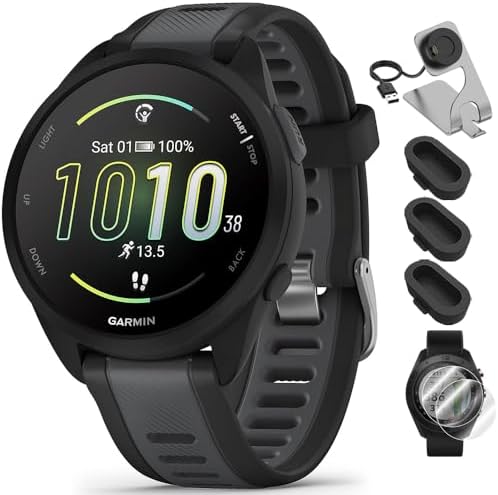
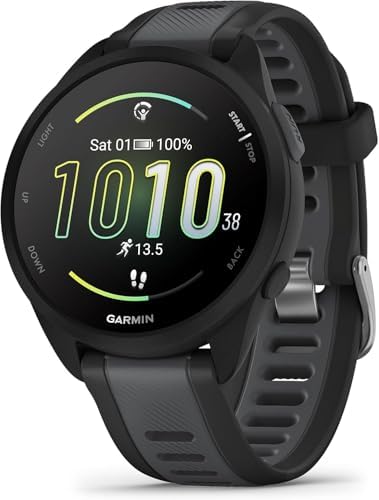
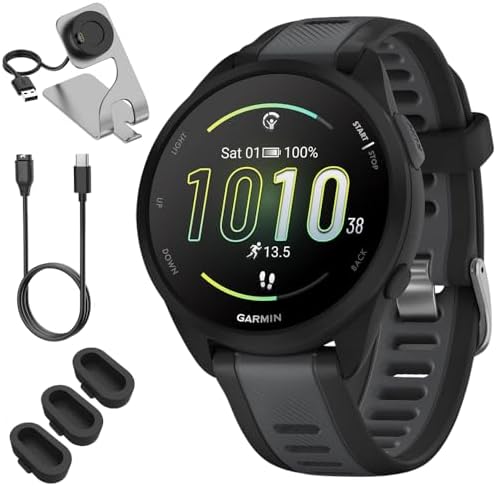
Three questions settle the decision. First, is the primary activity a structured run program with race goals? A yes points toward the Forerunner 165. Second, is the goal a general health overhaul with mixed activities, including yoga, walking, cycling, and the gym? A yes points toward the Vivoactive 5. Third, does always-on display or in-device music storage rank above advanced running analytics? If so, the Vivoactive 5 again. For a meaningful run-first experience, the Garmin Forerunner 165 Running Colorful AMOLED Black delivers those metrics with a readable AMOLED panel. For daily wellness, the Garmin vívoactive 5 Health and Fitness Ivory GPS offers a softer fit that covers more of the day.
What neither watch does is replace a full activity tracker plus a race watch. Both are single-watch solutions, and their divergence is deliberate. Garmin has long justified its mid-range ladder by specializing each rung, and the Garmin brand's design language across the two lines makes the family resemblance unmistakable while preserving the differentiation of training depth versus daily wear.
The Verdict Under Real Conditions
Neither model wins on hardware alone; both offer AMOLED displays, similar battery life, 5 ATM water resistance, and Garmin Pay. The deciding factors are soft features: training analytics for the Forerunner, wellness depth for the Vivoactive. The purchase standard is clarity about what the warranty of 11 days of battery life will actually be used for, whether that means structured kilometers of running or the full arc of daily health tracking.
The runner with a race calendar will not regret the Forerunner 165, and the keeper of a healthy routine will find the Vivoactive 5's always-on display and optional music version more consistent with life outside the starting corral. These two watches embody a smart split in Garmin's range, and choosing between them is less a matter of budget and more a question of which side of the training calendar defines the next three months.
 Just Pick Your Favorite Stylish Watch online














Item Reviews