The Amazfit Active Max series and the Amazfit Active 3 series approach the same buyer from opposite directions, and the split is clearer than most brand lineups manage. One is built around the largest battery and the brightest panel Amazfit fits into a mainstream training watch, while the other leans on premium materials and a four-button control layout aimed at structured running. This guide is written as a purchasing reference worth bookmarking, because the deciding criteria here are specific rather than philosophical: how long the watch runs between charges, how legible the screen is at midday, whether offline maps are onboard, and what the case is made of.
| Feature & Selling Point |
Amazfit Active Max |
Amazfit Active 3 Premium |
| Display Size and Type |
1.5 inch AMOLED |
AMOLED, size not specified in official material |
| Peak Brightness |
3,000 nits |
Not listed in official specification |
| Stated Battery Life |
Up to 25 days |
Not listed in official specification |
| Case Material |
Lightweight construction, material not detailed |
High-strength stainless steel |
| Crystal |
Not specified in official material |
Sapphire glass |
| Control Layout |
Touchscreen with physical buttons |
Four-button design |
| Onboard Storage |
4GB |
Not listed in official specification |
| Offline Maps |
Free downloadable maps |
Not listed in official specification |
| Sport Modes |
170+ modes |
Running-focused training suite |
| Strength Training Support |
Smart Strength included in mode list |
Not detailed in official material |
| Media Playback Use Case |
Up to 100 hours of podcast playback |
Not detailed in official material |
| Best Suited To |
Long battery endurance, mapping, mixed training |
Structured running, durability, tactile control |
| Charging Accessory |
Supported by the official Amazfit charging base |
Charging arrangement not detailed in official material |
| Decision Maker |
Buyers who charge rarely and want navigation |
Buyers who prioritize case material and button ergonomics |
Two rows in that table do most of the work. The Active Max publishes a 25-day battery figure and a 3,000-nit display, both of which change daily use rather than merely improving it. The Active 3 Premium answers with stainless steel and sapphire glass, materials that address long-term wear rather than runtime. Everything else flows from those two priorities, which is why the choice rarely comes down to which watch is newer.
How the Two Amazfit Designs Diverge
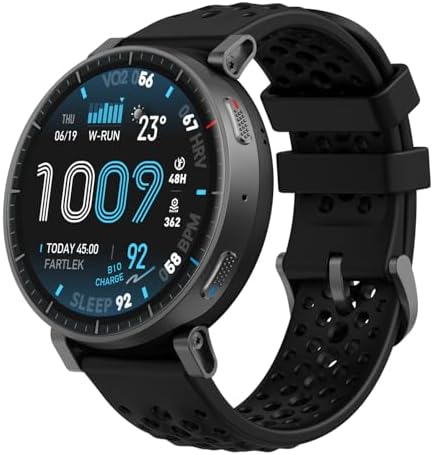
Amazfit states that the Active Max pairs a 1.5 inch AMOLED panel with 3,000 nits of brightness inside a lightweight body. Those numbers matter because they solve the two most common complaints about training watches in sunlight: washed-out screens and the habit of charging every few days. A 25-day claim in normal use is a different proposition from a two-week figure, and it reshapes how the watch fits into a routine. Buyers who travel without a cable, or who simply refuse to think about battery percentage, will treat that specification as the headline.
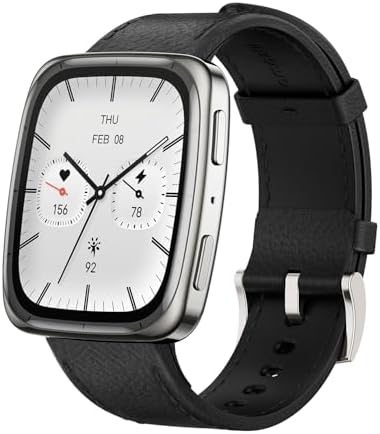
According to Amazfit, the Active 3 Premium takes its design cues from a lightweight four-button layout and builds the case from high-strength stainless steel with sapphire glass over the dial. Sapphire is the harder-wearing choice for a watch that will meet door frames and trailside rock, and the four-button arrangement is aimed squarely at runners who want to start, lap, and stop intervals without looking at a touchscreen. Buyers weighing the two watches should treat the Amazfit lineup as one with room for both philosophies, which is exactly why the decision is worth thinking through properly.
Battery Endurance, Display Legibility, and What They Cost You
The 25-day rating on the Active Max is the number that will sell the watch to a large share of buyers. It is worth being precise about what that figure represents: Amazfit lists up to 25 days of battery life in a lightweight design, and marketing estimates of this kind typically assume typical usage rather than continuous GPS. The practical takeaway is straightforward. If you run three or four times a week and wear the watch through the night for sleep tracking, a watch in this class should still measure its charging intervals in weeks rather than days.
The pairing of a brighter panel with long endurance is the real engineering story here. A 3,000-nit screen normally drains a battery faster, so the two figures have to be read together rather than in isolation. That combination is what separates the Amazfit Active Max Smart Watch 1.5" 48mm GPS from watches that win one metric and quietly lose the other.
The Active 3 Premium does not publish a comparable endurance figure in the material Amazfit has released, so a direct number-to-number comparison is not honest. What can be evaluated is the build trade-off. Stainless steel is denser than a lightweight composite case, and sapphire adds cost at the factory. Whether that matters depends on the buyer. For a watch worn only during runs and then removed, materials matter less. For a watch worn continuously for years, sapphire is the difference between a dial that looks new and one that carries a constellation of micro-scratches.
- Active Max priority: weeks-long endurance and a 3,000-nit AMOLED panel
- Active 3 Premium priority: stainless steel case, sapphire crystal, four-button control
- Shared limitation: neither is positioned as a dive or multisport flagship
- Practical outcome: the battery question and the material question cannot both be won at the same price
Navigation and Storage on the Active Max
Amazfit reports that the Active Max includes 4GB of onboard storage with free downloadable maps and up to 100 hours of podcast playback during workouts. Storage and offline mapping are usually the first features cut from a mid-range watch, so their presence changes who the watch is for. An unsupported route is no longer a reason to carry a phone, and a runner who prefers a long trail loop can check a junction on the wrist rather than stopping to retrieve a handset. The podcast figure is a useful side effect of the same memory, and it addresses the small but real annoyance of running long distances with a phone in a pocket.
The Active 3 Premium's official description centers on running rather than navigation. Buyers whose sessions happen on measured roads, tracks, and known paths will not miss a map layer. Those who explore unfamiliar ground should treat mapping as a deciding criterion, because route support is not something a firmware update can add without the memory to hold it.
Training Modes and the Running-Focused Alternative
The Active Max lists 170+ workout modes including Smart Strength. That breadth is genuinely useful for anyone who mixes running with gym sessions, rowing, or racket sports, and structured strength logging is a feature many runners eventually look for once they start supplementing mileage with resistance work. A broad mode list is not the same as depth in any single mode, but a watch that can name the session accurately is more likely to be worn through the whole week rather than only on run days.
The Active 3 Premium is positioned by Amazfit as a running smartwatch, and the four-button design should be understood in that context. Two-button and touchscreen controls work fine until the screen is wet or the session is cold enough to make bare-finger tapping unpleasant. Physical buttons allow lap marking without breaking stride and without hunting for a target. The trade-off is real in both directions: a running-first watch rewards the runner and does little for the swimmer, while the wide-mode watch spreads its usefulness across more days of the week.
Choosing Based on Session Type
Structured interval work points toward the button layout and the material durability of the Active 3 Premium. Mixed training, hiking, and route exploration point toward the Active Max. For a runner training for a first marathon or a personal best, the control feel matters as much as the specifications sheet. For someone who trains four or five different ways across a month, the wider mode list and offline mapping will be the features actually used.
Ownership Costs Beyond the Purchase
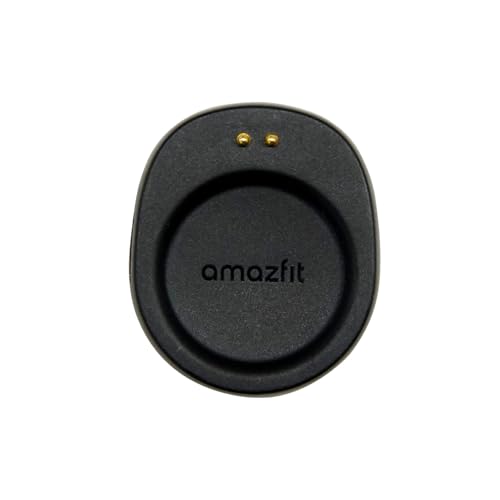
Charging cycles are part of the running cost of any wearable, and this is where the Active Max's endurance claim earns its place in the comparison. A watch rated at up to 25 days reduces the number of times a year it needs a cable, and the accessory situation is straightforward: an Amazfit Charging Base for Various Models is listed as compatible with the Active Max alongside several other Amazfit references, so a second unit for a desk or gym bag is a realistic addition. Buyers who leave charging until the last minute should weight this row heavily.
Who Should Buy Which
The buyer who should choose the Active Max is easy to describe. They run or train several times a week, they want the screen readable in direct afternoon sun, they go on routes without signage, and they find the idea of charging every few nights genuinely irritating. The 1.5 inch AMOLED panel at 3,000 nits, the 4GB of storage, the free downloadable maps, and the stated 25-day endurance all serve that person. For them, stainless steel is a nice detail they will not think about after the first week.
The buyer for the Active 3 Premium is defined by a different set of habits. They run structured sessions and want buttons under their fingers, they expect a watch to survive bracelet-level contact with walls and equipment, and they value the sapphire surface because they intend to keep the watch for years. Some of them will never use a map, and some will never use the podcast storage. Their criteria list puts material longevity and control ergonomics above the charging interval.
Neither group is buying the obviously better watch. They are buying different answers to the same two questions: how long should a watch run, and what should it be made of. The Active Max answers the first with enthusiasm. The Active 3 Premium answers the second with stainless steel and sapphire. Recognizing which of those questions you actually ask is the entire purchase decision.
The broader point is that Amazfit has moved beyond building a single acceptable watch into a rational lineup where specification choices carry real consequences. A 3,000-nit display, weeks of endurance, offline maps, and 4GB of storage belong to one kind of athlete. A sapphire-faced, stainless steel, four-button running tool belongs to another. A buyer who matches the tool to the training style will end up satisfied either way, while a buyer who chases whichever specification ranks highest in a review will spend the first months noticing everything their choice leaves out.
 Just Pick Your Favorite Stylish Watch online





















Item Reviews