The Amazfit Bip Max and the Garmin Forerunner 55 represent two distinct philosophies in wearable technology, each appealing to a different type of athlete and budget. A careful comparison of the Amazfit Bip Max series and the Garmin Forerunner 55 series is essential for anyone making a considered purchase, as the trade-offs between these two models directly impact the long-term ownership experience. This guide is designed to be a permanent reference for that decision, breaking down the core specifications and real-world usability of each watch.
| Feature & Selling Point |
Amazfit Bip Max |
Garmin Forerunner 55 |
| Display Technology |
2.07" AMOLED, high color accuracy and brightness |
1.04" MIP LCD, high contrast in direct sunlight |
| Battery Life (Smartwatch Mode) |
Up to 20 days (typical usage) |
Up to 2 weeks (smartwatch mode) |
| GPS Battery Life |
Not specified in official source |
Up to 20 hours (GPS mode) |
| Weight |
Not specified in official source |
37g, very light for daily wear |
| Water Resistance |
5 ATM (50 meters) |
5 ATM (50 meters) |
| Storage |
4GB internal memory for offline maps |
No internal storage for media or maps |
| Offline Maps |
Yes, supports offline map navigation |
No |
| Daily Suggested Workouts |
No automatic personalized workout suggestions |
Yes, Garmin's daily suggested workouts based on training load |
| Training Readiness / Recovery |
Basic recovery tracking |
Advanced recovery advisor and training status |
| Sport Modes |
150+ sports modes including HYROX, hybrid training |
Dedicated running, cycling, swimming, and gym profiles |
| Connectivity |
Bluetooth, compatible with iOS and Android |
Bluetooth, ANT+, compatible with iOS and Android |
| Case Size |
50mm (large form factor) |
42mm (more compact) |
| Best Use Scenario |
Multi-day battery, outdoor navigation, gym variety |
Structured running improvement and daily coaching |
| Key Selling Point |
2.07" AMOLED screen and offline maps at a budget price |
Garmin Coach and daily suggested workouts |
The most critical data point in this table is the divergence in training intelligence. The Forerunner 55 uses its processing power to deliver daily suggested workouts and recovery insights, while the Bip Max leans on physical hardware advantages like the large AMOLED panel and 4GB storage for offline maps. This fundamental difference defines who should buy which watch, and the following sections explore the practical implications of those choices.
Display, Dimensions, and Daily Wearability
The physical presence of each watch on the wrist tells a different story. The Amazfit Bip Max features a 50mm case that accommodates a 2.07-inch AMOLED display, a screen technology known for vibrant colors and deep blacks. This large, bright screen makes notifications, workout data, and map tiles highly legible, but the 50mm footprint will look oversized on slender wrists. For users who prefer a substantial, screen-dominant device, the Bip Max delivers a tablet-like visual experience on the wrist.
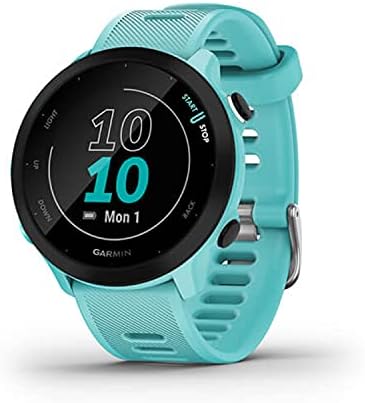
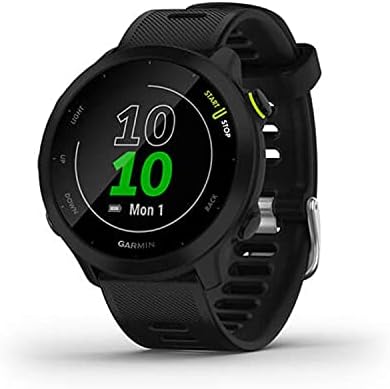
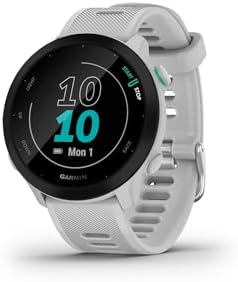
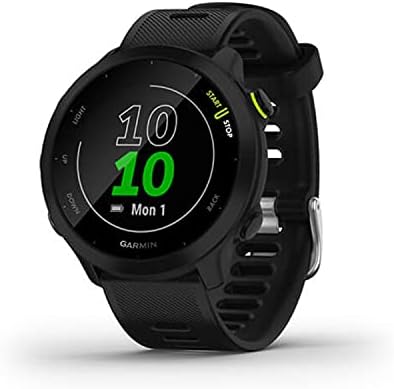
Garmin's approach with the Forerunner 55 is more conservative in size but aggressive in function. The 42mm case houses a 1.04-inch memory-in-pixel (MIP) display. While this screen does not produce the same color depth as an AMOLED, it is transflective, meaning it uses ambient light to increase visibility. This choice is essential for runners who need to read split times in bright sunlight without the screen washing out or consuming excessive battery power. The smaller 42mm case and 37g weight make the Forerunner 55 a more discreet companion for all-day wear, particularly during sleep tracking.
Choosing between these form factors is a matter of priority. A user who wants a device that feels like a wrist-worn smart display will gravitate toward the Amazfit Bip Max Smart Watch 2.07" 50mm GPS, while a runner seeking a lightweight, sweat-resistant tool for interval training will find the smaller profile of the Garmin Forerunner 55 GPS Running Watch Black.
Battery Life and Power Management
Battery endurance is a decisive factor for anyone who dislikes frequent charging. Amazfit positions the Bip Max as a long-endurance device, citing up to 20 days of typical usage. This figure relies on the efficiency of the AMOLED panel and a power management system that throttles background activity. In practice, heavy GPS use for outdoor runs will deplete the battery more rapidly than the 20-day marketing figure implies, but the baseline endurance remains a major asset for users who want a watch that rarely needs the charger.
Garmin states that the Forerunner 55 offers up to 2 weeks in smartwatch mode and up to 20 hours in GPS mode. The GPS figure is the critical number for runners. Twenty hours is enough for a full week of daily 5K runs with plenty of power left for recovery walks, but it falls short for ultra-distance events. The Forerunner 55 compensates with a more predictable power curve, and the MIP display draws less power when the backlight is off, which is the default state during daylight hours. For triathletes or marathoners, the GPS battery life of the Garmin Forerunner 55 is a known quantity that allows for reliable race-day planning.
Training Features and Coaching Intelligence
The Garmin Forerunner 55 is engineered around structured training. Its primary differentiation is the inclusion of daily suggested workouts. After an initial calibration period, the watch analyzes sleep quality, resting heart rate, and previous activity to propose a daily run or rest day. This feature is particularly valuable for new runners who lack a coach or a structured plan, as it removes the guesswork from building a weekly routine. The watch also includes Garmin Coach training plans, which provide adaptive, goal-based schedules for 5K, 10K, and half-marathon distances.
In contrast, the Amazfit Bip Max functions more as a multi-sport tracker than a dedicated running coach. It supports 150+ sport modes, including specialized profiles for hybrid training and HYROX-style functional fitness. This is a significant advantage for gym-goers who move between rowing, sled pushes, and bodyweight exercises. The watch tracks heart rate and calorie burn across these varied disciplines, and the 4GB of internal storage allows users to load offline maps and navigate unfamiliar routes without a phone. The Bip Max is a generalist that handles many activities competently, whereas the Forerunner 55 is a specialist that delivers depth in a narrow but demanding category.
Navigation and Outdoor Utility
The presence of offline maps on the Bip Max is a distinguishing feature that the Forerunner 55 does not offer. With 4GB of storage, a user can download map regions and follow a route on the 2.07-inch display. This capability transforms the Bip Max into a viable tool for trail exploration and urban navigation, where glancing at a map on the wrist is safer than pulling out a phone. The large screen makes map interpretation easier, and the watch can guide a user back to a starting point without cellular signal.
Garmin's navigation strategy for the Forerunner 55 focuses on track-back and basic route following. The watch does not store offline maps, but it can display a breadcrumb trail and direct the user back to the start point. For runners on familiar roads and park loops, this is sufficient. For hikers or trail runners who need turn-by-turn directions on unfamiliar terrain, the Bip Max provides a more robust toolkit. The choice here is between a compact running tool and a more expansive outdoor companion.
Runners who prioritize pace accuracy and structured coaching often start with the Forerunner 55 lineup, which is built around training metrics rather than general outdoor navigation. Meanwhile, the Amazfit portfolio positions the Bip Max as a more versatile lifestyle device that can handle a weekend hike as easily as a gym session.
Who Should Buy Which Watch
The decision ultimately hinges on the user's primary fitness identity. A runner driven by pace improvement, recovery metrics, and structured daily coaching will find the Garmin Forerunner 55 to be the more valuable tool. The watch is built to answer specific questions: How hard should I run today? How long should I rest? The data is focused on cardiovascular improvement, and the smaller case size ensures that it does not interfere with arm swing or cadence.
A user who wants a large, vivid screen, multi-day battery life, and the flexibility to use offline maps across different outdoor activities will lean toward the Amazfit Bip Max. The 50mm case and AMOLED panel make it a more engaging device for viewing notifications and media, and the HYROX mode signals an intent to serve the functional fitness community. This is a watch for people who see their wearable as a capable all-rounder rather than a dedicated running coach. The Garmin brand's reputation for running accuracy remains a strong pull, but the Bip Max makes a compelling case for users who prioritize screen quality and storage flexibility.
Neither watch is a compromise; they are simply optimized for different outcomes. The Forerunner 55 is a precision instrument for a single discipline, while the Bip Max is a broad-spectrum device that covers more ground with a larger display. Understanding the specific dimensions that matter most, whether that is GPS coaching logic or the size and brightness of the screen, is the final step in selecting the right fitness companion for the miles ahead.
 Just Pick Your Favorite Stylish Watch online














Item Reviews