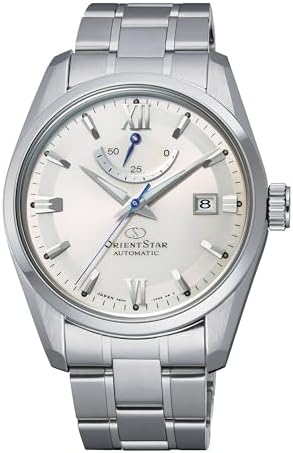
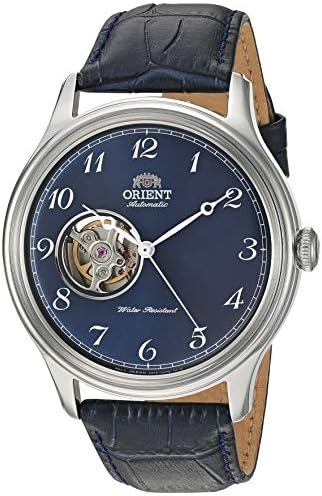
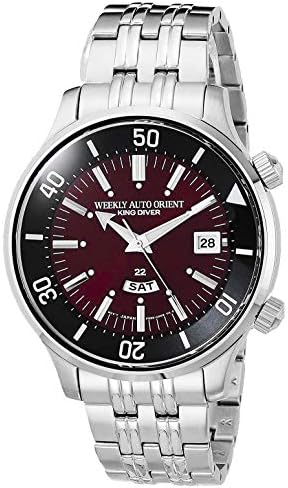
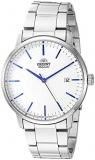
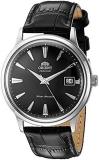
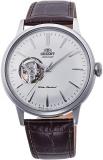
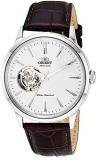
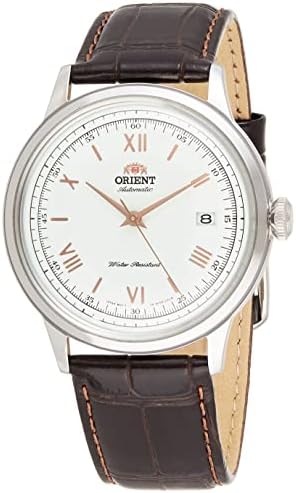
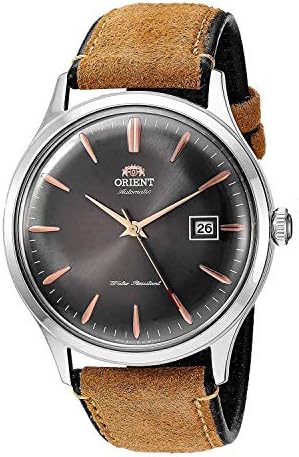
For collectors and enthusiasts who admire mechanical precision, few complications match the elegance of a perpetual calendar. Among affordable luxury watchmakers, Orient is a brand that, while often celebrated for its in-house automatic movements, has also produced noteworthy perpetual calendar models that stand as a testament to its horological ambition. These watches not only track the date, day, and month but also automatically adjust for leap years, making them a marvel of micro-engineering. The Orient perpetual calendar watch represents a fascinating intersection of high complication and accessible pricing, making this intricate mechanism available to a wider audience.
In mechanical watchmaking, a perpetual calendar is one of the “grand complications,” traditionally reserved for high-end Swiss maisons. However, a sustainable approach to mechanical expertise has been key to delivering such complexity without the astronomical price tag. Diving into the mechanics reveals how Orient integrates a 48-month gear train module into its automatic calibers, allowing the movement to distinguish between 30- and 31-day months as well as February in leap years. This feature requires no manual adjustment for decades, a convenience that collectors deeply appreciate. For those interested in the breadth of Japanese watchmaking, exploring the Orient brand collection reveals a deep commitment to mechanical innovation.
A Look into the Mechanics of Complexity
The heart of any perpetual calendar is its program wheel, a complex cam system that rotates once every four years. This wheel is notched with specific depths corresponding to the varying lengths of months. An Orient movement equipped with this feature uses a precision gear train to drive the date, day, and month sub-dials. Unlike quartz alternatives that use a simple firmware algorithm, the all-automatic perpetual calendar requires hundreds of tiny components to work in perfect synchronization. This purely mechanical problem-solving is why many watch enthusiasts value these timepieces as a superior alternative to smartwatches, simply for the tactile joy of pure engineering.
Dial Layout and Visual Harmony
Visually, Orient perpetual calendars often feature a symmetric and balanced dial layout. Typically, the date is indicated by a hand pointing to numerals along the periphery of the dial, rather than the more common window aperture. A month sub-dial sits at 12 o’clock, while the day of the week is displayed at 6 o’clock. Some references also include a 24-hour indicator or a moon phase, adding another layer of aesthetic complexity. The leaflike hands and applied indices common on these models exude a dress-watch formality, making them suitable for both a business suit and a leather-strapped casual setting.
Materials and Build Quality
Orient crafts these timepieces from high-grade stainless steel, often with a polished or brushed finish that resists daily wear. The case diameters typically range between 40mm and 43mm, providing a substantial presence on the wrist without being overly bulky. A domed mineral crystal or, in some higher-tier models, sapphire crystal protects the intricate dial. The crown is often signed with the Orient “O” logo, and the case back is usually screw-down, ensuring water resistance suitable for daily life, splashes, and rain.
Inside, the movements are based on workhorse Orient automatic calibers, such as the tried-and-true 46-series, which have been modified to accommodate the perpetual calendar module. These movements hand-wind and do not require a battery, appealing to enthusiasts who prefer self-sustaining mechanical power over the charging habits required by modern electronics.
Comparing Complications: Perpetual vs. Annual Calendar
It is useful to distinguish a perpetual calendar from its simpler cousin, the annual calendar. An annual calendar correctly displays the date for a full year but requires a manual adjustment at the end of February. A perpetual calendar, by contrast, knows that February has 28 or 29 days and adjusts itself until the year 2100. Owning a perpetual calendar from Orient means interacting with a device that accurately tracks the Gregorian calendar without intervention, a genuine engineering achievement.
For those seeking to understand the lineage of fine Japanese watchmaking, exploring the Orient brand’s history is essential. Orient has been manufacturing its own movements since 1951, a rarity in the watch industry. This vertical integration allows them to innovate and produce complicated movements at a fraction of what other manufacturers charge. Watches like the Orient perpetual calendar are emblematic of this philosophy: they offer high-grade mechanical watchmaking without the pretense. The depth of the industry’s technical output is remarkable, especially when compared with fashion-focused electronic accessories.
Wearing the Orient Perpetual Calendar
On the wrist, the Orient perpetual calendar commands a certain respect. The extra weight from the complex movement and the solid stainless steel case gives it a substantial feel. The watch is primarily designed as a dress piece, but its restrained styling integrates easily into daily life. The subtle “click” of the date hand advancing and the smooth sweep of the central seconds hand provide continuous tactile satisfaction. This is a timepiece that celebrates time itself, rather than merely displaying it.
Such a watch serves as a conversation starter among those in the know. Pointing to the month sub-dial and explaining that it automatically skips the 31st on short months, or that it knows to add a day in February on leap years, often draws admiration. It is a piece of classic watchmaking that feels equally at home in a collection of modern dive watches or smartwatches. For collectors looking for variety, the breadth of options across different functionalities in the market is impressive, including highly robust field watches that prioritize durability and utility.
Ultimately, the beauty of the Orient perpetual calendar watch lies not just in its ability to keep track of leap years, but in its statement: that the horological industry continues to produce intricate, emotionally engaging machines. It is a commitment to craftsmanship that outpaces the lifecycle of a software update. For the enthusiast who values the interplay of gears over the glow of a screen, this Orient complication stands as an outstanding, meaningful choice. It demonstrates that a perfectly engineered wheel, releasing tension over a four-year cycle, can bring a human connection to the abstract concept of passing time.