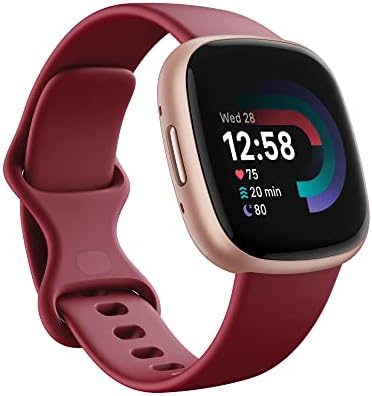
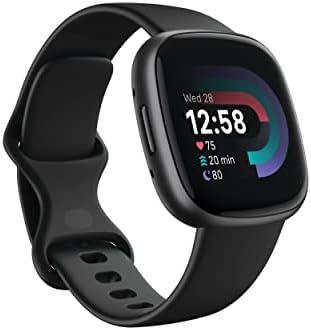
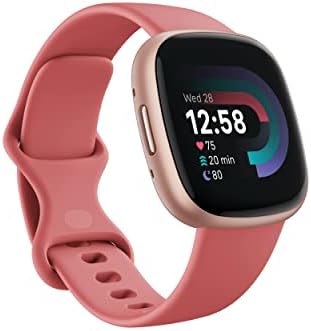
Choosing between the Fitbit Versa 4 and the previous generation Versa 3 often comes down to evaluating small but significant refinements in hardware, fitness tracking, and everyday usability. Both models sit squarely in the mid-range smartwatch segment, catering to users who want a balance between advanced health metrics and lifestyle convenience without the bulk of a dedicated sports watch. While the two share a familiar design DNA and a robust feature set, the later model introduces subtle adjustments that may sway a prospective buyer.
| User-Centric Comparison Point | Fitbit Versa 4 | Fitbit Versa 3 |
|---|---|---|
| Physical Button for Reliable Control | Yes – tactile button for easy presses during workouts or in wet conditions | Haptic indent only (no moving part); can be less responsive when sweaty |
| On-Device Workout Guidance | Over 40 built-in modes with goal-based workouts that guide reps, sets, and intensity on the wrist | Over 20 built-in modes; goal-based workouts must be set up via the phone app |
| Contactless Payment Convenience | Google Wallet – widely accepted at most merchants; simple to set up on Android | Fitbit Pay – limited to supported banks and regions; less universal |
| On-Wrist Navigation for Runs and Walks | Google Maps integration provides turn-by-turn directions directly on the watch face | No on-wrist map navigation; requires phone for directions |
| Voice Assistant Choice | Google Assistant native – responds to quick queries, sets timers, controls smart home devices | Amazon Alexa built-in – good for basic tasks but less integrated with Android ecosystem |
| Display Quality for Daily Use | 1.58-inch AMOLED color touchscreen – sharp, bright, and always-on capable | 1.58-inch AMOLED color touchscreen – identical in size, resolution, and brightness |
| Core Health Sensor Suite | Full set: SpO2, skin temperature, heart rate, EDA, ECG – all monitored 24/7 | Full set: SpO2, skin temperature, heart rate, EDA, ECG – same sensor hardware |
| Built-in GPS for Outdoor Workouts | Yes, with GLONASS – tracks pace, distance, and route without a phone | Yes, with GLONASS – same GPS accuracy for runs, hikes, and rides |
| Battery Life (Real-World Typical) | 6+ days with sleep tracking and limited GPS; fast charge to full in ~90 minutes | 6+ days with sleep tracking and limited GPS; same charging speed and cable |
| Charging Cable and Compatibility | Same proprietary magnetic dock as Versa 3 – easy upgrade for existing owners | Proprietary magnetic dock – works with Versa 4 charger as well |
| Google Ecosystem Integration | Deep Google integration: Maps, Wallet, Assistant, and Play Store access | Fitbit OS with some Google services; no native Maps or Wallet |
| Best Fit For | Active users who value tactile control, Google convenience, and on-wrist workout coaching | Budget-conscious buyers who need proven health tracking and Alexa voice control |
The table reveals that the most pronounced differences lie in the physical navigation method and the depth of built-in exercises, while core health sensors and battery longevity remain remarkably similar. For users already invested in the Fitbit ecosystem, the choice largely hinges on whether the refined button and Google wallet integration justify a change from the established Versa 3.
Design Evolution and Physical Interaction
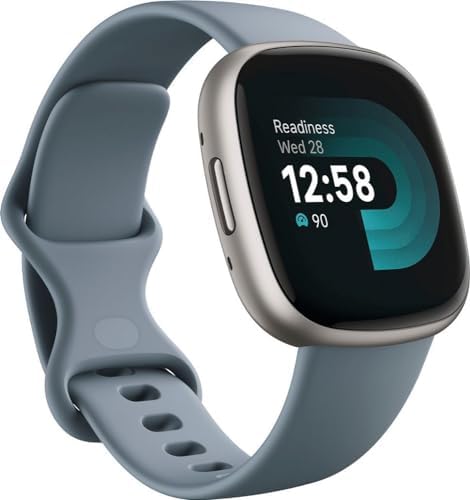
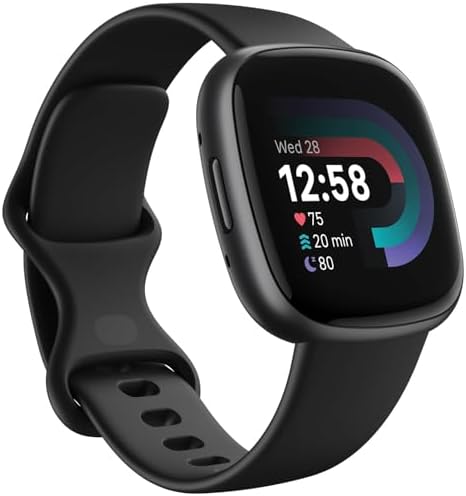
The outward silhouette of the Versa 4 and Versa 3 is nearly identical, with both featuring a squircle-inspired shape and a lightweight aluminum case. The most tangible change is the introduction of a physical button on the left side of the Versa 4, replacing the purely haptic indent found on its predecessor. This returning to a tactile element responds to user feedback that a clickable control provides a more reliable navigation method, especially during sweaty workouts or when wearing gloves. The color, size, and display quality remain unchanged at a 1.58-inch AMOLED panel, so visual clarity during outdoor runs or indoor sessions is equally sharp on both models.
Workout Experience and On-Device Metrics
A significant software-driven refresh can be seen in the fitness tracking department. The Versa 4 offers over 40 exercise modes directly available on the wrist, many of which come pre-loaded with goal-based workouts that guide the user in real-time. This reduces dependency on the phone for training plans. The Versa 3, while capable, requires users to load goal-based workouts through the companion app before syncing. Both watches support the same core health sensors, including SpO2, skin temperature variation, 24/7 heart rate, and EDA for stress management, but the later model’s on-device encouragement is designed to keep one more engaged without needing to reach for a smartphone.
Smart Ecosystem and Daily Convenience
The Versa 4 came to market after Fitbit’s acquisition by Google found its footing, resulting in tighter integration with Google services. The most noticeable difference is the replacement of Fitbit Pay with Google Wallet for contactless payments, and the addition of Google Maps turn-by-turn directions on the wrist. The voice assistant remains, though it is now powered by Google Assistant on the Versa 4. The older Versa 3 still uses a combination of Alexa and Fitbit Pay, and on-wrist call management is present on both. For someone who uses Android daily, the deeper Google ecosystem can be a meaningful point of convenience. Those who appreciate a more modern, app-driven experience may also enjoy the Fitbit Sense 2 for stress tracking, which shares the same sensor platform but adds an EDA sensor for stress tracking.
Battery Life and Long-Term Consistency
Battery performance is one area where claims align almost perfectly. Both the Versa 4 and the older Versa 3 advertise over six days of typical usage, which includes sleep tracking, all-day heart rate monitoring, and a few GPS-tracked workouts per week. Real-world stamina is comparable, and both models support fast charging that can reach a full charge in under two hours. For users seeking a replacement for an older connected watch, the Fitbit Versa 4 does not mandate a different charging cable, using the same proprietary magnetic dock as its predecessor, making the physical transition simpler for existing owners.
Value Proposition and Use Case Considerations
Deciding between these two smartwatches depends on how one values physical control and modern smart features versus budget efficiency. The Fitbit Versa 3 remains a highly capable health companion with a proven sensor set and excellent battery life, often available at a lower entry price after the launch of its successor. The Versa 4 justifies its slightly higher cost with the addition of the physical button, deeper on-device fitness guidance, and seamless Google Wallet integration. Upgraders moving from a Fitbit Versa 2 or older will find either model a substantial step forward, while newcomers who manage stress and sleep alongside step counts will appreciate that both watches deliver these metrics with Fitbit’s characteristic algorithmic nuance. For those focused on daily activity monitoring, the Fitbit Charge 5 for daily fitness offers a slimmer, band-style alternative with similar core health sensors.
The lifestyle of the user ultimately defines the better match. One who frequently starts spontaneous workouts, prefers physical feedback while navigating screens, and actively uses contactless payment on the wrist will find the Versa 4’s refinements additive to the daily experience. Conversely, a user who applies these core metrics during structured training and values the proven reliability of the existing generation can invest in the Versa 3 with confidence, knowing that the majority of health accuracy remains identical across both wrists. Exploring the top Fitbit smartwatch selection can provide additional context on how these models fit into the broader lineup.