The Garmin Forerunner 265 and the Forerunner 570 sit close enough in price and positioning that choosing between them comes down to a handful of measurable differences rather than brand loyalty. Both carry vivid AMOLED touchscreens, multi-band-capable positioning on select configurations, and the full Garmin training ecosystem, yet they diverge on battery endurance, case sizing, optical heart rate hardware, and price per feature. This guide breaks down those gaps so the decision becomes a matter of matching a watch to a training load rather than guessing.
| Feature & Selling Point | Forerunner 265 | Forerunner 570 |
|---|---|---|
| Display | AMOLED touchscreen | AMOLED, higher brightness |
| Smartwatch Battery | Up to 15 days | Up to 13 days |
| GPS Battery | Approx. 20+ hours | Up to 20 hours (SatIQ) |
| Weight | Lighter build | Slightly heavier |
| Case Size | 42mm and 46mm options | 42mm and 47mm options |
| Heart Rate Sensor | Garmin Elevate optical | Elevate with ECG-capable hardware |
| Training Readiness | Supported | Supported |
| Running Dynamics | On-watch and accessory | On-watch and accessory |
| Maps & Navigation | Breadcrumb plus course | Multi-band positioning support |
| Music Storage | Onboard offline playlists | Onboard offline playlists |
| Connectivity | Bluetooth, ANT+, Wi-Fi | Bluetooth, ANT+, Wi-Fi |
| Water Rating | 5 ATM | 5 ATM |
| Best For | Racers wanting max battery per gram | Runners wanting the brighter panel and newer sensor |
| Value Position | More battery life per dollar | Newer platform with higher asking price |
The table makes the central trade-off clear: the Forerunner 570 pushes the display and sensor hardware forward, while the Forerunner 265 defends its position with longer smartwatch battery life and a lighter chassis. Neither outcome is accidental. Garmin built the 265 as an endurance-first mid-tier runner, then positioned the 570 as the more premium daily trainer where screen quality and health tracking matter as much as mileage.
Battery Endurance: The Gap That Decides Multi-Day Training
Battery life is the first number most runners check, and the Forerunner 265 holds a measurable edge. In smartwatch mode the 265 is rated up to 15 days, while the 570 is rated up to 13 days according to Garmin’s own product comparison data. That two-day difference sounds small on paper, but it compounds across a training block: a runner who logs five to six sessions per week and leaves GPS tracking on for two of them will charge the 570 more often, and sometimes on a schedule that does not suit a race week.
In GPS-only GNSS mode the picture narrows considerably. Garmin lists the 570 at up to 20 hours, and the 265 sits in a comparable range once satellite tracking is active. For marathoners and half-marathoners, both watches comfortably cover the longest race day plus warm-up and cool-down time. The real differentiator appears for ultrarunners and multi-day stage racers, where the 265’s larger battery reserve reduces the anxiety of arriving at a checkpoint with a low percentage.
Charging behavior also matters. Both watches use a proprietary Garmin charging cable rather than USB-C directly on the case, so a single cable covers either model. A runner who already owns a Forerunner 255 or 965 will find the cable ecosystem unchanged, which is a minor but real convenience when swapping between devices.
Display Brightness and Readability in Direct Sunlight
Both devices use AMOLED panels, so the outdated assumption that a brighter screen always means a dimmer battery no longer applies cleanly. Independent comparative testing, including the post-test breakdown published by Wareable, reports that the 570’s panel is noticeably brighter and more vivid than the 265’s already capable display. In practice this matters most in two scenarios: midday summer runs where glare washes out mid-tier panels, and pool or track sessions where the watch sits at an angle to the sun.
The 265 is not dim by any standard. Its AMOLED screen remains readable in direct light and offers the same always-on display option that runners value for glancing at pace without raising a wrist fully. The difference is one of degree rather than usability, and runners who train mostly in shade or early morning light may never notice the gap.
Where the Brighter Panel Actually Pays Off
Ultra events with exposed ridgeline sections, midday road races, and open-water swim legs in triathlon all reward the 570’s brighter output. Runners who wear sunglasses with polarized lenses may also perceive a difference, since polarization interacts with screen brightness and viewing angle in ways that vary by panel.
Battery Cost of the Brighter Display
A brighter AMOLED panel is one of several factors behind the 570’s shorter smartwatch-mode rating. Garmin manages this through display dimming settings and gesture-based wake options, both of which can be tuned per user. Setting the 570 to a lower brightness profile brings its endurance closer to the 265, though the exact gain depends on usage patterns and is not a fixed figure.
Weight, Case Sizing, and Wrist Comfort
Weight distribution matters more than most spec sheets admit. Run-to-the-Finish’s comparison notes that the 265 is the lighter of the two, while the 570 carries a slightly larger case profile. For runners who wear a watch on long runs, a lighter chassis reduces the small but cumulative sensation of a swinging mass on the wrist, particularly in the 46mm-and-up sizes.
Case sizing options also differ. The Forerunner 265 has historically been offered in 42mm and 46mm variants, while the 570 appears in 42mm and 47mm. That 1mm difference on the larger case sounds negligible, but coupled with the weight difference it changes how the watch sits on a smaller wrist. Runners with wrists under 165mm may find the 42mm versions of either model preferable, and here the two are close enough that fit is better determined by trying both on than by reading dimensions.
Runners who prioritize a low-profile fit often gravitate toward the Forerunner 265, especially those transitioning from a Forerunner 55 or 165.
Sensors, Health Tracking, and the ECG Question
Both watches rely on Garmin’s Elevate optical heart rate platform, and both support the core training metrics that define the Forerunner line: Training Readiness, Training Status, Body Battery, HRV Status, and race predictions. For runners already using Garmin Connect, the software experience is effectively identical.
The 570 sits on a newer hardware generation of the Elevate sensor, which Garmin has paired with ECG-capable hardware on this model. That capability expands the health-tracking scope beyond training, offering a pathway to rhythm assessment features that are not part of the 265’s hardware. Runners who specifically want that health dimension have a concrete reason to consider the 570, though the training-focused feature set remains broadly the same.
Navigation hardware is another point of divergence. The 570 supports multi-band positioning on supported configurations, which improves accuracy in dense urban canyons and heavily wooded trails where satellite signals bounce and degrade. The 265 handles standard GPS and GNSS tracking well, but runners who train in cities with tall buildings or on tightly canopied trails will see a practical accuracy difference.
Training Features, Music, and Daily Wear
For day-to-day wear, both watches handle notifications, contactless payments where supported, sleep tracking, and offline music storage. Music storage is unusual at this price band and remains one of the strongest arguments for either model over a basic running watch, since it removes the need to carry a phone on easy runs.
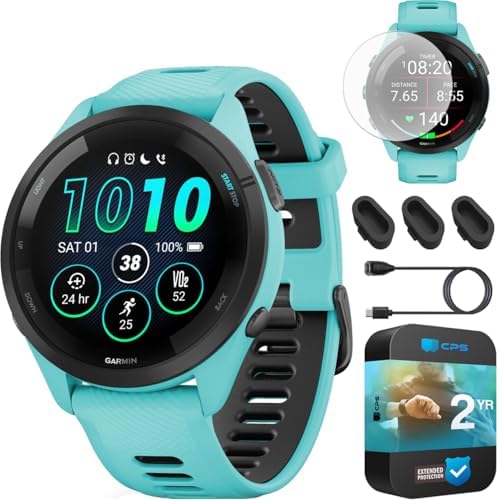
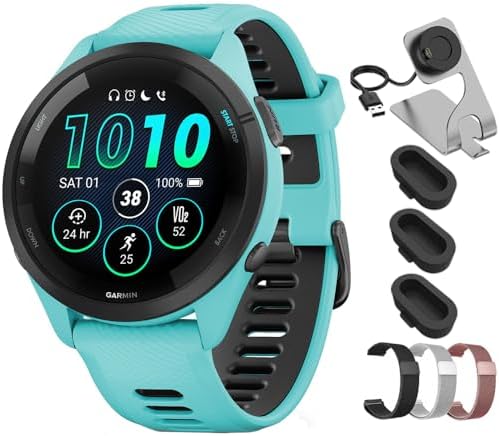
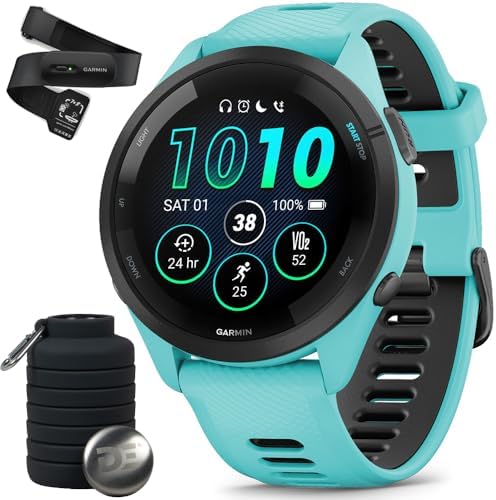
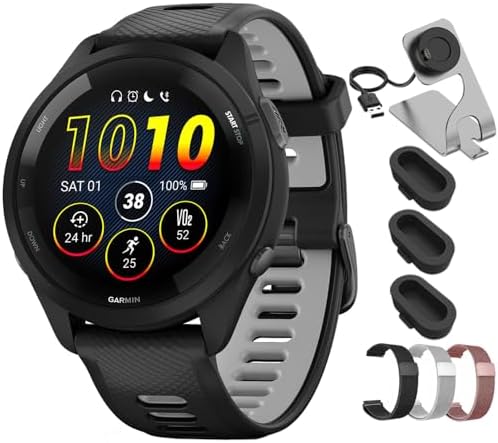
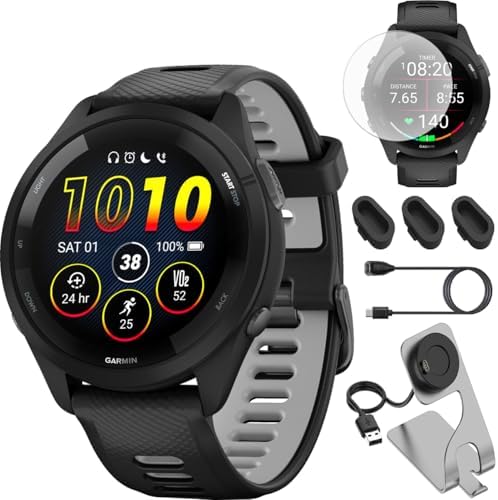
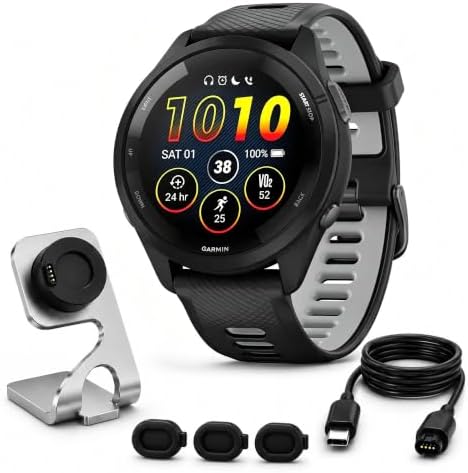
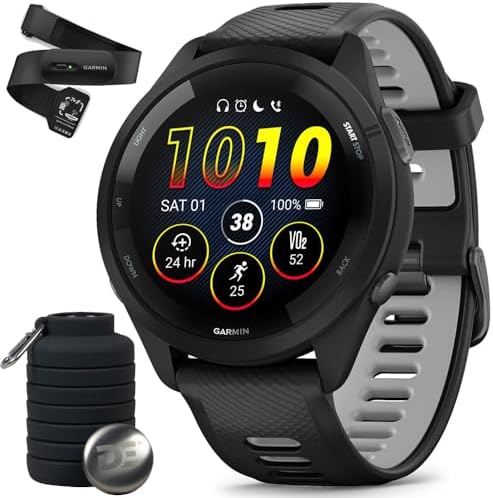
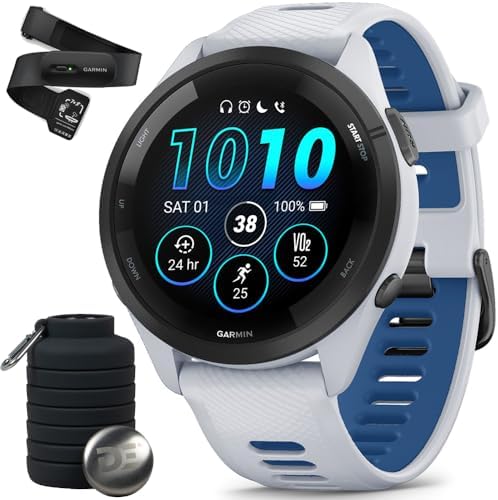
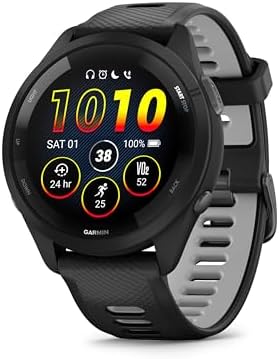
For runners who want a watch that doubles as a smartwatch, the 265 offers a familiar, well-established experience. The Garmin Forerunner 265 Running Colorful AMOLED Black pairs the AMOLED display with Garmin’s full training and recovery toolkit, making it a practical daily driver rather than a race-only tool.
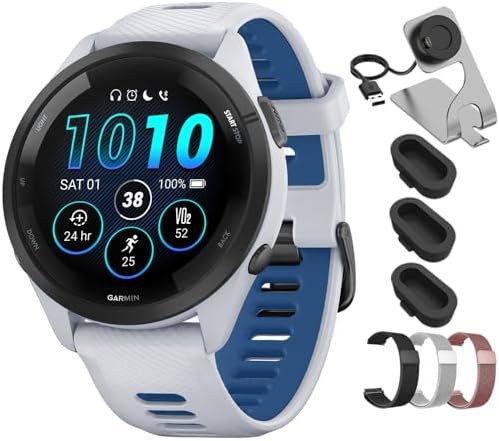
The 570 builds on the same foundation with the brighter panel and newer sensor array. A model such as the Garmin Forerunner 570 Running 42MM WiFi Aluminum GPS suits runners who prefer the smaller case size but still want the platform’s latest hardware.
Deciding Between Them by Training Profile
- Ultrarunners and stage racers: Choose the 265 for its longer smartwatch-mode battery life and lighter build.
- Urban and trail runners in signal-challenged areas: The 570’s multi-band positioning support is a meaningful accuracy upgrade.
- Runners prioritizing screen quality: The 570’s brighter AMOLED panel is the more visible upgrade.
- Health-tracking focused buyers: The 570’s ECG-capable hardware broadens its usefulness beyond training.
- Budget-conscious buyers: The 265 delivers more battery endurance per dollar.
The 265 is not a compromise for anyone whose priority is endurance. Its lighter chassis and longer battery endurance make it the more efficient tool for runners who measure value in hours of GPS time. The 570 justifies its higher price through the display and sensor upgrades, which are genuine advances rather than cosmetic ones.
What matters is the runner’s own data profile. Someone logging 40 kilometers per week on roads in a temperate climate will extract similar value from either model. Someone training for a 100-kilometer trail race, or living in a city where GPS accuracy is constantly tested, will feel the 570’s hardware advantages more acutely. Buyers exploring the wider Garmin brand should treat this pair as two distinct tools in the same workshop, not as an old model and its replacement. The 265 remains a legitimate first choice for endurance-first runners, and the 570 is a legitimate first choice for runners who want the newest panel and sensor generation on their wrist. Choosing between them is less about which watch is better and more about which training life it needs to support.