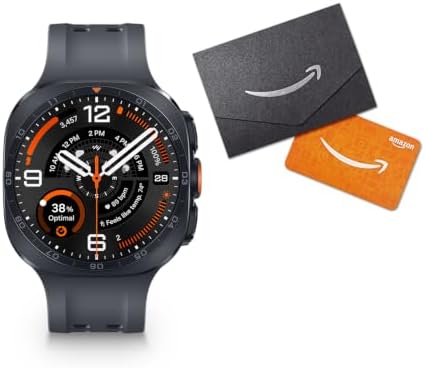
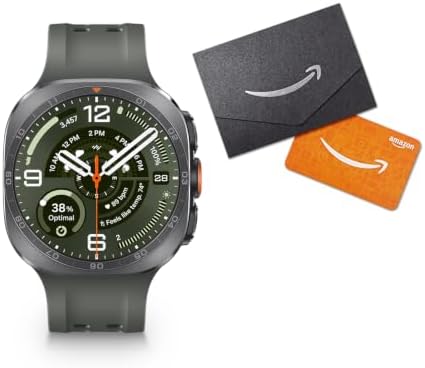
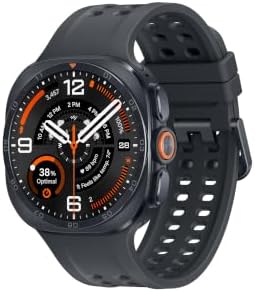
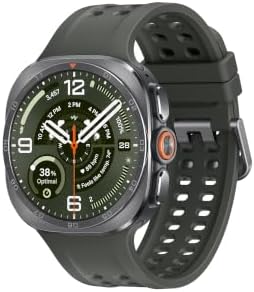
The Samsung Galaxy Watch Ultra2 arrives with a thicker spec sheet than its adventure-oriented predecessor, headlined by a 5,000-nit display, an 800 mAh battery, and a titanium chassis that has been trimmed thinner than the outgoing generation. That combination points to a clear design philosophy: keep the rugged credentials of the Ultra line while making the watch more wearable for daily use, not just summit pushes and trail runs.
This article breaks down the Galaxy Watch Ultra2 feature by feature, from the hardware and health sensors to the software layer that ties everything together. Anyone weighing a premium outdoor smartwatch against trail-focused rivals will find the technical breakdown and buying context useful. The Samsung brand’s broader catalog shows how the Ultra2 sits above standard Galaxy Watch models, and that hierarchy matters when comparing price against capability.
Battery Life and Charging Architecture
The single biggest talking point inside this generation is the 800 mAh cell. According to Samsung, that capacity represents a roughly 35\% increase over the previous Ultra. In practice, that headroom matters most for multi-day activities where nightly charging is not an option: extended hikes, overnight backpacking trips, and multi-sport events that span more than one day of GPS tracking.
Charging has been addressed alongside capacity. Samsung specifies high-frequency fast charging based on the WPC wireless standard, and Samsung states that a 30-minute top-up delivers around 40\% battery. That half-hour figure is the realistic use case: a quick charge during a shower or meal break can carry the watch through an evening of training or sleep tracking.
Wireless charging compatibility matters beyond convenience. The WPC standard allows the watch to draw power from many existing Qi-style pads and Samsung chargers, reducing the need to carry a proprietary cable on trips. Combined with the larger cell, the charging profile makes the Ultra2 a stronger candidate for users who previously had to choose between a bulky battery pack and a shorter-lived smartwatch.
Display and Materials
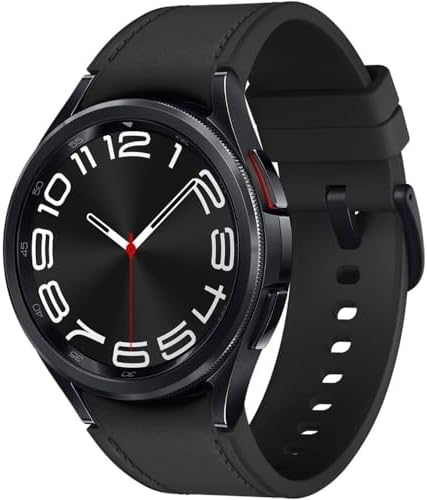
The Ultra2 uses a titanium case, which keeps weight down while providing the scratch and corrosion resistance expected of an adventure watch. The notable change this generation is thickness: the case has been trimmed compared with the original Ultra, making the wearable slimmer on the wrist without abandoning the 47mm footprint that defines the category. Titanium Gray is the reference finish, and it pairs well with the integrated lug design that keeps the watch from snagging on backpack straps or jacket sleeves.
The 5,000-nit display is the other headline hardware upgrade. Brightness at that level directly affects readability in direct sunlight, which is the condition where most smartwatch screens struggle. For trail runners checking pace mid-run, cyclists glancing at intervals, or climbers reading elevation at noon, the higher peak brightness reduces the need to squint or shade the watch with a free hand.
Together, the titanium build and brighter panel establish the Ultra2 as a tool watch first. The design language follows the rugged branch of the Galaxy Watch family rather than the dressier standard models, which is a deliberate split in the lineup.
Connectivity and Positioning
Networking support covers LTE and Bluetooth, plus Wi-Fi on both 2.4 GHz and 5 GHz bands and NFC for contactless payments. On the positioning side, Samsung specifies dual-frequency GPS using both L1 and L5 signals. Dual-band GNSS is significant for outdoor users because L5 signals improve resistance to multipath interference, the errors caused by signals bouncing off buildings, canyon walls, or dense tree cover.
In practical terms, dual GPS means route traces stay cleaner in urban canyons and densely wooded trails, which affects pace accuracy, distance totals, and any navigation cues that depend on reliable positioning. For anyone uploading routes to training platforms afterward, the difference shows up in the details.
The full LTE configuration is where the hardware comes together as a standalone device. A cellular model such as the Samsung Galaxy Watch Ultra2 Titanium Gray 47mm LTE pairs the titanium case, the 47mm sizing, and cellular connectivity in one package, letting users leave the phone behind while keeping calls, messages, and music streaming available.
Performance Platform and Software
The Ultra2 runs on a new Snapdragon Wear Elite processor, paired with Wear OS 7 under Samsung’s Wear OS Powered by Samsung umbrella. The chip change is meaningful because the Ultra line is expected to handle continuous sensor sampling, including heart rate, GPS, and sleep staging, while keeping the interface responsive. A faster platform also supports on-device processing for health metrics, which reduces lag between measurement and display.
Wear OS 7 brings the latest interaction layer from Google, and Samsung’s One UI Watch skin on top provides the familiar health dashboards, complication options, and quick settings. The combination of the new chip, the current Wear OS release, and the 800 mAh battery is what makes the deeper health features practical to run continuously rather than intermittently.
Health and Fitness Tracking
Samsung’s health suite on the Ultra2 centers on combined metrics rather than isolated numbers. The Energy Score is a good example: it aggregates sleep, activity, and heart-rate data into a single readiness figure, displayed as a number on the watch face. As the watch collects more data, the score becomes more stable, and related cards for sleep score, step count, and heart rate surface alongside it on the interface.
For athletes, the deeper value is in how the sensors support specific activities. GPS tracking pairs with heart-rate monitoring for pace and effort analysis, while sleep tracking feeds recovery guidance. Because the battery has been enlarged, these background measurements can run longer overnight and across multi-day blocks without forcing a choice between tracking and runtime.
The health story is not about a single breakthrough sensor but about making continuous measurement viable. A larger battery and a faster chip reduce the tradeoffs that have historically limited always-on health tracking on smartwatches.
How the Ultra2 Fits Into a Buying Decision
Choosing the Ultra2 comes down to a few practical questions. If the priority is outdoor use with dual-band GPS and a display that stays legible in harsh light, the Ultra2 addresses those directly. If multi-day battery life matters more than any single sensor, the 800 mAh cell is the differentiator, and the 35\% jump over the previous Ultra is the kind of gain that changes how a watch gets used rather than just how it reads on a spec sheet.
Connectivity options also shape the decision. The Bluetooth and Wi-Fi variants suit users who keep a phone nearby, while the LTE version suits runners, cyclists, and travelers who want to leave the phone at home. Titanium Gray is the standard finish across configurations, and the 47mm sizing keeps the Ultra2 firmly in the large-watch category, worth trying on before buying for anyone with smaller wrists.
Because Wear OS 7 and the Snapdragon Wear Elite chip are shared across the broader Galaxy Watch platform, buyers are also investing in a software ecosystem that will receive updates across the lineup, not a one-off device with a short support window.
The Galaxy Watch Ultra2 ultimately reads as a refinement of a specific idea: a smartwatch built for people who spend time outside and want health tracking that keeps up. The brighter screen, larger battery, thinner titanium case, and dual-band GPS each address a real friction point, and together they position the watch less as a status object and more as equipment that earns its place on the wrist.