The Garmin Forerunner 265 and the Garmin Vivoactive 6 sit close together in price yet pull in two different kinds of wearer, and the gap between them comes down to training depth rather than raw hardware. Both carry bright AMOLED panels in compact polymer cases, both lean on the same Garmin Connect ecosystem, and both handle notifications, music and contactless payments. This guide is built as a practical buying reference for runners, gym members and everyday trackers who want the right watch on the first try, so it is worth saving and sharing with anyone weighing the same two models.
| Feature and Selling Point | Garmin Forerunner 265 | Garmin Vivoactive 6 |
|---|---|---|
| Primary Audience | Runners and structured trainers | General fitness and daily wear |
| Display | AMOLED, always-on option | AMOLED, always-on option |
| Case Size | 42mm and 46mm variants | Single 42mm-class case |
| Smartwatch Battery (claimed) | Up to 13 days | Up to 11 days |
| GPS-Only Battery (claimed) | Up to 20 hours | Shorter GPS runtime |
| Satellite Modes | GPS, SatIQ auto-select | GPS with standard tracking |
| Training Metrics | Training readiness, load, status | Basic activity and workout data |
| Recovery Insights | Yes, detailed recovery guidance | Limited |
| Sports Modes | Running, cycling, swimming, triathlon | 80+ modes across gym and outdoor |
| Health Monitoring | Heart rate, SpO2, sleep, HRV status | Heart rate, SpO2, sleep, Body Battery |
| Daily Wear Design | Sport-focused silhouette | Slimmer, casual profile |
| Music Storage | Yes, offline playlists | Yes, music on wrist |
| Contactless Payments | Garmin Pay | Garmin Pay |
| Best Use Case | Marathon and interval training | Gym, commuting, weekend sport |
The clearest split appears in battery endurance under satellite tracking and in the depth of coaching data. The Forerunner 265 keeps GPS tracking alive for longer sessions and layers structured metrics on top, while the Vivoactive 6 answers a broader lifestyle brief with a lower training ceiling but a lighter presence on the wrist. Neither is a compromise pick; they simply answer different questions.
Positioning: A Running Tool Versus a Daily Companion
Garmin’s Forerunner line has carried a runner-first identity since the original 101, and the 265 continues that lineage with a training-led layout. The home screen pushes readiness, load balance and last-run summaries toward the front. That hierarchy tells the story: the watch assumes the wearer runs on a schedule and wants feedback between sessions.
Within the Garmin brand, the engineering spans dive computers, aviation instruments, cycling computers and wearables, and those disciplines feed back into the wearable range. The Vivoactive line sits at the accessible end of that spectrum. Its interface gives equal weight to steps, sleep, stress and workout logging, so the first screen feels balanced rather than performance-driven. Garmin positions the Vivoactive family around everyday movement and light sport rather than periodised training.
Display, Case and Build Character
Both models moved to AMOLED panels, which changed the daytime legibility and colour depth of Garmin’s mid-tier range. Blacks are deeper than the older memory-in-pixel screens, and watch faces render with more fluid animation. The practical trade-off is always-on display battery consumption, and both watches let the user cap brightness or switch always-on off to stretch runtime.
Case design separates them more than the screens do. the Forerunner 265 is offered in 42mm and 46mm sizes, using a fibre-reinforced polymer body with a reinforcing bezel and a 22mm or 18mm silicone strap depending on variant. It reads as sport equipment. The Vivoactive 6 keeps a slimmer profile closer to a conventional fitness tracker, with a softer case-to-strap transition that slides under a shirt cuff more easily. Buyers who wear a watch to the office will notice the difference immediately.
Weight and Wrist Feel
Lighter cases matter over long distances. Garmin engineers the Forerunner shells around a low mass target so arm swing stays uninhibited, and the sport strap uses widely spaced perforations for airflow. The Vivoactive 6 is built to disappear on the wrist through the working day and through a gym session, not just across a race course.
Durability Expectations
Both watches carry a 5 ATM water rating, which covers swimming, showering and rain. Neither is a dive instrument. Lens material differs slightly between variants, and the practical advice is the same for both: a screen protector is cheaper than a replacement lens if the watch is worn for trail running or gym work.
Battery Endurance Across Real Sessions
Garmin states that the Forerunner 265 reaches up to 13 days in smartwatch mode, up to 20 hours in GPS-only GNSS mode, and up to 16 hours when SatIQ automatic satellite selection is active. Those figures place it comfortably above most AMOLED competitors and make multi-hour long runs realistic without carrying a charger. SatIQ switches satellite systems automatically based on signal conditions, which protects battery in open terrain and improves accuracy in cities or canyons.
The Vivoactive 6 is rated at up to 11 days in smartwatch mode, with a GPS runtime suited to sessions of roughly an hour rather than an entire race day. For a marathon, an ultra, or a long cycling outing with navigation, the Forerunner is the safer instrument. For someone grinding out 5K runs and gym sessions three or four times a week, eleven days between charges is more than adequate and reduces how often a charging cable is needed.
- Forerunner 265: 13-day smartwatch mode, 20 hours GPS-only, 16 hours with SatIQ
- Vivoactive 6: 11-day smartwatch mode, shorter intermittent GPS runtime
- Common factor: charging via Garmin’s proprietary cable, no wireless pad support
Training Metrics: Where the Gap Becomes Obvious
Training readiness condenses sleep quality, recovery time, HRV status, acute load and recent training stress into a single morning number. Training status describes whether fitness is improving, maintaining or detraining. Training load focuses on the ratio between short-term strain and longer-term capacity. On the Forerunner 265 these tools sit at the centre of the experience, with post-run prompts and suggested workouts designed to build a weekly structure.
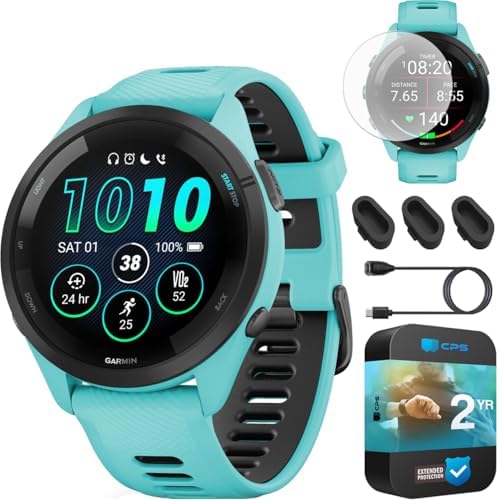
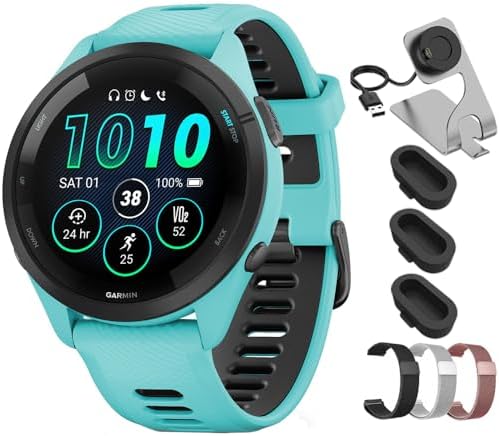
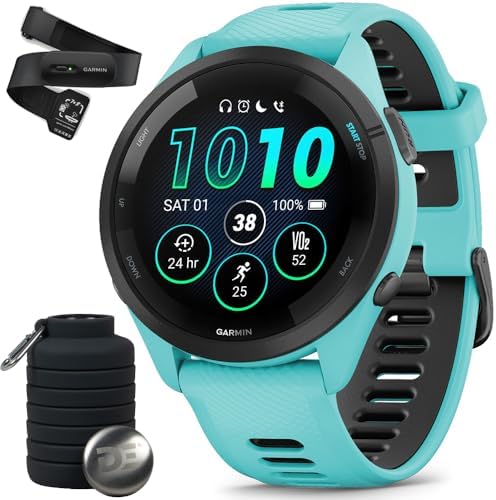
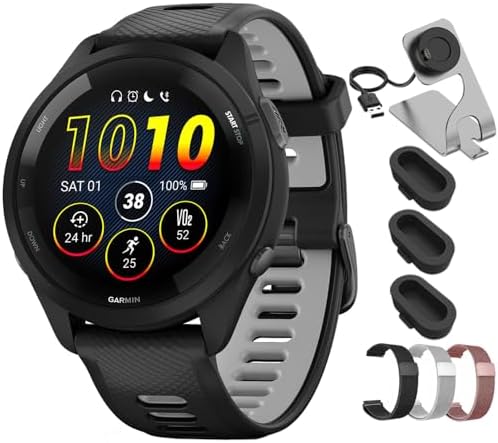
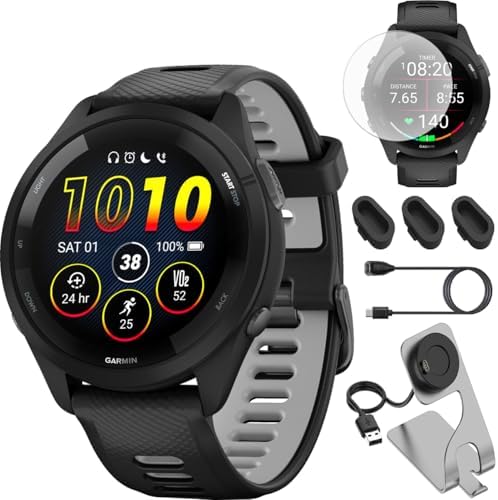
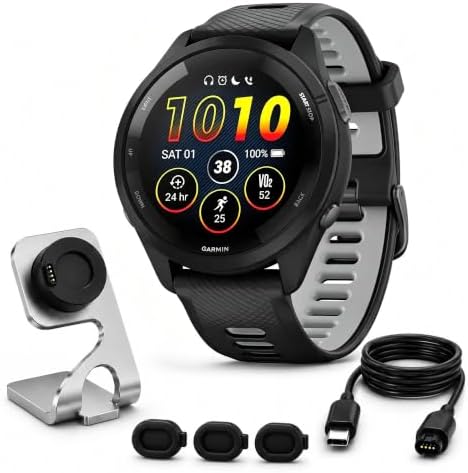
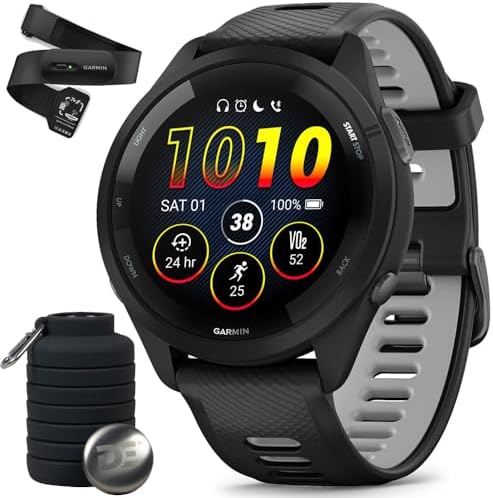
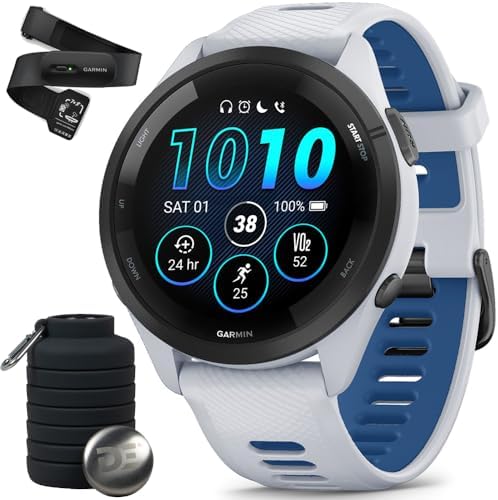
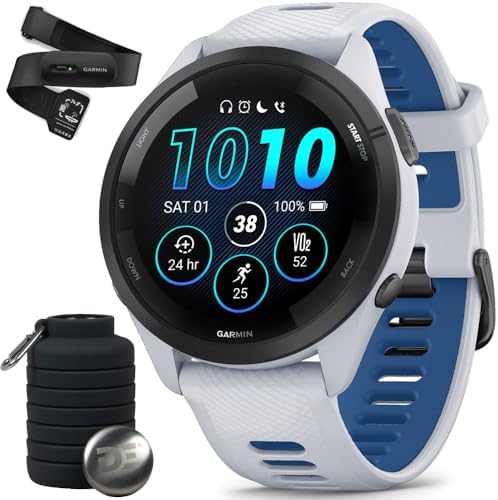
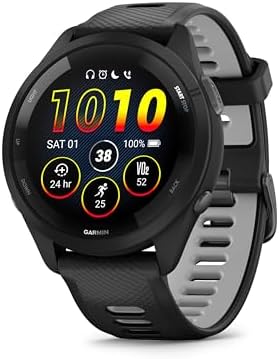
Daily suggested workouts adapt to the user’s race calendar and recent performance, which effectively gives the Forerunner 265 a coaching function without a subscription. Garmin Forerunner 265 Running Colorful AMOLED Black and Powder Gray brings those tools together with music storage and Garmin Pay in a package aimed at runners who want one device for training and daily carry.
The Vivoactive 6 covers heart rate, blood oxygen, sleep staging and Body Battery without entering periodised territory. Workouts can be logged, goals tracked and intensity minutes recorded, but the post-session analysis is closer to a fitness summary than a coaching conversation. For anyone who works out to stay healthy rather than to chase a personal best, this level is enough. For anyone following a training plan with intervals, tempo work and a target race, the extra layer on the Forerunner earns its place.
Sports Modes, GPS and Navigation
Both watches cover the core activity list: running, walking, cycling, swimming and strength training. the Vivoactive 6 is designed to reach further into casual recreation, with a wide set of sport profiles covering racket sports, yoga, skiing, golf and more. Track loading is reasonable on both, though pace smoothing and interval alerts are more disciplined on the Forerunner.
Where the Forerunner pulls ahead is GPS handling for structured speed work. SatIQ automatic satellite selection balances battery and positioning accuracy without requiring manual switching, and the 20-hour GPS runtime means a long trail day will not end with a dead watch. Navigation remains limited to breadcrumb-style guidance, so neither model replaces a handheld unit for serious expedition use. Multi-band positioning sits higher in Garmin’s line, which places both of these models in the mid-tier for precision alongside nearby mountains or in dense urban canyons.
How the Two Watches Sit on a Wrist
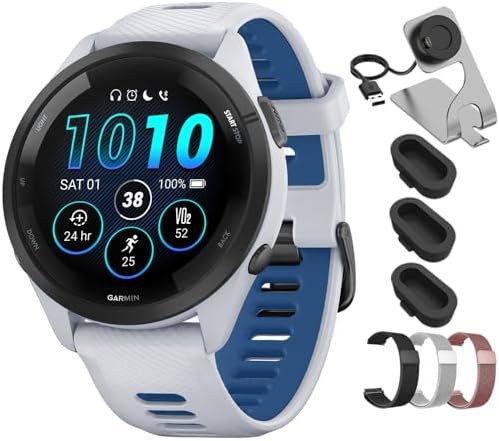
Most smartwatch training features sound interchangeable in a spec sheet, but the things that get noticed by users after a month are much simpler. On a desk day, the Garmin Vivoactive 6 Fitness GPS AMOLED Slate Black slips under a shirt cuff and does not look like gym equipment. Notification handling is comparable on both watches, and neither is a rival to a full smartwatch platform in areas like voice assistants or app stores.
If the watch stays on overnight for sleep and HRV tracking, battery becomes the rule that governs charging habits. Both models hit their claimed runtimes more comfortably when always-on display is switched off, and both are quicker to top up than a phone. Sleep staging and Body Battery readings are shared across the two platforms, which reduces the gap between them in everyday health tracking.
Body Battery remains one of Garmin’s more useful features for cyclical trainers: it shows how charge and drain accumulate through the day, based on stress and activity. On the Forerunner 265 that reading combines with training readiness, giving a second layer of guidance on whether a hard session is wise. On the Vivoactive 6 it remains a general readiness indicator rather than a coaching nudge.
Matching the Watch to the Owner
The decision rests on how the user structures their week. A triathlete or runner following a plan will find the Forerunner 265 gives them more to act on after every session, and they will see the battery advantage between charges. The training readiness score, HRV status and suggested workouts form a loop that is designed to keep the load pattern healthy well before a race week.
Someone training for general fitness and logging yard work, dog walks and swim sessions as readily as runs will find the Vivoactive 6 a better partner. Its wide library of activity profiles makes it more varied for weekly movement, and it does not carry training-intensity functions that require interpretation to be useful.
Both watches share Garmin’s connected ecosystem. That combination is what makes the platform attractive in daily use: the history is useful over months and years, not only across a single run. Garmin’s approach in both the Forerunner and the Vivoactive is to build instruments that can serve a decade of activity without asking the wearer to relearn the interface each season, and both of these watches follow that trajectory in a way that keeps the focus on movement rather than the gadget.