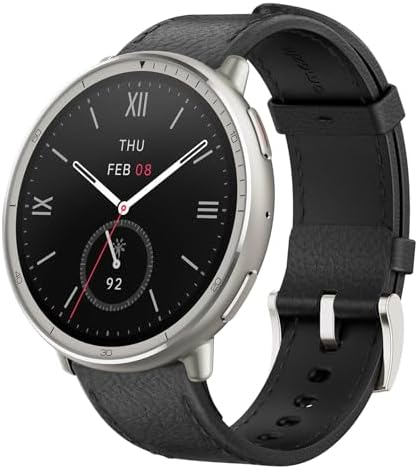
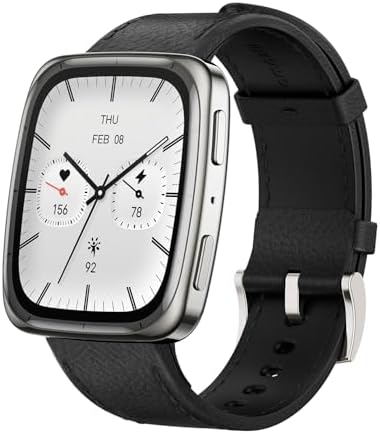
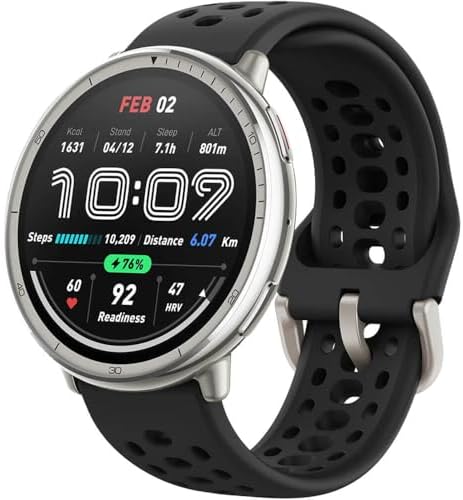
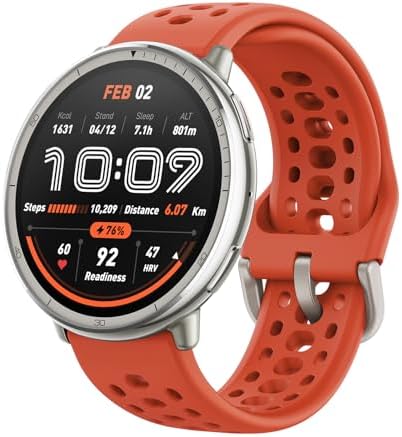
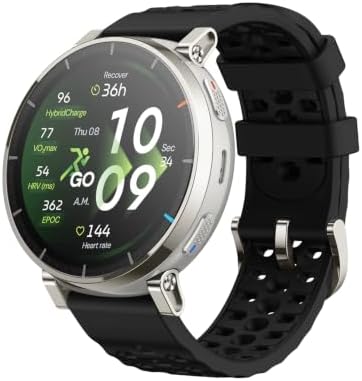
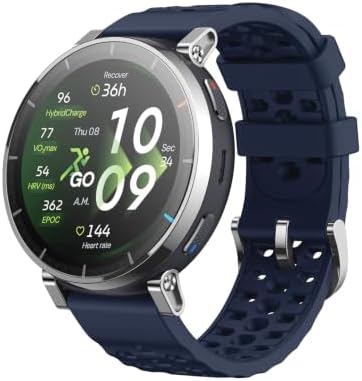
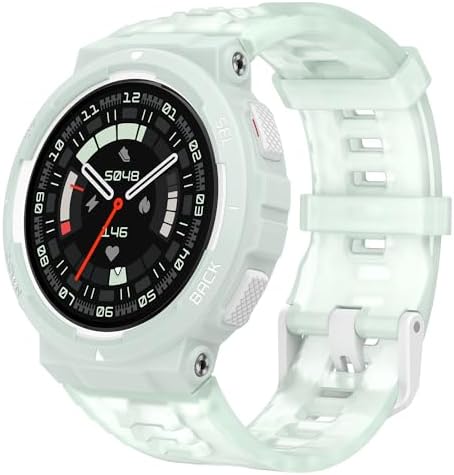
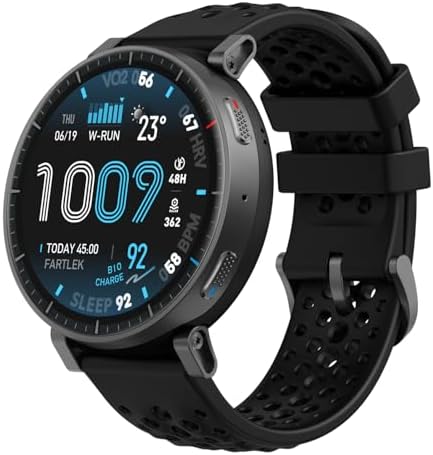
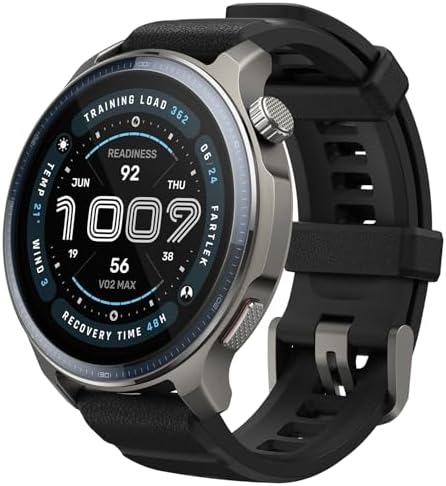
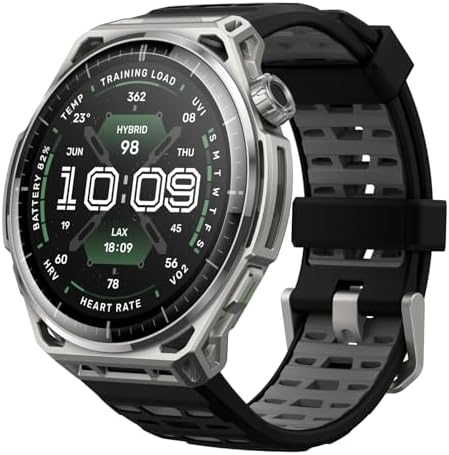
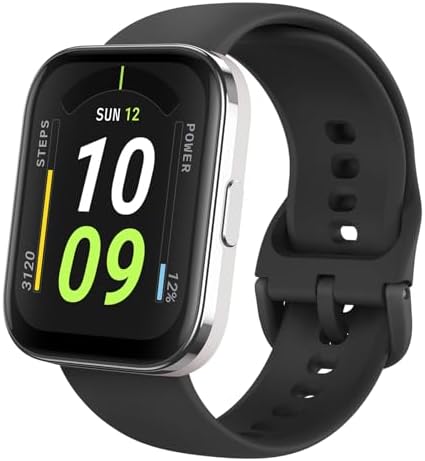
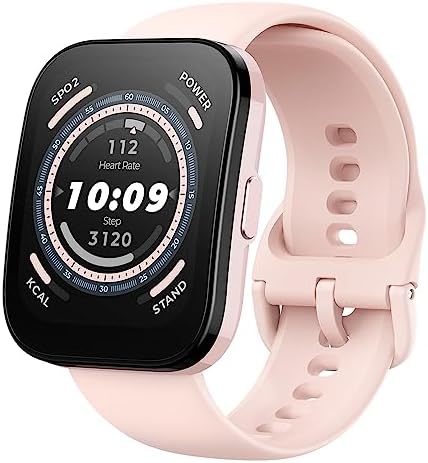
The Amazfit Active 2 Premium and the Garmin Vivoactive 5 both target the mid-range GPS smartwatch buyer, yet they arrive at that buyer from opposite directions. Amazfit anchors its case with a 1.32-inch AMOLED panel under sapphire glass, a stainless-steel frame, and a bundled leather strap plus sport band. Garmin answers with decades of wearable sensor refinement, wrapping an OLED touchscreen and an 11-day battery into a lightweight, swim-ready design. This guide is written as a decision-ready reference, walking through the specifications that actually influence daily ownership, so it is worth bookmarking for a second read before you commit.
| Feature & Selling Point | Amazfit Active 2 Premium | Garmin Vivoactive 5 |
|---|---|---|
| Display Size and Type | 1.32-inch AMOLED touchscreen | OLED touchscreen |
| Glass Protection | Sapphire glass | Corning Gorilla Glass 3 |
| Case Size and Material | 44mm, stainless-steel frame | 42mm, aluminum bezel, fibre-reinforced polymer case |
| Strap Options | Leather strap plus sport strap in box | Silicone band (20mm Quick Release) |
| Battery Life (Smartwatch Mode) | Up to 10 days | Up to 11 days |
| Battery Life (GPS Mode) | Lengthy multi-hour sessions | Up to 21 hours (GPS-only mode) |
| GPS Positioning | Built-in GPS with route support | Multi-band GNSS, deep activity profile library |
| Health Sensors | Heart rate and sleep monitoring | Full metrics via Garmin ecosystem |
| Performance Features | HYROX Mode | Dedicated multi-sport activity tracking |
| Water Resistance | Water-resistant | 5 ATM |
| Smart Notifications | Full incoming message sync | Garmin connect ecosystem |
| Platform Compatibility | iOS and Android | iOS and Android |
| Best Suited For | Style-conscious training and hybrid fitness racing | Daily activity tracking and outdoor multi-sport |
The table exposes one meaningful split: how each brand spends its engineering budget. The Amazfit Active 2 Premium puts money into materials, fitting sapphire glass and a leather strap into the box to push the watch toward a dress-watch feel at the gym. The Garmin Vivoactive 5 puts money into endurance and measurement depth, pairing an 11-day smartwatch battery and up to 21 hours of GPS runtime with mature multi-band positioning and training-load analytics. Neither direction is objectively superior; the right pick depends on whether materials or measurement breadth matter more to your routine.
A Tale of Two Design Philosophies
The Amazfit Active 2 Premium treats wearability as social signalling. The stainless-steel frame and sapphire crystal read as considered choices rather than spec-sheet padding, because sapphire sits well above Gorilla Glass 3 in scratch resistance and holds its clarity longer across a crowded gym season or a hiking season. Bundling a leather strap with a sport strap reinforces that positioning: the wearer swaps from a fitness-ready band to a leather band without the watch itself ever looking out of place at dinner. This is the classic hybrid approach applied to a mid-range GPS smartwatch rather than a luxury timepiece.
The Garmin Vivoactive 5 represents the opposite instinct: strip the finishing to its functional minimum and pour the savings into software and sensor maturity. Its fibre-reinforced polymer case and aluminum bezel keep weight low, which matters for all-day and overnight wear, and its 42mm profile sits a little easier on smaller wrists. Silicone is the default strap because it survives chlorine, sweat, and daily abuse without complaint, and the 20mm Quick Release interface opens access to a thriving aftermarket strap scene. That freedom matters, because the Vivoactive 5 was designed to disappear into a training routine rather than draw attention to itself.
The material trade-off also carries a practical cost. Sapphire on the Amazfit is a long-term scratch hedge, but the Vivoactive 5’s lower weight makes it easier to forget you are wearing it during sleep tracking, where wrist presence genuinely affects comfort and data quality. Garmin’s ecosystem experience shows through in that detail: the company designed the Vivoactive 5 to be worn 24 hours a day, seven days a week, whereas the Amazfit invites more deliberate wear on days that also involve a social calendar. Anyone curious how these choices play out across the wider family can browse the Vivoactive 5 lineup alongside its siblings, while the Garmin brand draws on sensor architecture trickled down from the Forerunner and Fenix lines. On the other side, the Amazfit brand frames the Active 2 Premium against its other releases.
Battery Endurance, GPS Precision, and the Training Edge
Battery life is one of the clearest differentiators here, and both watches avoid the typical two-day smartwatch bottleneck. The Amazfit Active 2 Premium promises up to 10 days of use per charge, which already places it well ahead of most fashion-first smartwatches. The Vivoactive 5 nudges that to up to 11 days in smartwatch mode, per Garmin’s official product page, and once GPS is running, the gap widens. Garmin specifies GPS-only runtime of up to 21 hours on the Vivoactive 5, which comfortably covers ultramarathon stages, long-distance hikes, or multi-leg bike tours.
GPS accuracy is where Garmin’s engineering heritage genuinely shows. The Vivoactive 5 supports multi-band GNSS positioning, meaning it can pull fixes from more than one satellite constellation at once and reconcile the results for tighter accuracy in tree cover, urban canyons, and hilly terrain. The Amazfit Active 2 Premium supports built-in GPS with route tracking, which is more than adequate for city running, treadmill replacement sessions, and mixed-use outdoor workouts, but it is not built to match Garmin’s multi-band depth. Sprint interval data and open-water swim tracking therefore tend to feel more confident on the Garmin side, because the underlying positioning layer carries more redundancy.
Health and training features form the core of both watches’ value propositions, though the approaches differ in ambition. The Amazfit Active 2 Premium pairs heart rate monitoring with detailed sleep analysis and includes HYROX Mode, tuned for the increasingly popular hybrid race format that blends functional fitness circuits with endurance running. The Vivoactive 5 leans instead on Garmin’s established full-suite metrics, including Body Battery, stress tracking, Pulse Ox, and multi-sport activity profiles. According to Garmin, these metrics are part of the standard Vivoactive 5 experience rather than paid unlocks, and the depth of analysis is one of the main reasons users stay inside the Garmin platform.
Choosing Between Materials and Metrics
Sapphire has become a rare feature at the Amazfit Active 2 Premium’s price point, and it is not a trivial detail. Over a year of daily wear, including accidental contact with keys, gym equipment, door frames, and hiking rocks, mineral and even some fortified glass surfaces accumulate micro-abrasions that degrade display legibility. Sapphire resists that fate far better, which means the Amazfit’s screen should still look near-new well after competitors’ displays have picked up visible scuffs. Shoppers weighing that durability against the rest of the package can inspect the Amazfit Active 2 Smart Watch 1.32″ 44mm GPS to see how these finishes pair with the leather and sport strap bundle.
The Garmin Vivoactive 5 makes its equivalent bet on longevity through 5 ATM water resistance, appropriate for swimming and shallow water exposure, and through the broader Garmin Connect platform, which keeps historical training data, personal records, and wellness trends accessible across watch upgrades. That ecosystem gravity is difficult to overstate: once heart rate zones, sleep baselines, and race PRs accumulate in Garmin Connect, switching to a different brand means leaving all that context behind. Amazfit’s Zepp platform has matured substantially and offers comparable day-to-day tracking, but Garmin still leads on depth of analysis and the scientific grounding of its training metrics.
Smart connectivity on both watches covers the essentials handsomely: incoming message sync, call alerts, media controls, and iOS plus Android compatibility. Neither offers cellular connectivity, which is worth knowing before purchase if you run without a phone. The Vivoactive 5 holds two structural advantages here: the 20mm Quick Release strap interface makes swapping bands trivial, and the broader catalogue of Garmin watch faces and data fields gives the watch a stronger sense of personalisation over time. Amazfit counters with a cleaner, icon-driven interface that feels less dense for users who primarily want notifications and health summaries rather than a training-log dashboard.
For runners who care about satellite lock quality, route replay, and training-load feedback, the Garmin v铆voactive 5 Health and Fitness Ivory GPS brings those strengths into a lighter, swim-ready body that suits daily wear.
The decision ultimately comes down to how each watch addresses a different user archetype. The Amazfit Active 2 Premium is aimed at the wearer who wants an attractive wrist piece that can double as a competent training companion, placing sapphire protection, a leather strap, and HYROX-specific tracking at the centre of its display experience. The Garmin Vivoactive 5 is built for someone who wants their health and performance data treated as serious analysis, prioritising expanded satellite positioning, an 11-day smartwatch battery, up to 21 hours of GPS runtime, and the Garmin Connect ecosystem. Both deliver the essentials of an everyday GPS smartwatch, and both are comfortably capable of handling daily movement, sleep tracking, and notifications. What separates them is the philosophy embedded in each: finish and flexibility on the Amazfit; measurement depth and ecosystem continuity on the Garmin.