The Garmin Instinct 3 and the Garmin Forerunner 965 sit at opposite ends of the same engineering philosophy, one built to survive the trail and the other built to measure it. Both carry bright AMOLED displays and multi-band GNSS positioning, yet they serve very different athletes. This comparison breaks down the real differences across price tier, housing materials, battery endurance, and training ecosystems so the choice becomes obvious.
| Feature and Selling Point | Garmin Instinct 3 | Garmin Forerunner 965 |
|---|---|---|
| Primary Audience | Outdoor, tactical, and field users | Road and trail runners, triathletes |
| Display Type | AMOLED or Solar MIP (model dependent) | AMOLED, always-on option |
| Case Size | 45mm and 50mm | 47mm |
| Bezel Construction | Metal-reinforced, fiber-reinforced polymer | Titanium bezel |
| Weight | Approx. 53g (45mm) | Approx. 53g with titanium bezel |
| Battery Life (Smartwatch Mode) | Up to 18 days (AMOLED 45mm) | Up to 23 days |
| GPS Battery Life | Up to 40+ hours (multi-band) | Up to 31 hours (multi-band) |
| Solar Charging | Available on Solar models | Not available |
| Built-in Flashlight | Yes | No |
| Mapping and Navigation | Basic breadcrumb navigation | Full-color TopoActive maps |
| Training Metrics | Standard activity tracking, ABC sensors | Training Readiness, Race Widget, VO2 Max |
| Water Resistance | 10 ATM | 5 ATM |
| Music Storage | Limited | Full offline music support |
| Touchscreen | Yes (AMOLED models) | Yes |
| Best Use Case | Multi-day expeditions, tactical field work | Marathon training, structured run programs |
| Key Selling Point | Rugged MIL-STD durability with solar option | Complete running analytics and mapping |
The table reveals the central split immediately: the Instinct 3 leans into survival-grade hardware and solar endurance, while the Forerunner 965 channels its budget into navigational detail and coaching intelligence. Deciding between them comes down to whether the wrist is headed into the backcountry or onto a starting line.
Two Different Answers to the Same Question
Garmin has spent years refining what a GPS smartwatch can be, and these two references illustrate how the brand segments its own catalog. The Garmin brand’s design language splits along use-case lines rather than price alone. One is engineered around shock, dust, and thermal exposure. The other is engineered around pace, cadence, and recovery load.
That distinction matters because buyers frequently cross-shop them. A runner who also hikes may assume the Forerunner 965 covers both worlds. A field worker who occasionally jogs may assume the Instinct 3 is versatile enough. Both assumptions are partly true, and partly where disappointment begins.
Housing, Bezel, and Real-World Durability
The Instinct 3 is built on a fiber-reinforced polymer case with a metal-reinforced bezel, a construction that absorbs impact rather than transferring it to the display. The 45mm and 50mm sizing keeps the watch readable without pushing into oversized territory, and the raised bezel lip protects the AMOLED panel from scrapes against rock and concrete.
Water resistance ratings diverge meaningfully. The Instinct 3 carries a 10 ATM rating, which supports swimming and shallow surface diving. The Forerunner 965 sits at 5 ATM, sufficient for pool laps and rain but not intended for repeated submersion pressure.
Where the Forerunner 965 Gains Ground
The Forerunner 965 uses a titanium bezel that reduces visual bulk while adding a premium finish. At roughly 53 grams, the weight is competitive for a 47mm AMOLED watch, and the lighter-feeling profile suits long road sessions where wrist fatigue becomes a factor over hours. The trade-off is that titanium scratches accumulate visibly over time, and the lower water rating narrows its use in wet environments.
Display Technology and Battery Endurance
Both watches use AMOLED panels, and both deliver strong outdoor readability with adaptive brightness. The Instinct 3 additionally offers Solar variants in its 45mm line, extending runtime through photovoltaic charging on the lens. Garmin states that the 45mm AMOLED Instinct 3 reaches up to 18 days in smartwatch mode, which already exceeds what most competitors manage.
That endurance pairs with a built-in flashlight, a feature that has quietly become one of the most practical additions to modern outdoor watches. Reconnaissance walks, tent adjustments, and roadside repairs all benefit from a wrist-mounted beam. The Garmin Instinct 3 45mm AMOLED Display Black GPS combines both capabilities in a single package.
The Forerunner 965 counters with a larger effective battery ceiling in smartwatch mode, and its always-on display implementation is tuned for glanceability during intervals. The trade-off: without a flashlight and without solar input, extended off-grid trips require more careful power planning.
GPS Accuracy and Navigational Depth
Both models support multi-band GNSS, which improves positional reliability in canyons, dense forest, and urban corridors where single-band receivers drift. For runners, this translates into cleaner pace data and more accurate split times. For hikers, it means a track that actually matches the trail.
Navigation is where the two separate sharply. The Forerunner 965 loads full-color TopoActive maps and supports turn-by-turn routing on the wrist. The Instinct 3 relies on breadcrumb-style navigation with a track-back function. That is sufficient for retracing a route but far less useful for exploratory navigation in unfamiliar terrain.
For a runner logging the same loops week after week, breadcrumbs are adequate. For someone plotting a new ridgeline traverse, color maps on the wrist reduce the frequency of phone checks and the risk of a wrong turn.
Training Science and Recovery Analytics
Here the Forerunner 965 pulls decisively ahead for structured athletes. It includes Training Readiness, which combines sleep, recovery time, and acute load into a single daily score. It also carries the Race Widget, which projects finish times based on recent performance and adjusts pacing targets accordingly.
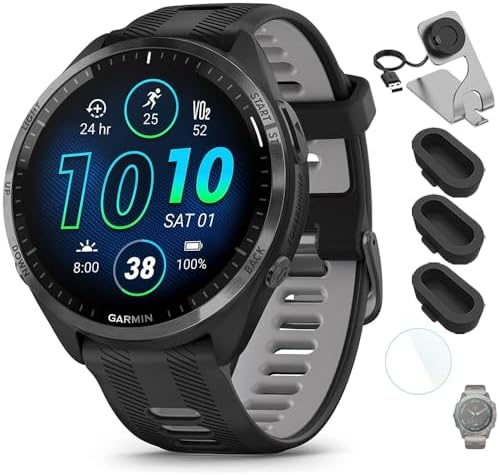
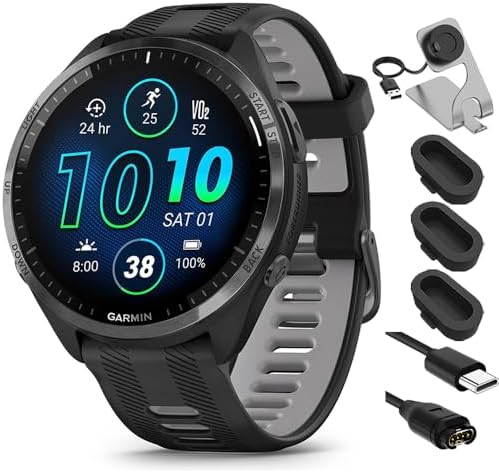
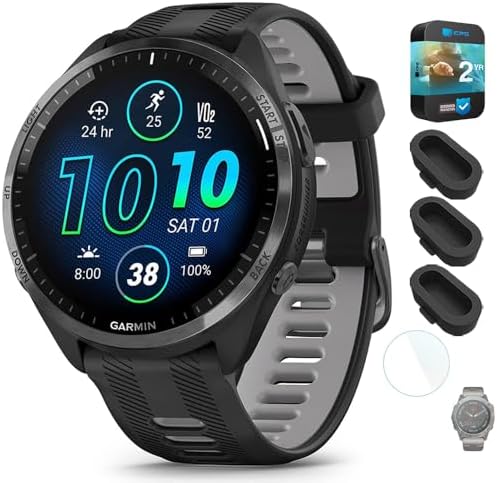
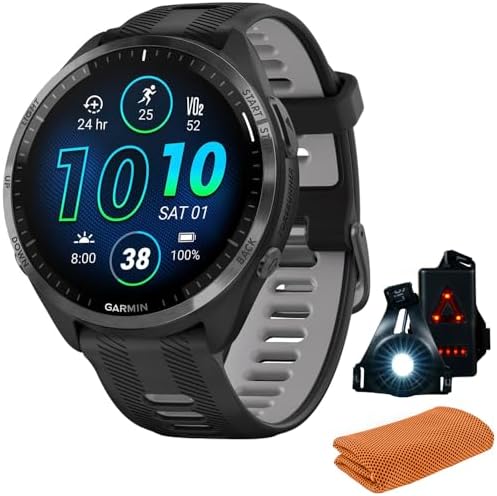
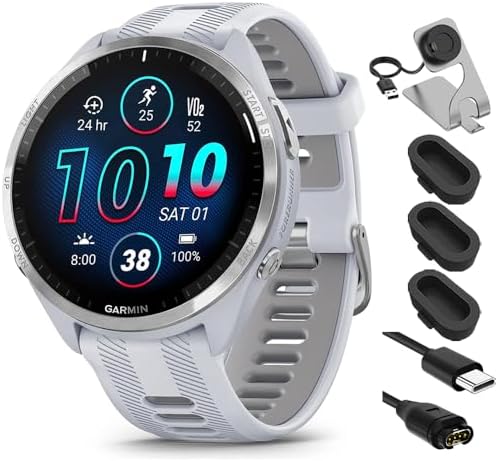
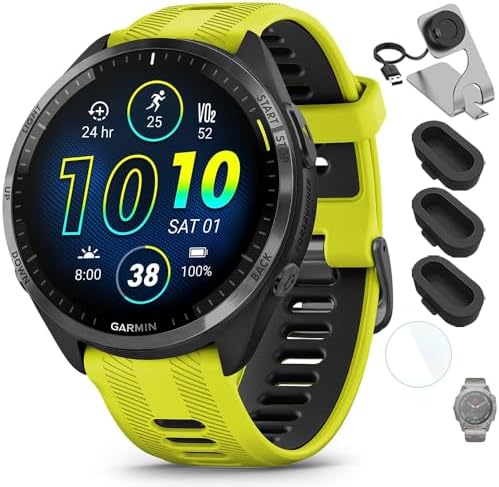
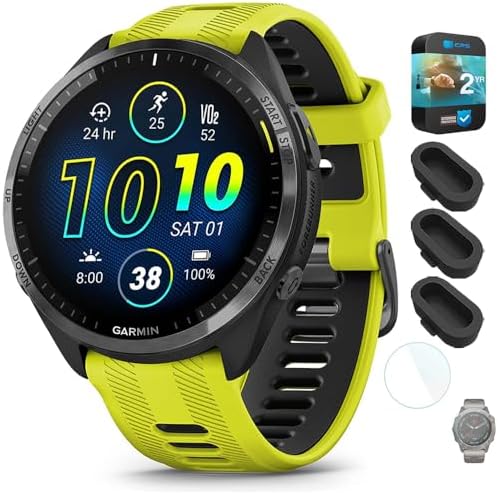
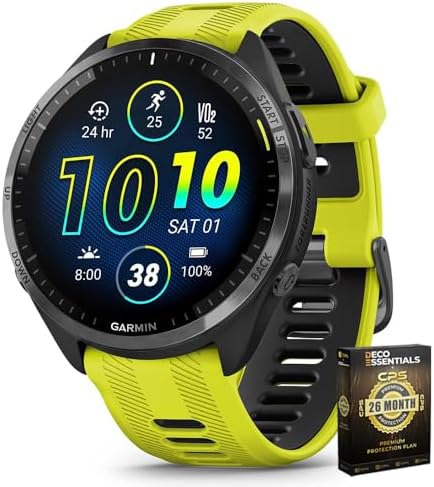
Consider the Garmin Forerunner 965 Running Colorful AMOLED Black with full offline music storage so a phone can stay behind on tempo runs. Combined with running dynamics and VO2 max estimation, the platform is designed around measurable progression rather than general activity logging.
The Instinct 3 covers the essentials well. It tracks heart rate, pulse ox, sleep, and stress, and its ABC sensors handle altitude, barometer, and compass duties that matter more in the field than a training load score. The philosophical difference is clear: one watch optimizes performance output, the other optimizes environmental awareness.
Which One Belongs on Your Wrist
Choose the Instinct 3 if the watch will spend time against rock, in cold, or away from power for days. The Solar options, the 10 ATM rating, the flashlight, and the reinforced housing all serve that mission. Buyers exploring rugged alternatives often look at the Instinct 3 family because the durability narrative is backed by hardware, not styling alone.
Choose the Forerunner 965 if training structure matters more than environmental resilience. Full-color maps, offline music, Training Readiness, and race-day tooling justify the titanium bezel and the lighter water rating. Runners comparing options within Garmin’s ecosystem frequently weigh the Forerunner 965 series against the broader Forerunner line, and the 965 remains the one that consolidates mapping, music, and analytics in a single AMOLED chassis.
There is no universal winner here, only a fit. A watch that survives a granite scrape is not automatically a better training partner, and a watch that predicts marathon splits is not automatically suited to a week above treeline. Matching the tool to the terrain is the entire decision.
What both references share is Garmin’s continued investment in multi-band positioning, wearable health sensing, and activity-specific software. That shared foundation means the choice is less about capability gaps and more about which capability you will actually use when the alarm sounds at five in the morning.