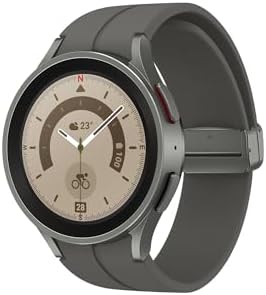
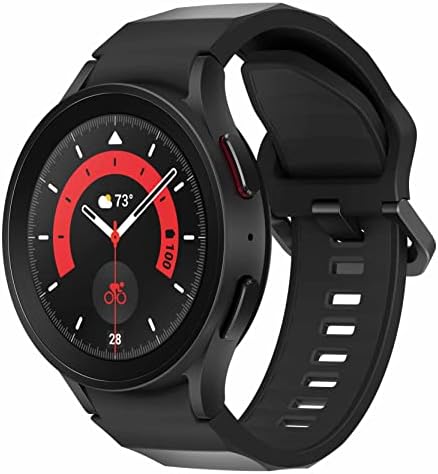
Choosing between the Samsung Galaxy Watch5 and the Garmin Fenix 7 often comes down to how a person defines an active lifestyle. For one, it means a sleek wearable that manages notifications and tracks morning runs; for another, it signifies a rugged expedition tool built to handle multi-day adventures in remote terrain. This comparison serves as a detailed purchasing reference, examining both devices across design philosophy, fitness accuracy, battery endurance, and ecosystem compatibility to help readers make a confident, well-informed decision.
| Feature & Selling Point | Samsung Galaxy Watch5 | Garmin Fenix 7 |
|---|---|---|
| Display Type | 1.4-inch Super AMOLED | 1.3-inch transflective MIP |
| Battery Life | Up to 50 hours (varies) | Up to 18 days smartwatch mode |
| GPS Mode Battery | Not officially specified | Up to 57 hours |
| Water Resistance | 5 ATM + IP68 | 10 ATM |
| Case Material | Aluminum with sport band | Stainless steel with fiber-reinforced polymer |
| Navigation & Mapping | GPS, GLONASS, BeiDou | Multi-band GNSS, Topo maps, point-to-point |
| Body Composition Analysis | Yes (BIA sensor) | No |
| Advanced Running Dynamics | Basic pace and distance | Ground contact time, vertical oscillation, more |
| Smart Assistant Support | Bixby, Google Assistant | Limited (on-device responses) |
| Best Suited For | Daily smartwatch users, health metrics | Trail runners, mountaineers, ultra athletes |
The table above reveals the fundamental identity of each watch. The Samsung Galaxy Watch5 excels as a connected lifestyle device with advanced body composition tools, while the Garmin Fenix 7 dominates battery endurance and dedicated outdoor navigation features. The choice depends on whether a user prioritises an integrated digital hub or a purpose-built adventure instrument.
Design Philosophy and Everyday Wearability
The Samsung Galaxy Watch5 adopts a minimalist, rounded aesthetic that follows the design language of its predecessors. The aluminium case keeps the weight low, and the sport band feels comfortable during standard daily wear. Samsung’s approach centres on creating a device that does not interrupt a business outfit or a casual dinner. The Super AMOLED display delivers vivid contrast and deep blacks, and Samsung protects the sapphire crystal glass which adds resilience against minor scratches.
The Garmin Fenix 7 takes a completely different visual stance. A titanium-charged stainless steel bezel combined with a fibre-reinforced polymer case signals durability. Buttons flanking the case offer tactile control for gloved hands or wet conditions. Although its 47mm diameter remains close to the Watch5’s 44mm, the Fenix 7 sits taller on the wrist due to its rugged build. This watch feels purposeful, and its transflective display is designed for continuous outdoor visibility, rendering it more legible under direct sunlight compared to a typical AMOLED. Dedicated multi-sport GPS navigation defines this model’s identity, targeting individuals who plan to spend extended time outside rather than those who merely glance at a screen between meetings.
Sport and Fitness Tracking Depth
Workout Metrics and Biomechanics
Both watches function as comprehensive fitness trackers, but their focal points differ extensively. The Galaxy Watch5 records standard workout metrics such as heart rate, pace, calories, and distance across numerous preset activities. Through Samsung’s Wearable app, a user can access sleep stages, stress scores, and blood oxygen readings. The notable addition is the BIA sensor, which estimates skeletal muscle mass, body fat percentage, and basal metabolic rate. These recovery indicators offer useful insights for consistent gym-goers.
Garmin’s Fenix 7 elevates the understanding of a user’s physical effort. It measures advanced running dynamics including ground contact time, stride length, vertical oscillation, and vertical ratio. Built-in satellite-based activity tracking performs without a paired phone, and the watch accepts additional performance metrics like training load, recovery time, and VO2 max across running, cycling, swimming, and many trail-specific sports. The Fenix 7 collection operates under data-rich frameworks originally designed for professionals in endurance sports, a heritage that shines through when navigating intervals or fatigued conditions.
Sleep and Recovery Tracking
Samsung’s approach to sleep monitoring includes REM, deep, light, and awake stages, delivered through a personalised sleep coach. The Watch5 vibrates to assist with a wake-up schedule aligned with sleep phases. Garmin also offers comprehensive sleep tracking with sleep score, Pulse Ox readings, and the Body Battery energy monitor. However, the Fenix 7 excels with its recovery time advisor, suggesting downtime before hard sessions. This distinction matters for athletes who follow structured training plans rather than those who casually observe nightly patterns.
Navigation, Mapping, and Outdoor Capabilities
Outdoor navigation separates these two devices dramatically. The Galaxy Watch5 includes basic GPS tracking that supports runs and walks, and it relies on a paired smartphone for full map interactions and turn-by-turn guidance. Its positioning works sufficiently for urban routes or familiar recreational paths, but it lacks preloaded topographic charts or offline navigation tools, which users might not notice unless they travel beyond cellular coverage.
The Garmin Fenix 7 responds to those same limitations with remarkable authority. It offers multi-band GNSS support, picking up signals from numerous global satellite systems to maintain location accuracy in dense forests or deep canyons. Preloaded TopoActive maps allow exploration without internet connection. Features including Trendline popularity routing, TracBack, and course creation build confidence for discovering unfamiliar areas. Battery life amplifies this advantage, delivering up to 57 hours of GPS operation, significantly surpassing the Watch5’s vague endurance details and making the Fenix worthy of multi-day expeditions. Anyone taking trips through the backcountry should examine compact-sized Garmin Fenix 7S units designed for smaller wrists, as they do not sacrifice core features.
Battery Life and Daily Usability
Samsung quotes a 50-hour maximum rating for the Galaxy Watch5 but in practice a small volume adjustment, frequent notifications, and sleep tracking place that figure closer to a day and a half. Moderate users will charge every night, which has become normal for contemporary smartwatches. Fast charging delivers roughly forty-five percent capacity within half an hour, alleviating panic for early morning sessions.
The Fenix 7 operates from a different starting point. Through what the manufacturer states as up to 18 days in smartwatch mode and 57 hours under GPS, the Garmin watch often stays uncharged for more than a week. Solar charging versions provide limited additional bursts under strong light. A dedicated power manager inspects each sensor, providing users with generous attention before leaving for a long trip. This extended autonomy gives the Fenix 7 persuasive appeal for those tired of daily battery anxiety.
Ecosystem and Smart Features
As part of the Samsung ecosystem, the Galaxy Watch5 pairs exclusively with devices running Android, displaying full compatibility with Samsung and other popular Android smartphones. It downloads apps from the Google Play Store, supports contactless payments through Samsung Pay, plays music, responds to messages, and takes calls via Bluetooth, while maintaining Wi-Fi and optional LTE connectivity. Bixby and Google Assistant deliver hands-free assistance. The Wearable software integrates seamlessly with Samsung Health and exports workout records to third-party apps.
Garmin supports pairing with both Android and iOS smartphones, although several response features function differently on an iPhone. Instead of an app store, the Connect IQ store provides watch faces, widgets, data fields, and small applications designed to enhance sport-oriented functionality. The Fenix functions as a wearable instrument rather than a platform node, accepting notifications, composing scripted replies, storing payment cards through Garmin Pay, and carrying music. Yet that feature set never asks for full smartphone replacement; this distinction guides buyers who require broad mobile integration in day-to-day software transitions. Those starting from a clean slate might compare the Samsung Galaxy Watch5 collection with the Fenix group before deciding where they reside on that spectrum.
Which Device Fits a Specific Person
The answer does not reside with one universal champion. For productivity-focused Android users who wear one watch from morning to night and who value bright visuals, contactless payments, sleep insights, body scans, and access to a vast software catalogue, the Samsung Galaxy Watch5 delivers impressive versatility. Its aesthetic fits boardroom attire.
For explorers spending weekends trekking through mountains, training toward competitive races, trekking remote trails, or travelling with a lean packing philosophy, the Garmin Fenix 7 performs far beyond ordinary fitness trackers. Its rugged casing, expert navigation intelligence, pro-grade running mechanics, and an energy reserve measured in days rather than hours align with a durable philosophy recognised by Garmin’s dedicated line of tactical and trail watches.
Each watch platform builds its reputation on separate truths. One prioritises fluid mobile interactions, while the other prioritises real-world persistence through the most demanding conditions a body can bear. Identifying personal context-the button to switch ecosystems, required maps, and preferred charging intervals-forms the correct decision matrix.