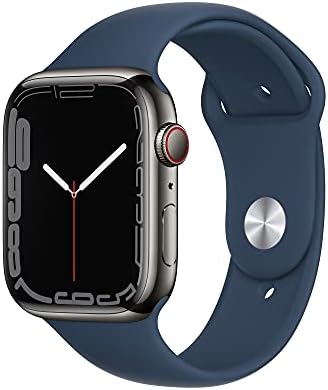
The decision between the Apple Watch Series 7 and the Samsung Galaxy Watch Active 2 often comes down to the smartphone in your pocket. These two smartwatches represent distinct philosophies from competing ecosystems, with the Series 7 engineered for seamless iPhone integration and the Active 2 designed around Samsung’s vision for wearable technology. For anyone weighing a purchase, understanding how these models differ in display technology, fitness tracking, battery behavior, and overall usability is essential for making a selection that aligns with daily habits and long-term expectations. This comparison serves as a practical reference guide, offering clear insights into each device’s strengths and limitations to support an informed buying decision.
| Feature & Selling Point | Apple Watch Series 7 | Samsung Galaxy Watch Active 2 |
|---|---|---|
| Release Generation | 2021 (7th generation) | 2019 (2nd generation) |
| Phone Compatibility | iPhone only | Android & iOS (limited) |
| Display Type | Always-On Retina (LTPO OLED) | Always-On Super AMOLED |
| Case Sizes | 41mm & 45mm | 40mm & 44mm |
| Display Area | Larger, edge-to-edge design | Standard circular bezel |
| Durability | IP6X dust resistant, WR50 | 5 ATM + MIL-STD-810G |
| Health Sensors | ECG, Blood Oxygen, Heart Rate | ECG, Heart Rate, Stress |
| GPS Connectivity | GPS + GLONASS, Galileo, QZSS | GPS + GLONASS |
| Processor | S7 SiP (64-bit dual-core) | Exynos 9110 (dual-core) |
| Storage Capacity | 32GB | 4GB (LTE) / 1.5GB (BT) |
| Battery Life (Typical) | Up to 18 hours | Up to 2 days (usage dependent) |
| Charging Speed | Fast charging (33\% faster) | Standard WPC wireless |
| Operating System | watchOS (iOS dependent) | Tizen OS |
| Software Key Update | watchOS 9 support | Tizen based on 2019 version |
The table above highlights a critical distinction: the Apple Watch Series 7 emphasizes a larger, more durable display with faster charging and deeper ecosystem locks, while the Samsung Active 2 counters with broader physical durability and a longer typical battery life on paper. The most significant takeaway is compatibility, as the Series 7 requires an iPhone, whereas the Active 2 offers some flexibility across platforms, though with reduced functionality on iOS.
Design Philosophy and Display Technology
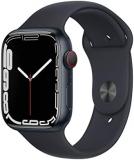
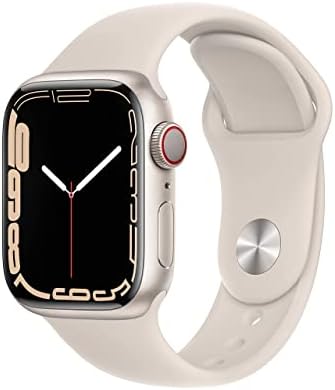
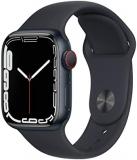
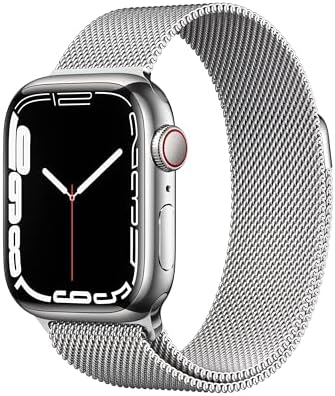
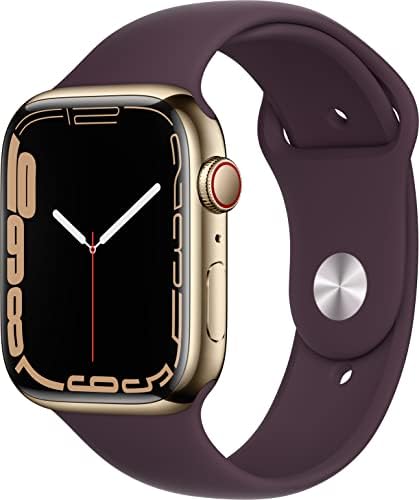
Apple’s approach with the Series 7 centered on maximizing the screen area within a familiar rounded rectangle shape. The 41mm and 45mm casings house displays that extend nearly to the edges, creating a seamless visual surface for watch faces and apps. The Always-On Retina display benefits from a significant increase in brightness when needed, making it highly legible outdoors. In contrast, the Samsung Galaxy Watch Active 2 retains a conventional circular dial, a design language that appeals to those who prefer a more traditional watch silhouette. Its Super AMOLED panel delivers vibrant colors and deep blacks, with a digital rotating bezel that serves as a tactile navigation method, a feature refined over multiple Samsung generations.
Material choices also differ. The Series 7 uses an Ion-X front crystal for the aluminum models and sapphire crystal for the stainless steel variants, paired with an IP6X dust resistance rating alongside a WR50 water resistance. The Active 2, on the other hand, uses Gorilla Glass with a 5 ATM rating and complies with MIL-STD-810G for shock and temperature extremes, emphasizing durability for more rugged activities. Each design serves its target audience: Apple’s offering feels like a premium extension of its smartphone, while Samsung’s device leans into a sportier, more instrument-like aesthetic. For those browsing Apple’s smartwatch lineup, the visual difference between Apple and Samsung becomes an immediate deciding factor.
Comparing Display Interaction Approaches
The way users interact with each watch marks a philosophical divide. Apple relies on the Digital Crown and a fluid touchscreen, integrating gestures like swipe and tap into its watchOS interface, which now supports Quick Keyboard for text input on the larger display. Samsung’s Active 2 features the rotating touch bezel, allowing precise scrolling through menus and widgets without obstructing the screen with a finger. This tactile control is often cited by users who favor the Active 2 for easier one-handed operation during workouts.
Additionally, the Series 7’s display is approximately 20\% larger than the Series 6, an advantage that materializes when reading notifications or using text-heavy interfaces. The Active 2’s circular display often truncates horizontal text, a necessary concession to its round shape. These interaction differences influence not just daily usability but also the variety of apps users can comfortably engage with, with Apple’s rectangular canvas typically accommodating more content per screen.
Performance, Hardware, and Software Support
Under the hood, the Apple Watch Series 7 runs on the S7 SiP, a 64-bit dual-core processor that delivers a noticeably smooth experience across the watchOS interface. With 32GB of onboard storage, there is ample room for music playlists, podcasts, and third-party applications. The Samsung Active 2, released two years earlier, relies on the Exynos 9110 chipset with significantly less storage-4GB on LTE models and 1.5GB on Bluetooth versions. This gap in hardware generation translates into differences in app loading times and the ability to handle resource-intensive tasks such as complex watch faces or offline music with multiple playlists.
Software support further differentiates the two. The Series 7 launched with watchOS 8 and later received watchOS 9, bringing extended functionality like enhanced workout metrics, AFib history tracking, and improved medication management. This continued support means the device remains relevant years after its release, with features improving over time. The Active 2 runs Tizen OS, which, while stable and efficient, has not received major version updates since Samsung transitioned to Wear OS starting with the Galaxy Watch4. Consequently, the Active 2’s feature set remains frozen in time, lacking newer software innovations from Samsung’s current ecosystem.
From a performance standpoint, daily tasks such as checking notifications, tracking a workout, or responding to messages feel responsive on both devices. However, Apple’s investment in a newer chipset and continuous software release cadence gives the Series 7 a clear edge in long-term usability. On the other hand, Tizen’s lightweight nature still allows the Active 2 to perform core functions smoothly, especially when paired with an Android device, though compatibility with iPhones remains a noted limitation as observed in community forums.
Health, Fitness, and Activity Tracking Capabilities
Both watches come equipped with a suite of sensors focused on wellness, though their priorities vary. The Apple Watch Series 7 includes an electrical heart sensor for ECG readings, a blood oxygen sensor for SpO2 measurement, and a third-generation optical heart sensor. These feed into the comprehensive Health app, consolidating metrics like resting heart rate, cardio fitness levels, and sleep stages. The watch also supports automatic workout detection for a wide range of activities, from indoor cycling to high-intensity interval training, with on-screen metrics that help users monitor performance in real time.
The Samsung Active 2 similarly offers ECG monitoring and a heart rate tracker, complemented by stress monitoring through heart rate variability analysis. Its fitness tracking spans over 60 workouts, automatically detecting common exercises like running, rowing, and swimming. A notable omission compared to the Series 7 is the absence of a blood oxygen sensor, which became a standard feature across most new smartwatches post-2020. For users focused on respiratory wellness or altitude acclimatization, this might be a significant gap in Samsung’s offering.
Both devices support automatic sleep tracking, though the Series 7 provides more detailed staging with watchOS 9, distinguishing between REM, core, and deep sleep phases. Apple’s Fitness+ service integrates deeply with the watch, offering guided workouts where metrics appear on screen, a feature that creates a cohesive experience for subscription users. Samsung Health, the companion app on the Active 2, maintains social challenges, step counts, and stress relief tools but lacks the depth of Apple’s segmented health record and trend analysis that help users identify long-term health patterns.
The Battery Life Perspective
Battery endurance is a dividing factor where the older Samsung model appears advantageous on paper. The Active 2 typically approaches two days of mixed use, benefiting from an efficient AMOLED display and a less demanding operating system. The Apple Watch Series 7, with its brighter screen and more powerful processor, generally requires daily charging, especially with always-on display enabled. Apple introduced a fast-charging capability for the Series 7, claiming it charges up to 33\% faster than prior models, meaning an 8-minute charge can provide approximately 8 hours of sleep tracking.
Practical usage patterns show that users who prioritize overnight sleep tracking might prefer the longer cycle of the Active 2, avoiding the need to recharge during the day. Conversely, the Series 7’s fast-charging functionality mitigates the inconvenience of daily charging, allowing a quick top-up during a morning routine. For travelers and heavy users, also examining current Galaxy Watch6 models might provide further insights into how newer devices address battery limitations compared to the Active 2’s typical endurance.
Ecosystem Integration and Compatibility
Ecosystem lock-in is perhaps the most decisive factor in this matchup. The Apple Watch Series 7 only works with an iPhone, requiring an iPhone 6s or later running iOS 15 or newer. Once paired, it integrates seamlessly with Apple services, including iMessage, FaceTime audio, Apple Pay, and synchronized media through iCloud. The deep integration extends to Apple Music, where users can store playlists for offline listening, and to Find My, which helps locate the watch if misplaced. For someone already invested in Apple’s ecosystem, the Series 7 essentially functions as a wrist-worn extension of the phone.
The Samsung Active 2 supports a broader set of connections initially, including both Android and iOS devices. However, true functionality is primarily realized on Android phones, where the Samsung Health app and notification mirroring operate without restrictions. On iOS, the companion app offers limited features, such as basic notifications and fitness data sync, but excludes advanced capabilities like replying to messages or installing third-party watch faces. Apple community forums have repeatedly addressed this confusion, clarifying that the best experience comes from matching devices within the same ecosystem.
Samsung’s integration with its own Galaxy phones includes Samsung Pay, call handling, and seamless audio device switching. The transition of Samsung smartwatches to Wear OS plays a role in this discussion, but the Active 2, stuck on Tizen, lacks compatibility with the broader Google Play ecosystem designed for newer Wear OS models. Consequently, users of the Active 2 may find themselves constrained by the app selection available in Samsung’s Galaxy Store, which, while adequate, pales compared to the extensive App Store offerings for watchOS.
Potential buyers may reference the Galaxy Active 2’s specifications in their search to explore additional configurations or colors, but the fundamental compatibility scenario remains unchanged across variants.
Additional Features: Fall Detection, GPS, and Safety
Safety features have become central to modern smartwatch purchases. The Apple Watch Series 7 introduces fall detection with hard fall recognition, which automatically initiates an emergency call if the user remains immobile. International emergency calling, noise monitoring with decibel alerts, and cycle tracking for reproductive health broaden the Series 7’s appeal beyond fitness enthusiasts. The latest watchOS versions further enhance these safety features with crash detection (available on newer models) and medication reminders that benefit older adults.
The Samsung Active 2 provides fall detection but lacks the granular emergency features found on Apple’s watch. It includes a stress management tool that guides breathing exercises and measures stress levels continuously, a feature that remains a strong point for promoting mental well-being. Location tracking via GPS and GLONASS helps users map routes for outdoor exercise, but Apple’s doubling of satellite systems to include Galileo and QZSS potentially improves positioning accuracy in dense urban environments or remote areas.
For adventurers, the Series 7’s IP6X dust protection, a first for Apple Watch, is paired with water resistance suitable for swimming; the Active 2, similarly, supports swim tracking up to 50 meters. Both watches offer women’s health tracking, albeit with Apple providing a more comprehensive cycle logging calculator. These safety-oriented additions align with modern expectations for a smartwatch that does more than just tell time, making the Comparative appeal for families or active seniors grow consistently with each software iteration from Apple.
Connectivity and Audio Features
In terms of connectivity, both devices support Bluetooth 5.0 and Wi-Fi, with cellular variants offering LTE for standalone calls and data streaming. The Series 7 supports both LTE and UMTS, while the Active 2’s LTE version supports 4G but with different regional bands, affecting travel usability. Audio playback differs-both allow music storage for offline listening, but Apple’s implementation supports thousands of songs in 32GB, while the constrained 4GB of the Active 2 fits a few hundred at best.
Sound quality through built-in speakers is acceptable for calls on both, with Samsung’s Active 2 providing slightly louder speaker output, a detail appreciated in noisy environments. Microphone quality for voice assistants-Siri on Apple and Bixby or the assistant of choice on Samsung-remains practical but not premium on either. However, Siri’s integration with iPhone functionalities, including sending messages and controlling smart home devices, is more mature compared to Tizen’s fragmented assistant experience. Users should consider how they prefer to interact with their watch during commuting or workouts, as these subtle differences impact day-to-day satisfaction.
Within this context, a natural segue to between the Series 7 and newer Series models might help potential buyers decide between models within Apple’s lineup. The Series 7 still holds up well, but future-proofing considerations should weigh heavily for initial purchases.
Exploring both the latest selection of Samsung and Apple devices helps clarify current market positions. Samsung’s Wear OS transformation introduced with later models provides closer competition, although older Tizen devices like the Active 2 now appear dated in comparison with a reliable but static feature set. Reflecting on the Active 2’s aftermarket value often pushes new buyers toward more recently maintained models from both brands.
Considering the full scope, the Apple Watch Series 7 and Samsung Active 2 belong to different generations of wearables. Since competitor comparisons like including the Galaxy Watch6 series reveal more advanced alternatives from Samsung’s existing lineup, prospective buyers would benefit from focusing on smartphone compatibility, preferred display style, and required features before making a final purchase decision, appreciating that specifications continuously evolve and dictate which watch remains the superior match.