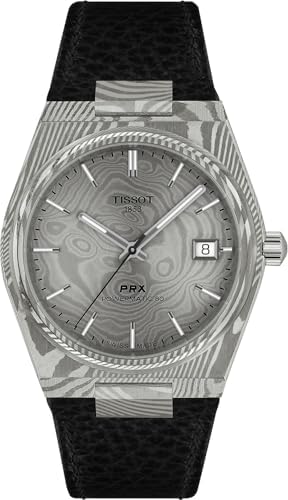
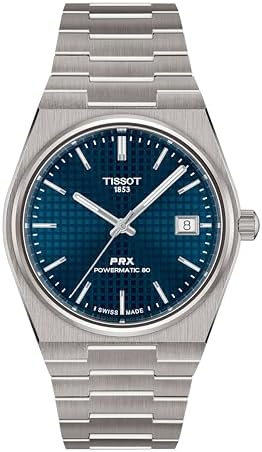
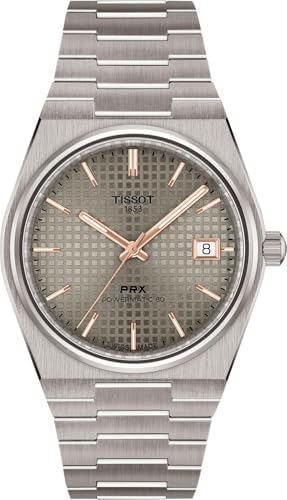
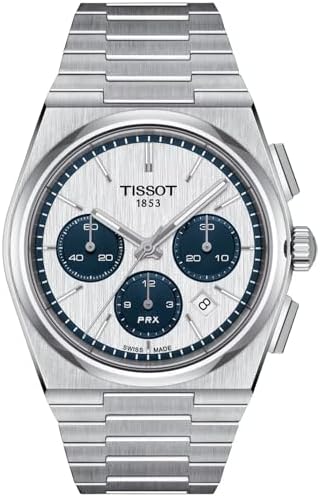
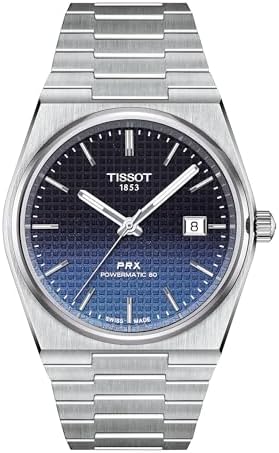
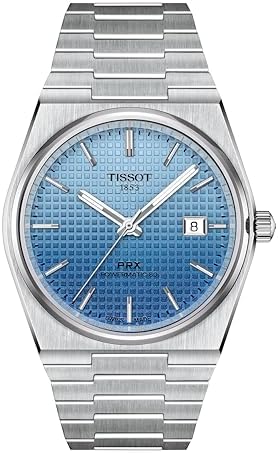
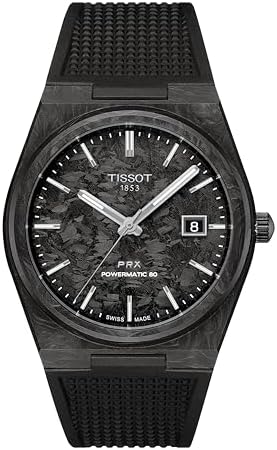
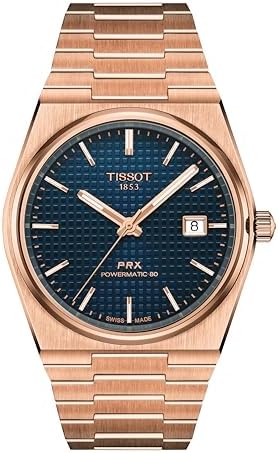
The Tissot PRX collection has become one of the most talked-about releases in modern Swiss watchmaking, and the discussions surrounding the Powermatic 80 version have only intensified since its debut. With a design language that harks back to the late 1970s, the PRX series captures the essence of a transformative era in horology, aptly described as a “distinctive, bold and elegant” timepiece by its creators. For those seeking a genuine mechanical experience wrapped in a retro-inspired integrated bracelet case, the Powermatic 80 variant offers an automatic movement with a substantial 80-hour power reserve, while the quartz models in the same family provide an affordable, low-maintenance entry point into the renowned PRX aesthetic. This guide serves as a practical reference for buyers weighing the two, offering a side-by-side comparison of specifications, wearing experience, and value to help clarify which version aligns with personal priorities.
The appeal of the PRX lies in its ability to bridge two very different worlds. On one side sits the quartz version, praised for its accuracy and grab-and-go convenience. On the other, the Powermatic 80 automatic movement delivers the technical allure that watch enthusiasts often crave. This dual nature means the collection appeals to a broad spectrum of buyers, and the decision between the two is not only about price, it is about how one connects with the mechanics of timekeeping itself.
| Feature & Selling Point | Tissot PRX Quartz | Tissot PRX Powermatic 80 |
|---|---|---|
| Movement Type | Swiss Quartz (battery-powered) | Swiss Automatic (self-winding) |
| Power Reserve | 2-3 years on a single battery | 80 hours |
| Case Diameter | 40mm or 35mm | 40mm or 35mm |
| Case Material | 316L stainless steel | 316L stainless steel |
| Water Resistance | 10 bar (100 metres) | 10 bar (100 metres) |
| Case Back | Closed (solid steel) | Skeleton (exhibition) |
| Key Feature | High accuracy, low maintenance | Visible movement and mechanical engagement |
| Entry Price Point | More affordable | Premium over quartz |
The most dramatic difference for many buyers will be the tactile experience. The Powermatic 80 version offers a skeleton case back, allowing owners to observe the oscillating weight and the rhythmic operation of the balance wheel. The quartz model, in contrast, houses a closed case back, focusing entirely on functional efficiency rather than mechanical spectacle.
Understanding the Powermatic 80 Movement
At the heart of the self-winding Tissot PRX Powermatic 80 lies a Swiss calibre that represents a significant technical achievement for its price point. The name Powermatic 80 comes from its most defining feature: an 80-hour power reserve. As confirmed by official Tissot documentation, this reserve “is enough to continue telling time accurately even if the watch is not worn for three days”. This is a practical advantage for those who rotate between multiple watches, as the timepiece will not need to be reset after a weekend away from the wrist.
The movement employs a 21,600 vph frequency (3 Hz) and incorporates a plastic escapement component, a decision that has generated discussion among purists. However, this material choice allows for a longer power reserve without increasing case thickness. The engineering solution demonstrates Tissot’s commitment to accessible innovation, ensuring that the core strengths of mechanical watchmaking remain available at a more democratic price level.
Key Differences: Quartz vs. Powermatic 80
Choosing between the quartz and automatic iterations of the PRX requires an understanding of how each aligns with individual preferences. Both share the same iconic silhouette, but the experience beneath the surface differs considerably. The quartz calibre inside the standard PRX is a proven Swiss workhorse, delivering exceptional precision with virtually no maintenance beyond a battery change every few years. For someone who values convenience and does not wish to interact with the mechanics, this is the more pragmatic route.
In contrast, the Powermatic 80 asks for a small commitment from its owner. A self-winding movement relies on motion to stay energised, meaning regular wear is part of the equation. In return, it offers a connection to traditional Swiss watchmaking that a battery cannot replicate. The sweeping seconds hand, the visible oscillating weight, and the ritual of winding the crown to start the movement all contribute to a richer, more involved daily experience.
Design Language and Wearing Experience
The PRX name itself stands for “Precise, Robust, and X100” – a coded reference to its 10 bar (100 metre) water resistance. The 1978 original that inspired this modern rendition was designed by a young and relatively unknown designer, but the integrated bracelet and barrel-shaped case quickly captured the spirit of the times. The rectangular baton hour markers and the absence of a crown guard create a clean, uncluttered profile that transitions effortlessly from boardroom to weekend patio.
In the 40mm iteration, the case sits with a notable presence on the wrist, yet its flat profile and integrated lugs allow it to slide neatly under a shirt cuff. The 35mm version was introduced to address growing demand for smaller, more versatile sizes, and it delivers an even sharper vintage vibe. This flexibility makes it a serious contender for those exploring the broader range of Tissot watches, which spans from rugged divers to refined dress pieces.
The Bracelet and Finishing
One of the PRX’s strongest talking points is its integrated three-link bracelet. The alternating brushed and polished surfaces catch light dynamically, giving the watch an appearance that punches well above its price category. The clasp is perhaps the only area where cost-saving measures become evident, but Tissot has included some useful micro-adjustment holes for fine-tuning fit throughout the day.
Dial Variations and Aesthetics
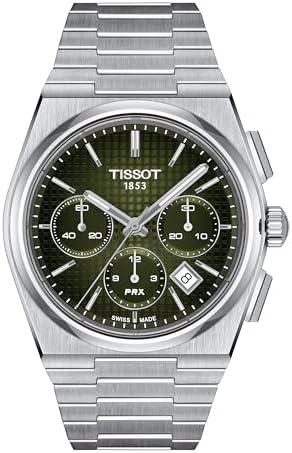
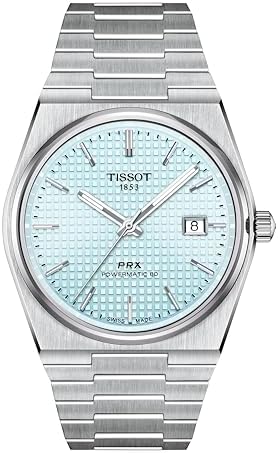
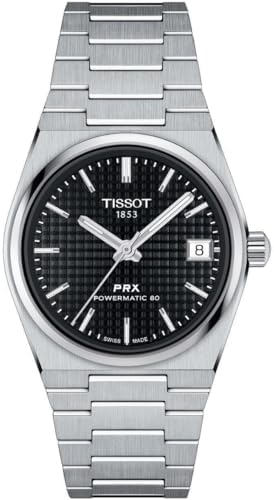
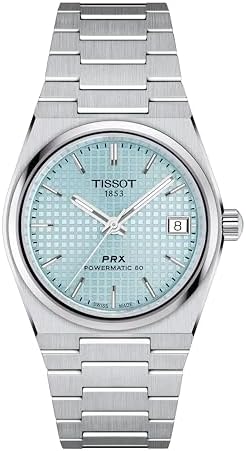
The dial options are both conservative and diverse. Sunray brushed finishes in black, blue, or green offer a classic and versatile appearance, while a white “powder” dial in the 35mm references a softer, more formal styling. The waffle-patterned “tapisserie” dial, introduced later in some automatic variants, further deepens the vintage connection, evoking the texture of high-end sports watches of the 1970s albeit executed in its own distinctive Tissot manner. Lume is applied to the hands and indices, ensuring legibility in reduced lighting without cluttering the minimalist layout.
Where the PRX Fits in the Modern Market
The success of the PRX has had a halo effect across the brand, drawing new customers toward the vintage-inspired Tissot Heritage pieces and reinforcing the maison’s position as a bridge between entry-level and mid-range Swiss watchmaking. In many ways, the PRX has filled a void left by discontinued models from other manufacturers, offering a refined integrated-bracelet sports watch without the often prohibitive aftermarket premiums.
For a truly different contrast, one might consider the rugged, dive-oriented character of the Seastar family offered by the same brand, which prioritizes water resistance and utility. The PRX instead emphasizes a sense of style and daily elegance, creating a situation where the choice between the two is less about one being superior and more about covering distinct needs. Those who seek the tactile interaction and longevity of a self-winding movement with modern machinery often find the Powermatic 80 model to be the ideal introduction to mechanical watches.
Given the cultural resonance of the 1970s design revival, the Tissot PRX finds itself at the confluence of nostalgia and practicality. Whether paired with a tailored suit on a weekday or denim and loafers on a Sunday, it carries a distinct personality. The quartz version, in particular, has made this aesthetic accessible to a wider audience of watch enthusiasts and casual wearers alike. For anyone stepping into the world of refined Swiss timepieces, the PRX Powermatic 80 stands as a compelling and high-quality option that is poised to remain a defining representative of its era for years to come.