The flagship smartwatch arena in 2025 presents a compelling choice between two distinct philosophies: the Samsung Galaxy Watch8 and the Apple Watch Series 11. Choosing between these wearables means deciding between two powerful ecosystems, each with unique strengths in health monitoring, display technology, and everyday usability. This comparison serves as a professional guide for anyone weighing these premium devices, offering a clear breakdown of specifications and features to clarify which option aligns with specific needs and smartphone preferences. The decision ultimately hinges on whether one prioritizes deep integration with an iPhone or the flexibility and distinctive circular design offered within the Android ecosystem.
| Feature & Selling Point | Samsung Galaxy Watch8 | Apple Watch Series 11 |
|---|---|---|
| Smartphone Compatibility | Android only (Samsung optimised) | iPhone only (exclusive) |
| Case Design & Navigation | Circular, rotating bezel option | Rectangular, digital crown + side button |
| Display Durability | Sapphire Crystal (Classic model) | Ion-X glass (GPS) / Sapphire (Cellular) |
| Water & Dust Rating | 5 ATM + IP68 | 50m (5 ATM) + IP6X dust resistant |
| Key Health Sensors | BioActive (HR, ECG, BIA body composition) | Electrical + optical HR, temp, SpO2, ECG |
| Unique Activity Feature | Advanced running metrics & recovery insights | Snorkeling tracking up to 6m |
| Battery Life Estimate | ~40 hours (typical use) | ~18 hours (all-day) |
| Connectivity | LTE (optional), Bluetooth, Wi-Fi | 5G and LTE, Wi-Fi 4 (2.4GHz & 5GHz) |
| App Ecosystem | Google Play Store (Wear OS) | watchOS App Store (curated) |
The table above highlights a core divergence in design philosophy and ecosystem strategy. The most significant differences for potential buyers are the display shape (circular versus rectangular), the exclusive smartphone compatibility, and the distinct battery life management approaches. These factors alone will typically determine the best choice for an individual user before considering more granular health-tracking capabilities.
Design Language and Display Technology
The external build of these wearables communicates their intended audience. The Samsung Galaxy Watch8 continues the brand’s commitment to a classic, circular watch face, offering a more traditional aesthetic that appeals to those who prefer their wearable to resemble a conventional timepiece. The Apple Watch Series 11 maintains its iconic rectangular design, which provides a larger surface area for text and interactive elements, favored for its efficiency in displaying notifications and app interfaces. Both devices offer premium materials, yet their form factors lead to different wearing experiences on the wrist.
Display quality is a key battleground, with both companies utilizing advanced LTPO OLED panels for high brightness and variable refresh rates. According to Apple’s official specifications, the Series 11 is available with Ion-X glass on GPS models and sapphire front crystal for cellular versions, aligning with its IP6X dust resistance rating. Samsung offers comparable durability with sapphire crystal on its Classic line and Gorilla Glass DX on standard models. The rectangular screen of the Apple Watch often makes reading long messages easier, whereas the circular watch face can be more aesthetically pleasing for watch enthusiasts.
Health and Fitness Tracking Capabilities
Health sensor suites are where these two smartwatches differentiate themselves in terms of available features. The Apple Watch Series 11 elevates its water-based activity tracking capabilities; a product detail confirmed in its official product page states that the device is rated IP6X dust resistant and supports snorkeling to 6 metres, underscoring its suitability for recreational water sports. An Apple Watch also provides comprehensive health insights, from ECG and blood oxygen monitoring to fall detection and cycle tracking. This places it as a robust companion for general wellness and safety features.
Samsung’s Galaxy Watch8 lineup counters with its BioActive sensor, which consolidates optical heart rate, electrical heart signal, and bioelectrical impedance analysis into a single compact module. This allows for measuring body composition, a feature less emphasized on the Apple side. For athletes, the BioActive sensor also supports advanced running metrics and recovery insights, often providing a more detailed overnight training readiness score. Choosing a Samsung Galaxy Watch8 means gaining deep access to Samsung Health’s extensive metrics tracking.
Performance and Battery Endurance
Under the hood, processing power has become more than sufficient in both ecosystems for smooth interactions and efficient background tracking. The anticipated S10 SiP in the Apple Watch Series 11 should deliver improved performance and neural engine capabilities, enabling on-device Siri processing and more advanced workout detection. For Samsung, the unannounced Exynos chip is expected to bring significant gains in efficiency and speed over its predecessor, ensuring the Galaxy Watch8 remains responsive even with complex watch faces and continuous health sensor data.
Battery life remains a decisive factor for many users. The Apple Watch Series 11 is designed for all-day use with up to 18 hours, encouraging nightly charging. In contrast, the Samsung Galaxy Watch8 typically offers a more substantial endurance window of up to 40 hours on a single charge, catering to users who prefer to track sleep without worrying about daily top-ups. This makes the Galaxy Watch8 better suited for extended use without a charger nearby, while the Apple Watch leverages its shorter runtime with rapid charging when combined with an iPhone.
Software, Ecosystem, and Navigation
The deciding factor in most comparisons boils down to the software ecosystem in which the user is invested. The Samsung Galaxy Watch8 runs on Wear OS powered by Samsung, offering a high degree of customization through the Google Play Store, including apps like Google Maps, WhatsApp, and advanced watch faces. This works exclusively with Android devices, syncing best with other offerings from the Samsung ecosystem. Its interface is defined by consistency, featuring a combination of touch navigation and the iconic rotating bezel for haptic control.
Alternatively, the Apple Watch Series 11 is designed to work seamlessly with the iPhone, integrating tightly with iOS features like Handoff, Apple Pay, and Find My. It supports connectivity options like 5G and LTE, alongside Wi-Fi 4 on the 2.4GHz and 5GHz bands, as confirmed in official Tech Specs. This tight integration creates a user experience that is difficult to match in the Android world, especially for consumers already using a Series 9 Apple Watch for their daily routines. Its digital crown and side button return for reliable and intuitive interaction.
Selecting the Right Premium Smartwatch
Evaluating the Galaxy Watch8 against the Series 11 provides clarity on what each platform prioritizes. The Galaxy Watch8 presents technological excellence with a classical diamond-cut watch look, equipped with superb body composition tools, favored for multi-day wear without a charger. The Apple Watch Series 11, however, remains much more useful if the user plans on using advanced snorkeling, has a tight integration with Apple services, or strongly prefers having advanced communication potential on the wrist.
Shoppers, therefore, should select the wearable, such as a samsung Galaxy Watch7 smartwatch for training, primarily based on their daily smartphone and not based on any list of unattached selling points. Android users who require an extension of their phone for both health and apps should likely consider the Galaxy Watch8. For dedicated iPhone owners, the seamless pairing, premium build quality, and communication capabilities will make the Series 11 the more practical daily driver, turning the smartphone choice into the companion watch here on site.
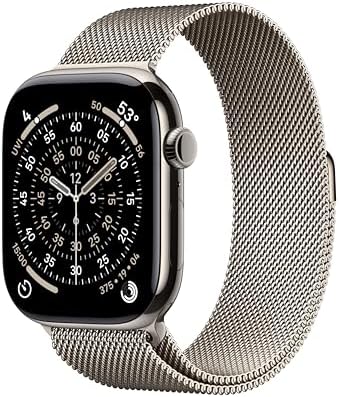
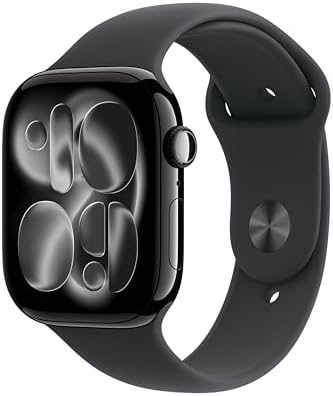
![Apple Watch Series 11 [GPS + Cellular 42mm] Smartwatch with Gold Titanium Case with Light Blush Sport Band - M/L. Sleep Score, Fitness Tracker, Health Monitoring, Always-On Display, Water Resistant](http://www.donysterling.com/images/202605/thumb_img/71703_thumb_G_1778569336975.jpg)
![Apple Watch Series 11 [GPS + Cellular 42mm] Smartwatch with Jet Black Aluminum Case with Black Sport Band - M/L. Sleep Score, Fitness Tracker, Health Monitoring, Always-On Display, Water Resistant](http://www.donysterling.com/images/202605/thumb_img/71725_thumb_G_1778569444441.jpg)
![Apple Watch Series 11 [GPS + Cellular 42mm] Smartwatch with Jet Black Aluminum Case with Black Sport Band - S/M. Sleep Score, Fitness Tracker, Health Monitoring, Always-On Display, Water Resistant](http://www.donysterling.com/images/202607/1785407610674_tampdi_0.jpg)
![Apple Watch Series 11 [GPS + Cellular 42mm] Smartwatch with Natural Titanium Case with Stone Grey Sport Band - M/L. Sleep Score, Fitness Tracker, Health Monitoring, Always-On Display, Water Resistant](http://www.donysterling.com/images/202605/thumb_img/71731_thumb_G_1778569472982.jpg)
![Apple Watch Series 11 [GPS + Cellular 42mm] Smartwatch with Rose Gold Aluminum Case w Light Blush Sport Band - S/M (Renewed Premium)](http://www.donysterling.com/images/202607/1785398243284_jb6fr9_0.jpg)
![Apple Watch Series 11 [GPS + Cellular 42mm] Smartwatch with Rose Gold Aluminum Case w Light Blush Sport Band - S/M. Fitness Tracker, Health Monitoring, Always-On Display, Water Resistant (Renewed)](http://www.donysterling.com/images/202607/1785406764963_avg1p6_0.jpg)
![Apple Watch Series 11 [GPS + Cellular 42mm] Smartwatch with Rose Gold Aluminum Case w Light Blush Sport Band - S/M. Sleep Score, Fitness Tracker, Health Monitoring, Always-On Display, Water Resistant](http://www.donysterling.com/images/202609/1789644203160_t7ayph_0.jpg)
![Apple Watch Series 11 [GPS + Cellular 42mm] Smartwatch with Rose Gold Aluminum Case w/Light Blush Sport Band - M/L. Sleep Score, Fitness Tracker, Health Monitoring, Always-On Display, Water Resistant](http://www.donysterling.com/images/202605/thumb_img/71717_thumb_G_1778569404958.jpg)
![Apple Watch Series 11 [GPS + Cellular 42mm] Smartwatch with Silver Aluminum Case with Purple Fog Sport Band - M/L. Sleep Score, Fitness Tracker, Health Monitoring, Always-On Display, Water Resistant](http://www.donysterling.com/images/202609/1789643033449_jq1uxw_0.jpg)
![Apple Watch Series 11 [GPS + Cellular 42mm] Smartwatch with Silver Aluminum Case with Purple Fog Sport Band - S/M. Sleep Score, Fitness Tracker, Health Monitoring, Always-On Display, Water Resistant](http://www.donysterling.com/images/202607/1785407523302_4uzynl_0.jpg)