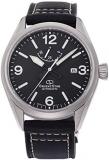
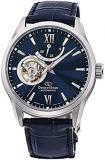
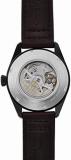
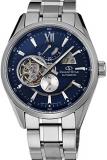
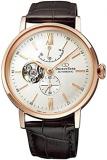
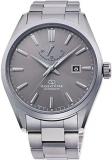
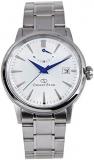
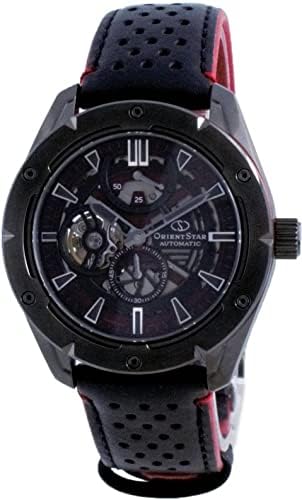
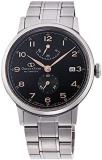
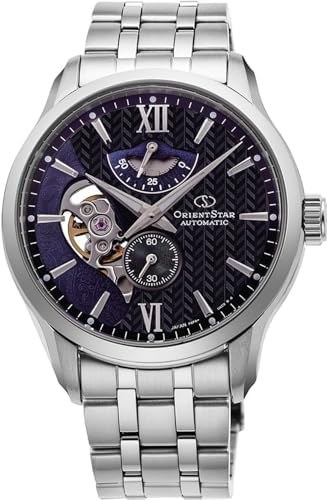
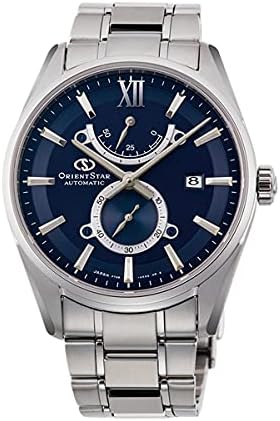
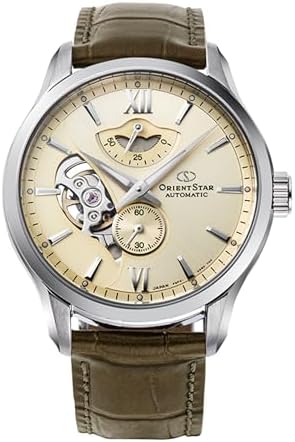
The Orient Star collection represents a distinctive tier within Japanese watchmaking, positioned above the standard Orient lineup to deliver enhanced finishing, superior movements, and more adventurous design language. Established as a platform for the brand’s most accomplished craftsmen, the series carries the aspirational title of the “Shining Star” – a reference to the engineers’ pursuit of creating mechanical watches that stand out through both technical sophistication and visual refinement. For enthusiasts seeking an entry point into high-quality automatic timepieces without venturing into luxury pricing territory, the Orient brand presents a compelling balance of heritage and innovation.
What distinguishes this family from other Japanese offerings is its unwavering commitment to in-house mechanical movements. Unlike many competitors that rely on third-party calibres, Orient Star models house manufacture movements developed entirely within the company’s own facilities. This vertical integration allows for meticulous control over accuracy, power reserve, and finishing details – from perlage on bridges to blued screws visible through exhibition case backs. The result is a watch that rewards close inspection, whether worn daily or displayed in a collector’s cabinet.
The Philosophy Behind the Shining Star
Orient’s official communications describe the Star line as embodying the craftsmen’s aspiration to create a mechanical watch known as the “Shining Star.” This philosophy translates into several concrete design principles that recur across the collection. First, a preference for multifaceted case geometry that plays with light across brushed and polished surfaces. Second, a dedication to dial architecture that prioritises depth and dimensionality over flat, printed simplicity. Third, a commitment to movement decoration that remains visible through sapphire crystal case backs, inviting owners to appreciate the mechanical ballet within.
The collection currently spans several distinct sub-families, each with its own character. Contemporary models feature bold openwork dials and twin sub-dials, presenting a sharp, intelligent presence that appeals to modern tastes. Classic interpretations offer restrained elegance with dauphine hands and applied indices, suitable for formal environments. Meanwhile, sports-oriented variants incorporate GMT complications and power reserve indicators, addressing travellers and professionals who require additional functionality beyond basic timekeeping.
Movement Technology and Craftsmanship
At the heart of most Orient Star references lies a 22-jewel automatic calibre operating at 21,600 vibrations per hour. This frequency, while lower than some Swiss counterparts, delivers robust reliability and a smoother sweeping seconds hand than quartz alternatives. Power reserve typically extends to approximately 40 hours, allowing a watch removed on Friday evening to continue running through the weekend before needing rewinding. The self-winding mechanism employs a unidirectional rotor system that efficiently harnesses wrist movement during daily wear.
Movement decoration deserves particular attention. Orient Star calibres display Geneva stripes on the rotor and main plate, perlage on the bridges, and polished screw heads that catch light through the exhibition window. Some higher-end references incorporate a power reserve indicator directly on the dial, with an arc-shaped scale that provides at-a-glance information about remaining energy. This attention to both mechanical performance and aesthetic presentation elevates the line well beyond its entry-level positioning.
Dial Architecture and Visual Identity
Dial design serves as the primary differentiator between Orient Star models and the broader Orient catalogue. Where standard editions often employ flat, printed dials, Star references typically feature layered constructions with applied markers, guilloch茅 patterns, or skeletonised sections that reveal the movement beneath. The Modern Skeleton sub-collection, for instance, pairs a bold openwork dial with twin dials and an edgy case design, creating a sharp and intelligent visual statement that appeals to those who appreciate mechanical complexity.
Colour palettes range from conservative silver and black to more adventurous blue and brown sunburst finishes. The sunburst effect, achieved through careful brushing of the dial surface before lacquering, creates a dynamic play of light that shifts with wrist movement. Applied indices, rather than printed markers, add three-dimensionality and improve legibility in low-light conditions when combined with luminous material on both hands and hour markers.
Case Construction and Wearability
Case diameters typically span 38 to 41 millimetres, striking a balance between contemporary presence and classic proportions. Stainless steel dominates the lineup, though some references incorporate gold-tone accents or two-tone treatments for added versatility. Finishing combines mirror-polished chamfers with brushed surfaces, creating visual interest while maintaining resistance to everyday scratches. Water resistance generally reaches 50 metres, suitable for handwashing and light rain but not for swimming – a consideration for buyers who require aquatic capability.
The selection of straps and bracelets reflects the collection’s dual personality. Three-link bracelets with solid end links offer a classic, integrated look suitable for office environments. Leather straps, available in black, brown, or blue variants, transition the watch toward smart-casual territory. Quick-release spring bars, standard across most references, enable effortless strap changes without specialised tools – a practical touch appreciated by enthusiasts who enjoy personalising their timepieces.
For those exploring mechanical watches as an alternative to mainstream smartwatches, the Orient Star collection presents a compelling case. While smart devices offer connectivity and fitness tracking, they lack the enduring character of a precision mechanical instrument. A well-maintained automatic watch can serve its owner for decades, requiring only periodic servicing rather than replacement every few years. This longevity, combined with the aesthetic satisfaction of wearing a beautifully engineered object, explains the continued appeal of traditional watchmaking in an increasingly digital world.
Compared with other accessible mechanical offerings on the market, Orient automatic watches deliver remarkable value through their combination of in-house movements, sapphire crystals, and exhibition case backs. The attention to finishing details typically reserved for significantly more expensive timepieces makes the Star collection a rational choice for collectors beginning their journey into serious horology.
Positioned as a stepping stone between entry-level Japanese automatics and Swiss luxury offerings, the Orient Star series occupies a distinctive market space. Buyers who prioritise mechanical integrity, visual sophistication, and manufacturing transparency will find much to appreciate. The collection continues to evolve, with new references regularly introduced to address changing consumer preferences while maintaining the core values that define the “Shining Star” promise.
The enduring appeal of the Orient Star collection lies in its ability to deliver genuine horological substance at an accessible price point, wrapped in designs that reward daily wear and close inspection alike. For those who value the craftsmanship of mechanical watchmaking, this Japanese series merits serious consideration.