Two Garmin watches share the same 1.3-inch AMOLED display size and the same multi-band GNSS silicon, yet they are engineered for different owners. The Epix 2 carries sapphire crystal, a steel or titanium bezel, and on-watch topographic mapping; the Forerunner 265 wraps the same screen in a fibre-reinforced polymer case that weighs roughly 23 grams less. This guide compares the specifications that actually change a purchase decision, so the choice between them comes down to terrain, wrist time, and budget rather than brand marketing.
| Decision Factor | Garmin Epix 2 (Gen 2) | Garmin Forerunner 265 |
|---|---|---|
| Display | 1.3 in AMOLED, always-on mode | 1.3 in AMOLED, always-on mode |
| Case Size and Weight | 47 mm, approx. 70 g with silicone band | 46 mm, approx. 47 g |
| Smartwatch Battery Life | Up to 16 days | Up to 13 days |
| All-Systems GNSS Runtime | Up to 32 hours | Up to 24 hours |
| Multi-Band GPS | Yes, with SatIQ | Yes, with SatIQ |
| Built-In Topo Maps | Full-color maps with routing | Breadcrumb navigation only |
| Training Metrics | Training Status, Readiness, Stamina | Training Readiness, Suggested Workouts |
| Running Dynamics | Supported with accessory | Supported with accessory |
| Water Rating | 10 ATM | 5 ATM |
| Lens Material | Sapphire crystal | Corning Gorilla Glass 3 |
| Bezel | Steel or titanium | Fibre-reinforced polymer |
| Sports Profiles | 40+ including ski, golf, dive | 30+ focused on run, ride, swim |
| Music Storage | Yes, supports offline playlists | Yes, supports offline playlists |
| Price Positioning | Premium tier | Mid-range tier |
| Best Suited For | Trail, hike, ski, golf, travel | Road running, triathlon, daily wear |
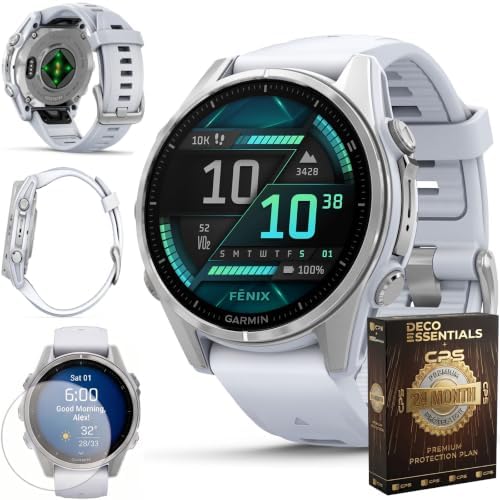
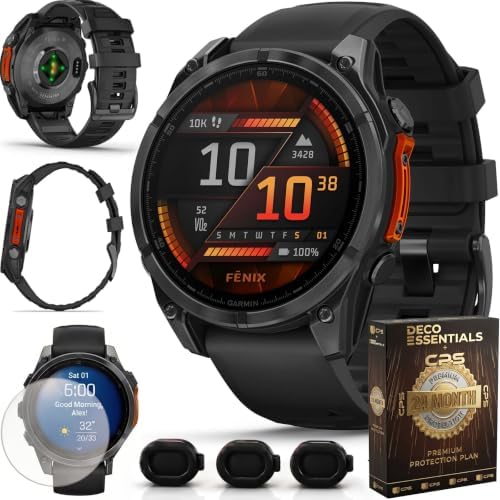
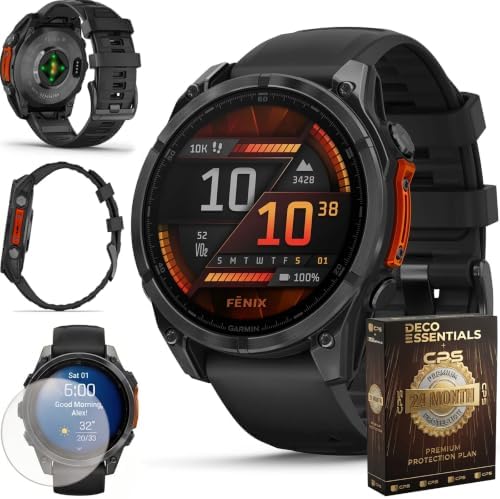
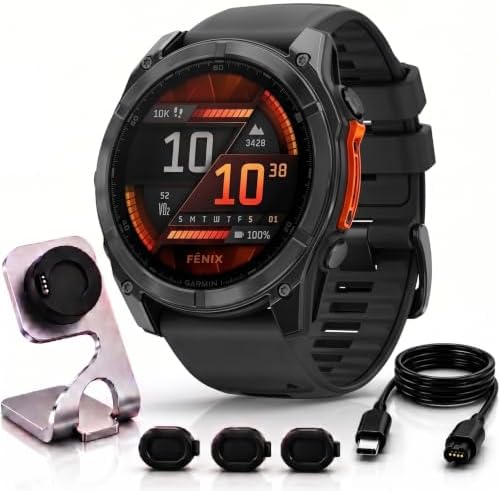
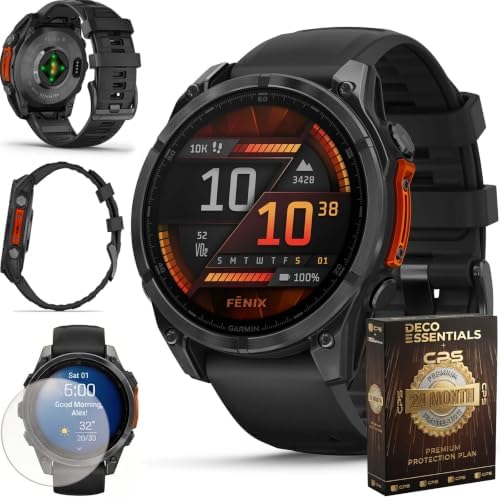
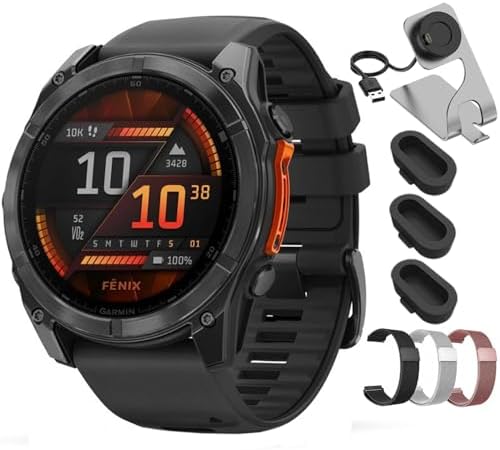
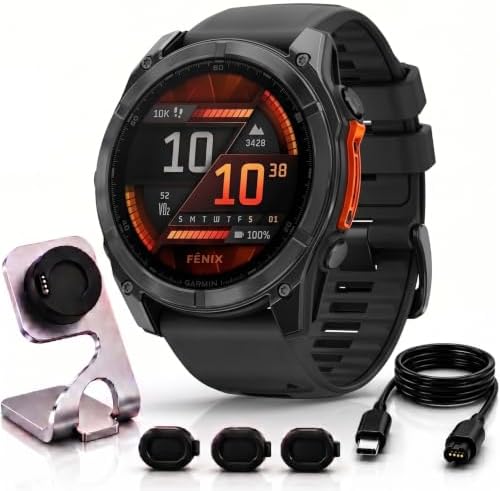
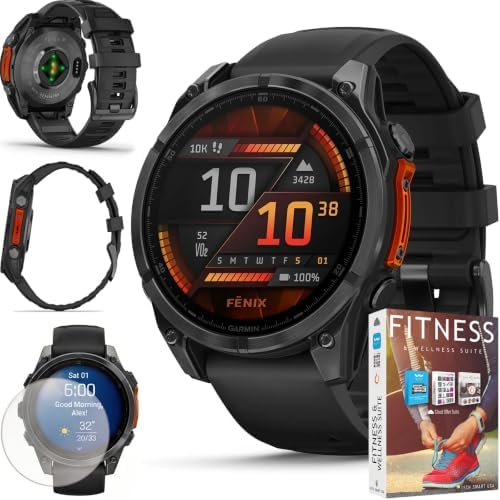
The table makes the split obvious: the heavier, sapphire-topped case of the Garmin 010-02582-00 epix Gen 2 active Slate buys longer GPS runtime and full topographic mapping, while the lighter Forerunner 265 counters with a lower price ceiling and a profile that disappears on the wrist during intervals. Neither is a downgrade of the other; they answer different questions about where and how you train.
Design and Wearability: Steel Versus Polymer
The Gen 2 places a 1.3-inch AMOLED panel behind sapphire crystal, held in a 47 mm steel or titanium case. Garmin states a smartwatch-mode runtime of up to 16 days, dropping to roughly 6 days when the always-on display is active, and the all-systems GNSS figure sits at up to 32 hours. The trade-off is mass: around 70 grams with a silicone strap, which is noticeable during long intervals and on the wrist overnight. The Forerunner 265 wraps the same display size in a 46 mm fibre-reinforced polymer case at roughly 47 grams, with Corning Gorilla Glass 3 instead of sapphire and a 5 ATM water rating instead of 10 ATM.
That weight gap is the first practical filter. Runners who do track workouts two or three times a week and sleep with a watch for recovery scores tend to notice every extra gram after the 40-minute mark, and the Forerunner 265 is the model that keeps friction low in that scenario. Trail runners, hikers, and skiers who value a scratch-resistant lens and a case that resists knocks against rock tend to accept the extra mass as a sensible insurance policy. The lighter, polymer-bodied Garmin Forerunner 265 Running Colorful AMOLED Black remains the more forgiving choice for a wrist that spends most of the day typing, driving, or sleeping rather than gripping trekking poles.
Mapping, Navigation, and Terrain Readiness
The single biggest functional divider is cartography. The Epix 2 stores full-color topographic maps on the watch, so turn-by-turn routing, point-of-interest lookup, and off-course recalculation happen without a phone. The Forerunner 265 offers breadcrumb navigation, a course line, and back-to-start guidance but no downloadable topo map layer. On an unfamiliar mountain trail, that difference is the one most likely to matter at dusk.
The Epix 2 also carries the more technical sensor array, including a barometric altimeter for elevation gain accuracy, a thermometer, and support for dive activities within the 10 ATM envelope. Garmin advertises 40 or more activity profiles on the Epix line covering ski, golf, and open-water swim alongside standard run and cycle modes. The Forerunner 265 focuses its profile list on running, cycling, swimming, and strength work, which is exactly where a road runner needs depth. Both support multi-band GNSS with SatIQ, which automatically switches satellite systems to balance accuracy and battery drain, and both accept running dynamics when paired with an HRM-Pro or similar strap.
Training Intelligence for Race Day
Both watches generate a Training Readiness score that blends sleep, recovery time, HRV status, and acute training load. Both offer daily suggested workouts that adapt after a hard session or a missed day. The Epix 2 adds endurance-related metrics such as Stamina, which estimates remaining energy during a long effort, plus full access to the Garmin golf and ski features that Forerunner owners typically ignore.
For structured marathon or 10K blocks, the gap narrows considerably. Race predictor, VO2 max, recovery advisories, and morning report summaries are present on both. The Forerunner line has historically been Garmin’s reference platform for road running, so the algorithm tuning for pace-based intervals and track mode is mature. Choosing between them here is less about capability and more about interface muscle memory and the ergonomics of a mid-run button press on a 47 mm case versus a 46 mm one.
Battery Endurance Across Real Scenarios
The Garmin brand’s official comparison pages list smartwatch figures of up to 16 days for the Epix 2 and up to 13 days for the Forerunner 265 without always-on display. In GPS-only mode with music off, the gap widens further, with the Epix 2 rated at up to 32 hours against 24 hours for the Forerunner. Those numbers assume GPS only; enabling multi-band or always-on modes cuts both watches significantly.
In practice, a 60-minute daily runner charging every Saturday will find the Forerunner 265 lasts the week comfortably. Someone heading out for a five-day hut-to-hut alpine route needs the Epix 2 to stay on for navigation, altitude recording, and overnight SpO2 tracking without visiting a power bank. The question is not which lasts longer, but whether the extra endurance actually lands inside your itinerary rather than simply on a spec sheet.
Value Positioning and Who Should Buy Which
The price gap between the two families is substantial. The Forerunner 265 sits in a mid-range bracket that leaves room for a chest strap and race entries in the same budget. The Epix 2 sits closer to the flagship tier because steel, titanium, and sapphire cost money, and full topo mapping has to be licensed and stored. Anyone who mainly runs roads, wants daily readiness guidance, and wears the watch at the office will extract more usable function per pound from the Forerunner series, which is exactly why the Forerunner 265 series remains a popular starting point.
The Garmin 010-02582-00 epix Gen 2 active Slate suits a different owner: someone who wants one device to cover trail runs, hikes, ski days, and travel navigation, who values a sapphire lens that shrugs off scrapes on granite, and who is willing to carry a heavier watch to get there. If terrain and durability are central to your training, the Epix 2 is the natural fit. If pace, weight, and price define your season, the Forerunner 265 stays the more rational companion for the miles ahead.