The Garmin Instinct 3 and the Garmin Vivoactive 6 sit at two very different points on the same family tree. One is a rugged outdoor tool built around shock resistance and a built-in flashlight, while the other is a slim lifestyle smartwatch designed for running, cycling, and daily wellness tracking. Choosing between them comes down to matching a build philosophy to a daily routine rather than picking an outright winner. This guide walks through the specifications, materials, and use cases that separate the two so readers can make a confident purchase decision and revisit the comparison later.
| Decision Factor | Garmin Instinct 3 | Garmin Vivoactive 6 |
|---|---|---|
| Who It Is For | Hikers, climbers, tactical and night-shift workers | Runners, cyclists, swimmers, commuters |
| Case Size & Weight | 45mm, heavier rugged build | Slim, lightweight profile |
| Display | AMOLED, 45mm case | AMOLED, thinner panel placement |
| Battery Life | Up to 18 days | Up to 11 days |
| Durability | Metal-reinforced bezel, shock resistant | Polymer composite, swim-friendly |
| Built-in Flashlight | Yes | No |
| GPS Accuracy | Multi-band outdoor tracking | Activity-grade GPS |
| Sports Modes | Tactical and expedition focus | 80+ activity profiles |
| Health Tracking | Body Battery, HR, sleep | Body Battery, HR, sleep, wellness |
| Music Storage | Model dependent | Onboard music storage |
| Contactless Payments | Garmin Pay supported | Garmin Pay supported |
| Water Resistance | Bathymetric-grade sealing | Swim-friendly sealing |
| Best Fit | Hiking, tactical, night work | Running, cycling, commuting |
The clearest split in the table is between the 18-day battery figure on the Instinct 3 and the roughly 80 sport profiles on the Vivoactive 6. Buyers who value light survival hardware, a flashlight, reinforced bezel, and long endurance, gravitate toward the Instinct line, while runners and daily commuters look to the slimmer alternative. Both share the Garmin Connect ecosystem, so the decision hinges on how each case and display level fits into a specific lifestyle rather than anything inside the software suite.
Two Watches, Two Design Languages
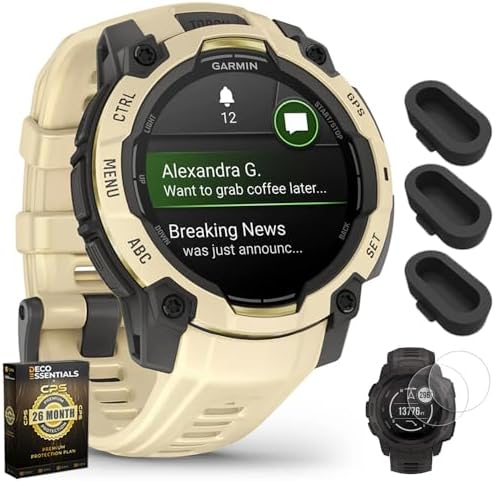
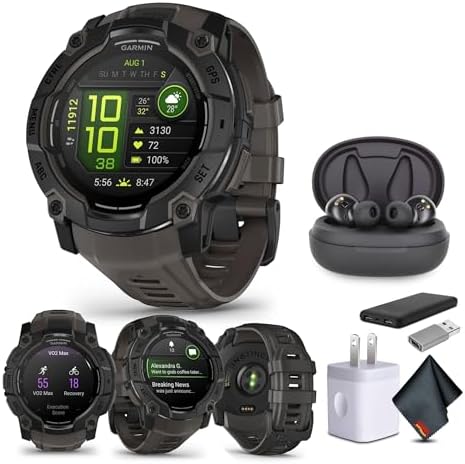
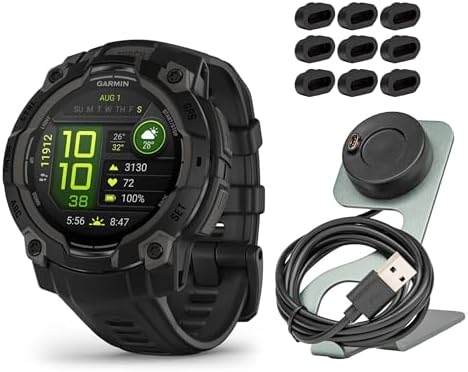
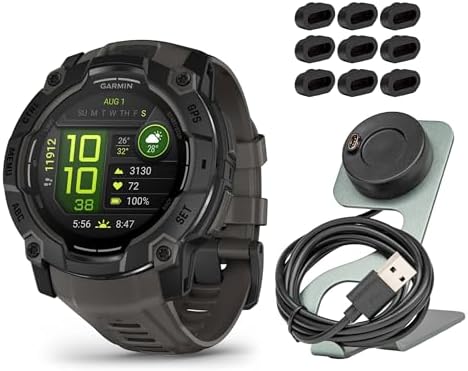
The Instinct 3 45mm inherits the family’s blocky identity. A 45mm case, a metal-reinforced bezel, and button guards combine into a silhouette that reads as a tool long before it reads as a watch. The AMOLED variant of that chassis sits inside a case engineered to absorb knocks, with raised edges protecting the glass and a strap geometry that keeps the piece steady on the wrist during forced movement in low light. For anyone who has handled previous Instinct generations, the build language is instantly familiar, but the AMOLED screen lifts legibility well beyond what an MIP panel delivers under direct sun.
The Garmin Vivoactive 6 takes the opposite approach. Its case hugs the wrist in a slim polymer composite frame, paired with a Slate finish and a Black silicone band on the reference listed in the selection, and the low side profile makes it easy to wear with a cuff or under a dress shirt. The AMOLED display on this model uses the same underlying panel technology as the Instinct 3 but packages it in a body that flatters a wider range of wrist sizes and casual outfits. In practice, this means the Vivoactive 6 reads as an everyday accessory first, a fitness device second, while the Instinct 3 communicates durability at a glance.
Display, Materials, and Real-world Legibility
Both devices now ship with AMOLED panels, which marks a shift for the Instinct line that historically relied on memory-in-pixel screens for longer battery life. The 45mm AMOLED variant of the Instinct 3 balances vibrant color and quick glanceability with roughly 18 days of stated battery life, and the outdoor-tuned brightness profile keeps the screen readable in harsh light. Glass protection, bezel height, and strap material all lean toward impact tolerance, and the built-in flashlight adds a level of utility that is genuinely useful on night trails, in tents, or in workshops.
The AMOLED display on the Vivoactive 6 behaves differently in use. Because the case is thinner, the panel sits closer to the wrist, and the Slate and Black treatment of the tested configuration keeps the visual footprint understated. Garmin quotes up to 11 days of battery for this model, so users sacrifice roughly a week of runtime compared with the Instinct spec sheet in exchange for a lower weight and a smaller presence on the wrist. Music storage and contactless payments are available on the Vivoactive 6, and both features turn the watch into a capable training and commuting companion when a phone can stay in a pocket.
GPS, Sensors, and Training Metrics
Garmin has long placed the same core sensor stack behind multiple product lines, and both watches confirm that pattern. Heart rate, Body Battery, advanced sleep tracking, and stress monitoring appear on the Instinct 3 and the Vivoactive 6, so the daily wellness readout looks nearly identical between them. Where the differentiation shows is in positioning and sport profile depth. The Instinct 3 leans toward multi-band outdoor tracking and tactical navigation utilities, while the Vivoactive 6 carries 80 or more sports modes alongside the kind of pace, cadence, and training-load data that road runners and cyclists read during a session.
Anyone weighing the Garmin brand’s outdoor lineup against its lifestyle models should consider which satellites a typical route actually demands. For estuary runs and city park loops, the Vivoactive 6 has more than enough positional accuracy. For high-alpine traverses, open-water swims, and search-and-rescue style navigation where sky views are partial, the heavier navigation suite of the Instinct range is the more appropriate tool. The choice maps to trail height rather than to a numerical score.
Battery, Charging, and Daily Wearability
Battery life is where the spec sheets separate the two most clearly. Garmin rates the Instinct 3 collection’s 18-day rating in smartwatch mode when equipped with the AMOLED display, which is a meaningful figure for users who travel frequently or cover multi-day routes without reliable power. That runtime, combined with the sunlight-optimized casing, turns the watch into a piece of kit that demands less attention between charges. The trade-off is mass: the rugged frame, protruding bezel, and larger 45mm case are noticeably beadier on a narrow wrist than the slimmer alternative.
The Vivoactive 6 counters with an 11-day stated battery and a charging cadence that suits a weekday routine. Even at that figure, the device can hold up through a full week of training and a weekend without reaching for the cable, and the AMOLED display avoids the need to raise the wrist repeatedly to check the time. In use, the watch disappears visually, which is often what buyers want from a device they will wear with office attire and casual clothing alike. Running, cycling, and swimming are all well served by the profile set, and the onboard music storage pairs naturally with a Bluetooth headset on outdoor sessions.
Where Each Watch Fits Best
For hikers, climbers, tactical and emergency professionals, and anyone who regularly works outdoors at night, the Instinct 3 delivers the sensibilities that have defined the family for years. A built-in flashlight, a metal-reinforced bezel, and an 18-day rated battery all point to long periods away from a charger in conditions that favor tolerance over delicacy. The 45mm AMOLED form is a useful update for users who want the rugged build without the older MIP display, and the broader Garmin outdoor ecosystem remains the same.
For runners, cyclists, swimmers, gym regulars, and commuters who want a neat wrist presence, the Vivoactive 6 collection offers a sensible balance of features and weight. The AMOLED display, 11-day rated battery, 80-plus sport modes, music storage, and contactless payments cover nearly everything that one of these devices could reasonably be asked to do across a working week. Buyers who previously felt the Instinct range was too large will find the silhouette of the Vivoactive line closer to the watches they should be wearing.
Two concrete configurations anchor a purchasing decision. The Garmin Instinct 3 45mm AMOLED Display Black GPS suits those who want the rugged build, while the slimmer lifestyle counterpart represented by the Garmin Vivoactive 6 Fitness GPS AMOLED Slate Black suits those who put wearability on the same level as sport depth. Matching one of these two profiles to daily reality is a far more reliable decision than scoring the watches on a single axis, and the candidate that fits the morning routine usually turns out to be the one that stays on the wrist past the first month.