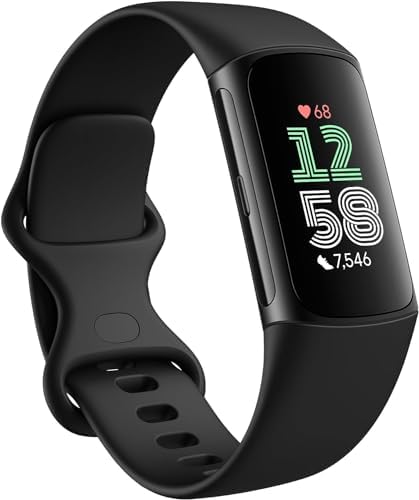
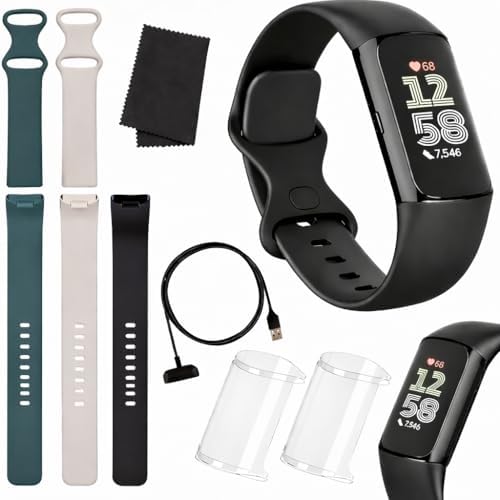
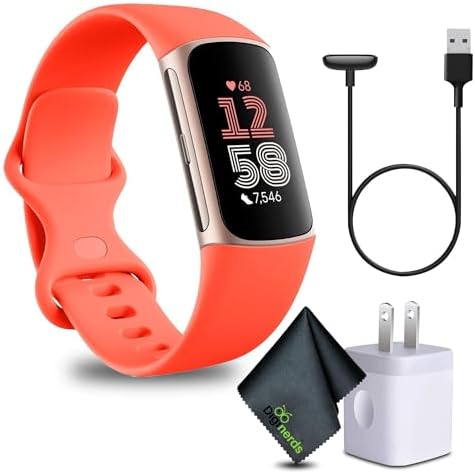
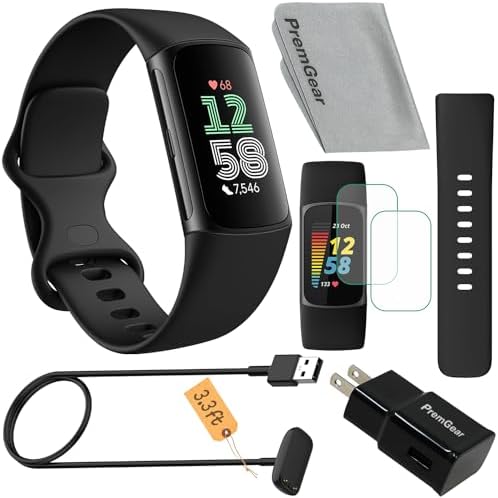
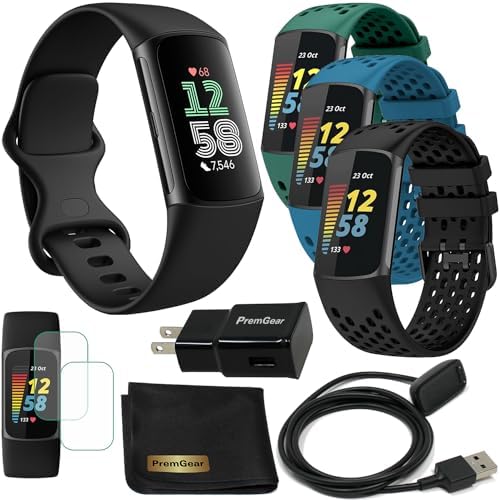
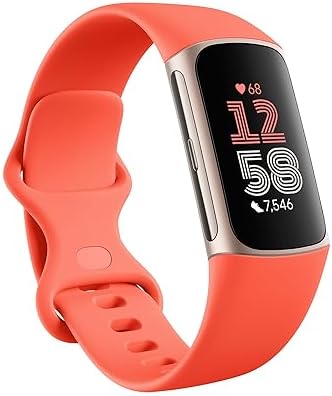
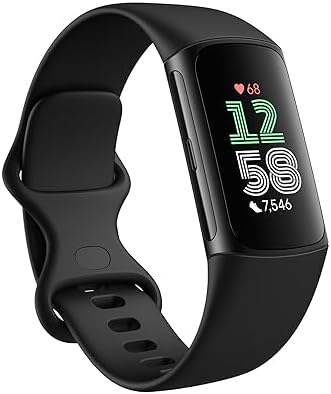
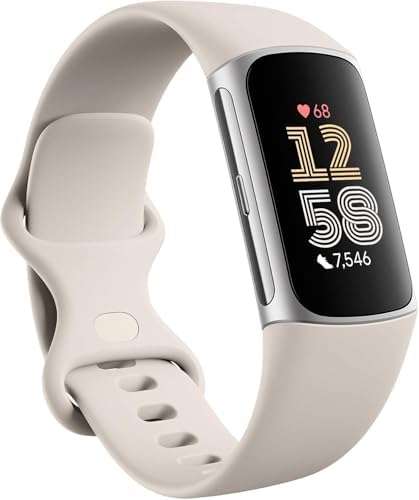
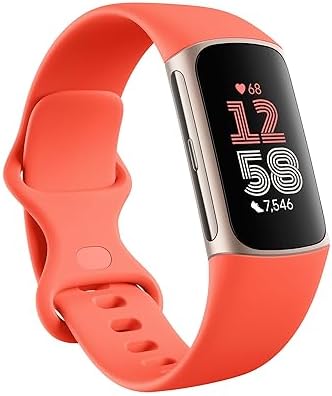
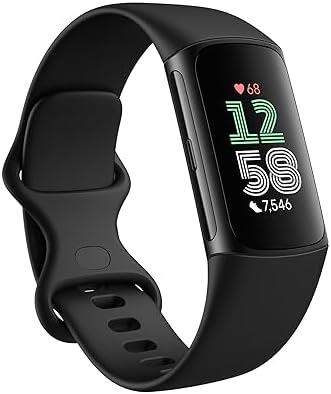
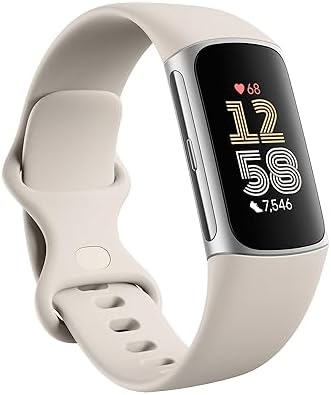
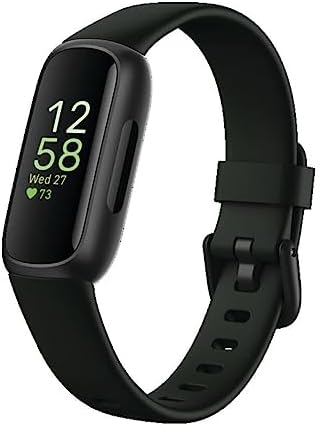
Two trackers sit at the centre of Fitbit’s current lineup, and the gap between them is narrower on paper than it feels on the wrist. The Charge 6 packs a colour AMOLED panel, a built-in GPS receiver, an electrodermal activity sensor and a skin temperature sensor into a band roughly the size of a wristwatch. The Inspire 3 pairs a slim colour AMOLED strip with the same core heart rate and sleep architecture, drops the onboard GPS, and sells for roughly half the money. Both devices sync to the same Google Health app, both carry a 50-metre water resistance rating, and both include a three-month Google Health Premium membership in the box. That overlap is exactly why the decision is harder than the price tags suggest.
This is a buying guide built around one question: which of these two trackers should end up on your wrist? Both are legitimate long-term purchases, and both excel at different jobs. The breakdown below covers sensor hardware, battery behaviour, GPS accuracy, sleep scoring depth, comfort during exercise, and the total cost of ownership over three years, so the choice can be made on evidence rather than marketing.
| Feature and Buying Factor | Fitbit Charge 6 | Fitbit Inspire 3 |
|---|---|---|
| Display Type and Size | Colour AMOLED, roughly 1.04 inch | Colour AMOLED strip, roughly 0.76 inch |
| Built-in GPS | Yes, onboard GPS plus GLONASS | No, connected GPS via phone only |
| Heart Rate Sensor | Multi-path optical, compatible with gym equipment Bluetooth broadcasting | Standard optical, 24/7 continuous tracking |
| Electrodermal Activity Sensor | Yes, continuous EDA for stress tracking | No, stress score uses heart rate variability only |
| Skin Temperature Sensor | Yes, nightly variations logged | Yes, nightly variations logged |
| Blood Oxygen Tracking | Spot checks and overnight estimates | Spot checks and overnight estimates |
| Battery Life (typical use) | Up to 7 days | Up to 10 days |
| Battery Life (GPS active) | Up to 5 hours continuous tracking | Not applicable, phone GPS required |
| Charging Method | Magnetic proprietary cable | Magnetic proprietary cable |
| Water Resistance | 50 metres (5 ATM) | 50 metres (5 ATM) |
| Built-in Sports Modes | 40+ modes with automatic exercise detection | 20+ modes with automatic exercise detection |
| Google Apps on Device | Google Wallet and Google Maps navigation | Not supported |
| Physical Profile | Wider band, taller case, 37g | Slimmer, lighter, 17.7g |
| Best Suited To | Runners, cyclists, climbers, daily training | Sleep tracking, step counting, wear-all-day minimalism |
| Included Membership | 3-month Google Health Premium | 3-month Google Health Premium |
| Price Positioning | Mid-tier | Entry-level |
The table exposes three decisive gaps. The first is GPS: only the Charge 6 can record a route without a phone attached, which changes how runners and cyclists can use the tracker. The second is the EDA sensor, which enables the kind of continuous stress logging the Inspire 3 cannot replicate. The third runs in the opposite direction: the Inspire 3 lasts longer between charges and sits noticeably lighter on the wrist, two advantages that matter to anyone who wears a tracker to bed. Every other difference flows from those three facts.
Who Each Tracker Is Actually Built For
The widest gap between these two devices has nothing to do with hardware. It is about the kind of person each one was designed to serve. The Charge 6 assumes the wearer leaves the house without a phone, cares about pace, elevation and heart rate zones mid-run, and wants workout data rich enough to adjust training week to week. Fitbit positions it as a training tool that happens to look like a band, and the feature list backs that up: built-in GPS, an on-device workout interface with live stats, and Bluetooth heart rate broadcasting so the sensor can drive third-party gym equipment directly.
The Inspire 3 makes the opposite assumption. It is a tracker for people who want their health data collected quietly, not a device that demands attention every session. There is no GPS chip, no barometric altimeter, and the screen is a thin strip rather than a full dial. What remains is the core of what Fitbit does well: continuous heart rate, sleep staging, stress management through heart rate variability, and a step and activity baseline that syncs every morning. For a desk-based user, a shift worker, or someone starting a first fitness habit, that set of capabilities is genuinely sufficient, and the weight saved is not trivial.
Sensor Hardware and What It Actually Records
Both trackers share the foundational sensor set. Heart rate is optical on both, blood oxygen is sampled on both, and skin temperature variation is logged overnight on both. That shared base is the reason the Inspire 3 punches above its price category on sleep and recovery metrics. The difference appears above that base layer. The Charge 6 adds an electrodermal activity sensor, the hardware behind its continuous body response tracking. Fitbit uses that signal, combined with heart rate variability, to generate stress management scores throughout the day rather than only during a dedicated two-minute scan.
That sounds like a feature checkbox, but it changes daily behaviour. EDA-based logging can surface a rising stress trend during an afternoon of meetings, in a way that a single manual reading cannot. Users who track recovery seriously tend to notice the difference within a week. Users who mainly want a morning readiness summary will find the Inspire 3’s heart rate variability approach adequate. The spending decision here comes down to whether granular daytime stress data is worth the price step, or whether the overnight picture is enough.
Sleep Scoring Depth on Both Devices
Sleep is where the Inspire 3 defends its position most strongly. Both devices produce a nightly sleep score with light, deep and REM stage breakdowns, and both deliver a daily readiness score. The underlying model is the same, which means the Inspire 3 gives up very little here despite costing far less. The one advantage the Charge 6 holds is the wider screen for reviewing last night’s hypnogram in the morning, which is a convenience improvement rather than a data improvement.
Exercise Tracking During Hard Sessions
During high-movement activities, wrist-based optical heart rate has a well-documented tendency to lag. Fitbit addresses this on the Charge 6 with the multi-path heart rate sensor plus the ability to broadcast that signal to gym equipment over Bluetooth, so the reading comes from the tracker while the console displays it. On the Inspire 3, the same heart rate data is recorded but cannot be pushed outward, so interval training on a machine relies on its own sensors. For anyone doing structured HIIT work, this is a meaningful functional difference that no software update can close.
GPS: The Feature That Splits the Decision
Built-in GPS is the single clearest dividing line. With the Charge 6, a run, ride or hike is captured in full detail without a phone anywhere nearby: pace, distance, route and elevation against the recorded heart rate trace. The tracker stores the activity locally and syncs later. This is genuinely useful behaviour because it removes a phone from the equation entirely, and it removes the battery drain that connected GPS places on the handset.
The Inspire 3 offers connected GPS instead, which means it borrows the phone’s location hardware. Bring the phone along and workout routes are recorded; leave it behind and the session shows duration and heart rate but no map. For short walks in a familiar neighbourhood, that trade-off costs nothing. For a long trail run, a cycling commute, or an outdoor swim where carrying a phone is impractical, the absence of onboard GPS becomes the deciding limitation. This is the point where a buyer should be honest about their habits rather than optimistic.
Battery, Charging and Long-Term Wearability
Battery life favours the Inspire 3 clearly, and in the daily reality of tracker ownership that matters more than spec sheets suggest. Fitbit rates both devices at up to 7 days on the Charge 6 and up to 10 days on the Inspire 3 in typical use, with the gap widening once GPS sessions are involved, since continuous GPS on the Charge 6 can exhaust the battery in around five hours. A well-managed 10-day cycle becomes a 7-day cycle after ageing, and similar reductions apply on both sides, so a longer baseline stays longer throughout the life of a device. Details of the charging setup and connector are published in the official manual for each model.
Wearability follows battery, with a slight twist. The Charge 6 weighs about 37 grams, the Inspire 3 roughly 17.7 grams. That difference is most noticeable while sleeping and during sweaty workouts, but has a practical effect on data quality. Anyone tracking temperature trends needs to wear the device overnight for several consecutive nights, and the lighter Inspire 3 removes a small but real deterrent to doing so. For users whose primary interest is sleep and stress patterns rather than sport, the lower weight is a genuine advantage.
Google Apps and the Smart Features on the Charge 6
Software is the last meaningful gap, and it runs in the Charge 6’s favour. Only the Charge 6 ships with access to Google Wallet for contactless payments and Google Maps navigation on the wrist. That makes it a useful companion for short outings where a phone stays behind. The broader Google ecosystem shows up on both devices through the Google Health app, including the bundled three-month Google Health Premium membership and compatible tracking integrations, so software parity holds everywhere except on-device apps. None of this changes the fitness story, but for buyers who want their tracker to also function as a lightweight smartwatch, the Charge 6 remains the only option in this pairing.
Cost of Ownership: What the Cheaper Tracker Actually Costs
On price alone, the Inspire 3 wins by a wide margin. The correct comparison, though, is not the sticker number but the total spend over the realistic three-year life of these devices. Two honest trade-offs sit on the ledger: without onboard GPS on the Inspire 3, running with route data requires carrying a phone, so outdoor workouts are less convenient; and the smaller sensor set means EDA-based stress tracking is not available. Those two gaps, taken together, can make the higher-priced Charge 6 look more reasonable over the life of the device, or make it look like overkill. The same three-month Google Health Premium code is bundled on both, so subscription access is not a deciding factor in either direction.
Which Tracker Should End Up on Most Wrists?
The right answer depends on one primary activity. If running, cycling or any outdoor training without a phone is central to daily life, the Google Fitbit Charge 6 – Fitness Black is the model with the hardware to support it: GPS, a larger display for live metrics, EDA sensor and Google Wallet, all working together in a package designed for training-focused wear. Anyone committed to structured intensity or to removing a phone completely during sessions will notice the difference every time they lace up.
If the goal is steady health coverage rather than sport data, then sleep tracking, stress awareness, blood oxygen sampling and heart rate logging are the priorities, and they are all delivered by the Fitbit Inspire 3 Health & Fitness Midnight Black, which keeps weight and price low without gutting the core feature set. That is the honest split. The Inspire 3 is not a stripped-down version of a fitness watch; it is a sleep and wellness tracker that someone who happens to jog a few times a week can use with total comfort.
Two families support that split. The Charge 6 has positioned itself as the tracker for people who train, and the current generation is the most complete execution of that idea. The Inspire 3 has always pointed at quieter use: sleep, stress, steps and heart rate delivered without interruption. Seeing which frame fits an actual week is the fastest way to decide, and the Fitbit brand’s full range is where both lines sit side by side. Either path leads to the same outcome: continuous, dependable health data around the clock, with little missed between the two. For most buyers, the deciding question is simply whether a weekly outdoor session without a phone is worth the extra spend, and the answer changes tracker from user to user.