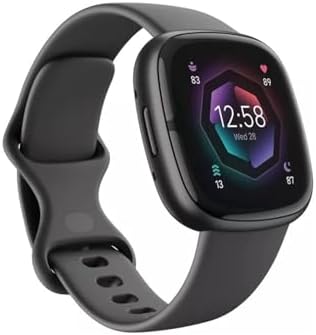
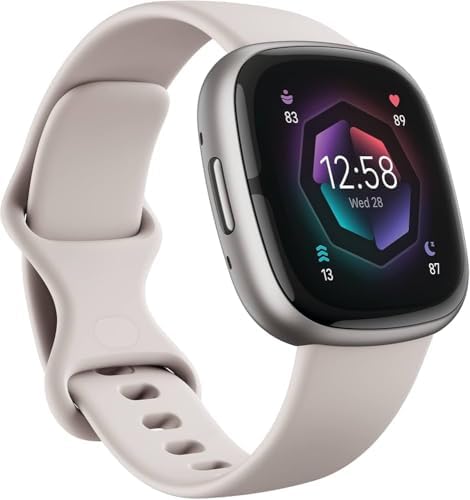
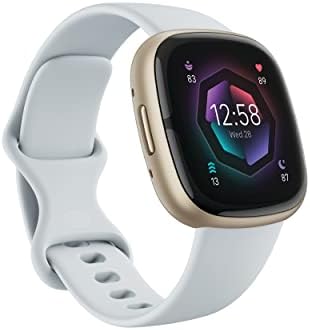
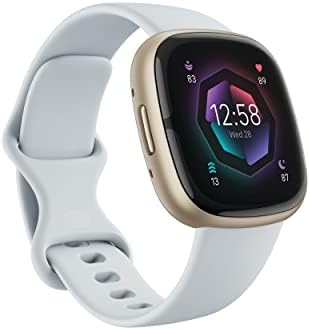
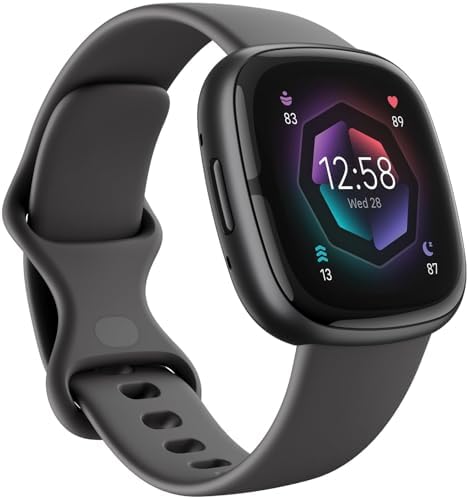
The Fitbit Sense 2 and the Google Pixel Watch 4 approach the smartwatch formula from two different directions. The Sense 2 carries a 6+ day battery rating and a health-first sensor suite, while the Pixel Watch 4 pushes a brighter domed display, a 40-hour battery ceiling, and deeper Gemini integration into Wear OS. Choosing between them comes down to what you value more: marathon battery life and stress management, or a richer smart platform with a bigger screen. This guide breaks down every decision point that matters.
| Feature & Selling Point | Fitbit Sense 2 | Google Pixel Watch 4 |
|---|---|---|
| Battery Life | 6+ days typical use | Up to 40 hours |
| Display Type | 1.58-inch square AMOLED, always-on | Domed round AMOLED, brightest to date |
| Operating System | Fitbit OS (limited third-party apps) | Wear OS with Gemini built in |
| GPS Capability | Connected GPS via phone | Dual-frequency GPS on-watch |
| Stress Monitoring | cEDA sensor, EDA scans, Body Response | Fitbit-powered metrics, Body Response |
| ECG App | Yes | Yes |
| SpO2 Tracking | Yes, overnight passive | Yes, overnight passive |
| Sleep Analytics | Sleep Score, Sleep Profile | Sleep Score, Sleep Profile |
| Phone Compatibility | Android and iOS | Android 12.0 or newer only |
| Water Resistance | 5 ATM (swim-proof) | 5 ATM (swim-proof) |
| Contactless Payments | Fitbit Pay (limited banks) | Google Wallet (broad bank support) |
| Voice Assistant | Alexa, Google Assistant | Gemini built in |
| Case Sizes | One size (roughly 40mm) | 41mm and 45mm options |
| App Ecosystem | Minimal third-party support | Google Play Store access |
| Best For | Wellness-first, long battery | Wear OS apps, active lifestyle |
The table makes the real split obvious. The Sense 2 trades app depth and on-watch GPS for roughly three times the battery life of the Pixel Watch 4. The Pixel Watch 4 answers back with a brighter domed display, dual-frequency GPS, Gemini on the wrist, and a real app store. Neither device is short of health tools; the decision is about what you want the device to prioritize.
Where the Fitbit Sense 2 Still Leads
The Sense 2 was never built to compete as a general-purpose smartwatch. It was built as a health instrument, and that shows in the way it handles battery and stress management. Google rates the Sense 2 at 6+ days of battery life under typical conditions, a figure actual owners often find generous with moderate use. That matters far more than it sounds: a wearable you have to charge every night is one you are more likely to take off, and behavioral data is only useful when it is continuous.
Stress Sensing as a Core Feature
What separates the Sense 2 from most fitness trackers is its dedicated electrodermal activity sensor. The watch can perform on-demand EDA scans using the cEDA sensor to read sweat-gland response, which correlates with sympathetic nervous system activity. The user touches the stainless-steel frame, holds still, and the device logs a readout. This is paired with continuous stress monitoring, an all-day Body Response signal, and a guided breathing workflow that kicks in when elevated stress is detected.
For anyone who suspects their stress profile is affecting their sleep or heart rate variability, this is the specific function that justifies choosing the Sense 2 over a more capable app-driven platform. The ECG app works alongside this by detecting signs of atrial fibrillation, and SpO2 tracking runs passively overnight. Combined with Sleep Score and Sleep Profile, the Sense 2 is less a phone accessory and more a passive health journal you happen to wear.
Where the Google Pixel Watch 4 Pulls Ahead
The Pixel Watch 4 belongs to a different category. Google positions it as a full smartwatch running Wear OS with Gemini built in, and that framing is honest about what it does well. The watch delivers up to 40 hours of battery in its standard mode, though always-on display and heavier usage narrow that figure substantially. The trade-off is that you get a genuinely capable smart platform in return.
On-watch dual-frequency GPS is the most consequential upgrade for runners and cyclists. The Pixel Watch 4 can track routes independently of a phone, and dual-frequency positioning improves accuracy in dense urban canyons or tree cover where traditional single-band GPS tends to drift. The Fitbit Sense 2 relies on connected GPS, so an Android or iPhone has to come along for anything beyond basic step and distance estimates.
Wear OS Apps and Gemini on the Wrist
Wear OS brings Google Maps, Google Wallet, Gmail previews, calendar, and third-party apps from the Play Store. Contactless payments work through Google Wallet, which supports a broader range of banks than the Fitbit Pay system. Replies to messages, voice dictation through Gemini, and smart-home controls all feel closer to a phone experience than to a fitness tracker with some notifications bolted on.
The caveat is phone compatibility. The Pixel Watch 4 requires an Android 12.0 or newer device; iPhone users are locked out entirely. The Sense 2 works with both Android and iOS. For anyone on iOS who wants Fitbit sensors, the choice is effectively made for them.
Sensor-for-Sensor Comparison
Both watches draw from the same Fitbit health platform, which simplifies the overlap. The Fitbit Sense 2 tracks 24/7 heart rate, skin temperature variation, blood oxygen saturation, and sleep stages. The Pixel Watch 4 delivers the same core metric set but gains access to newer Google Health dashboards and Body Response insights that rely on ongoing algorithmic refinement rather than new hardware.
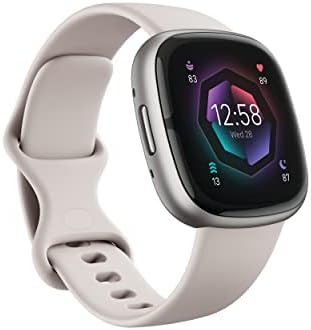
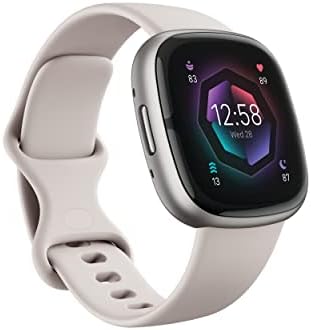
In practice, the sensors are similar enough that choosing based on a single metric is a mistake. The meaningful hardware differences are stress-tool depth on the Sense 2 and GPS capability on the Pixel Watch 4. Buyers who run outdoors with a route log should weigh the GPS gap heavily; buyers whose priority is daytime stress awareness and overnight recovery scoring get more value from the Fitbit Sense 2 Health and Fitness Smartwatch – Lunar White/Platinum, whose cEDA-based toolkit remains the deepest stress-sensing implementation on either platform.
Battery Life and the Real Charging Equation
This is where the comparison often gets decided. The Sense 2 typically runs four to six days between charges depending on feature use, and it fast-charges enough for multi-day tracking to stay unbroken. The Pixel Watch 4 hits its 40-hour ceiling only with always-on display disabled and lighter tracking load; heavy GPS use shortens that window further. A weekly routine that includes multiple GPS sessions will likely land Pixel Watch 4 users on a nightly charge rhythm.
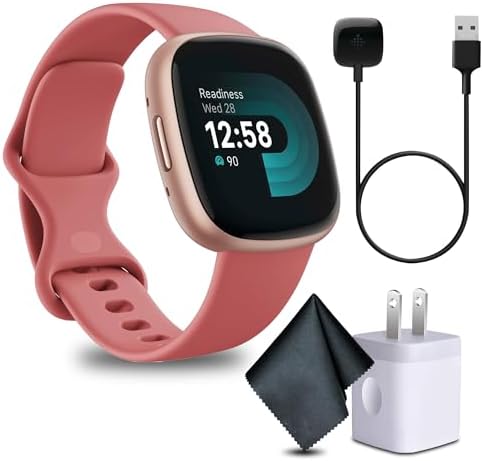
Neither number is unacceptable. The point is that they represent different habits. The Sense 2 asks you to think about charging roughly once or twice a week, while the Google Pixel Watch 4 (45mm) – Moonstone Active Band earns a place on your nightstand as reliably as your phone.
Design, Display, and Case Sizing
The visual language could not be more different. The Sense 2 uses a 1.58-inch square AMOLED display with rounded corners, roughly 40mm across, which gives it a wider canvas for reading health metrics and text-heavy notifications. The Pixel Watch 4 counters with a round domed AMOLED that Google describes as its brightest and largest to date, plus two case sizes at 41mm and 45mm. Buyers with larger wrists or those who prefer a traditional watch silhouette generally find the Pixel Watch 4 more natural on the wrist.
Both watches are rated 5 ATM, which covers pool swimming and shower use but not high-impact water sports. The Sense 2 uses an aluminum case with a stainless-steel frame that the EDA scan depends on, while the Pixel Watch 4 offers an aluminum or stainless-steel build depending on trim. Strap compatibility differs as well: Fitbit uses a proprietary clip system, and Pixel Watch 4 uses a rotating lug mechanism that accepts Google’s own bands and a growing third-party ecosystem.
Which Should You Actually Buy?
The right answer maps to your phone and your priorities. Users on Android who want notifications, apps, contactless payments, music downloads, and accurate standalone GPS should default to the Pixel Watch 4; the Gemini integration alone changes how often you interact with the watch instead of your phone. Users who want to wear the device to bed, scan their stress response during the day, and only charge on weekends should look at the Sense 2 first.
Fitbit has long positioned the Fitbit brand’s wellness-first approach as a companion philosophy, and the Sense 2 follows that path without compromise. The Google brand’s side of the family is built around the opposite assumption, where the watch is a small screen for Google services that happens to track your health. The purchase decision is really a vote on which philosophy fits your day.
The Subscriber Question
Both devices lean on Google Health Premium to unlock deeper features, and stress management, sleep analytics, and some recovery insights land behind that subscription. Neither watch is a dud without it, but the Sense 2’s value concentrates more heavily in the subscription layer because stress and sleep tools are its signature features. Budget accordingly: the hardware price is rarely the whole story for either device.
A Note on Longevity and Updates
The Pixel Watch 4 ships on newer Wear OS builds with Gemini groundwork in place, so it has more runway for feature drops tied to Google’s AI roadmap. The Sense 2 uses Fitbit’s own compact OS, which has seen slower iteration and fewer third-party additions over its lifecycle. Buyers weighing a three-to-four-year ownership window should tilt slightly toward the Pixel Watch 4 if platform longevity matters; buyers treating the watch as a health tool they will replace when the sensor story changes can pick the Sense 2 without regret.
Whichever side you land on, the underlying choice is straightforward. The Sense 2 optimizes for continuity of health data and week-long battery, while the Pixel Watch 4 optimizes for what a modern wrist computer can do. Decide which of those you actually want on your wrist every morning, and the comparison resolves itself.