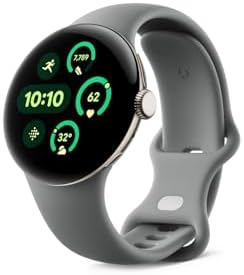
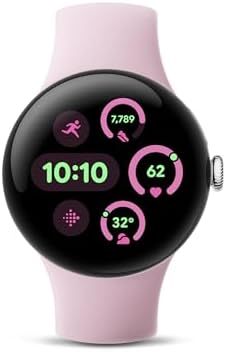
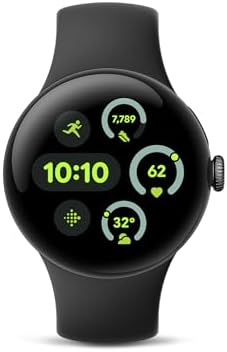
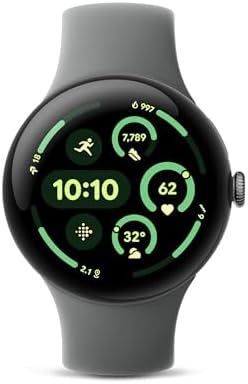
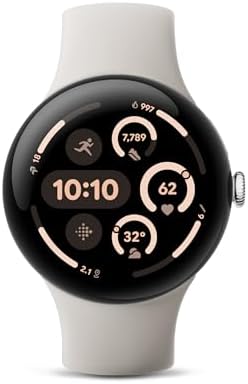
The Google Pixel Watch 3 and the Vivoactive 5 lineup occupy the same mid-range smartwatch bracket, yet they serve two very different kinds of buyers. The Pixel Watch 3 leans on deep Android integration, Fitbit-powered wellness metrics, and a rotating crown interface, while the Vivoactive 5 prioritizes multi-day battery life and a broader sport profile list inside the Garmin Connect ecosystem. This guide breaks down the evidence buyers need before committing to either model, from battery behavior to sensor depth and long-term ownership costs.
| Feature & Selling Point | Google Pixel Watch 3 | Garmin Vivoactive 5 |
|---|---|---|
| Battery Life (Always-On Off) | Up to 36 hours (41mm), up to 48 hours (45mm) | Up to 11 days smartwatch mode |
| Display | Actua 2000-nit AMOLED, always-on | AMOLED, always-on option |
| Case Sizes | 41mm and 45mm | 42mm (single size) |
| Health Sensors | Heart rate, SpO2, skin temperature, ECG | Heart rate, SpO2, sleep, Body Battery, nap detection |
| GPS | Dual-frequency GPS (L1 + L5) | Single-band GPS |
| Ecosystem | Wear OS 5 with Fitbit app | The Garmin brand’s Connect platform, no third-party app store |
| Phone Compatibility | Android only | Android and iOS |
| Water Resistance | 5 ATM / 50m | 5 ATM / 50m |
| Sport Modes | 40+ (Fitbit exercise types) | 30+ with automatic rep counting |
| Sleep Tracking | Sleep Score, Sleep Profile, bedtime mode | Sleep Score, Sleep Coach, nap detection |
| Safety Features | Fall detection, emergency SOS, Safety Signal | Incident detection, assistance (phone-connected) |
| Case Materials | Recycled aluminum or polished silver | Fiber-reinforced polymer |
| LTE Option | Yes, cellular variant available | No |
| Offline Maps | Yes, offline Google Maps | No |
| Charging | Magnetic pogo pin, 60 min to full | Standard Garmin charging cable |
| Best For | Android users wanting LTE and app depth | Buyers prioritizing battery and cross-platform use |
The comparison shows the sharpest divide: battery and platform openness. The Vivoactive 5 runs up to eleven days in smartwatch mode, while the Pixel Watch 3 needs a charge roughly every two days. On the other side, the Pixel Watch 3 brings dual-frequency GPS, LTE connectivity, offline maps through The Google brand’s Maps service, and an ECG sensor that the Vivoactive 5 does not offer. What follows is a deeper look at where each watch earns its place on the wrist, and which buyer should choose which model.
Design and Wearing Experience
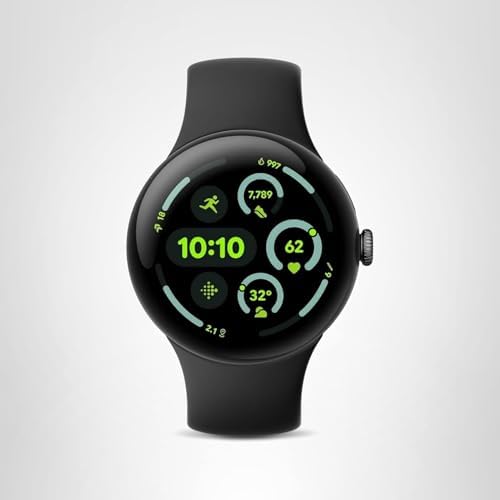
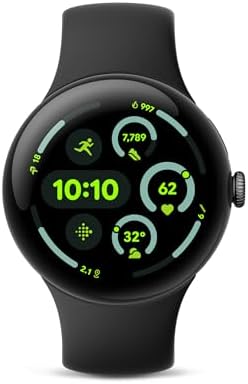
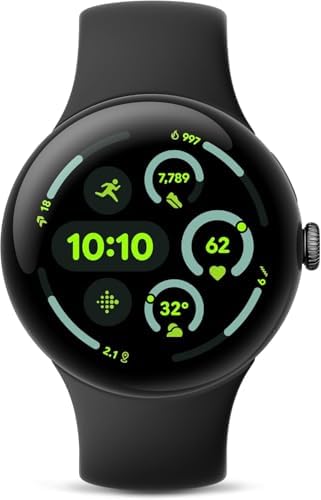
The Pixel Watch 3 takes a distinctly jewelry-first approach. Its domed glass rises above a recycled aluminum case, and the 41mm and 45mm options give buyers a real choice in wrist presence. The rotating haptic crown is a tactile highlight: it scrolls through tiles and menus with a subtle vibration rather than a physical ratchet. The result reads more like a traditional dress watch than a fitness gadget, which matters for users who want a single wearable that works in meetings and at the gym alike. There is also a more premium Google Pixel Watch 3 (45mm) Matte Black with a matte finish for buyers who prefer a stealthier look.
The Vivoactive 5 goes in the opposite direction. Its fiber-reinforced polymer case keeps the weight down to roughly 26 grams with the silicone band, and the 42mm sizing sits comfortably on most wrists. The aluminum bezel adds rigidity without bulk. Garmin’s design language here is functional: flush buttons, a slightly recessed display, and a silicone strap that grips during sweaty sessions. The 42mm single-size approach means buyers do not have to choose a diameter, but it also removes the ability to tailor fit. Garmin has long positioned the Vivoactive line as its value-oriented everyday fitness watch, and this generation continues that positioning with an Ivory colorway that pairs well with casual wear, as seen in the Garmin v铆voactive 5 Health and Fitness GPS Ivory.
Battery Life and Charging Routines
Battery is the single biggest day-to-day difference between these two watches. Garmin specifies the Vivoactive 5 at up to 11 days in smartwatch mode, dropping to roughly five days with the always-on display enabled. GPS-only activities drain the battery faster, but for most users the watch can go a week without a charger. That changes usage behavior entirely: sleep tracking becomes effortless because the watch never needs a nightly top-up, and weekend trips do not require packing a cable.
The Pixel Watch 3 delivers up to 36 hours on the 41mm model and up to 48 hours on the 45mm model with the always-on display turned off. Enabling always-on mode cuts those figures significantly, and heavy GPS use will drain the battery in a few hours. The trade-off is a smaller chassis and a brighter screen, and the Pixel Watch 3 charges from zero to full in about an hour on its magnetic pogo-pin charger. For buyers who already charge a phone every night, this rhythm may feel familiar. For buyers who want to forget about charging entirely, the Vivoactive 5 wins outright.
Health Tracking Depth
Google leans on Fitbit’s platform for the Pixel Watch 3. The watch measures heart rate, blood oxygen, skin temperature, and offers an ECG app for irregular rhythm notifications. Fitbit’s Sleep Score and Sleep Profile deliver a nightly breakdown with an emphasis on how sleep quality shifts week to week. The readiness score combines recent activity, sleep, and heart rate variability into a single training suggestion. This is a wellness-first approach: the numbers are contextualized in plain language and geared toward habit change rather than athletic performance.
Garmin’s Vivoactive 5 tracks the same core metrics but frames them through an athletic lens. Body Battery visualizes energy reserves throughout the day, rising with rest and falling with stress or exertion. Sleep Coach suggests optimal bedtime windows based on recent patterns, and nap detection automatically logs daytime rest without manual input. Garmin’s training load and recovery metrics are less prominent here than on the Forerunner or other performance-focused models, but the foundation is still more performance-oriented than Fitbit’s. For anyone training for a specific event, the Garmin’s data presentation will feel more actionable.
GPS and Outdoor Navigation
The Pixel Watch 3 uses dual-frequency GPS (L1 plus L5), which improves accuracy in dense urban environments where signals bounce off buildings. It also supports offline Google Maps downloads, so routes remain viewable without a phone nearby. Combined with the LTE variant, this makes the Pixel Watch 3 a capable standalone navigation tool for runners and cyclists who want to leave the phone at home.
The Vivoactive 5 uses single-band GPS. Accuracy is generally solid in open terrain, but urban canyons and tree cover can introduce drift compared to dual-frequency receivers. There are no offline maps on this model, which means navigation relies on a connected phone or pre-loaded courses. For trail runners and hikers who need breadcrumb navigation, Garmin’s higher-tier models offer more, but the standard Vivoactive 5 is best suited to road running, cycling, and gym work where route-finding is simple.
Ecosystem and Smart Features
The Pixel Watch 3 runs Wear OS 5. It supports Google Wallet for tap-to-pay, Google Assistant voice control, and a wide library of third-party apps through the Play Store. Notifications, calendar alerts, and messages arrive with full interaction. For Android users, the integration is tight: the watch unlocks a Pixel phone, controls Pixel Buds, and shares data with the Fitbit app. There is no iOS support, so iPhone owners are excluded entirely.
The Vivoactive 5 is more limited as a smartwatch. It displays notifications, controls music, and offers Garmin Pay, but there is no third-party app store and no voice assistant. What it does offer is cross-platform support: it pairs with both Android and iOS devices, making it the only choice here for iPhone users. Garmin’s ecosystem is broader than just the watch, with accessories such as chest straps, cycling computers, and scales that all feed into Garmin Connect, similar to how Google’s wearable ecosystem ties together Pixel phones, Buds, and the Fitbit platform. The question is whether buyers want a smartwatch that runs apps or a fitness watch that nails the fundamentals.
Safety, Durability, and Water Resistance
Both watches carry a 5 ATM water-resistance rating, which means they survive pool swims and showers. Neither is rated for high-impact water sports or diving. In terms of case durability, the Pixel Watch 3’s domed glass is more exposed to knocks than the recessed and slightly protected display of the Vivoactive 5, though the aluminum case on the Pixel adds rigidity.
Safety features differ meaningfully. The Pixel Watch 3 includes fall detection, emergency SOS, and Safety Signal, which can notify contacts even without a phone or cellular plan on the LTE model. The Vivoactive 5 offers incident detection and assistance, but these require a paired phone. For solo runners and older users concerned about falls, the Pixel Watch 3’s standalone safety stack is a genuine advantage.
Who Should Buy Which Watch
The decision ultimately comes down to two buyer profiles. Someone who carries an Android phone, wants LTE for phone-free runs, values a rotating crown and rich app support, and is comfortable charging every one to two nights will find the Pixel Watch 3 the more complete smartwatch. Its dual-frequency GPS, offline maps, ECG, and Fitbit integration make it a strong all-rounder for urban users.
The Vivoactive 5 suits a different buyer: someone who wants to track sleep and workouts without charging anxiety, who may use an iPhone, and who prioritizes battery life and a light chassis over app depth. It is also the more affordable option in most markets and the better choice for anyone who has tried a smartwatch before and found the nightly charging routine exhausting. The case for each is clear once the buyer decides which trade-off matters more: capability or endurance.