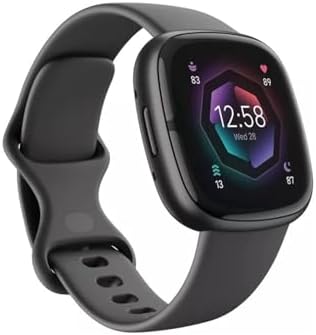
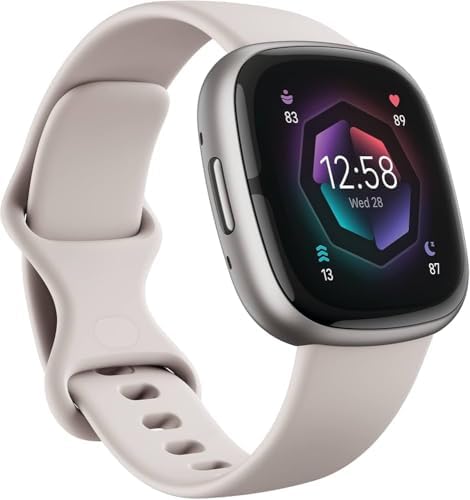
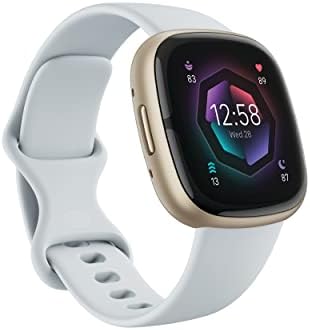
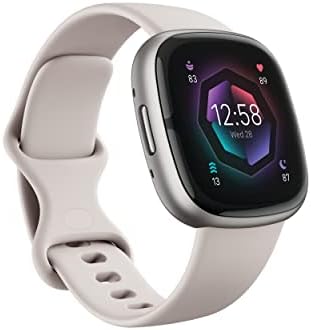
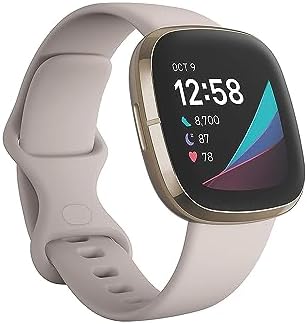
The Fitbit Sense 2 is Fitbit’s premium health-focused smartwatch, engineered for users who prioritise stress monitoring, heart health insights, and sleep quality over mere notification delivery. It succeeds the original Fitbit Sense, building on its foundation with a dedicated CEDA (Continuous Electrodermal Activity) sensor that provides a more holistic view of how the body responds to daily stressors. For anyone evaluating advanced wearables, understanding the Fitbit Sense 2 details is essential, as it represents one of the few devices that places physiological recovery at the centre of the user experience.
This second-generation model refines the formula with a comfortable aluminium case, an upgraded interface, and deeper integration with the Fitbit Premium ecosystem. Unlike general-purpose smartwatches that treat stress as an afterthought, the Sense 2 positions itself as a wellness companion, giving users actionable feedback rather than raw data alone. The following breakdown explores its design, health sensors, battery performance, and how it compares to alternatives within Fitbit’s expanding wearable lineup.
Design and Display: A Practical Health-First Build
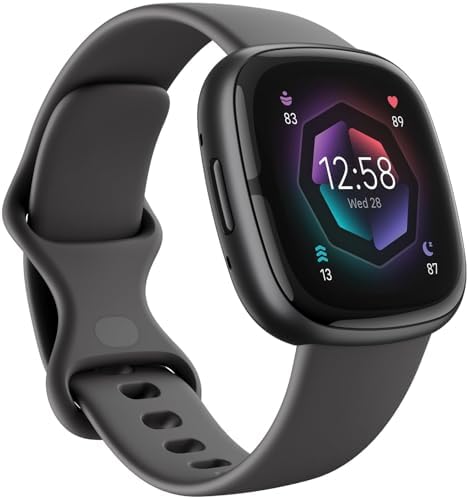
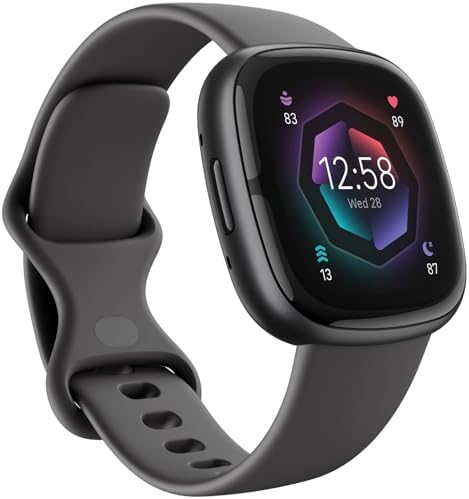
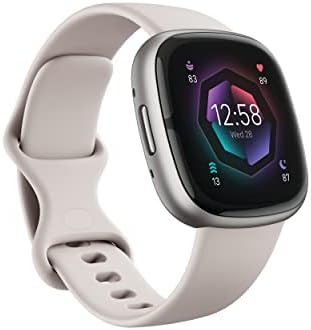
The Fitbit Sense 2 adopts a familiar design language, featuring a rounded-square aluminium case available in two sizes (41 mm and 45 mm, according to official Fitbit specifications) and dimensions of 34.9 x 17 x 8.3 mm for the sensor module. The device weighs comfortably on the wrist and uses a silicone strap that is easily interchangeable and suitable for workouts and sleep tracking. Its flat AMOLED display provides vibrant colours and remains legible outdoors, though it operates with a single physical button on the side, which simplifies interaction alongside touch controls. The build emphasises durability, with 5 ATM water resistance that allows swimming and showering without concern.
Fitbit’s design strategy here prioritises functionality over ostentation. The Sense 2 does not attempt to disguise itself as a traditional timepiece; instead, it embraces a sporty, health-centric aesthetic. This choice makes it less suitable for formal events but highly effective for daily fitness monitoring. The textured button provides tactile feedback, and the haptic engine delivers pleasant alerts without being intrusive. Overall, the design reflects a mature approach to wearable ergonomics, ensuring that users can wear the device around the clock, which is critical for collecting continuous health data.
Health and Wellness Tracking: The Core Differentiator
The Sense 2 stands apart from mainstream fitness trackers through its advanced sensor suite, notably the cEDA sensor that monitors electrodermal activity to detect stress responses in the body. This technology, developed from Google’s research integration, works alongside heart rate variability (HRV) and skin temperature sensors to generate a Stress Management Score. When the watch detects elevated stress, it prompts users to log their mood and offers guided breathing sessions, encouraging mindful pauses. This continuous physiological assessment offers a depth of insight comparable to dedicated wellness devices.
| Feature | Fitbit Sense 2 | Fitbit Sense (Original) |
|---|---|---|
| CEDA Sensor | Yes (Continuous) | Yes |
| ECG App | Yes | Yes |
| Skin Temperature | Yes | Yes |
| SpO2 Monitoring | Yes | Yes |
| Battery Life | 6+ days | 6+ days |
| Key Upgrade | Dedicated stress response sensor | Baseline health tracking |
Beyond stress, the Sense 2 supports a range of heart health tools, including an ECG app for detecting atrial fibrillation and irregular rhythm notifications. These features require the Google Fitbit app integration but operate seamlessly once configured. The watch also tracks SpO2 during sleep, providing insights into potential breathing disruptions, and records skin temperature variations overnight. Such comprehensive monitoring makes the Sense 2 suitable for proactive health management, although it should not replace professional medical advice.
Sleep and Recovery Insights
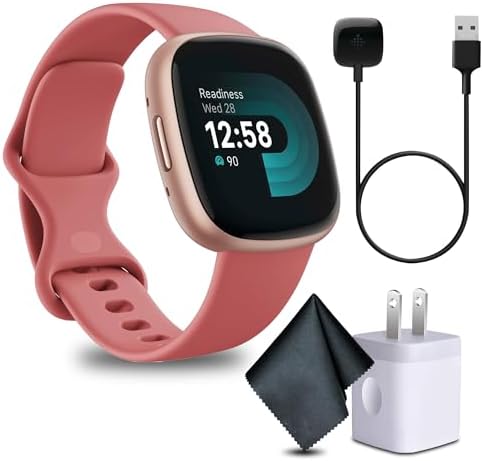
Sleep tracking on the Sense 2 is among the most detailed available in the wearable market. Users receive a nightly Sleep Score based on duration, stages (light, deep, REM), and restlessness. The device’s resting heart rate and HRV data feed into the Daily Readiness Score, which suggests whether to prioritise recovery or engage in more intense exercise. This integration between sleep metrics and training guidance mirrors the sophistication found in the Versa 4, which shares similar recovery tools, but the Sense 2 adds stress and temperature layers.
The Fitbit Premium subscription expands this data with personalised insights, including a detailed Health Trends dashboard that highlights long-term changes. While some users may find the subscription necessary to unlock full value, the Sense 2 still provides robust features without it, such as Active Zone Minutes and guided workouts. For those committed to improving sleep and managing stress, this depth is arguably the strongest reason to consider the device. Fitbit’s long battery life ensures this tracking runs continuously without constant recharging anxiety.
Google Integration and Smartwatch Features
Following Google’s acquisition of Fitbit, the Sense 2 integrates with Google services, including Google Maps turn-by-turn navigation (when paired with a phone) and Google Wallet for contactless payments. The app gallery offers a selection of apps and clock faces, though the ecosystem remains narrower than those of Apple or Samsung watches. Users can receive calls, texts, and app notifications directly to the wrist, with quick reply options for Android devices. Voice assistants are supported, allowing hands-free control of smart home devices.
However, it is important to set expectations: the Sense 2 is not designed as a full-featured app platform. It focuses on fitness and health delivery, with music storage and Bluetooth playback for phone-free listening. This limitation is acceptable given the product’s wellness-centric positioning. Additionally, the watch supports multi-day GPS tracking for outdoor workouts via built-in GPS, meaning users can run or cycle without carrying their phones.
Activity Tracking and Exercise Modes
The Sense 2 offers more than 40 exercise modes, covering common activities ranging from running and cycling to yoga and HIIT. Each mode captures specific metrics such as pace, route, and heart rate zones. The device automatically recognises certain activities, allowing seamless logging when users forget to start a session manually. Its built-in GPS provides accurate pace and distance data without a connected phone, which is a key advantage over the budget-friendly Charge 5, a tracker aimed at cost-conscious buyers.
For strength training, the watch counts sets and reps with reasonable accuracy, although wrist-based detection occasionally struggles with certain movements. The Active Zone Minutes feature encourages users to spend time in heart rate zones that improve cardiovascular fitness, customising this based on age and resting heart rate. Male and female users alike will find the adaptive tracking valuable, especially with the additional female health tracking that logs menstrual cycles and symptoms, integrating with the overall wellness picture.
Battery Life and Charging Practicality
Fitbit quotes a battery life of 6+ days for the Sense 2, which aligns with official documentation for similar models in the Sense series. In real-world usage, with continuous SpO2 monitoring and regular notifications, this figure typically holds. The fast-charging proprietary cable provides about a day of power with a 12-minute charge, making it easy to maintain during busy schedules. This battery performance exceeds that of many AMOLED smartwatches, representing a significant practical benefit for health tracking, as fewer charging interruptions result in more complete data collection.
Should You Choose the Fitbit Sense 2?
The Fitbit Sense 2 is clearly positioned as a health-first wearable with advanced stress and recovery tools rarely found in competitors. Its CEDA sensor, combined with ECG, skin temperature, and SpO2 monitoring, provides a remarkable breadth of physiological data for its price class. While it sacrifices app versatility and stylish design compared to general-purpose smartwatches, its targeted wellness features and long battery life make it an exceptional choice for health-conscious users.
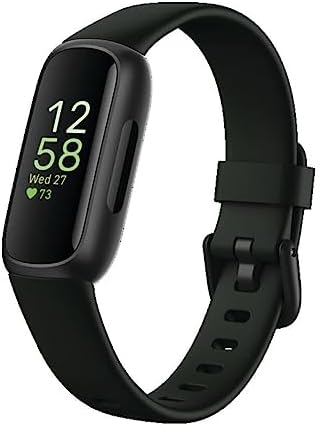
Compared to the original Fitbit Sense smartwatch, the 2nd generation version adds a dedicated stress response sensor via CEDA, which is a meaningful upgrade for stress management. Yet, some users may find the difference subtle in daily use. For existing Fitbit users, particularly those with older trackers like the Inspire 2 fitness band, the Sense 2 represents a substantial upgrade in health analytics and battery sustainability. Conversely, those seeking an all-round smartwatch with interactive apps might find better value with the Versa series. Ultimately, the Sense 2 excels where it matters: putting comprehensive health data on the wrist while respecting users’ time between charges.