Choosing between the Samsung Galaxy Watch8 and the Apple Watch Series 11 requires a close look at how each flagship wearable approaches daily health, fitness, and connectivity. Both devices represent the pinnacle of their respective ecosystems, yet they target different user priorities, from operating system preferences to battery life expectations. This detailed guide examines every meaningful difference, offering a professional comparison that serves as a reliable reference for any purchase decision.
| Feature & Selling Point | Samsung Galaxy Watch8 | Apple Watch Series 11 |
|---|---|---|
| Operating System | Wear OS (Samsung One UI) | watchOS |
| Smartphone Compatibility | Android only (Galaxy optimized) | iPhone only |
| Case Size Options | 40mm and 44mm | 42mm and 46mm |
| Display Technology | Super AMOLED, Always-On | Retina LTPO OLED, Always-On |
| Battery Life (Typical Use) | Up to 40 hours | Up to 18 hours (all-day) |
| Water Resistance | 5 ATM + IP68 | 50 metres (ISO 22810) + IP6X |
| Health Sensors | HR, ECG, BIA, SpO2, Skin Temp | HR, ECG, SpO2, Temp Sensing |
| Key Differentiation | Body composition analysis via BIA | Snorkeling support and dust resistance |
| GPS & Connectivity | LTE, Bluetooth, Wi-Fi, NFC | GPS + Cellular, Wi-Fi 4, Bluetooth |
| Best For | Android users prioritizing battery and fitness depth | iPhone users wanting seamless integration |
The chart above highlights a fundamental split: battery endurance and body composition tools define the Galaxy Watch8, while the Apple Watch Series 11 counters with robust water resistance, including snorkeling capability, and a tightly woven iPhone experience. Choosing the right wearable largely depends on the smartphone in your pocket and whether battery longevity outweighs ecosystem polish.
Design Philosophy and Build Quality
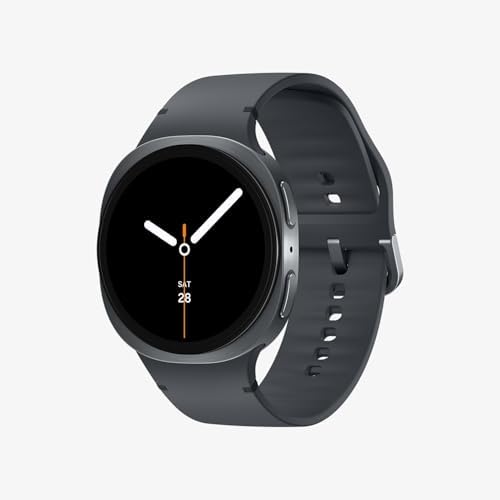
Physical design separates these wearables beyond simple dimensions. The Samsung Galaxy Watch8 continues the sporty circular aesthetic, available in 40mm and 44mm cases, crafted with an aluminum frame and a Super AMOLED display that delivers vibrant colors and deep blacks. Its rotating bezel heritage has evolved into a digital interface, offering smooth navigation through One UI on Wear OS. The softer, rounded silhouette suits casual and athletic wear, while the strap system remains universally compatible with standard 20mm bands.
In contrast, the Apple Watch Series 11 retains the iconic rectangular form with rounded corners, now offered in larger 42mm and 46mm cases to accommodate a bigger display area without increasing overall footprint excessively. The aluminum case remains standard, with ion-X glass protecting the Retina LTPO OLED screen, as confirmed by official Apple documentation. This square design maximizes screen real estate for glanceable information, but it presents a distinctly modern tech aesthetic rather than a traditional timepiece profile. Both watches feel premium in hand, yet ergonomics differ sharply: the Apple model sits flatter on the wrist, while the Galaxy Watch8 hugs curved wrists more closely. Durability ratings also diverge, with the Series 11 achieving a 50-metre water resistance rating under the ISO standard plus IP6X dust resistance, enabling snorkeling, whereas the Watch8 offers 5 ATM and IP68, adequate for swimming but not officially rated for high-velocity water sports beyond that.
Display Brightness and Outdoor Visibility
Outdoor readability and interactive fluidity directly affect daily satisfaction. The Galaxy Watch8’s Super AMOLED panel offers high peak brightness, typically exceeding 2000 nits in direct sunlight, ensuring clear visibility during midday runs or bright outdoor commutes. The always-on display function works reliably, though enabling it reduces battery runtime, a trade-off Samsung addresses with a larger capacity battery in the 44mm version. Touch response feels snappy, and the haptic feedback provides crisp, subtle notifications.
Apple has consistently pushed display brightness further, and the Series 11 continues that trend with a Retina LTPO OLED that reaches peak brightness levels comparable to or exceeding the competition under bright sunshine. The LTPO backplane enables adaptive refresh rates, ranging from a power-saving 1Hz idle state to a smooth 60Hz, optimizing both visual quality and energy efficiency. Apple’s brightness management automatically adjusts zones on the display, enhancing contrast in challenging lighting. Both screens rank among the best in the industry, but the decision often comes down to whether you prefer the circular or rectangular layout for receiving notifications and viewing widgets at a glance. For those exploring the full spectrum of Apple wearables, the latest Apple Series 10 lineup offers additional context on how the brand’s display technology has evolved.
Health and Fitness Tracking Accuracy
This category represents a deciding factor for many buyers, as both Samsung and Apple have invested heavily in sensor technology and algorithmic health insights. The Galaxy Watch8 excels in bioelectrical impedance analysis, a feature that measures body composition, including skeletal muscle mass, basal metabolic rate, and body fat percentage. This data-rich approach appeals to fitness enthusiasts who monitor progressive strength training or weight management goals beyond daily step counts. Samsung Health consolidates this information into actionable trends, integrating sleep coaching, snoring detection, and skin temperature tracking to provide a holistic wellness overview.
The Apple Watch Series 11, conversely, prioritizes accessibility to clinical-grade tools. The ECG app can detect irregular heart rhythms, while the blood oxygen sensor measures SpO2, though regional restrictions may limit this capability. Temperature sensing enables retrospective ovulation tracking, and the new capabilities include snorkeling-specific metrics, leveraging the official 50-metre water resistance rating. Apple’s heart rate algorithm is widely regarded for accuracy during interval training, and the Fitness+ subscription service seamlessly integrates guided workouts, ring-based activity goals, and social sharing features. Neither watch decisively outperforms the other in raw sensor accuracy, but Samsung offers deeper body composition analysis, while Apple provides a more polished, medically-aligned user interface.
Battery Performance and Charging Convenience
Battery chemistry and charging ecosystems reveal divergent design priorities. The Samsung Galaxy Watch8 emphasizes endurance, delivering up to 40 hours of typical mixed usage on a single charge. The 44mm variant employs a higher-capacity cell, and fast charging (WPC-based) recovers around 45\% capacity in 30 minutes, fitting into a morning routine. Power-saving features, such as disabling always-on display and restricting background GPS, extend usability to nearly two days for light users. This stamina advantage reduces charging anxiety, appealing to travelers and individuals who prefer minimal device maintenance.
The Apple Watch Series 11 maintains Apple’s all-day battery philosophy, rated for 18 hours of standard operation, aligning with a daily overnight charging regimen. Fast charging technology on the Series 11 shortens the top-up window significantly, and watchOS battery optimization learns your routine to batch background updates efficiently. However, heavy GPS usage or continuous workouts can deplete the battery in under 14 hours, necessitating mid-day charging for extreme users. This distinction shapes lifestyle compatibility: runners tackling marathons might favor the Watch8’s extended range, while office-bound professionals who charge nightly may never notice the battery advantage in either direction.
Software Experience and Ecosystem Lock-In
Software defines the operational reality of each device, transcending raw specs. For Android users, the Samsung Galaxy Watch8 stands as the most fully-featured Wear OS device, integrating seamless Samsung Health syncing, Google Assistant, and access to the Google Play Store. Samsung’s One UI Watch layer enhances usability with convenient app continuity and dual-screen controls. However, certain advanced health metrics and quick responses require a Samsung smartphone for full functionality; pairing with other Android handsets disables some features like ECG and blood pressure monitoring. This ecosystem dependency is worth noting, and prospective buyers should verify compatibility with their specific device before committing. Shoppers interested in the broader Samsung ecosystem can explore previous Galaxy Watch6 generation models to see how the software experience has matured over successive releases.
Apple Watch Series 11 conversely requires an iPhone and delivers the deepest integration available in smart wearables. Features like Apple Watch For Your Kids, formerly known as Family Setup, allow family members without their own iPhone to use the watch’s communication features, broadening its appeal to households with young children or elderly relatives. This capability is detailed in official Apple support documentation. The watch-to-iPhone handoff, precision finding, Apple Pay, and seamless AirPod switching create an ecosystem frictionless experience that competitors rarely match. watchOS also receives consistent updates across older models-exceptional long-term support, though recent Series 10 models also benefit from enhanced efficiency thanks to the redesigned processor architecture.
Price Positioning and Long-Term Value Considerations
Pricing dynamics influence decision-making as much as hardware capabilities. The Galaxy Watch8 typically enters the market slightly below the Apple Watch Series 11 MSRP, particularly considering frequent promotions for Android wearables. Samsung also offers generous trade-in incentives for prior Galaxy generation devices, potentially reducing the effective price further. However, residual value retention for Apple products historically yields higher resale returns after two years, offsetting the higher initial cost.
Long-term value also hinges on software commitment. Apple’s track record delivers five years or more of watchOS updates, while Samsung has committed to four major OS upgrades beyond initial rollout for recent Galaxy watch models-a respectable timeframe, though slightly shorter. App ecosystem quality differs as well, with watchOS native apps frequently offering richer experiences, while Wear OS watch apps sometimes lag in maturity. Both platforms continue narrowing this gap, yet the distinction remains relevant for users who keep devices for several years. When evaluating premium wearables, a closer look at top Apple smartwatch selections at specialist retailers provides useful pricing benchmarks across the full lineup.
Making the Right Choice for Your Wrist
The final decision rests on personal priorities shaped by your smartphone and daily activities. If you own an iPhone, the Series 11 delivers effortless connectivity that no Android wearable can replicate, complemented by official health features like snorkeling mode and notable CPU advancement suitable for fitness enthusiasts. If you prefer Android devices, the Galaxy Watch8 presents the most complete wearable experience, excelling in battery longevity, body composition tracking, and outdoor visibility tailored for extended adventures.
Consider testing both options side by side to evaluate wearability and ergonomics firsthand. The Galaxy Watch8’s circular case and lighter footprint may appeal to those accustomed to traditional watches, while the Series 11’s flat, rectangular display offers a larger canvas for complications and glanceable data. Battery stamina, charging speed, and sensor accuracy all factor into the equation, but so does the intangible feel of daily interaction with the interface. Wearable technology evolves rapidly, but these two flagship models represent the current ceiling for health insights and mobile communication. Aligning your selection with your ecosystem guarantees a satisfying experience, delivering a smartwatch that feels less like a gadget and more like a natural extension of your daily rhythm.
The future of personal wearables continues to grow brighter with each generation. Both brands will iterate relentlessly, yet the devices available today already provide remarkable utility that transforms schedules and fitness journeys. Whether convenience-seeking travelers, demanding athletes, or tech accessories select the Galaxy Watch8 dual-day battery capacity, the Series 11’s refined interface and rugged water tolerance merit close consideration. Whichever smartwatch mirrors your priorities, both promise to elevate daily routine with data-driven precision and thoughtful design-choices that reward clear-eyed evaluation of your ecosystem and lifestyle.